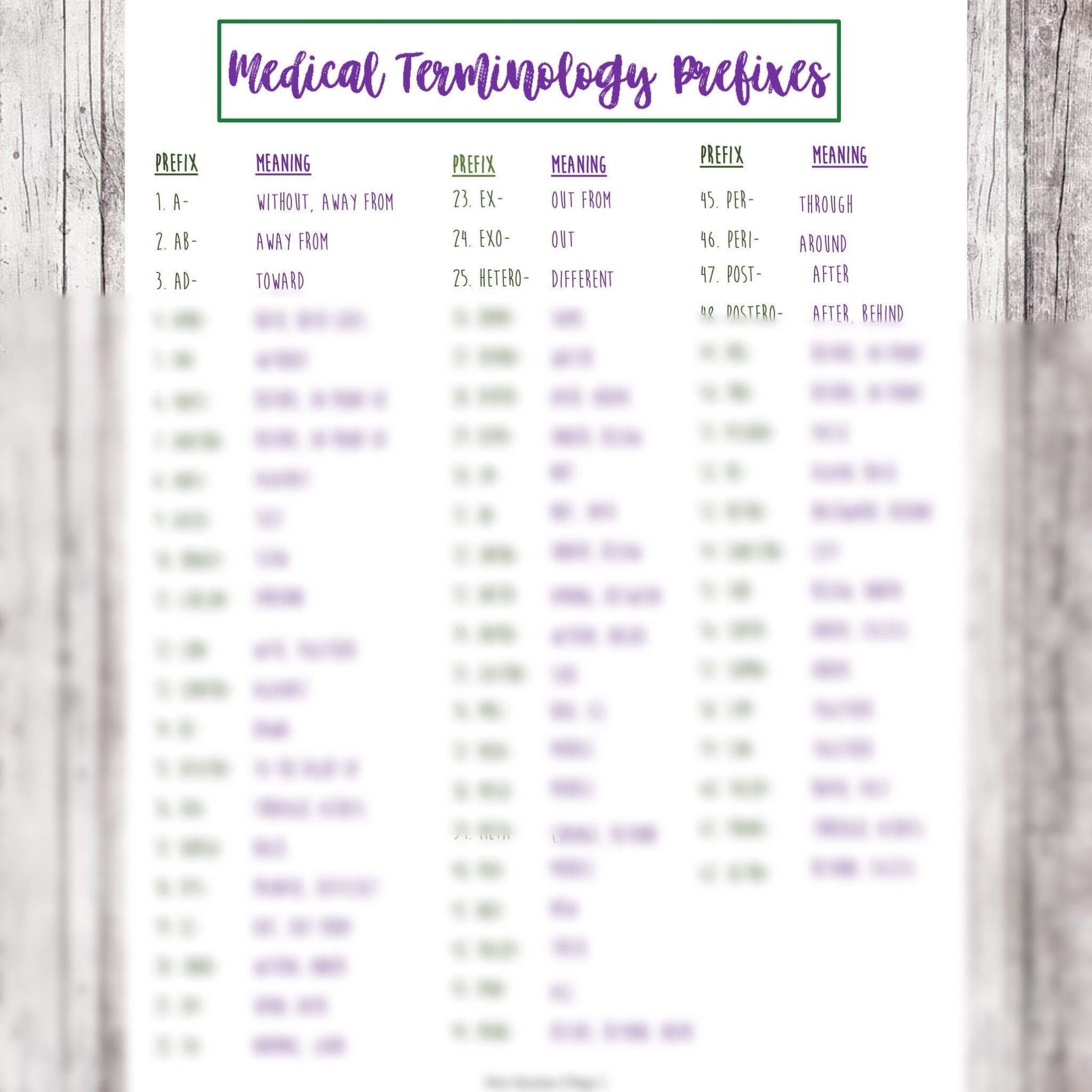
In medical practice and pharmaceutical documentation, the term "as needed" is officially represented by the Latin abbreviation PRN (pro re nata). This designation indicates that a medication or treatment is not administered on a fixed schedule but is instead provided only when specific clinical criteria are met, such as the onset of pain, fever, or other documented symptoms.
The Origin and Definition of PRN
The term "as needed" is more than a simple instruction; it is a clinical designation that dictates the timing and frequency of pharmacological interventions. PRN is derived from the Latin phrase pro re nata, which translates literally to "for the thing born" or, in a functional medical context, "as the occasion arises."
When a healthcare provider prescribes a medication with PRN instructions, they are delegating a degree of clinical judgment to the patient or the nursing staff. Unlike a scheduled (round-the-clock) medication, which is intended to maintain a consistent steady-state concentration of a drug in the bloodstream, a PRN order is reactive. It is intended to manage episodic symptoms or conditions that fluctuate in intensity, such as nausea, migraines, anxiety, or breakthrough pain.
Clinical Criteria and Documentation Requirements
For a PRN order to be legally and clinically valid, it must include clear parameters. A vague instruction such as "take as needed for pain" is insufficient in modern healthcare settings. To ensure patient safety, a complete PRN order requires three distinct components:
- The Indication: The specific symptom for which the medication is intended. This must be clearly defined (e.g., "for mild to moderate headache" or "for insomnia").
- The Dosage: The specific amount of the medication to be administered.
- The Frequency and Limits: The minimum time interval between doses (e.g., "every 4 to 6 hours") and the maximum allowable dose within a 24-hour period.
Without these strict limits, the risk of medication errors, including toxicity or accidental overdose, increases significantly. Healthcare providers are responsible for defining the "ceiling" of these orders to prevent the excessive accumulation of active pharmaceutical ingredients.
Common Examples of PRN Medications
The scope of PRN medications is vast, ranging from over-the-counter supplements to potent controlled substances. Understanding the class of medication helps in determining the appropriate use case.
- Analgesics: Medications such as acetaminophen or ibuprofen are frequently prescribed PRN for episodic pain. In hospital settings, opioids may be prescribed PRN for breakthrough pain following surgery.
- Antiemetics: Drugs used to treat nausea or vomiting are almost exclusively PRN because the symptoms are typically intermittent.
- Anxiolytics: Benzodiazepines or other sedative-hypnotics may be ordered PRN for acute bouts of anxiety or situational distress.
- Antipyretics: Medications intended to reduce fever are administered only when a patient’s temperature crosses a predetermined threshold (e.g., above 101°F).
Table: Comparison of Scheduled vs. PRN Medication Regimens
| Feature | Scheduled (Fixed) | PRN (As Needed) |
|---|---|---|
| Primary Goal | Maintain therapeutic levels | Treat acute symptoms |
| Timing | Exact intervals (e.g., Q8H) | Based on patient condition |
| Decision Maker | Fixed by protocol | Patient or caregiver assessment |
| Risk Profile | Predictable | Variable; dependent on frequency |
| Documentation | Charting compliance | Charting effectiveness/timing |
The Role of the Patient and Caregiver in Assessment
When a medication is labeled PRN, the responsibility for assessing the need for treatment often shifts to the patient. This requires a level of health literacy that allows the individual to objectively evaluate their own symptoms.
For example, if a patient is prescribed an antihistamine PRN for seasonal allergies, they must be able to distinguish between a minor nasal tickle and a full-blown allergic reaction. If a patient misinterprets a PRN order, they may either under-treat a condition—leading to prolonged suffering—or over-treat it, leading to unnecessary side effects or drug dependence. In professional healthcare settings, nurses perform this assessment through physical examination and subjective patient reporting before dispensing PRN medication.
Risks and Safety Considerations
While PRN orders offer flexibility and efficiency, they are not without significant risks. The most prominent danger is the "stacking" of doses. If a patient or caregiver fails to track the exact time of the previous dose, they may administer the next dose too soon, potentially leading to toxic blood levels.
Furthermore, relying on PRN medication for chronic conditions can mask underlying health issues. If a patient consistently requires PRN pain medication, it may be an indication that their primary, scheduled treatment regimen is failing to control the disease, necessitating a formal review by a physician rather than an increase in PRN frequency.
Legal and Regulatory Guidelines
In the United States, as of 2026, regulations regarding the administration of PRN medications are governed by state-specific nurse practice acts and institutional policies. Facilities are required to maintain an accurate Medication Administration Record (MAR). Every time a PRN medication is administered, the clinician must document:
- The time and date of administration.
- The specific symptom (indication) being treated.
- The patient’s response to the medication (typically 30–60 minutes after administration).
Failure to document the "why" and the "result" of a PRN medication is a common audit finding in healthcare quality control. Without this evidence, there is no way to verify that the medication was medically necessary or that it provided the intended relief.
Troubleshooting Common PRN Issues
If you are managing PRN medications, either for yourself or a family member, you may encounter obstacles regarding dosage or effectiveness.
- Missing Frequency Guidelines: If your prescription label says "as needed" without a time interval, contact your pharmacist or physician immediately. You must know the minimum interval between doses.
- Lack of Effectiveness: If you find that you are using the medication at the maximum allowed frequency and still experiencing symptoms, do not increase the dose. Contact your provider to discuss an alternative treatment or an adjustment to your base medication regimen.
- Adverse Reactions: PRN medications can cause side effects just like scheduled ones. If you experience dizziness, nausea, or cognitive changes, keep a log of when you took the dose and what you felt. This data is critical for your doctor when making changes to your plan.
Frequently Asked Questions
Does PRN mean I should take the medication every time I feel a little bit of pain? No. PRN means the medication is available for use when necessary, but it does not mandate use. You should evaluate whether the symptom is significant enough to warrant treatment and ensure you have waited the minimum amount of time required by the label or your doctor.
Can I combine different PRN medications for the same symptom? Never combine medications unless explicitly instructed by a physician. Some PRN medications interact negatively with one another, or they may contain overlapping ingredients (such as acetaminophen in both a pain reliever and a cold medication), which can lead to liver damage if the total daily limit is exceeded.
Why does my nurse ask about my pain level before giving me PRN medicine? Nurses use standardized pain or symptom scales to ensure that the medication is appropriate for the severity of your current distress. This documentation ensures that the administration is evidence-based and assists the medical team in tracking the progression of your recovery.
Is there a limit to how much PRN medication I can take in a day? Yes. Every PRN order must have a maximum dosage limit per 24 hours. You can find this on the pharmacy label or your discharge papers. Exceeding this limit is considered a medication error and can be dangerous.
What should I do if I forget when I took my last dose of PRN medication? If you are uncertain about the timing of your last dose, do not take another one. It is safer to skip or delay a dose than to risk an accidental overdose. Maintain a written log or use a medication management application to track the exact time of each PRN dose administered.
Recommendations for Management
To successfully manage PRN medications, adopt a system of verification. If you are managing your own health, create a simple logbook or use a digital tool to record the time, the reason for the dose, and the resulting effect. Before starting any PRN regimen, explicitly ask your physician: "What is the maximum number of doses I can take in 24 hours?" and "How long should I wait before deciding that this medication is not working?" Maintaining this level of clarity ensures that "as needed" becomes a tool for relief rather than a source of medical uncertainty.