An appliance repair warranty is a contractual agreement that covers the cost of repairing or replacing a household appliance if it fails due to mechanical or electrical defects. These warranties typically cover parts and labor for a specified period, ranging from one year for standard manufacturer coverage to several years for extended plans or home warranty contracts.
Navigating the landscape of appliance protection in 2026 requires an understanding of three distinct layers of coverage: manufacturer warranties, extended service plans, and comprehensive home warranties. As appliances become increasingly sophisticated—incorporating AI-driven diagnostics and complex electronic sensors—the cost of individual repairs has risen, making these protection plans a central component of modern home management.
The Three Pillars of Appliance Protection
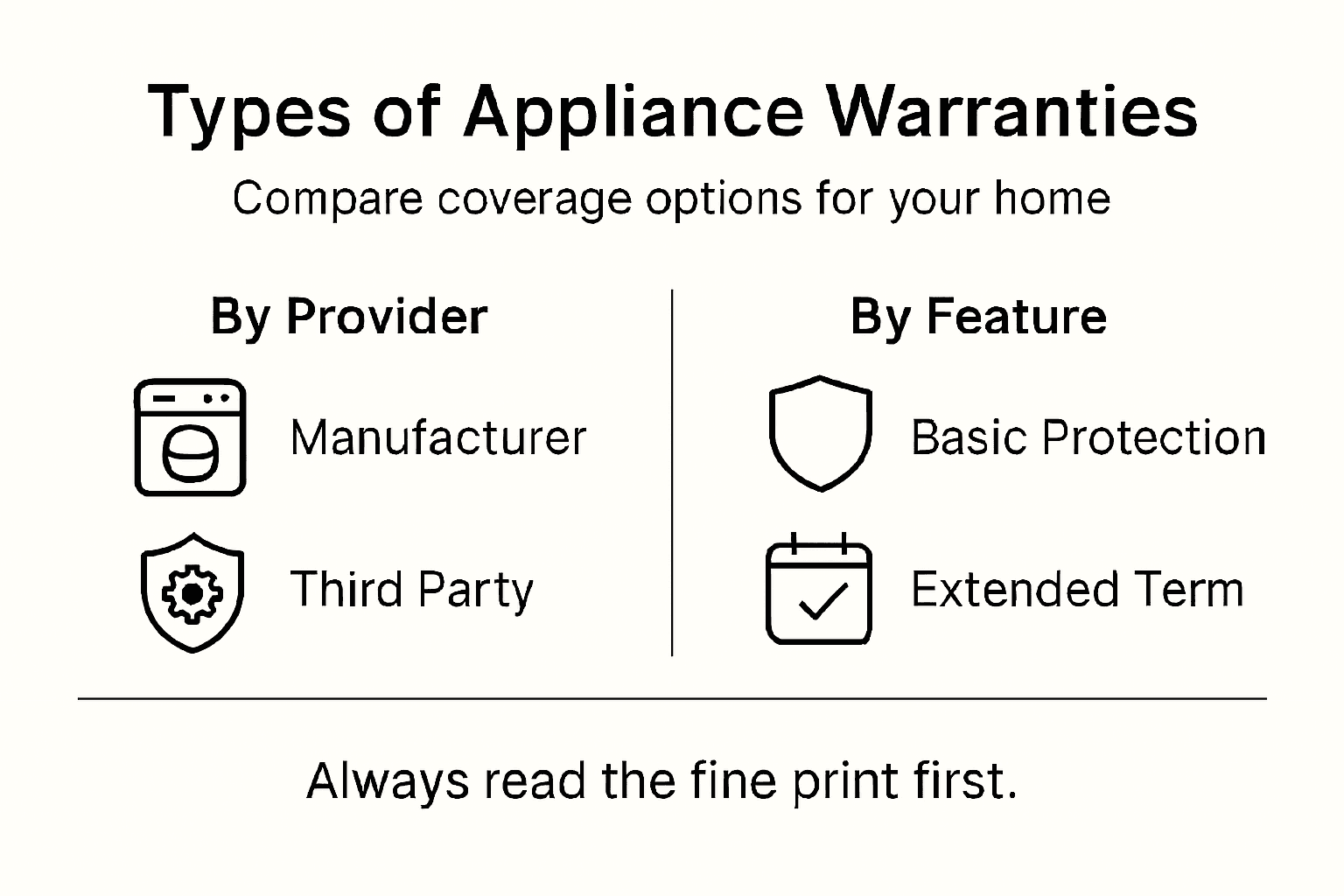
To understand how appliance repair warranties work, it is essential to distinguish between the various products available on the market. While they all aim to reduce out-of-pocket repair costs, their origins, costs, and durations differ significantly.
1. Manufacturer’s Warranty (The Factory Warranty)
The manufacturer’s warranty is the initial protection provided by the brand (e.g., Samsung, LG, Whirlpool) at the time of purchase. In 2026, most major appliances come with a standard one-year "full" warranty that covers both parts and labor.
However, many manufacturers offer "limited" warranties that extend beyond the first year for specific, high-value components. For example, a refrigerator might have a one-year warranty on the entire unit but a five-to-ten-year limited warranty specifically for the sealed refrigeration system or the digital inverter compressor. It is important to note that during these extended "parts-only" periods, the consumer is usually responsible for the cost of the technician's labor and the service call fee.
2. Extended Warranty (Service Contracts)
Extended warranties are typically sold by retailers (like Best Buy or Costco) or third-party providers (such as Allstate or Asurion) at the point of sale or shortly thereafter. These plans act as an extension of the manufacturer’s coverage. If a washing machine has a one-year factory warranty, a three-year extended warranty would typically provide coverage for years two, three, and four.
In 2026, these plans often include "perks" that factory warranties do not, such as power surge protection, food spoilage reimbursement for refrigerators, and "no-lemon" clauses. A no-lemon clause dictates that if the same major component fails multiple times (usually three or four) within a specific period, the provider will replace the entire unit rather than attempting another repair.
3. Home Warranty Plans
Unlike the first two types, which are specific to a single appliance, a home warranty is a service contract that covers a broad suite of home systems and appliances. These are often purchased by homeowners or provided during real estate transactions. A single home warranty policy might cover the refrigerator, dishwasher, oven, HVAC system, and plumbing simultaneously.
Home warranties operate on a service-fee model. When an appliance breaks, the homeowner pays a flat "trade service call fee" (averaging $75 to $125 in 2026), and the warranty company covers the remainder of the repair or replacement cost, subject to contract caps.
What is Typically Covered?
Understanding the "scope of coverage" is the most critical step in evaluating an appliance repair warranty. Most warranties are designed to protect against mechanical and electrical failure occurring during "normal residential use."
Covered Components
- Mechanical Parts: Motors, pumps, belts, seals, and valves.
- Electrical Systems: Control boards (PCBs), wiring harnesses, sensors, and heating elements.
- Structural Integrity: This is often limited, but some warranties cover the tub of a washing machine or the interior liner of a dishwasher if they leak due to manufacturing defects.
Common Exclusions
Warranties are not "all-risk" insurance policies. There are several standard exclusions that apply across almost all providers in 2026:
- Cosmetic Damage: Scratches, dents, or cracked glass that do not affect the mechanical operation of the unit.
- Pre-existing Conditions: If an appliance was already broken before the warranty began, the claim will be denied.
- Consumer Abuse or Misuse: Using a residential dishwasher in a commercial setting or overloading a washing machine to the point of mechanical strain.
- Acts of God: Damage from floods, fires, or lightning strikes is typically the domain of homeowners' insurance, not an appliance warranty.
- Consumables: Light bulbs, water filters, air filters, and plastic drawers/shelves are rarely covered.
Comparative Overview of Warranty Types
| Feature | Manufacturer Warranty | Extended Warranty | Home Warranty |
|---|---|---|---|
| Provider | The Brand (Manufacturer) | Retailer or Third-Party | Service Contract Provider |
| Average Duration | 1 Year (Full) / 5–10 Years (Parts) | 2 to 5 Years | 1 Year (Renewable) |
| Typical Cost | Included in Purchase Price | $50 – $300 (One-time) | $500 – $900 (Annual) |
| Service Fee | Usually $0 during Year 1 | Usually $0 | $75 – $125 per Claim |
| Transferability | Often stays with the machine | Often transferable for a fee | Almost always transferable |
Understanding "Right to Repair" in 2026
By 2026, "Right to Repair" legislation has matured in several jurisdictions. These laws often require manufacturers to provide parts, tools, and repair manuals to independent repair shops and consumers.
From a warranty perspective, this has created a more competitive environment. Some modern warranties now allow consumers to choose their own "authorized" independent technicians rather than being forced to wait for a factory-dispatched repair person. However, it is vital to check your specific contract; performing a DIY repair or hiring an uncertified technician can still void the remainder of a manufacturer’s warranty if the repair causes further damage.
How to File a Warranty Claim Successfully
The effectiveness of an appliance repair warranty often depends on how the claim is handled. Following a specific protocol ensures that the claim is processed without unnecessary delays.
- Locate the Model and Serial Number: This information is usually found on a sticker inside the door or on the back of the appliance.
- Verify the Coverage Window: Check your receipt or online account to ensure the appliance is still within the warranty period.
- Document the Failure: In 2026, many smart appliances generate error codes. Take a photo of the display screen. If the appliance is making a strange noise, record a short video to show the technician.
- Contact the Provider Directly: Do not call a local repair shop first. Most warranties require you to use their portal or hotline to initiate a "service request." If you pay for a repair out-of-pocket without prior authorization, you will likely not be reimbursed.
- Review the Service Call Fee: Clarify whether you owe a diagnostic fee. In a manufacturer's warranty, this is usually covered; in a home warranty, you will pay this fee upfront to the technician.
Common Reasons for Claim Denials
One of the biggest frustrations for consumers is a denied claim. To avoid this, be aware of these common pitfalls:
- Lack of Maintenance: If a dryer catches fire because the internal vent was never cleaned, the warranty provider may argue that the failure resulted from owner negligence.
- Unauthorized Modifications: Adding aftermarket parts or modifying the electrical plug can void coverage.
- Improper Installation: If a dishwasher leaks because the homeowner installed the drain hose incorrectly, the warranty will not cover the repair of the unit or the damage to the floor.
- Wait Periods: Most home warranties have a 30-day wait period after the initial purchase before you can file a claim. This prevents people from buying a warranty only after an appliance has already broken.
Is an Appliance Repair Warranty Worth It?
The value of a warranty depends on the type of appliance and your financial "pain threshold" for unexpected repairs.
High-Value Items
For appliances like high-end refrigerators or smart laundry pairs, which often feature touchscreens and complex inverter technology, a single control board replacement can cost upwards of $600. In these cases, an extended warranty costing $150 is often viewed as a wise investment.
Low-Value Items
For "budget" appliances—such as basic microwaves or small bar fridges—the cost of an extended warranty might be 30% to 50% of the replacement cost. In these instances, it is generally more cost-effective to "self-insure" by setting aside a small emergency fund for repairs.
Legal Protections and Regulations
In the United States, the Magnuson-Moss Warranty Act governs consumer product warranties. It requires manufacturers to provide detailed information about warranty coverage in a single, clear document. It also prohibits "tie-in sales" provisions, meaning a manufacturer cannot mandate that you use only their branded replacement parts (like water filters) to keep the warranty active, unless they provide those parts for free.
Similarly, many credit card issuers in 2026 offer "Extended Warranty Protection" as a cardholder benefit. If you purchase an appliance entirely with a qualifying card, the bank may extend the manufacturer's warranty for an additional year. This is often a free alternative to buying a separate extended service plan.
FAQs
Can I buy a warranty for an appliance I already own?
Yes. While manufacturer warranties must be activated at purchase, third-party extended warranties can often be purchased within the first 9 months of ownership. Home warranties can be purchased at any time, regardless of the age of the appliances, provided they are in good working order when the contract begins.
Does a warranty cover the replacement of the entire appliance?
Most warranties state they will "repair or replace" at their discretion. Usually, if the cost of the repair exceeds a certain percentage of the appliance's current market value (often 60–80%), the provider will issue a replacement or a buy-out check for the depreciated value.
What is the difference between a warranty and home insurance?
Home insurance covers "perils" like fire, theft, and wind damage. It does not cover a refrigerator simply because the compressor stopped working due to age. An appliance repair warranty covers that mechanical "wear and tear" that insurance ignores.
Will a warranty cover "smart" features and software?
In 2026, most comprehensive warranties cover the hardware (the screens and sensors) required for smart features. However, they generally do not cover "software issues," such as your refrigerator's ability to connect to your specific Wi-Fi router or bugs in a third-party app.
Are labor costs always included in a warranty repair?
During the primary manufacturer warranty or a standard extended warranty, labor is usually included. However, some "limited" long-term warranties (like a 10-year motor warranty) specifically cover the part only, meaning you will have to pay the technician for the hours spent installing it.
Final Recommendation
To maximize your protection, always read the "Exclusions" section of any warranty contract before signing. For new, expensive appliances, check if your credit card provides a free warranty extension before paying for a retail plan. For older homes with multiple aging appliances, a comprehensive home warranty often provides the best balance of predictable costs and peace of mind.