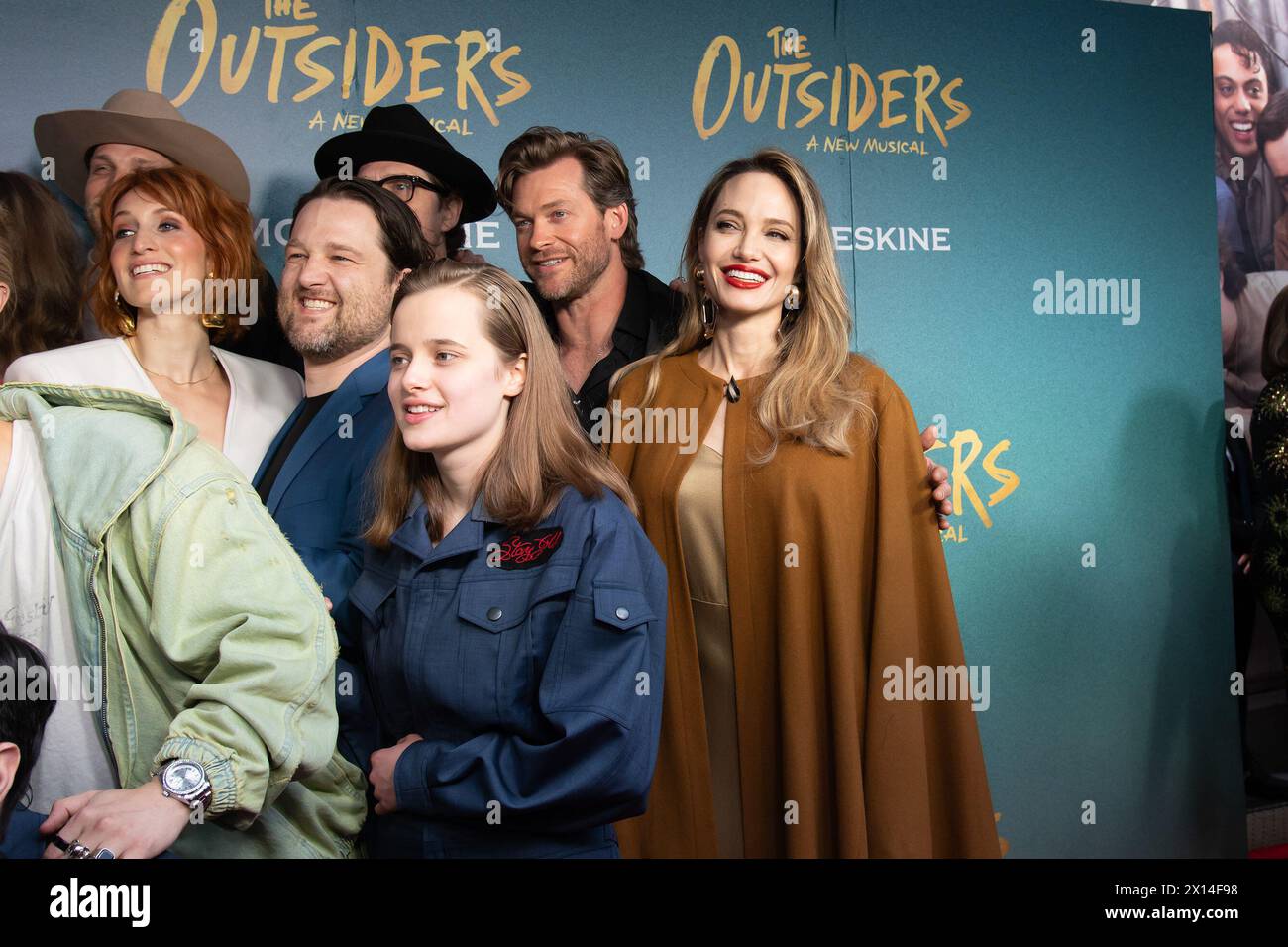
Angelina Jolie transitioned into the role of lead producer for the Broadway musical adaptation of S.E. Hinton’s The Outsiders, which officially opened at the Bernard B. Jacobs Theatre in 2024. Her involvement marked a significant milestone in her career, shifting from her established work in film acting and humanitarian advocacy toward the collaborative, live-performance world of professional musical theater.
The Origin of the Production
The Broadway musical The Outsiders is based on the 1967 novel by S.E. Hinton and the 1983 film directed by Francis Ford Coppola. The production follows the rivalries between two groups, the Greasers and the Socs, in 1960s Tulsa, Oklahoma. When the project began development for the stage, the creative team sought collaborators who could bring both artistic vision and a dedication to the themes of adolescent identity and societal divide.
Angelina Jolie joined the production after being invited to attend a workshop of the musical by her daughter, Vivienne Jolie-Pitt, who had expressed a deep interest in the work. Following the workshop, Jolie reportedly met with S.E. Hinton and was profoundly moved by the show’s emotional resonance and its capacity to speak to younger generations. This led her to transition from a casual observer to a lead producer, lending her platform and resources to shepherd the project to Broadway.
The Role of a Lead Producer on Broadway
In the context of the Broadway industry, the role of a lead producer extends far beyond financial backing. It involves the overarching management of a commercial property, which includes assembling the creative team, securing theater space, managing capital, and navigating the complexities of the Broadway Union regulations.
For Jolie, joining The Outsiders meant taking an active, hands-on approach. She worked closely with the creative team to ensure the integrity of the source material was preserved while adapting it for a modern musical format. Her role included:
- Creative Oversight: Providing feedback during the development phases, specifically regarding the narrative arc and the emotional grounding of the characters.
- Resource Allocation: Managing the budget required to sustain a high-production-value show at the Bernard B. Jacobs Theatre.
- Public Advocacy: Using her public profile to draw attention to the themes of the production, emphasizing the importance of theater in fostering empathy among youth.
- Operational Liaison: Coordinating with the various stakeholders, including the book writers, composers, and the production house, to ensure the production remained on schedule and within its defined scope.
Impact on the Production and Artistic Community
Jolie’s entry into the world of musical theater generated significant discourse regarding the intersection of Hollywood and Broadway. While many celebrity producers are viewed primarily as financiers, Jolie’s involvement was noted for its commitment to the long-term health of the production. By highlighting the collaborative nature of the medium, she drew attention to the necessity of mentorship within the arts.
The show received critical acclaim, eventually securing several Tony Awards, including Best Musical in 2024. This success validated the production team’s decision to pursue a grounded, narrative-heavy musical style that departed from some of the more glitzy conventions of contemporary Broadway. The collaboration between the established theater artists and the film-industry professional resulted in a production that resonated with both legacy fans of the novel and new audiences discovering the story through music.
Understanding the Financial Commitment of Broadway
Entering the Broadway market as a producer requires an understanding of the financial risks inherent in live performance. Broadway productions are notoriously expensive to mount, requiring significant "capitalization" to cover rehearsal costs, set construction, marketing, and the weekly "running costs" of the theater.
| Financial Phase | Description |
|---|---|
| Capitalization | The initial funding required to develop, mount, and market the show until it opens. |
| Running Costs | Weekly expenses including actor salaries, stagehands, royalties, and theater rent. |
| Recoupment | The stage at which the show earns enough profit to pay back the initial investors. |
| Gross Revenue | The total ticket sales income before any operating expenses are deducted. |
Investors and producers in theater look for "legs"—the ability of a show to sustain ticket demand over an extended period. Because The Outsiders was backed by a proven literary property, the risk profile was different from an original concept, yet the pressure to maintain quality and relevance remained high.
Navigating Union and Guild Regulations
A critical aspect of Jolie’s work as a producer involved operating within the strict regulatory environment of the American theater industry. Broadway is governed by a complex network of unions, including:
- Actors' Equity Association (AEA): Represents the actors and stage managers, dictating minimum pay, rehearsal hours, and working conditions.
- International Alliance of Theatrical Stage Employees (IATSE): Governs the technical crews responsible for sound, lights, and set changes.
- The Dramatists Guild: Protects the rights of the authors and composers of the work.
As a lead producer, Jolie had to ensure that the production not only remained artistically vibrant but also strictly compliant with these labor standards. This requires legal and managerial acumen, as any violation of these collective bargaining agreements can lead to work stoppages or costly legal disputes.
Challenges of Adapting a Cult Classic
Adapting The Outsiders presented specific artistic hurdles. The original story is famously sparse, prioritizing atmosphere and character tension over expansive plot maneuvers. The challenge for the creative team was to incorporate music that felt authentic to the 1960s setting without turning the production into a jukebox musical.
The decision to focus on the grit of the narrative, rather than stylized nostalgia, was a point of consensus between the creative team and the production leadership. This approach allowed the show to maintain its "cult classic" status while expanding its reach into a more mainstream Broadway demographic.
Frequently Asked Questions
Did Angelina Jolie direct the Broadway production of The Outsiders? No. Angelina Jolie served as a lead producer. The creative direction, including choreography and staging, was handled by the professional creative team, including director Danya Taymor.
Why did Angelina Jolie choose to produce this specific show? Jolie became involved after her daughter, Vivienne, introduced her to the workshop. She has stated in interviews that she was deeply moved by the story’s themes of community and the struggle of youth, and she wanted to support a project that she felt would resonate with younger audiences.
Is The Outsiders musical still running on Broadway? As of 2026, the production continues to run at the Bernard B. Jacobs Theatre. Prospective attendees should check official ticketing platforms like Telecharge for availability and current pricing.
What is the significance of the 2024 Tony Award win for the production? Winning Best Musical provides a significant boost to a production’s longevity and cultural footprint. It confirms the show’s quality among professional peers and often leads to increased ticket demand and the potential for a national tour.
How does a producer like Angelina Jolie influence the cast? While the director is responsible for the artistic choices made by the actors, a lead producer creates the environment for those choices to flourish. This includes ensuring the cast has the necessary resources, support, and professional stability to deliver consistent performances over a long run.
Moving Forward with Theatrical Production
For those interested in the business of theater, the involvement of prominent figures like Angelina Jolie serves as a case study in how established industry professionals can pivot toward live performance to support meaningful storytelling. The success of The Outsiders highlights the value of patient capital and a commitment to collaborative, narrative-driven art in the commercial theater landscape.
If you are planning to see the show or research its business history further, focus on the official archival reports from the Tony Awards and the production’s verified news releases regarding its ongoing residency. The theater industry relies on the support of such collaborations to ensure that classic narratives continue to find new life on the stage.