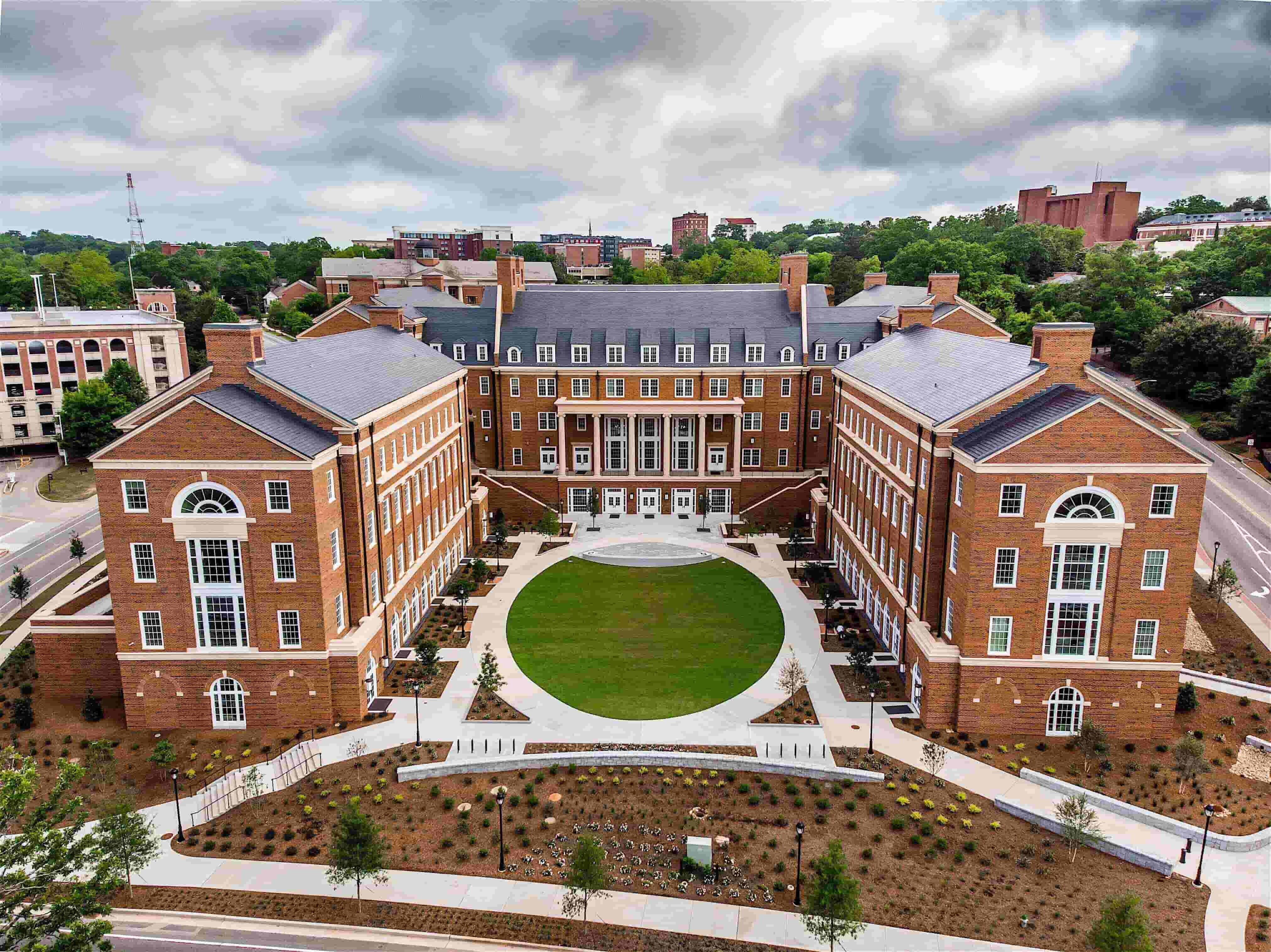
Earning American university degrees in the United States involves completing structured programs at accredited post-secondary institutions, ranging from two-year associate degrees to advanced doctoral research. These degrees are characterized by a flexible credit-based system, a focus on liberal arts foundations, and rigorous accreditation standards that ensure global recognition and professional validity.
The United States higher education system is unique for its decentralization and diversity. Unlike many nations where the central government manages universities, the U.S. relies on independent accrediting bodies and state-level oversight. This guide explores the types of degrees available, the pathways to achievement, the financial landscape for the 2026-2027 academic year, and the critical requirements for both domestic and international students.
The Hierarchy of American University Degrees
Higher education in the United States is organized into undergraduate and graduate levels. Understanding the distinctions between these tiers is essential for selecting a program that aligns with specific career goals.
Undergraduate Degrees: Associate and Bachelor’s
Undergraduate education is the first stage of post-secondary study. It is designed to provide a broad educational foundation alongside specialized knowledge in a "major" field.
- Associate Degrees (AA, AS, AAS): Typically earned at community or junior colleges, these degrees require approximately 60 credit hours and two years of full-time study. The Associate of Arts (AA) and Associate of Science (AS) are generally designed for transfer into a four-year bachelor’s program, while the Associate of Applied Science (AAS) focuses on immediate vocational entry. In 2026, the "2+2" pathway—two years at a community college followed by two years at a university—remains a dominant strategy for reducing overall tuition costs.
- Bachelor’s Degrees (BA, BS, BFA): The standard hallmark of U.S. higher education, the bachelor's degree requires roughly 120 credit hours and four years of study. The curriculum is divided into General Education requirements (humanities, sciences, social sciences), Major requirements (specialized focus), and Electives. This "Liberal Arts" approach ensures that even a chemistry major gains competency in writing and historical analysis.
Graduate Degrees: Master’s and Doctoral
Once a bachelor’s degree is conferred, students may pursue advanced specialization.
- Master’s Degrees (MA, MS, MBA, MPH): These programs usually last one to two years and require 30 to 60 credits. They can be either professional (focused on specific industry skills) or academic (focused on research and theory). For example, a Master of Business Administration (MBA) is highly career-oriented, whereas a Master of Science in Biology may be a stepping stone to a PhD.
- Doctoral Degrees (PhD, EdD, DBA): The highest level of academic achievement, a PhD (Doctor of Philosophy) focuses on original research and the defense of a dissertation. Other professional doctorates, like the Doctor of Education (EdD), focus on applying research to practical leadership. These programs can take anywhere from four to seven years to complete.
- Professional Degrees (JD, MD, DDS): These are specialized degrees required for specific licensed professions, such as Law (Juris Doctor) or Medicine (Doctor of Medicine). Entry into these programs usually requires a completed bachelor’s degree first.
The Role of Accreditation and Degree Verification
In the United States, the value of a degree is entirely dependent on the institution's accreditation. Accreditation is a private, non-governmental process of peer review that ensures a school meets specific quality standards.
Regional vs. National Accreditation
Historically, regional accreditation was considered the "gold standard" for traditional research and liberal arts universities, while national accreditation was often associated with vocational or for-profit schools. While the U.S. Department of Education updated regulations in recent years to move toward a more unified "institutional accreditation" model, the distinction remains important for credit transfer and employer recognition.
To verify the status of a degree-granting institution, students should consult the U.S. Department of Education’s Database of Accredited Postsecondary Institutions and Programs. Obtaining a degree from an unaccredited "diploma mill" results in credentials that are not recognized by the federal government for financial aid, nor by most reputable employers.
The 2026 Admissions Landscape: Requirements and Procedures
Applying for American university degrees has evolved into a holistic process. Admissions officers do not look at test scores in isolation; they evaluate the "whole student."
Undergraduate Admissions Requirements
For the 2026-2027 cycle, most competitive universities require:
- High School Transcripts: A record of all classes and grades from ages 14 to 18.
- Standardized Tests: While many institutions have maintained "test-optional" or "test-blind" policies, the SAT and ACT are still utilized by many public state systems and elite private colleges to differentiate applicants.
- Personal Statement/Essays: A narrative that demonstrates the student’s character, resilience, and unique perspective.
- Letters of Recommendation: Typically from teachers or counselors who can speak to the student’s academic potential.
- Extracurricular Profile: Proof of leadership, community service, or specialized talents.
Graduate Admissions Requirements
Graduate programs focus more heavily on academic preparation and professional alignment. Requirements often include:
- GRE/GMAT/LSAT/MCAT: Specialized entrance exams depending on the field.
- Statement of Purpose: A detailed explanation of the student’s research interests or professional goals.
- Curriculum Vitae (CV) or Resume: Highlighting relevant work experience or publications.
Comparison of Degree Levels in the United States
The following table summarizes the typical structures and expectations for the primary degree levels available in the U.S. as of 2026.
| Degree Level | Typical Duration | Minimum Credits | Primary Objective | Common Institutions |
|---|---|---|---|---|
| Associate | 2 Years | 60 | Foundational / Vocational | Community Colleges |
| Bachelor’s | 4 Years | 120 | Broad Education + Major | Universities / Colleges |
| Master’s | 1–2 Years | 30–60 | Specialization / Professional | Graduate Schools |
| Doctoral | 4–7 Years | Variable | Original Research / Expertise | Research Universities |
| Professional | 3–4 Years | Variable | Licensure (Law, Medicine) | Professional Schools |
Costs, Financing, and Financial Aid for 2026
The cost of American university degrees varies significantly based on the type of institution (public vs. private) and the student’s residency status. For the 2026 academic year, tuition inflation continues to be a primary concern for families.
Public vs. Private Institutions
- Public Universities: These are funded by state governments. "In-state" residents receive a significant discount. For 2026, the average in-state tuition for a four-year public university is approximately $11,500–$12,500 per year, while "out-of-state" students may pay upwards of $29,000–$35,000.
- Private Universities: These are funded by endowments and tuition. They do not distinguish between in-state and out-of-state residents. Costs for 2026 at elite private institutions can exceed $65,000 per year in tuition alone, though many offer robust "need-blind" financial aid packages.
Financial Aid Mechanisms
The primary vehicle for aid is the FAFSA (Free Application for Federal Student Aid). Domestic students use this to access:
- Pell Grants: Federal funds for students with high financial need that do not require repayment.
- Direct Loans: Subsidized or unsubsidized federal loans with regulated interest rates.
- Work-Study: Programs that allow students to work part-time on campus to earn money for education expenses.
Scholarships are also a vital component, offered by the universities themselves (merit-based or need-based) or by private organizations. In 2026, many states have expanded "Promise" programs, which provide free community college tuition for residents meeting specific GPA requirements.
Considerations for International Students
The United States remains a top destination for international scholars. However, earning a degree as a non-resident involves additional legal and financial layers.
Visa Requirements (F-1 and J-1)
International students must be accepted by an SEVP-certified institution (Student and Exchange Visitor Program) before applying for a visa.
- F-1 Visa: The most common for full-time students at a university or college.
- I-20 Form: This document, issued by the school, confirms the student has the financial resources to cover at least the first year of study and is the basis for the visa interview.
English Proficiency
Applicants from non-English speaking countries must demonstrate proficiency through standardized exams. Most U.S. universities accept:
- TOEFL (Test of English as a Foreign Language)
- IELTS (International English Language Testing System)
- Duolingo English Test (DET): Now widely accepted in 2026 as a convenient online alternative.
Post-Graduation Opportunities: OPT and CPT
One of the major draws of an American degree is the opportunity for practical work experience.
- CPT (Curricular Practical Training): Allows students to participate in internships related to their major while still in school.
- OPT (Optional Practical Training): Allows F-1 students to work in their field for 12 months after graduation. Students in STEM fields (Science, Technology, Engineering, Mathematics) are often eligible for a 24-month extension, totaling three years of work eligibility.
The Value and ROI of a U.S. Degree
The return on investment (ROI) for American university degrees is often analyzed through the lens of lifetime earnings. According to data from the U.S. Bureau of Labor Statistics, bachelor's degree holders consistently earn significantly more weekly than those with only a high school diploma, and they face lower unemployment rates.
However, in 2026, students are increasingly looking at "debt-to-income" ratios. Choosing a major with high market demand—such as Nursing, Computer Science, or Data Analytics—often leads to a faster ROI. Prospective students are encouraged to use the College Scorecard to research the average post-graduation salary for specific majors at specific schools.
Common Mistakes When Pursuing a U.S. Degree
- Ignoring Accreditation: Enrolling in a school that is not recognized by the U.S. Department of Education or CHEA (Council for Higher Education Accreditation).
- Overlooking Total Cost of Attendance: Focusing only on tuition while forgetting about housing, health insurance (mandatory for international students), books, and transportation.
- Narrow School Search: Only applying to "Ivy League" or world-famous institutions. The U.S. has over 4,000 degree-granting institutions, many of which offer excellent programs and more generous scholarships than top-tier brands.
- Missed Deadlines: U.S. admissions follow a strict calendar. Missing a November 1st (Early Action) or January 1st (Regular Decision) deadline can delay an education by a full year.
Frequently Asked Questions
What is the difference between a college and a university in the U.S.?
In the U.S., the terms are often used interchangeably in casual conversation. However, technically, a "college" usually refers to a smaller institution focused on undergraduate education, while a "university" is a larger institution that offers both undergraduate and graduate degrees and often prioritizes research. Both confer valid American university degrees.
Can I transfer credits from a university outside the United States?
Yes, but the process requires a professional "credential evaluation." Companies like WES (World Education Services) or ECE (Educational Credential Evaluators) review your non-U.S. transcripts and determine their U.S. equivalent. Each individual university then decides which of those evaluated credits they will accept toward their degree requirements.
Are online degrees from U.S. universities viewed the same as on-campus degrees?
In 2026, degrees earned online from accredited, "brick-and-mortar" universities are generally viewed as identical to their on-campus counterparts. The diploma usually does not specify the mode of delivery. However, it is vital to ensure the online program is offered by a reputable, traditionally accredited institution rather than an exclusively online, for-profit school with poor graduation rates.
What is a "Minor" and do I need one?
A minor is a secondary area of specialization consisting of approximately 18–24 credit hours. While not required by most institutions to graduate, a minor allows students to pursue a secondary interest or gain a competitive edge (e.g., a Major in Business with a Minor in Mandarin Chinese).
How long does it take for an international student to get a visa?
Wait times vary significantly by country and consulate. Generally, it is recommended to start the process at least three to five months before the program start date. You cannot apply for an F-1 visa more than 365 days before the start date listed on your Form I-20.
Next Steps for Prospective Students
For those ready to pursue an American university degree, the first step is to define your budget and career goals. Research institutions using the EducationUSA network if you are abroad, or the College Board’s search tools if you are domestic. Prioritize schools that are accredited by recognized bodies and offer the specific "major" or research facilities you require. Once you have a list of 5 to 10 schools, begin tracking their specific application deadlines and financial aid requirements for the upcoming 2026-2027 cycle.