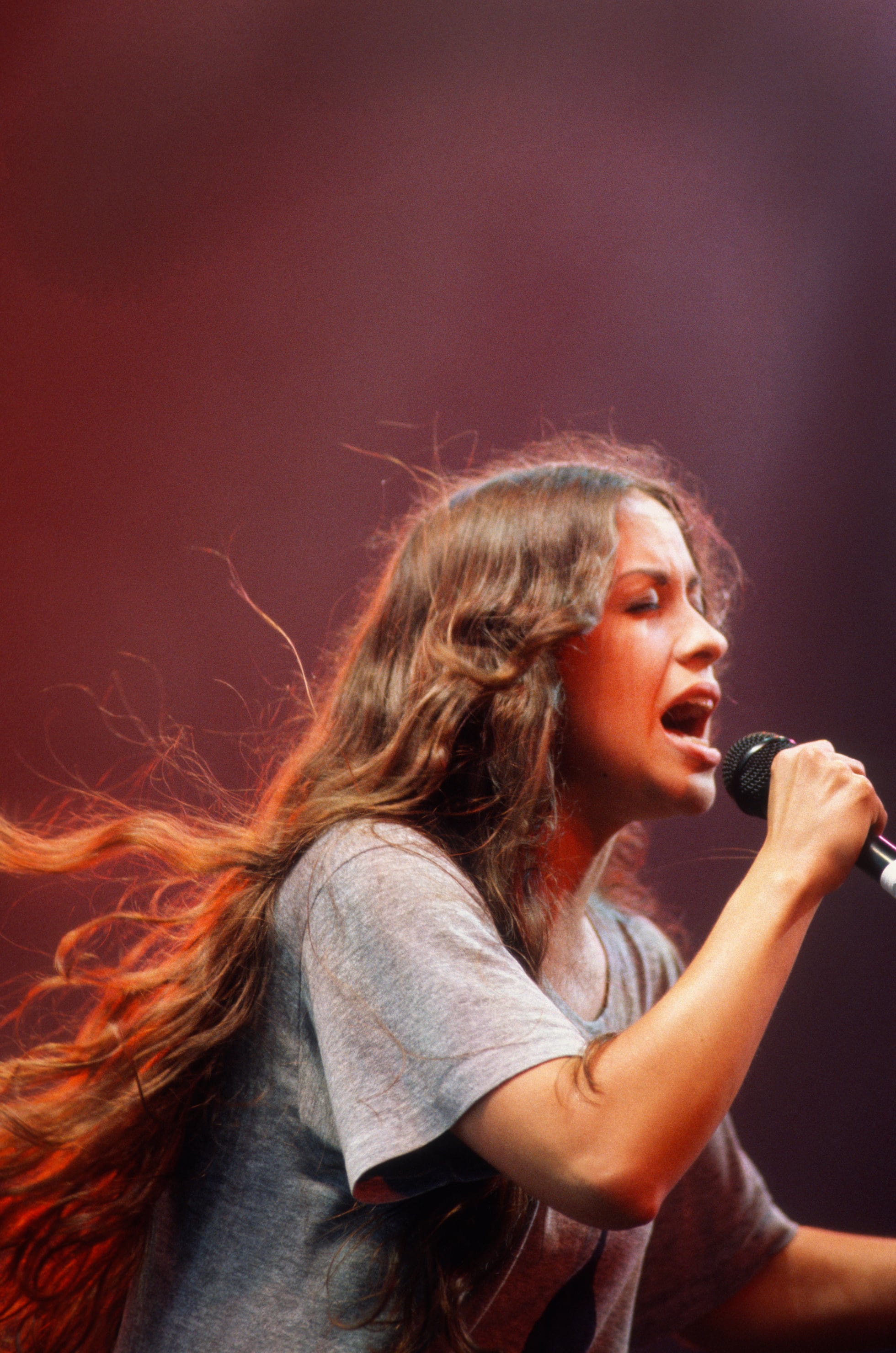
Alanis Morissette’s "You Oughta Know," released in 1995 as the lead single from her breakthrough album Jagged Little Pill, remains a definitive anthem of raw emotional honesty and alternative rock. The track fundamentally shifted the landscape of popular music by introducing a candid, unvarnished female perspective on heartbreak and betrayal.
The Genesis of a Cultural Reset
In the early 1990s, Alanis Morissette was primarily known in Canada as a teenage pop star, often compared to artists like Debbie Gibson or Tiffany. However, by 1994, Morissette sought a radical departure from her dance-pop roots. This evolution led her to Los Angeles, where she met producer and songwriter Glen Ballard. Together, they forged a creative partnership built on spontaneity and psychological depth.
"You Oughta Know" was one of the first songs written during these sessions. Unlike the polished, highly edited tracks of the era, the song was recorded with a sense of urgency. Morissette has often noted that the lyrics flowed out in a stream-of-consciousness fashion, capturing the immediate, jagged edges of a recent breakup. This "first thought, best thought" approach ensured that the track retained an authentic grit that resonated with millions of listeners worldwide.
The song was released at a time when the "grunge" movement was beginning to plateau, and the music industry was looking for new voices. When the Los Angeles-based radio station KROQ began playing the single, the response was instantaneous. It didn't just climb the charts; it ignited a conversation about female anger and the right to express it without apology.
Technical Composition and the Rhythm Section
One of the most distinctive elements of "You Oughta Know" is its aggressive, driving instrumentation, which stands in stark contrast to the acoustic-heavy tracks found elsewhere on Jagged Little Pill. To achieve this specific sound, Ballard and Morissette enlisted the help of two members of the Red Hot Chili Peppers: bassist Flea and guitarist Dave Navarro.
The Flea and Navarro Collaboration
The inclusion of Flea and Navarro was not a marketing gimmick but a search for a specific energy. Flea’s bassline is central to the song’s tension; it is melodic yet percussive, sliding between the verses' brooding quiet and the chorus's explosive release. Navarro’s guitar work provides the "crunch" that defined 90s alternative rock, utilizing dissonant chords and a biting tone that mirrored the lyrical content.
Technical analysis of the track reveals a complex interplay between the rhythm section and Morissette’s vocals. The song is primarily in the key of F# minor, a key often associated with tension and mourning. The verses utilize a sparse arrangement, allowing Morissette’s lower register to convey a sense of intimate, whispered confidence. As the song progresses toward the chorus, the dynamics shift dramatically—a hallmark of the "quiet-loud" aesthetic popularized by bands like the Pixies and Nirvana.
Vocal Performance and Production
Morissette’s vocal delivery on the track is famously unpolished. Ballard chose to use the original demo vocals for the final release because they captured a level of emotional intensity that could not be replicated in subsequent takes. Her voice breaks in several places, and her phrasing is often unconventional, pushing against the beat rather than sitting comfortably within it. This technical "imperfection" became the song’s greatest strength, signaling to the audience that the emotion was real and unmanufactured.
Dissecting the Lyrics: Beyond the Anger
While "You Oughta Know" is frequently categorized as an "angry" song, a closer reading of the lyrics reveals a more nuanced spectrum of grief, including denial, bargaining, and eventual confrontation. The song serves as a direct address to an ex-lover who has moved on quickly, leaving the narrator to grapple with the debris of their shared history.
The opening lines, "I want you to know that I'm happy for you / I wish nothing but the best for you both," are delivered with a heavy layer of sarcasm that immediately sets the tone. However, the lyrics quickly transition into visceral imagery. The mention of "an older version of me" and the specific, confrontational questions regarding the new partner’s intimacy were revolutionary for mainstream radio in 1995.
Morissette’s use of the "cross I bear" and "the mess you left when you went away" frames the breakup not just as a romantic failure, but as a moral or spiritual transgression. By the time the bridge arrives—"And are you thinking of me when you fuck her?"—the song has completely stripped away the social decorum typically expected of female artists at the time. This line remains one of the most famous lyrics in rock history, representing a moment of total transparency.
The Cultural Mystery: Who Is the Subject?
For over three decades, "You Oughta Know" has been the subject of intense speculation regarding the identity of the man who inspired it. The most prominent theory involves actor Dave Coulier, known for his role as Joey Gladstone on the sitcom Full House.
The Dave Coulier Connection
Coulier has given various interviews over the years, sometimes admitting that he sees himself in the lyrics and other times downplaying the connection. He famously recounted hearing the song on the radio for the first time and thinking, "Ooh, I think I may have really hurt this woman." He noted specific details, such as the "shaking your head" line, which he felt mirrored his own habits.
Morissette’s Stance on Subject Identity
Despite the persistent rumors, Alanis Morissette has never officially confirmed that the song is about Coulier or any other specific individual. In her 2021 documentary Jagged, and in various interviews leading up to 2026, she has maintained that the song's power lies in its universality rather than its biography. She has often stated that she writes for her own catharsis and that naming the subject would detract from the listener's ability to map their own experiences onto the music.
Other names have been floated by fans and journalists over the years, including hockey player Mike Peluso and actor Matt LeBlanc (who appeared in her music video for "Walk Away"), but none have the staying power of the Coulier theory. Ultimately, the "who" is less important than the "what"—the song represents the collective voice of anyone who has felt discarded.
Critical and Commercial Success
Upon its release, "You Oughta Know" was a massive success, but it also faced a segment of critical backlash from observers who were uncomfortable with its aggression. However, the song's commercial performance was undeniable.
| Metric | Achievement/Detail |
|---|---|
| Billboard Peak | #1 on Modern Rock Tracks; #13 on Hot 100 |
| Grammy Awards | Best Rock Song, Best Female Rock Vocal Performance (1996) |
| Album Impact | Helped Jagged Little Pill sell over 33 million copies |
| Lead Personnel | Alanis Morissette (Vocals), Flea (Bass), Dave Navarro (Guitar) |
| Production | Glen Ballard (Maverick/Reprise Records) |
The song’s success paved the way for a wave of female singer-songwriters in the late 90s, often referred to as the "Lilith Fair" generation, although Morissette’s sound was significantly more abrasive than many of her contemporaries. It broke the "glass ceiling" for women in alternative rock, proving that a female artist could be commercially viable while being raw, angry, and musically complex.
Legacy and Influence in 2026
As of 2026, "You Oughta Know" has transcended its origins as a 90s radio hit to become a foundational text in rock history. Its influence can be seen in the works of contemporary artists across genres—from Olivia Rodrigo and Billie Eilish to SZA—who cite Morissette’s fearless lyricism as a primary influence.
The song’s longevity is evidenced by its constant presence in pop culture. It was the centerpiece of the Tony Award-winning musical Jagged Little Pill, where its performance on stage regularly receives standing ovations. In the streaming era, it remains one of the most-played tracks of the 1990s, consistently appearing on "Greatest of All Time" lists by publications like Rolling Stone and Pitchfork.
Furthermore, the song has undergone various re-interpretations. Morissette’s own 10th-anniversary acoustic version offered a more haunted, melancholic take on the material, proving that the songwriting holds up even when stripped of its aggressive production. In 2026, the track is viewed not just as a "breakup song," but as a pioneering work of "confessional rock" that gave permission to a generation of listeners to embrace their most difficult emotions.
Frequently Asked Questions
Who played the bass on "You Oughta Know"?
The bass on the track was played by Flea of the Red Hot Chili Peppers. He was brought in by producer Glen Ballard to provide a "funky yet aggressive" foundation that differentiated the song from standard pop-rock tracks of the time.
Did Alanis Morissette confirm the song is about Dave Coulier?
No, Alanis Morissette has never publicly confirmed the identity of the person who inspired the song. While Dave Coulier has frequently discussed the possibility that it is about him, Morissette maintains that she prefers to keep the inspiration private to preserve the song’s universal appeal.
What year did "You Oughta Know" come out?
The single was released in July 1995. It served as the lead single for the album Jagged Little Pill, which was released in June of the same year.
Why is the song considered "groundbreaking"?
It was one of the first times a female artist on a major label expressed such raw, unedited anger and sexual frankness. It challenged the prevailing stereotypes of how women should behave in pop music and opened doors for more diverse female voices in the rock genre.
What awards did the song win?
At the 1996 Grammy Awards, "You Oughta Know" won Best Rock Song and Best Female Rock Vocal Performance. It was also nominated for Song of the Year.
Practical Recommendation: Exploring the Song Today
For those looking to understand the full scope of "You Oughta Know" in 2026, a multi-sensory approach is recommended. Begin by listening to the original 1995 studio version to appreciate the interplay between Flea’s bass and Morissette’s raw vocals. Following this, watch the 2021 documentary Jagged (available on various streaming platforms) for behind-the-scenes footage of the recording process and Morissette’s reflections on the era.
If you are interested in the evolution of the song, the Jagged Little Pill (Acoustic) album provides a stark contrast that highlights the lyrical depth over the initial shock value of the production. Finally, for musicians, studying the isolated bass and guitar tracks—available through various online educational archives—offers a masterclass in how to build tension and release in alternative rock composition.