Air pressure measured in PSI, or pounds per square inch, is a unit of pressure that represents one pound of force applied to an area of one square inch. It is the standard imperial unit used to measure the tension of gases and liquids in automotive, industrial, and residential applications as of 2026.
Understanding PSI is essential for everything from maintaining vehicle safety and optimizing fuel efficiency to operating power tools and ensuring the integrity of home plumbing systems. While the scientific community often uses the metric Pascal (Pa), PSI remains the dominant measurement in the United States, United Kingdom, and many global manufacturing sectors for pneumatic and hydraulic systems.
The Fundamental Physics of PSI
To understand air pressure in PSI, one must first understand the relationship between force and area. Pressure is defined as the amount of force exerted over a specific surface. In the case of PSI, the force is measured in pounds (lbs) and the area is measured in square inches (in²).
When you pump air into a tire, you are forcing billions of nitrogen and oxygen molecules into a confined space. These molecules are in constant motion, colliding with the interior walls of the tire. The collective impact of these collisions creates a steady outward force. If you have a tire inflated to 32 PSI, every single square inch of the tire's inner surface is experiencing 32 pounds of force pushing outward.
The Role of Atmospheric Pressure
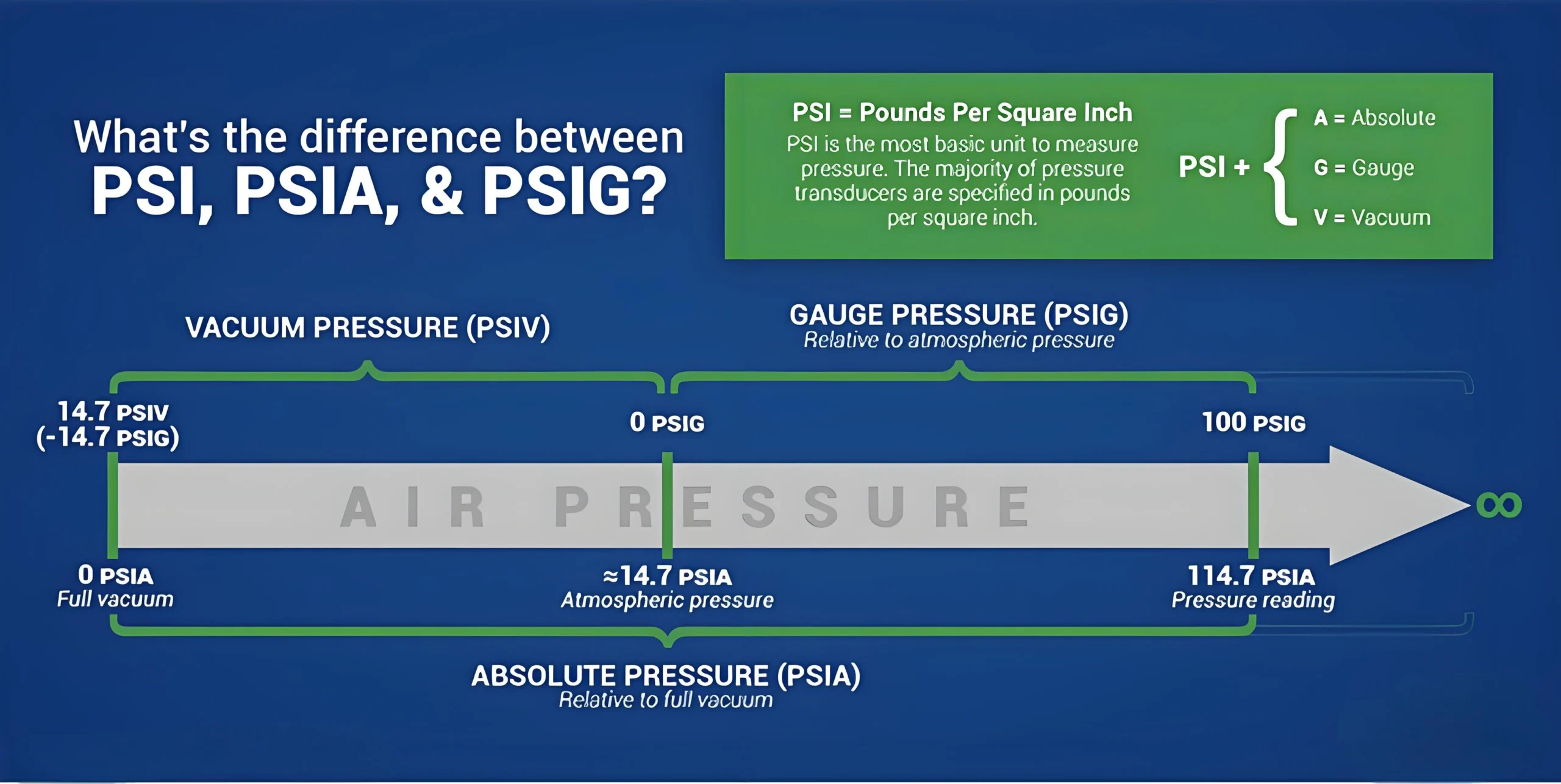
It is a common misconception that "zero PSI" represents a total vacuum. In reality, we live at the bottom of a "sea of air" that exerts its own pressure. At sea level, the Earth's atmosphere exerts approximately 14.7 PSI on everything it touches. This is known as one atmosphere (1 atm).
When we use a standard tire gauge, the device ignores this 14.7 PSI of ambient pressure and only measures the pressure above the current atmospheric level. This leads to an important technical distinction used by engineers and technicians: PSIG vs. PSIA.
Distinguishing PSIG, PSIA, and PSID
In technical documentation and industrial settings, you will often see suffixes attached to the PSI unit. These distinctions are critical for accuracy in engineering and high-altitude applications.
- PSIG (Pounds per Square Inch Gauge): This is the most common measurement. It is the pressure relative to the surrounding atmosphere. A tire gauge that reads "0" at sea level is actually at 14.7 PSI absolute, but because it is equalized with the outside air, the gauge reads zero.
- PSIA (Pounds per Square Inch Absolute): This is the total pressure, including atmospheric pressure. To calculate PSIA, you take the gauge reading (PSIG) and add the local atmospheric pressure (roughly 14.7). In a total vacuum, the PSIA would be zero.
- PSID (Pounds per Square Inch Differential): This measures the difference between two different pressure points. For example, if a filter has 100 PSI coming in and 90 PSI going out, the PSID is 10. This is frequently used to determine when industrial filters are clogged and need replacement.
Why PSI Matters: Practical Applications
The relevance of PSI spans across multiple sectors of daily life. Even in 2026, with the advancement of smart sensors and automated systems, the fundamental need to monitor PSI remains unchanged.
Automotive Safety and Efficiency
For the average person, the most frequent interaction with PSI occurs at the gas station or in the driveway. Correct tire pressure is a pillar of vehicle maintenance.
- Fuel Economy: Under-inflated tires have a higher rolling resistance, meaning the engine has to work harder and consume more fuel to move the vehicle.
- Tire Longevity: Improper PSI causes uneven tread wear. Too much pressure (over-inflation) wears out the center of the tire, while too little pressure (under-inflation) wears out the shoulders.
- Handling: Tires inflated to the manufacturer’s recommended PSI (found on the driver’s side door jamb) provide the optimal "contact patch" with the road, ensuring safe braking and cornering.
Home Improvement and Pneumatic Tools
Air compressors are rated by their PSI capacity. Most household pneumatic tools, such as nail guns or paint sprayers, require a specific PSI range to operate effectively. If the PSI is too low, a nail gun may not drive a fastener flush into the wood; if it is too high, it could damage the tool's internal seals or the material being worked on.
Residential Plumbing and Water Systems
Water pressure in a home is also measured in PSI. Standard residential water pressure typically ranges between 40 and 60 PSI. If the pressure exceeds 80 PSI, it can cause significant damage to pipes, faucets, and appliances like dishwashers and washing machines. Homeowners often use a pressure-reducing valve (PRV) to maintain a safe PSI throughout the structure.
Technical Comparisons: Converting PSI to Other Units
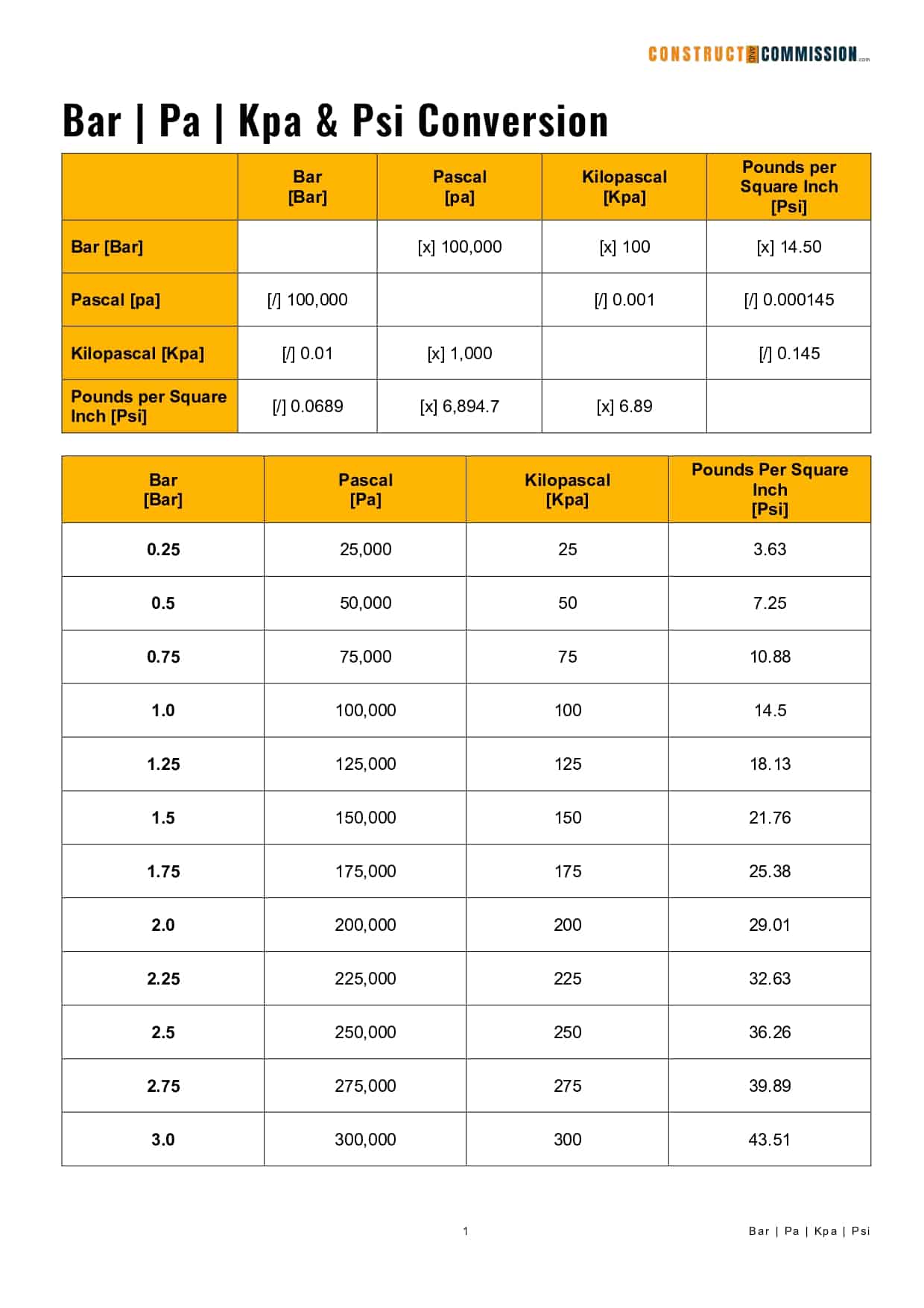
While PSI is the standard in certain regions, much of the world and many scientific fields use the Metric System (SI). Understanding how to convert these units is vital for following international manuals or performing engineering calculations.
| To Convert From | To | Multiply By |
|---|---|---|
| PSI | Bar | 0.0689 |
| PSI | KiloPascal (kPa) | 6.8947 |
| PSI | Atmosphere (atm) | 0.0680 |
| PSI | kg/cm² | 0.0703 |
| Bar | PSI | 14.5038 |
| kPa | PSI | 0.1450 |
For example, if a high-end European bicycle tire recommends a pressure of 6 Bar, you would multiply 6 by 14.5038 to find that the equivalent is approximately 87 PSI.
How Air Pressure is Measured
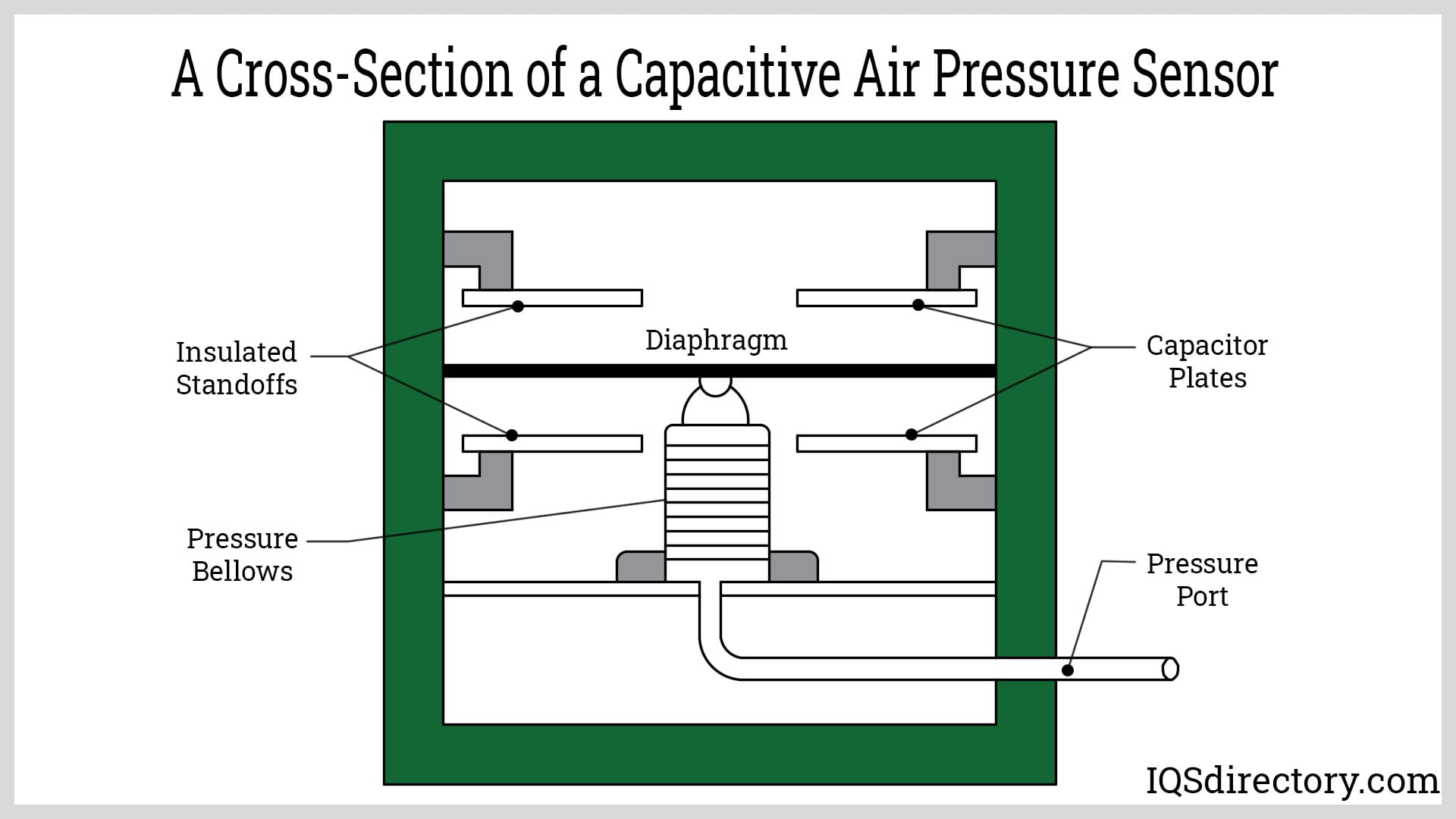
The technology used to measure PSI has evolved from simple mechanical devices to sophisticated digital transducers.
Mechanical Gauges (Bourdon Tube)
The most common analog gauge uses a Bourdon tube—a hollow, flattened metal tube bent into a "C" shape. When air pressure enters the tube, it tries to straighten out. This movement is captured by a series of gears that move the needle on the dial. These are reliable and require no power, making them a staple in industrial environments.
Digital Pressure Sensors
In 2026, most modern vehicles utilize TPMS (Tire Pressure Monitoring Systems). These sensors use piezo-resistive materials that change their electrical resistance when deformed by pressure. A microprocessor converts this change into a digital PSI reading that appears on your dashboard. Digital gauges are generally more accurate and easier to read than analog versions, though they require battery power or energy-harvesting technology.
Factors That Influence PSI Readings
PSI is not a static measurement; it fluctuates based on environmental conditions. This is a critical concept for safety and precision.
Temperature and the Ideal Gas Law
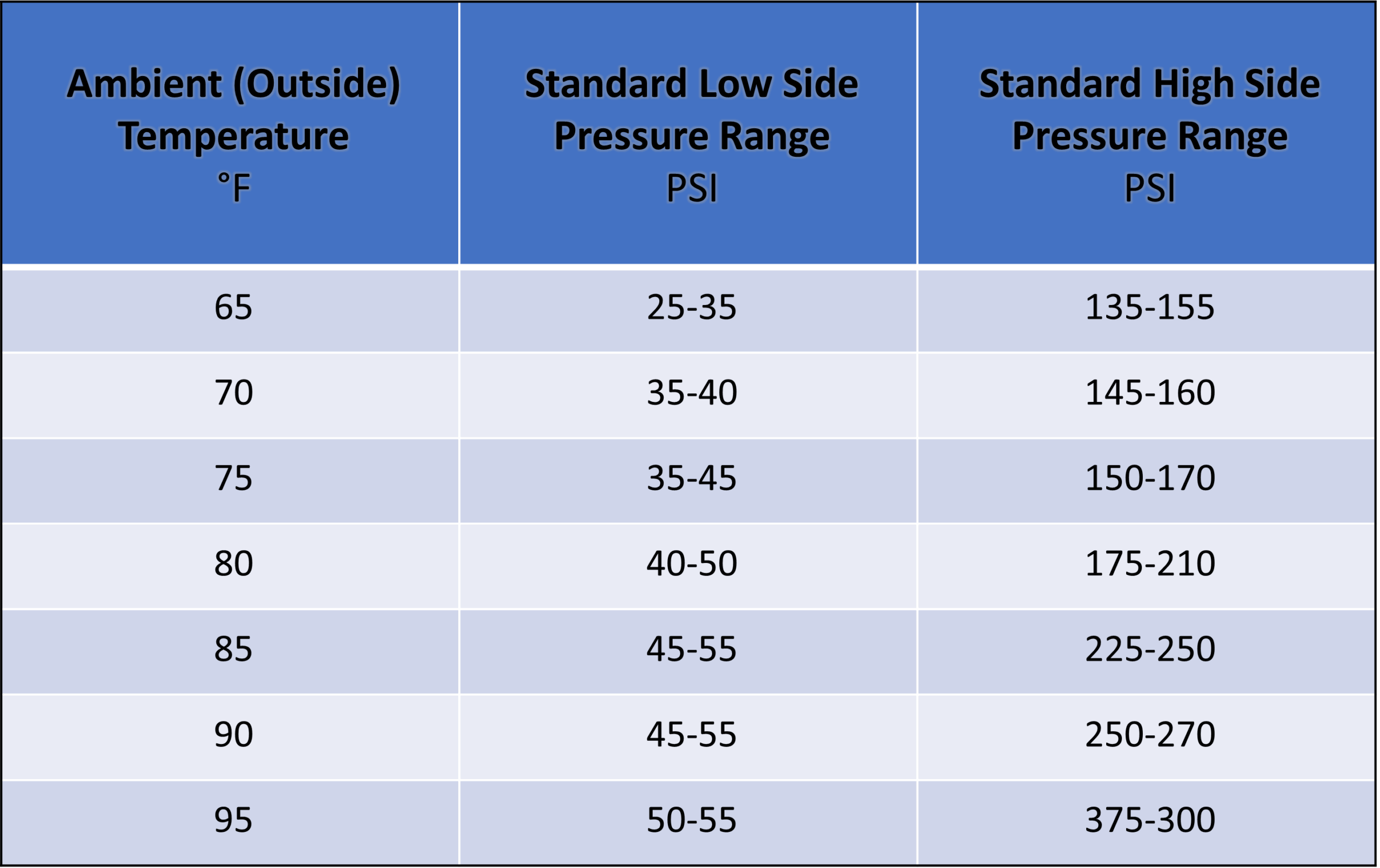
Based on the principles of thermodynamics (specifically Gay-Lussac's Law), the pressure of a gas is directly proportional to its temperature. As the temperature of the air inside a container increases, the molecules move faster and hit the walls with more force, increasing the PSI.
- Rule of Thumb: For every 10 degrees Fahrenheit change in temperature, tire pressure changes by approximately 1 PSI.
- Practical Tip: Always check tire pressure in the morning before driving ("cold pressure"), as the friction of driving heats the air inside and provides an artificially high reading.
Altitude and Atmospheric Density
As you move to higher altitudes, the atmospheric pressure decreases because there is less air above you pushing down. While the air inside a sealed container like a tire remains the same, the gauge reading (PSIG) may change slightly because the ambient pressure it uses as a zero-point has dropped. For most consumer applications, this change is negligible, but for aviation and high-precision calibration, it is a significant factor.
Safety Considerations for High-Pressure Systems
Working with air pressure requires respect for the energy stored within the system. Compressed air is essentially stored energy; if a container or hose fails, that energy is released instantly.
- Pressure Vessel Integrity: Air compressor tanks must be drained regularly to prevent internal rust. Corrosion thins the metal walls, reducing the maximum safe PSI the tank can hold.
- Hose Ratings: Always ensure that hoses and fittings are rated for the PSI of the source. Using a 50 PSI-rated hose on a 150 PSI compressor can lead to a violent "hose whip" if the line bursts.
- Eye and Ear Protection: High-pressure leaks can propel debris at dangerous speeds. Additionally, the rapid release of compressed air often exceeds 100 decibels, which can cause permanent hearing damage without proper protection.
Troubleshooting Common PSI Issues
When a system fails to maintain its intended PSI, the cause is usually one of three factors: leaks, blockages, or mechanical failure.
- Pressure Drops: If you notice a lower PSI at the end of a long air hose than at the compressor, this is "pressure drop" caused by friction against the hose walls. Using a larger diameter hose can mitigate this.
- Fluctuating Readings: This often indicates a failing regulator or a leak in the system. In automotive contexts, a fluctuating PSI during a compression test may indicate a leaking head gasket or worn piston rings.
- Slow Leaks: In tires, slow PSI loss is often caused by a faulty valve stem or a "bead leak" where the rubber meets the metal rim. Even without a puncture, tires can lose about 1 to 2 PSI per month through natural permeation of the rubber.
Frequently Asked Questions
What is the ideal PSI for car tires?
Most passenger vehicles require between 32 and 36 PSI in the tires. However, this varies by vehicle weight and tire type. You should always refer to the manufacturer's specification found on the sticker inside the driver’s door or in the owner's manual. Never use the "Max Pressure" listed on the tire sidewall as your daily driving PSI, as this is the maximum the tire can safely hold, not the recommended level for performance.
Does altitude affect PSI?
Yes. Because standard pressure gauges measure the difference between the internal pressure and the external atmosphere, a change in altitude (which changes atmospheric pressure) will change the reading on a gauge. If you drive from sea level to a high mountain pass, your tire's internal pressure stays the same, but your gauge will show a slightly higher PSI because there is less atmospheric pressure pushing back against it.
Is PSI the same as Bar?
No, they are different units of measurement, though they both measure pressure. 1 Bar is roughly equal to 14.5 PSI. Bar is more common in Europe and in high-pressure scuba diving applications, while PSI is the standard for consumer and automotive use in North America.
Why does my tire pressure light come on in the winter?
When the temperature drops, the air molecules inside your tires move more slowly and take up less space, leading to a drop in PSI. If your tires were already at the lower end of the recommended range, a cold snap can drop the pressure enough to trigger the TPMS sensor. Usually, the pressure will rise slightly as you drive and the tires warm up, but you should still add air to meet the recommended "cold PSI" levels.
Can air pressure be too high?
Absolutely. Over-pressurizing any system—whether it is a tire, an air tank, or a water pipe—can lead to catastrophic failure. Over-inflated tires have less grip on the road and are more prone to blowouts if they hit a pothole. In plumbing, high PSI can cause "water hammer" and eventually burst joints or seals.
Final Recommendations for Managing Air Pressure
To maintain safe and efficient systems, whether in your vehicle or your home, consistent monitoring is key. Invest in a high-quality digital pressure gauge, as these are less prone to the mechanical wear that can degrade the accuracy of "pencil-style" or cheap analog gauges over time.
For vehicle owners, make it a habit to check your PSI once a month and before any long road trip. For homeowners, consider installing a water pressure gauge on an outdoor spigot to ensure your home's regulator is functioning correctly. Understanding the "Why" and "How" of PSI allows you to prevent expensive repairs, improve safety, and extend the lifespan of your mechanical investments.