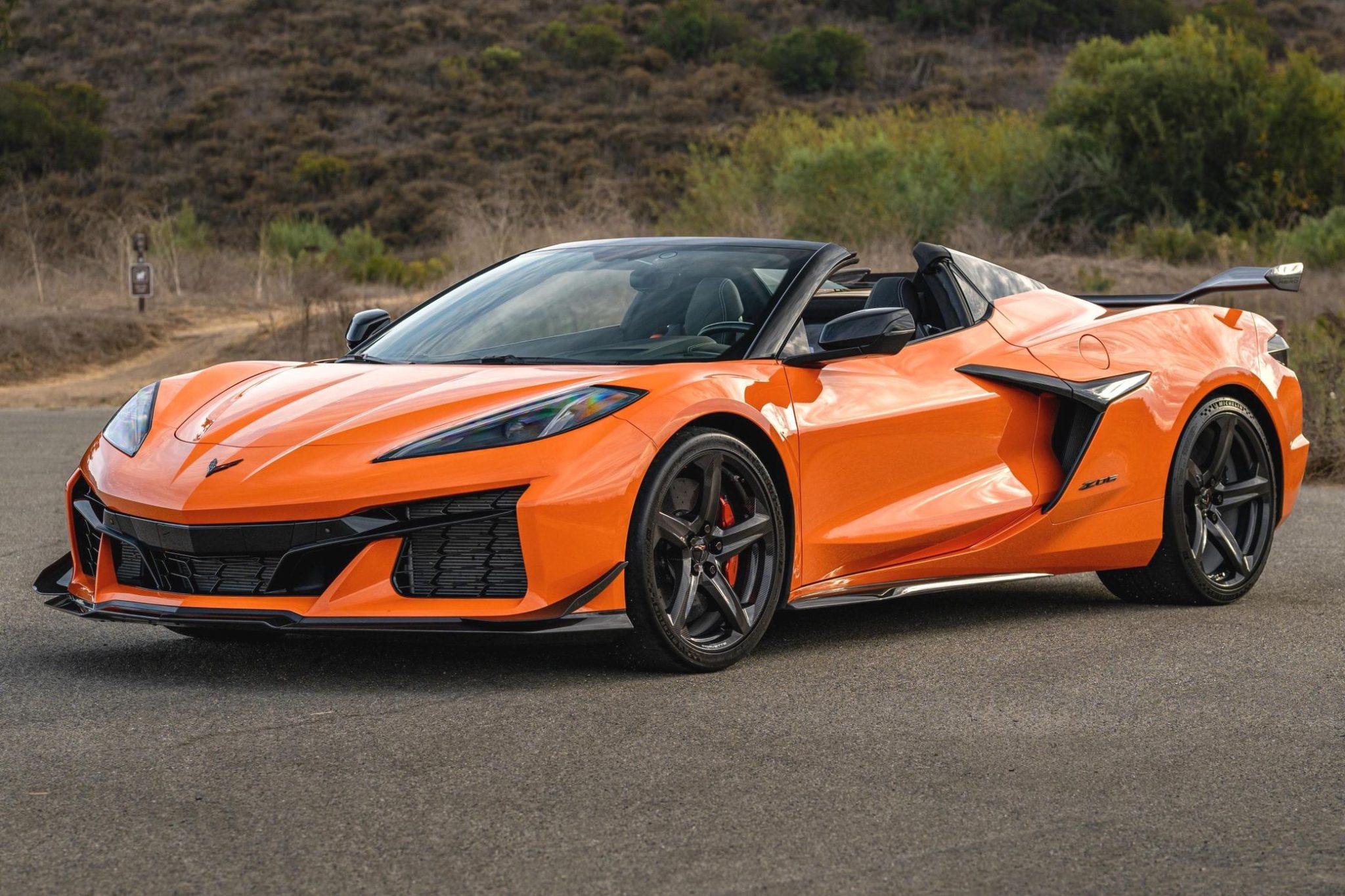
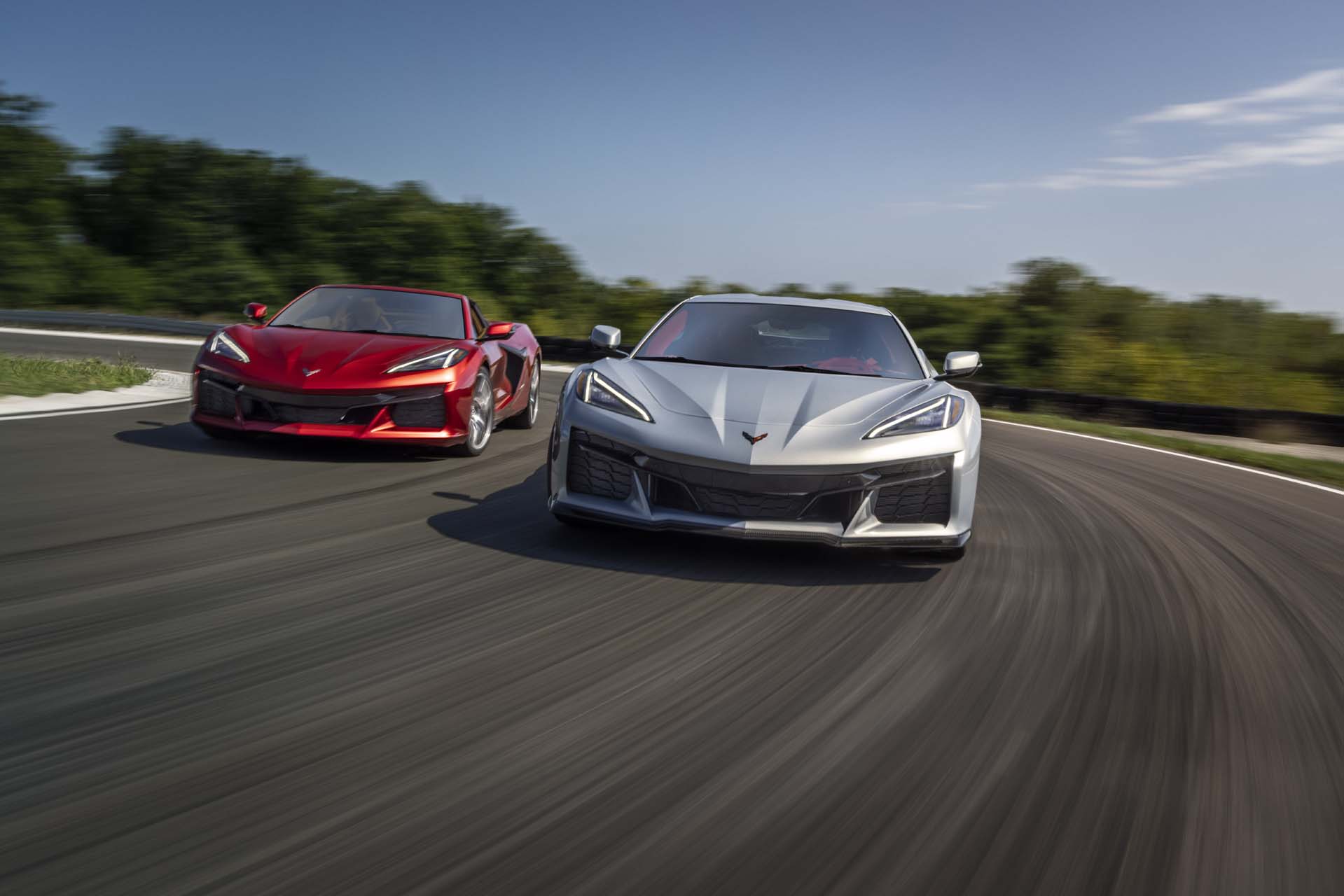
The 2023 Chevrolet Corvette Z06 achieves its 670 horsepower output through the LT6 engine, a 5.5-liter naturally aspirated dual-overhead-cam (DOHC) V8 featuring a flat-plane crankshaft. This engineering milestone represents the most powerful naturally aspirated V8 engine ever installed in a production passenger car, delivering its peak power at a high 8,400 rpm.
The Engineering Behind the LT6 Powerplant
To understand why the 2023 Corvette Z06 produces 670 horsepower without the assistance of a turbocharger or supercharger, one must examine the fundamental design of the LT6 engine. Unlike the traditional cross-plane crankshafts found in most American V8s—which prioritize low-end torque and a rhythmic, "burbling" exhaust note—the LT6 utilizes a flat-plane crankshaft. This design allows for a firing order that promotes efficient gas flow and enables the engine to rev significantly higher than conventional pushrod V8s.
The high-revving nature of the LT6 is critical to its power output. Horsepower is a calculation of torque multiplied by rpm. By extending the power band to an 8,600 rpm redline, Chevrolet engineers allowed the engine to sustain high torque levels well into the upper registers of the tachometer. To handle these forces, the engine incorporates forged aluminum pistons and forged titanium connecting rods, which reduce reciprocating mass and allow for the extreme piston speeds required to reach peak output.
Technical Specifications and Performance Metrics
The 670 horsepower figure is not merely a marketing number; it is the culmination of a decade of development in the small-block architecture. The LT6 engine is built at the Performance Build Center in Bowling Green, Kentucky, where each engine is assembled by a single technician from start to finish. This rigorous build process ensures that the tolerances required to support 670 hp at high engine speeds are maintained.
When evaluating the power delivery of the 2023 Z06, it is helpful to contrast it with the standard C8 Corvette Stingray. While the Stingray uses the LT2 engine—a pushrod V8 producing 490 or 495 horsepower—the Z06 moves into an entirely different performance tier. The transition from pushrod valvetrains to DOHC with four valves per cylinder allows for significantly better "breathing," meaning the engine can draw in more air and evacuate exhaust gases more efficiently at high speed.
Comparison of Corvette Engine Architectures
| Feature | LT2 (Corvette Stingray) | LT6 (Corvette Z06) |
|---|---|---|
| Displacement | 6.2L | 5.5L |
| Valvetrain | Pushrod (OHV) | DOHC (4 valves/cyl) |
| Crankshaft | Cross-plane | Flat-plane |
| Peak Horsepower | 495 hp | 670 hp |
| Peak Torque | 470 lb-ft | 460 lb-ft |
| Redline | 6,600 rpm | 8,600 rpm |
The Role of Airflow and Induction
The 670 horsepower rating relies heavily on the induction system's ability to supply the engine with massive volumes of oxygen. The 2023 Z06 features significantly widened side air intakes compared to the base C8, which are designed to feed the heat exchangers and provide the necessary mass airflow to the engine intake manifold.
Inside the intake manifold, dual throttle bodies feed air into a complex plenum system designed to optimize air pulses. This intake system is engineered specifically to ensure that at peak rpm, the combustion chambers are filled to maximum volumetric efficiency. Because the LT6 is naturally aspirated, it lacks the "forced" density of a supercharged engine, making its intake geometry and exhaust scavenging even more critical to achieving its specific power targets.
Transmission and Drivetrain Integration
An engine producing 670 hp is useless if the power cannot be effectively transferred to the pavement. The 2023 Corvette Z06 utilizes an eight-speed dual-clutch transmission (DCT) specifically calibrated to handle the higher rpm ceiling and the torque curve of the LT6.
The DCT allows for lightning-fast gear changes, ensuring the engine remains in the heart of its power band during acceleration. Because the peak power occurs at 8,400 rpm, the transmission's shift points are optimized to keep the engine spinning between the peak torque and peak horsepower ranges. This integration is essential for the Z06's claimed 0–60 mph time of 2.6 seconds. The software controlling the transmission also monitors engine load and thermal data to ensure that the 670 hp can be delivered consistently during track driving, where heat soak is a primary concern for high-performance vehicles.
Practical Considerations for Ownership
Owners should recognize that a 670-hp naturally aspirated engine requires specific maintenance intervals to maintain its factory output. The high-revving nature of the LT6 puts significant stress on the valvetrain and oiling system. Chevrolet mandates specific engine oil viscosities to accommodate the high-performance tolerances within the engine.
Furthermore, the 670 hp output is achieved using premium unleaded gasoline (93 octane is recommended). Running lower-octane fuel will trigger the engine management system to retard timing, which will result in a decrease in power. For those planning to track the vehicle, utilizing the recommended high-performance fluids is not optional; it is a prerequisite for keeping the vehicle operating within its design parameters during prolonged high-speed operation.
Common Questions Regarding Z06 Power
Is the 670 hp rating affected by the Z07 performance package?
No. The 670 hp rating is constant across all 2023 Z06 models. The Z07 package includes performance upgrades such as carbon-ceramic brakes, specialized suspension tuning, and aerodynamic elements, but it does not alter the engine's internal output.
How does the flat-plane crank affect the engine sound?
The flat-plane crankshaft produces a high-pitched, exotic exhaust note that is distinct from the low-frequency rumble of traditional American pushrod V8s. This is a direct consequence of the 180-degree firing order, which contributes to the engine's unique acoustic signature and its ability to rev quickly.
Can the LT6 engine be tuned for more power?
While aftermarket companies offer various modifications, the LT6 is a highly optimized, high-compression engine. Significant power gains beyond the factory 670 hp are difficult to achieve without internal modifications, and doing so may void the factory powertrain warranty.
Why is the torque lower than the base Corvette?
The LT6 sacrifices peak torque at low rpm in favor of high-rpm horsepower. By shifting the engine's breathing characteristics to prioritize efficiency at 8,000+ rpm, the torque at lower speeds is lower than that of the larger displacement 6.2L LT2 engine.
Is the 670 hp output consistent in all weather conditions?
Like all internal combustion engines, the LT6 is sensitive to ambient air density. High temperatures and high altitudes can slightly reduce the density of the intake air, which may lead to minor fluctuations in actual horsepower output compared to the rated figures measured at standard atmospheric conditions.
Strategic Maintenance for Peak Performance
To ensure the 670 hp is always available, owners should strictly adhere to the Chevrolet-provided maintenance schedule. This includes checking oil levels frequently, as high-performance, high-revving engines may consume more oil than standard passenger vehicles. Additionally, keeping the intake filters clean is vital. Since the engine is naturally aspirated and relies on high-volume airflow, any restriction in the intake tract will prevent the engine from reaching its target volumetric efficiency and, consequently, its 670 hp potential.
When driving the 2023 Corvette Z06, allow the engine oil and coolant to reach full operating temperature before engaging in high-rpm driving. The tolerances inside the LT6 are extremely tight, and the components must be properly expanded to their operating dimensions to prevent premature wear. By respecting the mechanical limits and following factory guidelines, the Z06 remains one of the most reliable and capable track-ready supercars available.