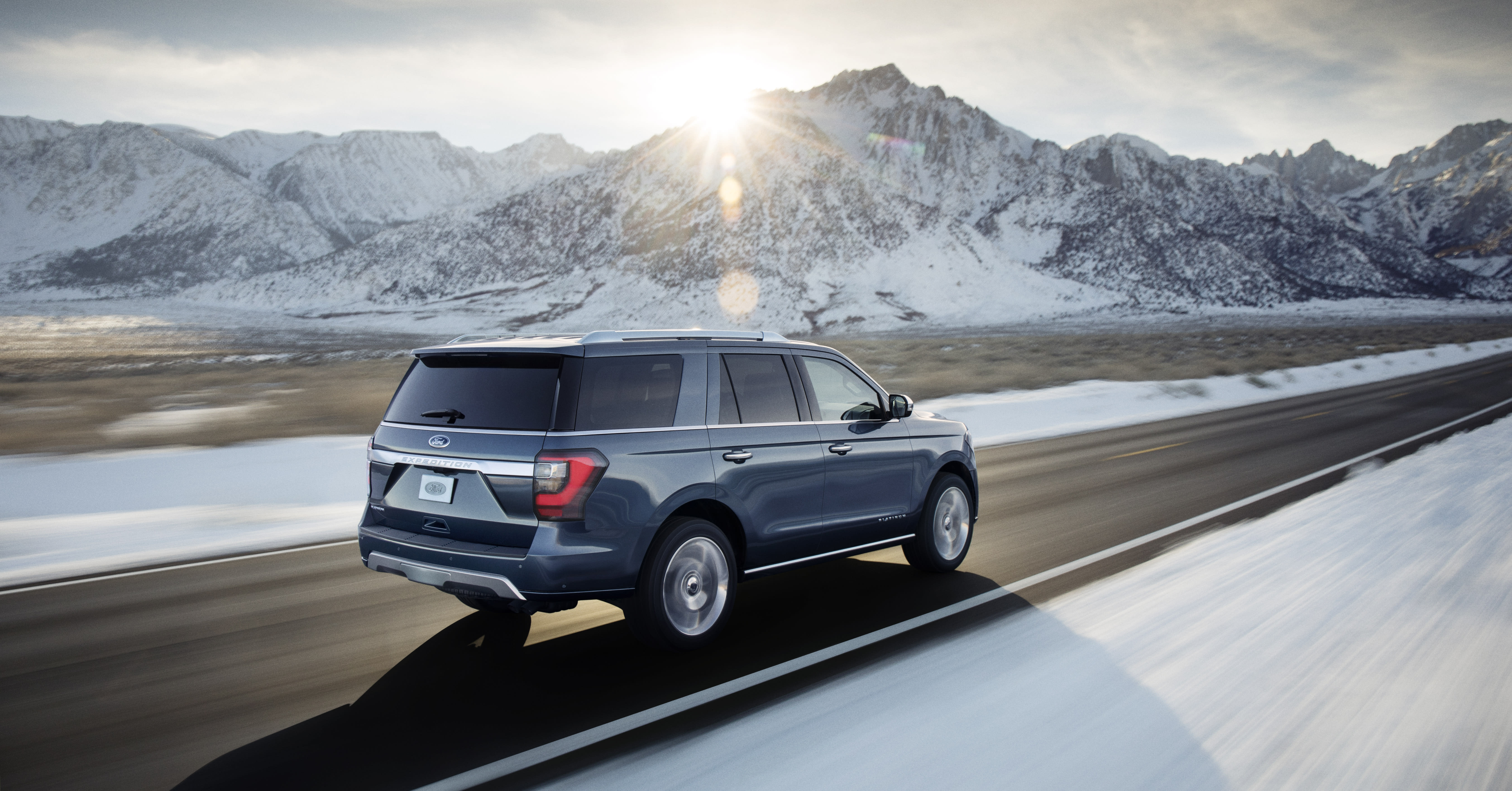
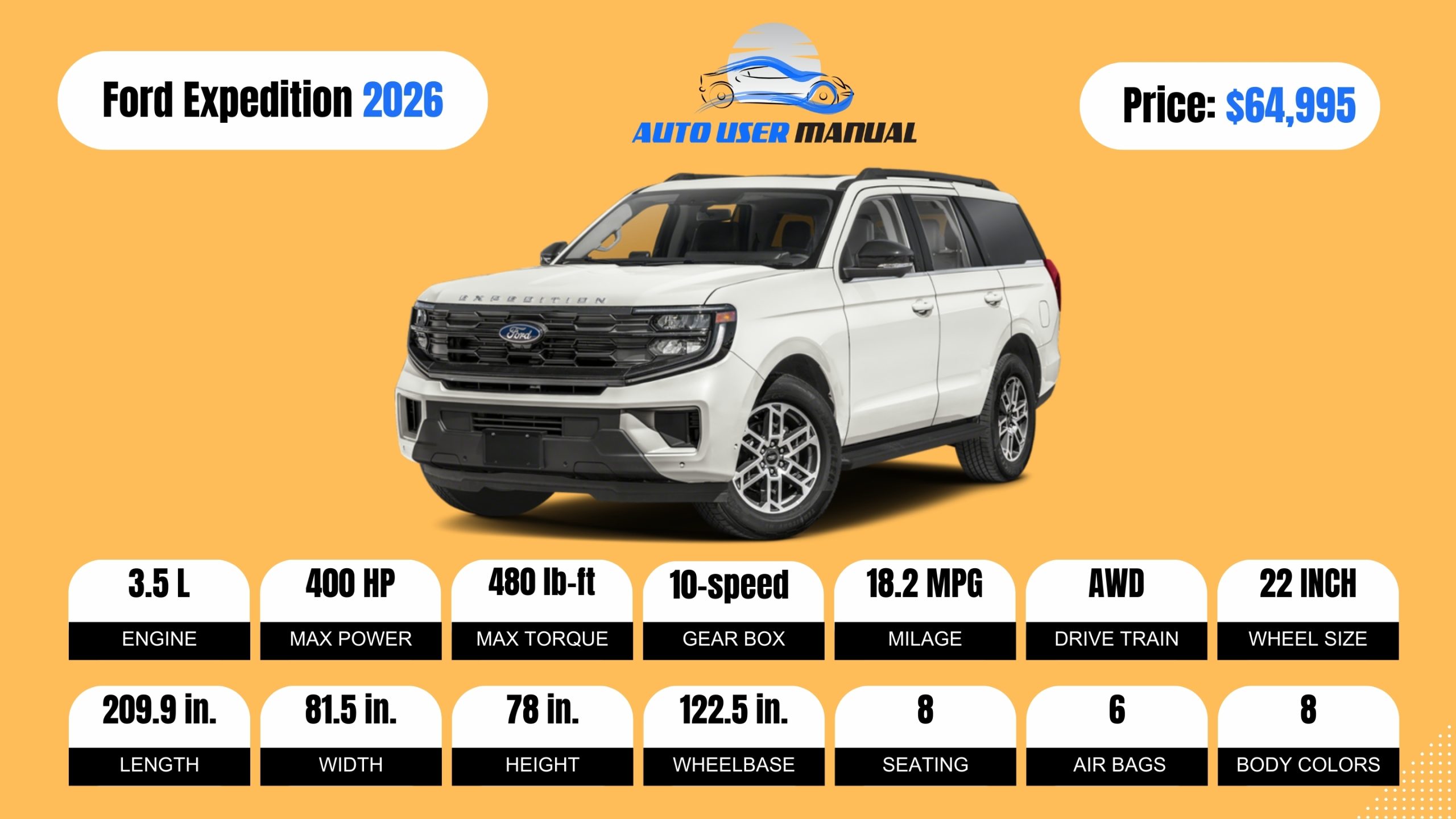
The 2018 Ford Expedition achieves an EPA-estimated fuel economy of 17 mpg city and 24 mpg highway for standard rear-wheel-drive models, while four-wheel-drive and longer Max variants see slightly lower figures ranging from 16 to 22 mpg. Real-world mileage varies significantly based on payload weight, driving style, trailer towing, and mechanical maintenance.
Understanding the fuel economy of a full-size, three-row utility vehicle like the 2018 Ford Expedition requires looking past window sticker numbers and examining how engine architecture, transmission gearing, and real-world driving physics interact. When Ford redesigned the Expedition for the 2018 model year, it introduced an aluminum-intensive body structure and paired it exclusively with a 3.5-liter EcoBoost V6 engine and a 10-speed automatic transmission. This powertrain combination was engineered to maximize efficiency without sacrificing the heavy towing and passenger-hauling capabilities expected from a body-on-frame SUV.
Powertrain Architecture and Official EPA Ratings
The foundation of the 2018 Ford Expedition’s fuel efficiency lies in its modern powertrain layout. Abandoning traditional, large-displacement V8 engines in favor of forced induction, Ford utilized the 3.5-liter twin-turbocharged EcoBoost V6 across the entire lineup. Depending on the specific trim level—ranging from the base XLT to the luxury-focused Platinum—output is rated at either 375 horsepower and 470 lb-ft of torque, or an upgraded 400 horsepower and 480 lb-ft of torque for the Platinum edition.
Directly bolted to this engine is a 10-speed automatic transmission. The high number of gear ratios allows the vehicle to maintain its engine speed within the optimal power band during acceleration while dropping RPM significantly during sustained highway cruising. This reduces internal mechanical pumping losses and improves fuel consumption compared to older 6-speed configurations.
Official United States Environmental Protection Agency (EPA) testing outlines distinct mileage categories for the various body styles and drivetrain configurations available in 2018:
- Standard Wheelbase, Rear-Wheel Drive (RWD): 17 mpg city, 24 mpg highway, 20 mpg combined.
- Standard Wheelbase, Four-Wheel Drive (4WD): 17 mpg city, 22 mpg highway, 19 mpg combined.
- Expedition MAX (Extended Length), Rear-Wheel Drive (RWD): 17 mpg city, 23 mpg highway, 19 mpg combined.
- Expedition MAX (Extended Length), Four-Wheel Drive (4WD): 16 mpg city, 21 mpg highway, 18 mpg combined.
These figures place the 2018 model near the top of the full-size SUV class for fuel efficiency, frequently outperforming traditional V8 competitors from the same model year, such as the Chevrolet Tahoe and GMC Yukon.
Real-World Driving Dynamics vs. EPA Estimates
While laboratory-derived EPA figures provide a standardized baseline for comparison, real-world ownership experiences frequently diverge from these numbers. Because the 2018 Ford Expedition utilizes turbochargers, its fuel consumption is exceptionally sensitive to throttle input.
Under light acceleration, the EcoBoost V6 operates efficiently, keeping the turbochargers largely inactive and sipping fuel like a smaller displacement engine. However, when the driver demands rapid acceleration or climbs an incline, the turbochargers spool up, forcing compressed air and additional fuel into the combustion chambers. Under heavy boost, real-world instantaneous fuel economy can drop into single digits.
City Driving vs. Highway Cruising
City driving represents the most challenging environment for a 5,500-to-6,000-pound vehicle. Starting a massive mass from a complete stop requires significant energy, which translates to lower efficiency. Drivers commuting in heavy urban stop-and-go traffic typically report real-world figures hovering between 14 and 16 mpg, even with the assistance of the standard Auto Start-Stop technology.
Conversely, highway driving yields the most favorable results. At steady legal speeds between 65 and 75 mph, the 10-speed transmission shifts into its highest overdrive gears, allowing the engine to spin at remarkably low revolutions per minute. Owners frequently report achieving or even slightly exceeding the EPA highway rating of 22 to 24 mpg on flat interstate road trips when unladen.
| Drivetrain & Body Style | EPA City (MPG) | EPA Highway (MPG) | EPA Combined (MPG) | Real-World Range (Approx. Miles) |
|---|---|---|---|---|
| Standard Wheelbase (RWD) | 17 | 24 | 20 | 460 - 480 |
| Standard Wheelbase (4WD) | 17 | 22 | 19 | 420 - 440 |
| Expedition MAX (RWD) | 17 | 23 | 19 | 430 - 450 |
| Expedition MAX (4WD) | 16 | 21 | 18 | 400 - 420 |
Impact of Towing and Heavy Payload on Fuel Economy
One of the primary reasons buyers select the 2018 Ford Expedition is its substantial towing capacity, which reaches up to 9,300 pounds when properly equipped with the Heavy-Duty Trailer Tow Package. However, towing a heavy trailer drastically alters fuel consumption.
When pulling a travel trailer, boat, or enclosed utility trailer, aerodynamic drag and rolling resistance increase exponentially. Under towing conditions, real-world mileage for the 2018 Expedition typically drops into the 8 to 12 mpg range, depending on the weight, height, and frontal surface area of the trailer.
To manage fuel consumption while towing, drivers should utilize the vehicle's dedicated Tow/Haul drive mode. This mode alters the transmission shift schedule to prevent excessive gear hunting, keeps engine braking active on descents, and optimizes power delivery, which helps stabilize fuel burn under heavy loads.
Key Factors Influencing 2018 Expedition Fuel Efficiency
Beyond driving habits and towing demands, several mechanical and environmental factors directly influence the fuel mileage of a used 2018 Ford Expedition.
Tire Selection and Inflation Pressures
Factory specifications call for specific tire sizes, typically ranging from 18-inch wheels on base models to 20- or 22-inch wheels on higher trims. Upgrading to heavier, aggressive all-terrain or mud-terrain tires increases rotational mass and rolling resistance, reducing fuel economy by 1 to 2 mpg. Furthermore, maintaining proper tire inflation pressure is critical; under-inflated tires increase drag and force the engine to work harder.
Maintenance and Engine Health
Because the 3.5-liter EcoBoost relies heavily on precise air-fuel mixtures, clean components are essential. Clogged air filters, fouled spark plugs, or carbon buildup on the intake valves—a common trait of direct-injection engines—can degrade combustion efficiency over time. Regular maintenance, including timely oil changes and spark plug replacements every 60,000 to 100,000 miles, helps preserve factory-level efficiency.
Climate Control and Accessories
Running the air conditioning compressor heavily in hot weather draws engine power and increases fuel consumption. Additionally, idling the vehicle to warm it up during cold winter months records zero miles per gallon while consuming fuel, which lowers the overall average displayed on the vehicle's trip computer.
Frequently Asked Questions
What is the actual gas mileage of a 2018 Ford Expedition?
Real-world gas mileage for a 2018 Ford Expedition typically ranges from 14 to 16 mpg in city driving and 21 to 24 mpg on the highway, depending on whether the vehicle has rear-wheel drive or four-wheel drive. Combined averages hover around 18 to 20 mpg under normal, mixed driving conditions without a heavy load.
Does the 2018 Ford Expedition require premium fuel?
No, the 2018 Ford Expedition is designed to run on regular 87-octane gasoline. However, the engine management system is capable of detecting higher-octane fuel (such as 91 or 93 octane) and will slightly adjust ignition timing to produce maximum horsepower and torque, particularly when towing. Premium fuel yields negligible gains in daily fuel economy that rarely offset its higher purchase cost.
How big is the fuel tank on a 2018 Ford Expedition?
Standard wheelbase models feature a 23.3-gallon fuel tank. If you purchase the longer Expedition MAX variant, the fuel tank capacity increases to 28.3 gallons, providing a significantly greater cruising range between fill-ups despite the slightly lower EPA ratings.
Why is my 2018 Ford Expedition getting bad gas mileage?
Poor fuel economy in this vehicle is frequently caused by frequent short trips where the engine does not reach operating temperature, under-inflated tires, heavy roof racks or cargo boxes creating aerodynamic drag, dirty air filters, or aggressive driving habits that activate the twin turbochargers unnecessarily.
Can fuel economy be improved with aftermarket modifications?
While some owners install cold-air intakes or performance exhaust systems, their impact on actual fuel economy is often minimal. The most effective ways to maximize fuel efficiency are maintaining proper tire pressure, keeping up with routine ignition system maintenance, removing unneeded cargo from the roof or trunk, and practicing smooth, anticipatory driving habits.
Practical Next Actions for Owners and Buyers
If you currently own a 2018 Ford Expedition and want to maximize your fuel mileage, begin by verifying your tire pressures weekly and scheduling a diagnostic check if your fuel economy has drifted significantly below historical averages. For prospective buyers evaluating a used model, review the onboard trip computer's historical fuel economy log during a test drive to gain insight into how the previous owner operated and maintained the vehicle. Prioritize models with documented maintenance records to ensure the turbochargers and direct-injection fuel systems operate at peak efficiency.