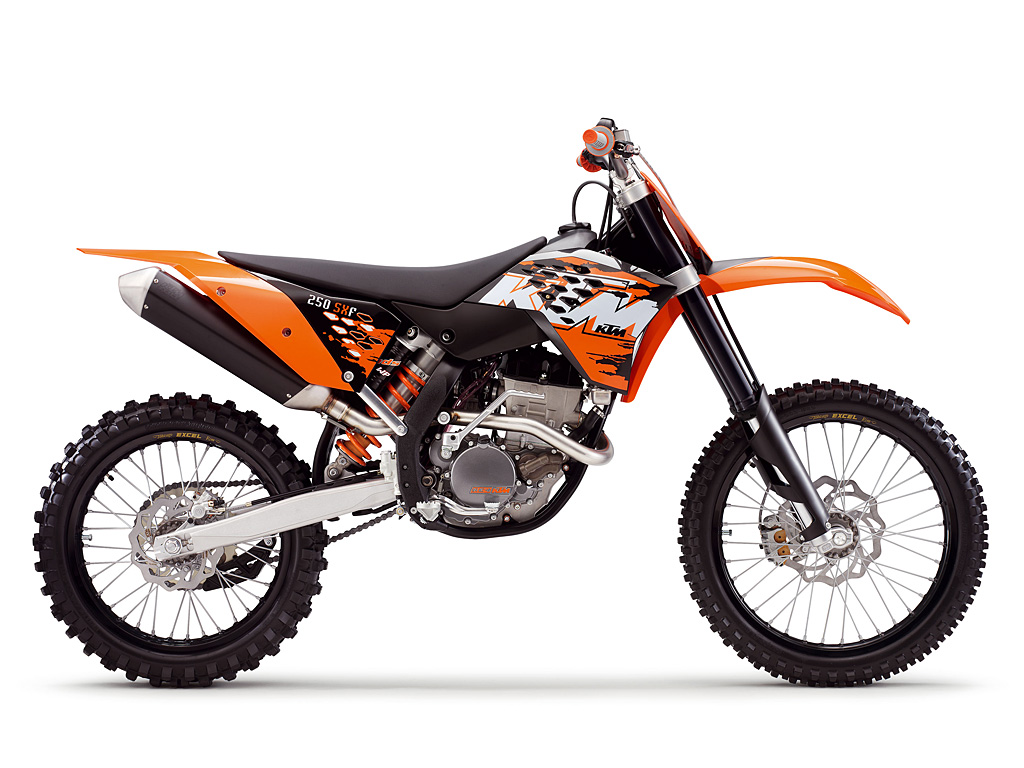
The 2008 KTM 250 XC stands out as a watershed model in off-road motorcycle history, pairing an explosive yet tunable 249cc two-stroke engine with a redesigned chromoly chassis and electric start. Its blend of linear bottom-end torque, razor-sharp singletrack maneuverability, and mechanical simplicity rescued the 250cc two-stroke from competitive extinction, setting the baseline for modern cross-country racing.
The 2008 Paradigm Shift: Defining Modern Two-Stroke Cross-Country
In the late 2000s, the off-road racing world was rapidly transitioning to four-stroke technology. Major Japanese manufacturers scaled back two-stroke development, focusing capital on high-revving 250F and 450F race platforms. KTM took a starkly different approach. For the 2008 model year, the Austrian manufacturer introduced a ground-up redesign of its two-stroke off-road line, headlined by the 2008 KTM 250 XC.
| 2008 KTM 250 XC PLATFORM HIGHLIGHTS |
|---|
| Engine: 249cc 2-Stroke, Keihin PWK 36S AG Carburetor |
| Key Tech: Factory Electric Start (E-Start) System |
| Frame: Redesigned Central Chromoly Steel Geometry |
| Front Suspension: WP Suspension 48mm Closed-Chamber Forks |
| Rear Suspension: Linkless PDS (Progressive Damping System) |
The 2008 model represented far more than a bold graphic package or minor trim adjustment. It introduced a lighter, central-tube oval chromoly frame, completely overhauled bodywork, refined airbox architecture, and, most importantly, integrated electric start capabilities directly onto a competition cross-country two-stroke platform.
This model year proved that two-strokes could combine the lightweight agility and low maintenance costs of traditional oil-burners with the modern conveniences and tractable power delivery required to win Grand National Cross Country (GNCC) and National Enduro championships. The 2008 250 XC bridged the gap between raw, peaky two-stroke motocrossers of the 1990s and the sophisticated, fuel-injected off-road machines in production today.
Engine Architecture and Power Delivery Dynamics
At the heart of the 2008 KTM 250 XC lies a liquid-cooled, single-cylinder 249cc engine fed by a Keihin PWK 36S AG carburetor. Unlike its strictly motocross sibling (the 250 SX), the XC was engineered specifically for cross-country performance, demanding a broader powerband, higher flywheel inertia, and adaptable engine dynamics for unpredictable terrain.
- Low-RPM Lugging
- Smooth power off idle; resists stalling in hard enduro
- Tunable Mid-Range Transition
- Controlled by interchangeable power valve auxiliary springs
- Strong Over-Rev
- Sustained peak output for open fire roads
The Twin-Valve System (TVS) Power Valve
One of the defining mechanical features of the 2008 engine is KTM's adjustable Twin-Valve System (TVS). By altering the tension on the power valve spring, riders can radically change the character of the powerband without opening the crankcase or swapping exhaust pipes:
- Yellow Spring (Stock): Delivers a balanced, linear transition from the low-end to the mid-range. It offers predictable traction on loose dirt and slippery roots while retaining strong acceleration when opening the throttle wide.
- Red Spring (Soft/Aggressive): Decreases preload tension, allowing the power valve to open earlier in the rev range. This creates a quick-hitting, explosive power stroke favored by aggressive riders on open grass tracks or deep sand.
- Green Spring (Hard/Mellow): Delays power valve opening, extending the lower power curve and smoothing out the hit. This configuration minimizes rear wheel spin on wet rocks, slick clay, and extreme technical climbs.
In addition to auxiliary spring swapping, the 2008 engine features an external brass square-head adjuster screw on the right side of the engine case. Turning this screw adjusts the overall preload on the main spring, enabling fine-tuned adjustments to the exact RPM at which the power valve begins to open.
Carburization and Throttle Response
The 36mm Keihin PWK carburetor provides instantaneous throttle response while preserving fuel efficiency for long off-road loops. The 36mm venturi diameter—slightly smaller than the 38mm carburetors found on pure motocross bikes—increases air velocity at lower engine speeds. This design decision gives the 2008 250 XC its legendary "lugging" capability, enabling the bike to climb technical hills at near-idle RPMs without stalling or loading up the spark plug.
Chassis Geometry, Suspension, and Handling Dynamics
Power means little in dense woods or rocky creek beds without a chassis capable of putting that energy to the ground. The 2008 chassis redesign marked a major structural evolution for KTM, focusing on frame flex, weight centralization, and rider ergonomics.
| FEATURE | DESIGN STRUCTURE | TRAIL IMPACT |
|---|---|---|
| Chromoly Steel Frame | Lightweight oval tubes | High longitudinal flex; absorbs sharp trail square bumps effortlessly. |
| WP 48mm CC Fork | Dual-chamber cartridge system | Keeps damping consistent under high-speed impacts. |
| PDS Rear Suspension | Linkless single shock mounted directly to swingarm | High ground clearance; no low-hanging linkage to drag over logs or rocks. |
Frame Engineering and Flex Characteristics
The 2008 frame replaced older, stiffer tube configurations with an oval-tube central chromoly steel design. Steel inherently offers superior longitudinal flex compared to rigid aluminum twin-spar frames of the same era. On high-speed fire roads and chattered singletrack, this chassis absorbs small, high-frequency impacts, reducing rider fatigue over multi-hour endurance events.
Ergonomically, the 2008 frame narrowed significantly at the knee contact points, allowing riders to transition seamlessly between sitting and standing positions. The airbox was redesigned with a side-access door, allowing filter swaps in seconds without tools—a major advantage during muddy pit stops.
Front Suspension: WP 48mm Closed-Chamber Forks
For 2008, the 250 XC received 48mm WP Closed-Chamber (CC) forks (often referred to as twin-chamber forks). By isolating the damper oil from the outer fork leg air chamber, closed-chamber technology prevents oil cavitation and foaming during aggressive riding.
- Small-Bump Compliance: Excellent sensitivity over exposed roots and braking bumps, keeping the front wheel planted.
- Bottoming Resistance: The internal pressurized cartridge maintains consistent hydraulic dampening through deep ops and G-out landings.
Rear Suspension: The Linkless PDS Advantage
Rear suspension duties are managed by KTM's signature Progressive Damping System (PDS) WP shock, which bolts directly to the cast aluminum swingarm without an underlying linkage mechanism.
- Traditional Linkage System
- [Shock]
- [Linkage]
- [Swingarm]
- (Exposed low ground clearance)
- KTM Linkage-Less PDS System
- [Shock]
- [Swingarm]
- (Tucked high ground clearance)
- Ground Clearance: Without lower linkage arms hanging beneath the swingarm, the 2008 250 XC glides over fallen trees, boulders, and deep ruts without catching or high-centering.
- Maintenance Simplicity: PDS systems eliminate four sets of linkage bearings, reducing routine chassis overhaul times significantly.
- Progressive Shock Motion: The internal dual-piston design of the PDS shock provides mounting progression mechanically within the shock body rather than through dynamic lever ratios. While PDS can feel slightly busier on high-speed square-edged bumps compared to linkage systems, its performance in tight, slow-speed technical riding remains exceptional.
Technical Specifications Matrix
Below are the detailed factory specifications for the 2008 KTM 250 XC motorcycle:
| Engine Component | Specification |
|---|---|
| Engine Type | Liquid-cooled, single-cylinder two-stroke |
| Displacement | 249cc |
| Bore x Stroke | 66.4 mm x 72.0 mm |
| Starter System | Kick-starter and Electric Starter (E-Start) |
| Carburetor | Keihin PWK 36S AG |
| Ignition | Kokusan digital control (Dual-map switch capable) |
| Transmission | 5-speed, semi-wide ratio |
| Clutch | Wet multi-disc, Magura hydraulic actuation |
| Lubrication | Premix 40:1 to 50:1 ratio |
| Chassis Component | Specification |
| Frame | Central double-cradle chromoly steel (oval tubing) |
| Subframe | Aluminum profile |
| Front Suspension | WP USD 48mm Closed Chamber (11.81 in / 300 mm travel) |
| Rear Suspension | WP PDS Monoshock (13.19 in / 335 mm travel) |
| Front Brake | 260 mm floating disc with Brembo dual-piston caliper |
| Rear Brake | 220 mm solid disc with Brembo single-piston caliper |
| Fuel Tank Capacity | Approx. 2.9 gallons (11.0 Liters) |
| Dry Weight | Approx. 216 lbs (98 kg) without fuel |
| Seat Height | 38.78 in (985 mm) |
| Ground Clearance | 15.16 in (385 mm) |
Known Operational Considerations, Tuning, and Maintenance
Decades after its original release, the 2008 KTM 250 XC remains highly sought after on the used off-road market. However, maintaining or purchasing a 2008 model requires specific knowledge regarding its mechanical nuances and first-generation components.
| TASK / SYSTEM | COMMON ISSUE | PREVENTIVE ACTION |
|---|---|---|
| Electric Starter Assembly | Weak engagement, worn bendix bushings or weak crown gear. | Upgrade to 350W starter motor and brass bushing kit. |
| Magura Hydraulic Clutch | Leaking slave cylinder piston seals leading to clutch drag. | Flush with Mineral Oil only; install aftermarket piston. |
| Keihin Jetting Alignment | Rich mid-range stutter in summer heat/high elevation. | Drop needle one clip position or re-jet for elevation. |
| PDS Rear Shock Setup | Harshness over high-speed chatter if sag is incorrect. | Set static sag strictly to 35mm-38mm; race sag 105mm. |
Electric Starter System Refinement
The 2008 model featured KTM's first-generation external electric starter system mounted to the left side of the engine flywheel case. While revolutionary at the time, these early systems were known to wear out quickly if left unmaintained.
- Bendix Bushings: The bronze bushings supporting the bendix gear suffer from premature wear. Replacing these stock bushings with upgraded brass bushings resolves starter binding issues.
- Crown Gear Shimming: Setting correct gear lash on the starter gear assembly prevents ring gear damage.
- Battery Upgrades: Replacing original lead-acid batteries with modern high-CCA (Cold Cranking Amps) Lithium-Ion batteries greatly improves start speeds and dependability.
Suspension Setup: Setting Correct PDS Sag
Unlike linkage suspension systems, which tolerate broader setup windows, PDS linkless rear suspension is sensitive to proper spring selection and sag measurements.
- Static Sag (Unloaded): Must be set between 35mm and 38mm.
- Rider Sag (Loaded): Must fall precisely between 100mm and 105mm.
If static sag falls outside these ranges after adjusting the shock spring preload collar, the rear shock spring rate is incorrect for the rider's weight. Installing the correct spring rate is essential to balance the chassis and prevent front-end knife-in during tight cornering.
Fuel Mixing and Hydraulic Fluids
- Fuel Premix: A high-quality full-synthetic two-stroke oil mixed at 40:1 to 50:1 with 91+ octane pump gas or race fuel provides optimal lubrication for the main crank bearings and piston skirt without fouling spark plugs.
- Clutch Actuation: The Magura hydraulic clutch system requires Mineral Oil (such as Magura Blood), not DOT brake fluid. Filling the Magura master cylinder with DOT 4 or DOT 5.1 brake fluid will cause internal rubber seals to swell and destroy the hydraulic system.
Comparison: 2008 KTM 250 XC vs. Japanese Competitors & Later Eras
To understand the historical importance of the 2008 250 XC, it is useful to compare its baseline specifications against major contemporary cross-country and motocross platforms of its era.
- 2008 KTM 250 XC
- [Off-Road Tuned / E-Start]
- Wide-ratio 5-speed
- 2.9-gal fuel capacity
- Linkless PDS system
- 2008 Yamaha YZ250
- [Motocross Native / Kick Only]
- Close-ratio 5-speed
- 2.1-gal fuel capacity
- KYB SSS Linkage System
- 2008 Honda CR250R
- [Out of Production (2007)]
- Case-reed design retired
- Legacy track bike only
- Stiff aluminum frame
2008 KTM 250 XC vs. 2008 Yamaha YZ250
During 2008, Yamaha's YZ250 was KTM's main Japanese two-stroke competitor. While the YZ250 featured the outstanding KYB Speed Sensitive System (SSS) fork and a lightweight aluminum frame, it was built primarily as a motocross bike. Converts who turned YZ250s into off-road racers had to purchase aftermarket 3.0-gallon fuel tanks, 18-inch rear wheels, kickstands, and flywheel weights.
By contrast, the 2008 KTM 250 XC came pre-configured from the factory with an 18-inch rear wheel, an oversized 2.9-gallon fuel tank, an electric starter, heavy-duty skid plate mounts, handguards, and a wide-ratio transmission. Out of the crate, the KTM was fully prepped for GNCC or woods racing.
Foundation for TPI and Modern Injection Platforms
The chassis layout and engine architecture established in 2008 served as the structural template for KTM's two-stroke development through the 2010s. The frame dimensions and engine geometry refined during this generation directly informed the development of later Transfer Port Injection (TPI) and Throttle Body Injection (TBI) platforms.
Frequently Asked Questions
Did the 2008 KTM 250 XC come standard with electric start?
Yes, 2008 was a major year where electric start (E-Start) was integrated as standard equipment on the 250 XC and 300 XC lines, alongside the traditional kick-starter for backup starting capability.
What is the primary difference between the 2008 KTM 250 XC and the 250 XC-W?
The XC (Cross-Country) features closed-chamber WP forks, a stiffer overall suspension setting, and a tighter, semi-wide-ratio 5-speed transmission designed for high-speed racing and GNCC events. The XC-W (Wide-Ratio) includes open-chamber WP forks, softer trail-focused suspension valving, a wider-ratio transmission for technical crawling, and a headlight/taillight wiring harness.
How do you change the powerband delivery on a 2008 KTM 250 XC?
Power delivery is adjusted by swapping the auxiliary power valve springs located behind the right-side engine cover. Installing the red spring yields quick, aggressive power hit; the yellow spring provides balanced stock power; and the green spring yields smooth, manageable low-speed power. Additional fine-tuning can be made by adjusting the brass power valve preload screw.
What fuel premix ratio should be run in the 2008 KTM 250 XC?
KTM recommends running a high-quality, synthetic two-stroke oil mixed with premium unleaded fuel (91 octane or higher) at a ratio between 40:1 (3.2 oz oil per gallon) and 50:1 (2.56 oz oil per gallon).
What type of fluid goes in the hydraulic clutch master cylinder?
The 2008 KTM 250 XC uses a Magura hydraulic clutch system that requires biodegradable mineral oil (such as Magura Blood). Do not use DOT 4 or DOT 5.1 brake fluid, as glycol-based brake fluids will melt the internal seals of the Magura system.
The Lasting Legacy of the 2008 KTM 250 XC
The 2008 KTM 250 XC proved that two-stroke technology retained a vital place in modern off-road motorcycle racing. By pairing lightweight, tractable power valve architecture with a refined central chromoly chassis, closed-chamber WP suspension, and electric start, KTM established a platform that dominated off-road podiums for a generation.
For prospective buyers and enthusiasts today, the 2008 model remains an outstanding entry point into competitive two-stroke riding. With simple carburetor tuning, widely available aftermarket replacement parts, and legendary engine reliability, a well-maintained 2008 KTM 250 XC continues to hold its ground against modern off-road machinery on any trail or race course.