YKK zippers are widely considered the gold standard of the fastener industry due to their rigorous in-house manufacturing processes, material consistency, and exceptional quality control. By controlling the entire production cycle—from the smelting of brass and aluminum to the injection molding of plastic and the final assembly of the sliders—YKK ensures a level of uniformity and reliability that few competitors match.
Understanding the YKK Standard in Manufacturing
The reputation of YKK, which stands for Yoshida Kōgyō Kabushiki Kaisha, is rooted in the "Cycle of Goodness" philosophy established by its founder, Tadao Yoshida. In a technical context, "good" refers to the precise tolerances maintained during the manufacturing of the teeth (elements), the slider mechanisms, and the locking components. Unlike manufacturers that outsource the production of individual components, YKK maintains vertical integration.
When you examine a zipper, you are looking at a complex mechanical system. The teeth must interlock with perfect alignment to prevent "gapping" or "splitting." YKK uses specialized metallurgy to ensure their metal teeth—whether brass, nickel-plated, or aluminum—have the correct hardness and flexibility. If the metal is too soft, the teeth deform; if too hard, they can become brittle and snap. YKK’s proprietary alloy formulations and heat-treatment processes are engineered to balance these properties for specific applications, ranging from lightweight denim to heavy-duty industrial workwear.
Material Composition and Application Suitability
Determining whether a zipper is "good" requires an understanding of the specific application. A zipper that excels in a high-tension gear bag might be too abrasive for a delicate silk garment. YKK classifies their products by material and intended use to address these physical requirements.
Metal Zippers
These are the industry leaders for strength and aesthetic durability. YKK produces brass, antique-finish, and aluminum zippers. Brass is favored for its smooth operation and resistance to corrosion, while aluminum is often chosen for its lighter weight. These are standard in denim, leather jackets, and rugged luggage.
Coil Zippers (Nylon)
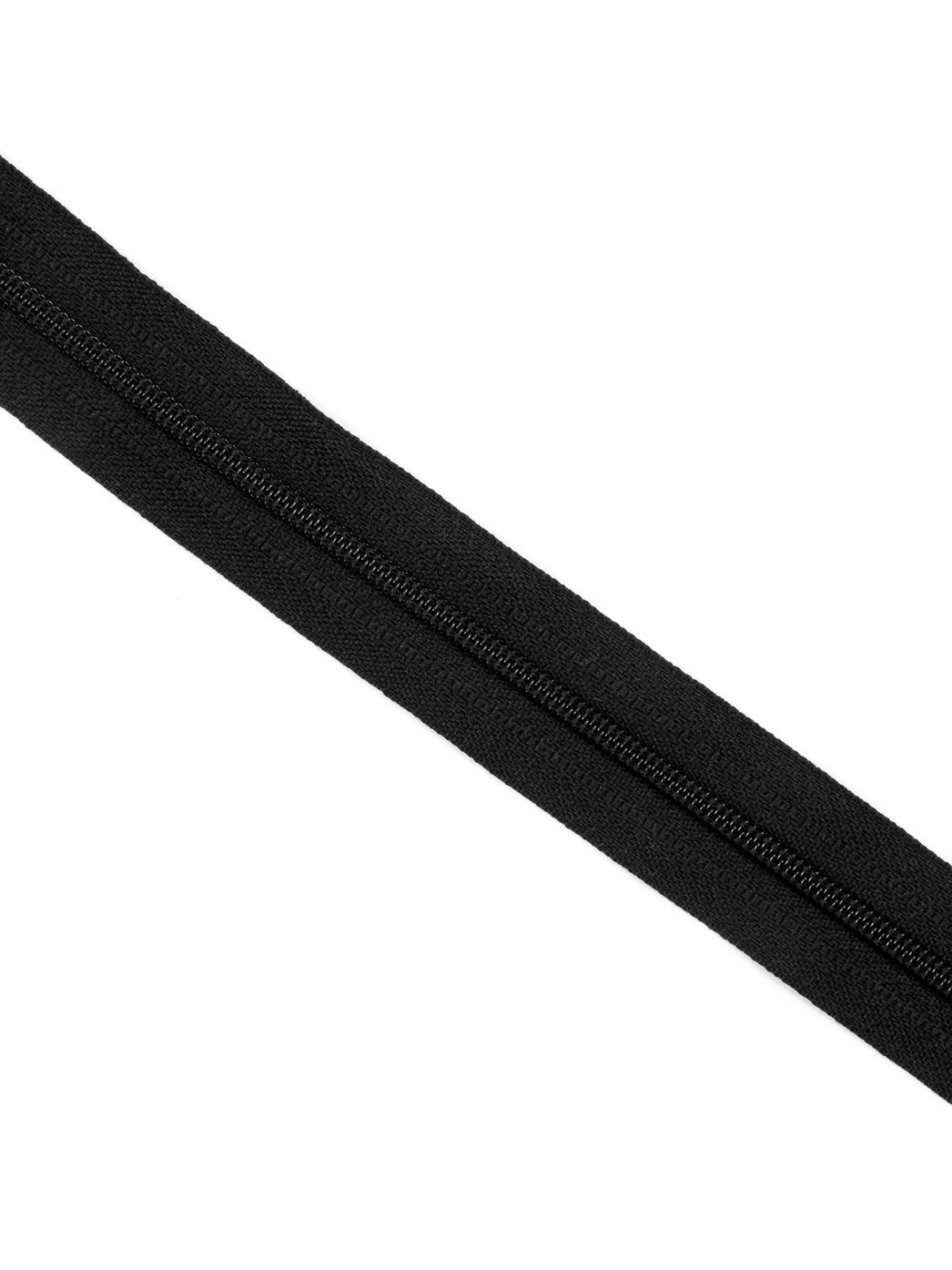
Commonly found on backpacks, tents, and sportswear, coil zippers consist of two spiral coils made of polyester or nylon. These are inherently more flexible than metal zippers and are better at resisting damage when the fabric is folded or bent. YKK’s Vislon and coil lines are engineered to be self-healing, meaning if the slider moves over a misaligned section, the teeth are designed to realign without permanent deformation.
Vislon Zippers
Vislon is a proprietary YKK brand of plastic-injected teeth. These are remarkably popular because they are resistant to the elements. Unlike metal, they do not corrode, and unlike standard nylon coils, they maintain a rigid structure that can withstand significant impact. They are the preferred choice for marine environments, winter sports apparel, and outdoor equipment where exposure to salt, snow, or mud is frequent.
The Technical Significance of the Slider
A zipper is only as good as its slider. The slider is the component that moves along the teeth to lock or unlock them. YKK invests heavily in the internal geometry of the slider, which is often more complex than it appears to the naked eye.
The internal "Y" shaped channel of the slider must be precisely calibrated to the dimensions of the chain (the two sides of the zipper). If the channel is too wide, the teeth will not interlock firmly, leading to failure under load. If it is too narrow, the slider will jam or require excessive force to pull. YKK manufactures sliders with varying degrees of tension, including "auto-lock" features that utilize a small spring-loaded pin to prevent the slider from sliding down due to gravity—a critical safety feature in apparel like jackets and pants.
Table 1: Comparison of Zipper Types by Performance Metric
| Zipper Type | Strength | Corrosion Resistance | Flexibility | Best Use Case |
|---|---|---|---|---|
| Metal (Brass) | High | Moderate | Low | Denim, Heavy Leather |
| Nylon Coil | Moderate | High | High | Tents, Backpacks |
| Vislon (Plastic) | High | Very High | Moderate | Outdoor Gear, Marine |
| Waterproof | High | Maximum | Low | Technical Outerwear |
Why YKK is the Industry Benchmark
For professional designers and manufacturers, the decision to use YKK often comes down to the "failure rate." In mass production, even a 1% failure rate for a component as essential as a zipper can lead to massive warranty claims and brand damage.
YKK provides manufacturers with detailed technical manuals, including load-testing data. They subject their products to standardized tests, including:
- Lateral Strength Testing: Measuring how much force is required to pull the two sides of the zipper apart while closed.
- Slider Reciprocation Testing: Testing the slider’s durability over thousands of opening and closing cycles.
- Corrosion Testing: Exposing zippers to salt spray to ensure that components do not seize or oxidize.
This reliability is why you find YKK zippers on a vast range of products, from entry-level luggage to luxury fashion items. The brand has achieved a level of ubiquity that allows a designer to know exactly how a zipper will perform without needing to run independent lab tests for every batch.
Common Myths and Misconceptions
There is a long-standing myth that if a zipper has "YKK" stamped on it, it must be original. In reality, because YKK is a major global manufacturer, counterfeiters sometimes apply YKK branding to low-quality fasteners. If a zipper on a supposed high-end garment feels flimsy, has sharp edges on the teeth, or catches frequently, it may be a counterfeit rather than a genuine YKK product.
Another misconception is that YKK is the only good manufacturer. While YKK is the industry leader, other reputable companies like RIRI (known for high-end fashion applications) and Talon (historically significant in American denim) also produce excellent components. However, for sheer volume, consistency, and international availability, YKK remains the dominant force.
Troubleshooting and Maintenance
Even the highest quality zipper will fail if it is improperly used or neglected. Understanding basic maintenance is essential to getting the most out of your YKK-equipped gear.
- Cleaning: If you are using gear in dirty or sandy environments, rinse the zipper with fresh water. Grit and sand are the primary enemies of zipper teeth; they act as an abrasive that wears down the precise interlocking surface of the elements.
- Lubrication: Do not use heavy oils or waxes that attract dirt. If a zipper becomes stiff, a small amount of graphite (from a standard pencil lead) rubbed on the teeth can provide dry lubrication.
- Slider Care: Never force a slider if it gets stuck on fabric. Most jams occur because a piece of lining or thread has been caught in the teeth. Gently move the slider backward to clear the obstruction rather than pulling it forward with force, which can permanently deform the slider’s internal channels.
Frequently Asked Questions
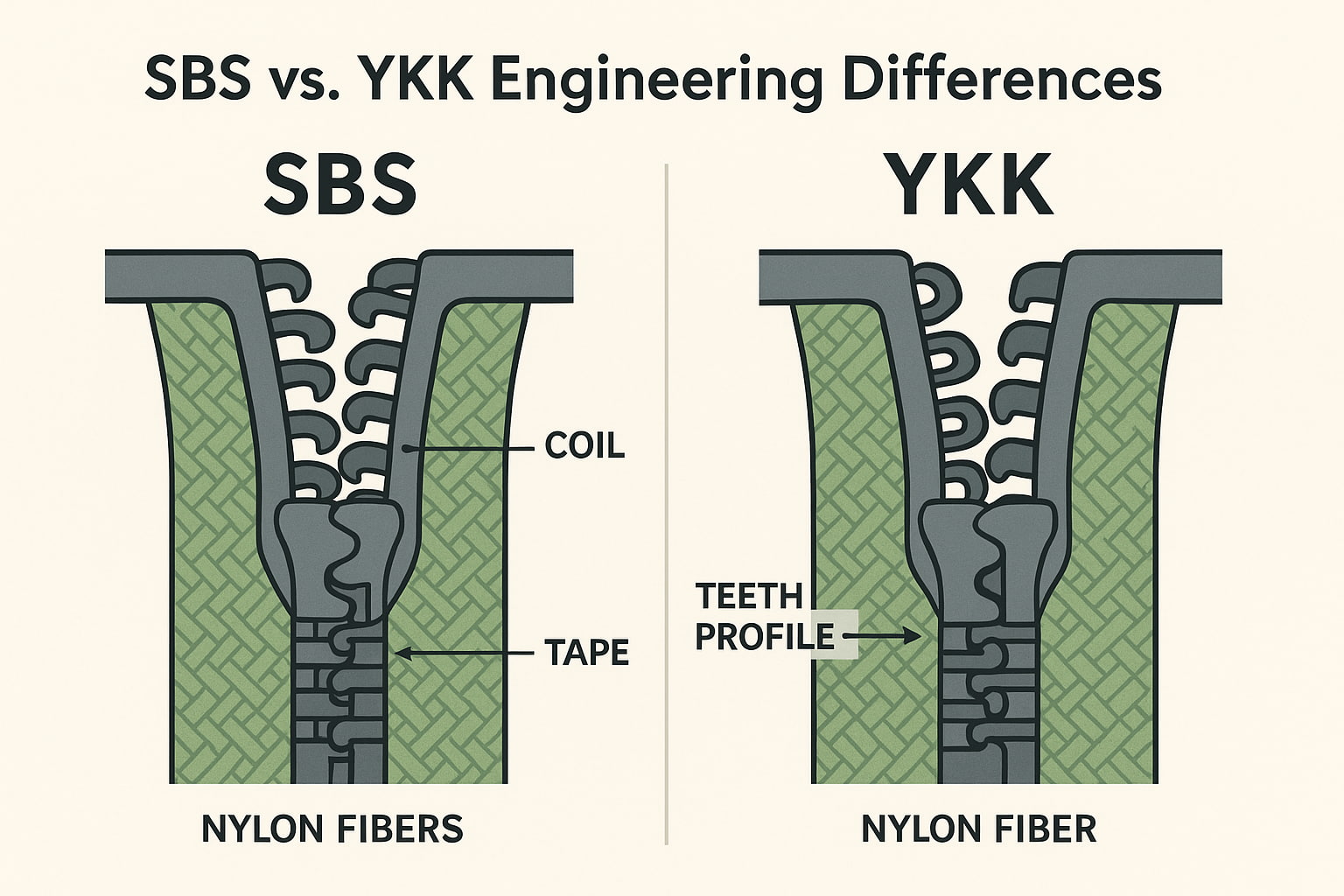
Are YKK zippers better than SBS or other generic zippers? In terms of manufacturing consistency and quality control, yes. YKK operates its own metallurgical facilities and injection molding plants. Many generic brands lack this level of vertical integration, which often leads to "batch variance," where the quality of one shipment may differ from another.
Why does my YKK zipper get stuck? Usually, this is due to debris, a missing tooth, or a misaligned slider. Check the teeth for any bent elements. If the zipper is on a garment, ensure no loose threads are trapped in the slider housing.
Can I repair a broken YKK zipper slider? Yes. If the slider is the only component that is failing (and the zipper chain is still intact), you can often replace just the slider. You must measure the zipper gauge (e.g., #5, #8, #10) to ensure the replacement slider matches the size of the chain.
Do YKK zippers have a warranty? YKK supplies components to manufacturers; the warranty for the zipper typically falls under the warranty of the product itself. If a zipper fails on a brand-name bag, you should contact the manufacturer of that bag for a repair or replacement.
Are all YKK zippers made of the same material? No. YKK produces a wide catalog of materials ranging from recycled plastic and bio-based resins to various grades of stainless steel and brass, tailored to the environmental demands of the finished product.
Final Recommendation
When purchasing high-use items like luggage, outdoor jackets, or heavy-duty pants, checking for a YKK mark is a reliable way to gauge the manufacturer's commitment to quality. While a YKK zipper is not a guarantee of perfection, it serves as a high-confidence indicator that the manufacturer has sourced reliable, tested, and industry-standard hardware. If you are a designer or a consumer performing repairs, prioritize selecting the correct "gauge" or size of YKK zipper for your project, as the wrong size will fail regardless of the brand’s inherent quality. Always ensure you are sourcing these zippers from authorized distributors to avoid the performance issues associated with imitation components.