Deciding whether vocational nurse programs are worth the investment requires careful consideration of upfront educational expenses, opportunity costs, immediate employment potential, and long-term career ceilings. For many individuals looking to enter the healthcare sector quickly, enrolling in a Licensed Practical Nurse (LPN) or Licensed Vocational Nurse (LVN) program offers a direct, expedited route to a stable clinical career without the multi-year commitment and high tuition fees associated with a Bachelor of Science in Nursing (BSN). However, prospective students must weigh these advantages against lower starting salaries, restricted clinical scopes of practice, and fewer advancement opportunities compared to Registered Nurses (RNs).
Evaluating this educational investment involves examining tuition structures, clinical training requirements, licensure examinations, and subsequent earning trajectories. Because healthcare education demands a significant commitment of time, energy, and financial resources, breaking down the tangible costs and returns helps prospective students determine whether vocational nursing aligns with their professional and personal goals.
Understanding Vocational Nursing: LPN and LVN Roles
Vocational nursing programs train students to provide basic, foundational patient care under the supervision of registered nurses, physicians, and other licensed healthcare providers. Depending on the state of practice, these professionals are designated as Licensed Practical Nurses (LPNs)—the term used in most U.S. states—or Licensed Vocational Nurses (LVNs), a designation specifically used in California and Texas.
The core responsibilities of a vocational nurse typically include:
- Monitoring patient vital signs (temperature, blood pressure, pulse, and respiration).
- Administering basic medications via oral, topical, and subcutaneous or intramuscular routes (subject to state board regulations and pharmacology certification).
- Changing dressings, cleaning wounds, and maintaining sterile fields.
- Assisting patients with activities of daily living (ADLs), such as bathing, dressing, and eating.
- Documenting patient status, reporting changes to supervising RNs or doctors, and communicating with patient families.
Practice Settings and Work Environments
Vocational nurses work across a diverse array of healthcare facilities, which significantly influences daily job satisfaction, scheduling flexibility, and overall compensation. The primary employment sectors include:
- Long-Term Care and Skilled Nursing Facilities (SNFs): Representing the largest employment sector for LPNs/LVNs, where nurses manage daily resident care, medication passes, and care plans.
- Home Health Care: Visiting patients in their private residences to provide specialized wound care, monitor chronic conditions, and educate family caregivers.
- Ambulatory Care Clinics and Physician Offices: Assisting with patient intake, administering immunizations, and managing administrative clinic tasks.
- Hospitals: Providing supplemental bedside care, though hospital opportunities for vocational nurses vary considerably by region and hospital system acuity levels.
Financial Analysis: Upfront Costs vs. Immediate Earning Potential
To determine if vocational nurse programs are worth the financial outlay, students must calculate the total cost of attendance against projected entry-level earnings. Financial viability depends heavily on the type of institution chosen—public community colleges versus private vocational schools—as well as geographic location.
Tuition and Educational Expenses
Vocational nursing programs typically take between 12 to 18 months to complete, spanning roughly three semesters or four quarters.
- Community College Programs: Public institutions generally offer the most cost-effective path, with total tuition and fee structures ranging from $3,000 to $10,000. However, community college programs frequently feature competitive admissions processes and lengthy waitlists.
- Private Career Schools and Technical Institutes: Private institutions often feature immediate enrollment cycles, flexible scheduling, and smaller class sizes, but tuition costs can range from $15,000 to $40,000 or more for the complete certificate program.
Beyond base tuition, prospective students must budget for mandatory ancillary expenses:
- Textbooks, clinical uniforms, and specialized medical equipment (stethoscopes, blood pressure cuffs).
- Background checks, immunizations, physical examinations, and drug screenings required for clinical placement.
- Licensure preparation materials, testing fees, and the National Council Licensure Examination for Practical Nurses (NCLEX-PN) registration costs.
Earning Potential and Return on Investment (ROI)
According to data compiled by the U.S. Bureau of Labor Statistics (BLS), the median annual wage for licensed practical and licensed vocational nurses was approximately $59,730 (or roughly $28.72 per hour), with top earners in specialized or high-cost-of-living regions exceeding $75,000 per year.
When comparing a $10,000 community college program against a $30,000 private school program, the ROI shifts dramatically:
- Low-Cost Path: A student investing $10,000 who secures a $55,000 starting salary recoups their educational investment within the first few months of full-time employment.
- High-Cost Path: A student investing $35,000 in a private institution while facing high-interest student loans will take significantly longer to achieve a positive net return, requiring careful budgeting and loan repayment planning.
Comparing Educational Pathways: Vocational Nursing vs. Registered Nursing
Choosing between a vocational nursing program and a registered nursing program (such as an Associate Degree in Nursing [ADN] or a Bachelor of Science in Nursing [BSN]) is the most critical decision prospective healthcare students face. Each path offers distinct advantages, educational hurdles, and long-term career trajectories.
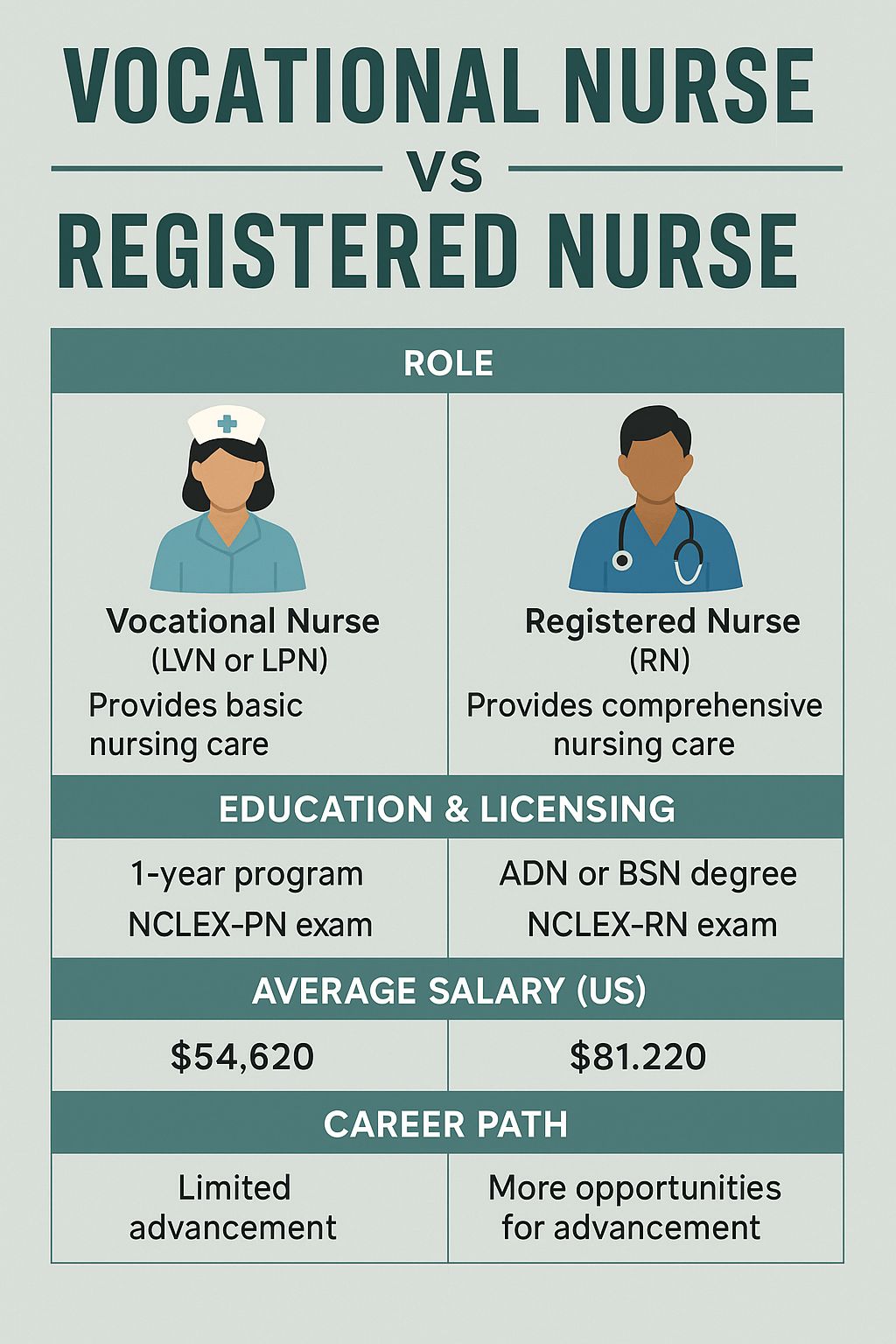
| Feature / Metric | Vocational Nurse (LPN / LVN) | Associate Degree in Nursing (ADN / RN) | Bachelor of Science in Nursing (BSN / RN) |
|---|---|---|---|
| Typical Program Length | 12 to 18 months | 2 years | 4 years |
| Average Program Cost | $3,000 – $35,000 | $6,000 – $20,000 (Public) | $40,000 – $100,000+ |
| Licensure Examination | NCLEX-PN | NCLEX-RN | NCLEX-RN |
| Scope of Practice | Basic, supervised patient care; medication administration | Comprehensive patient assessment, care planning, IV therapy, leadership | Advanced leadership, research, specialized care, public health |
| Median Annual Salary | ~$59,730 | ~$81,220 | ~$86,070+ |
| Career Advancement Ceiling | Moderate (requires bridge program to progress) | High (RN status, specialty certifications) | Highest (management, education, nurse practitioner tracks) |
Key Trade-Offs
- Speed to Market: LPN/LVN programs get graduates into the workforce faster than any other formal nursing credential. For adults with financial dependents or urgent income needs, entering the workforce in under a year minimizes the duration of the income gap.
- Scope and Autonomy: Registered nurses possess an independent scope of practice regarding patient assessment, care plan formulation, and complex intravenous (IV) medication management. Vocational nurses operate under the direct oversight of an RN, physician, or dentist, limiting independent clinical decision-making.
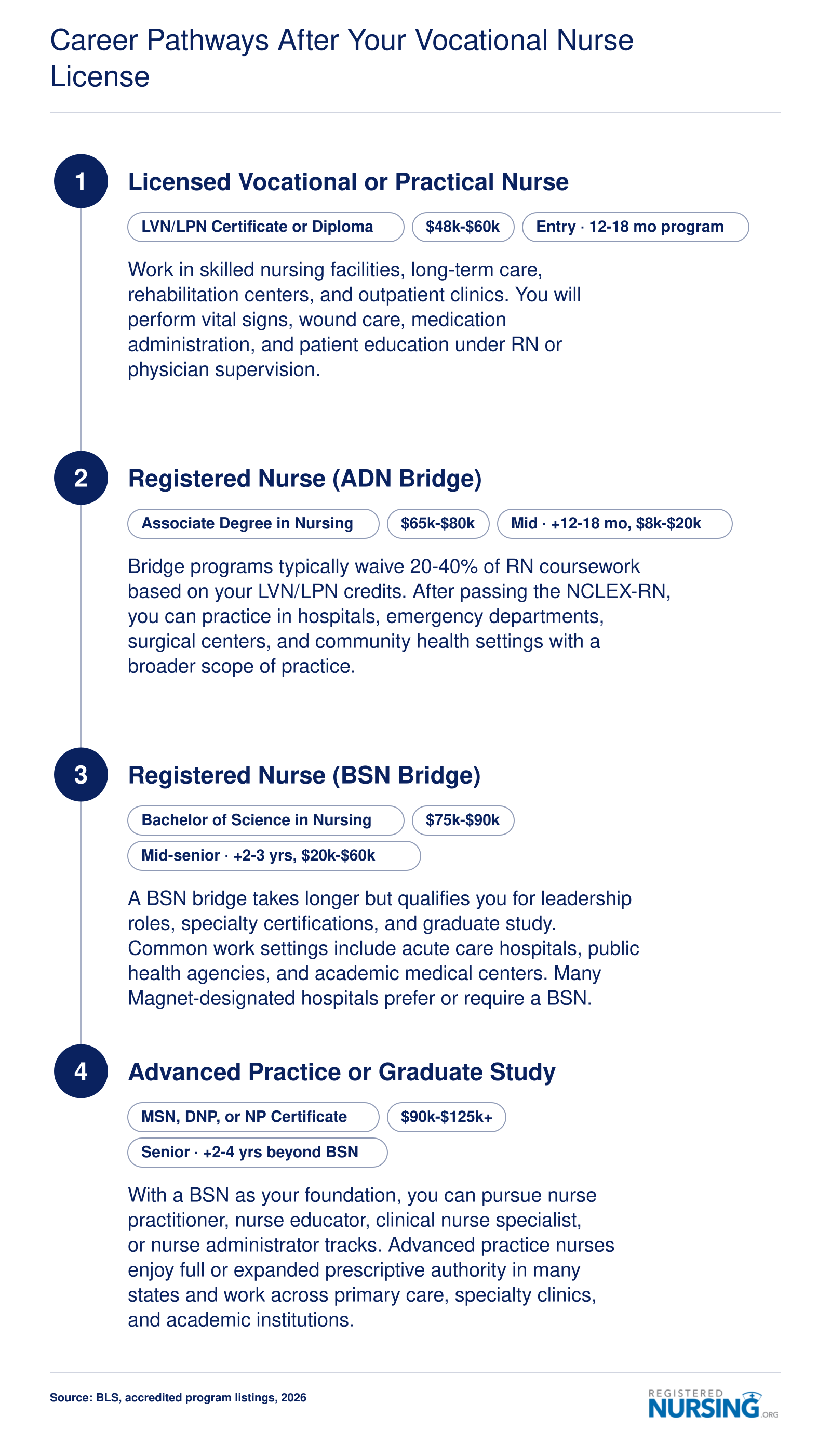
- The LPN-to-RN Bridge Option: Many working vocational nurses choose a stepping-stone approach. They complete an LPN program, enter the workforce to gain paid clinical experience and earn an income, and subsequently enroll in an LPN-to-RN bridge program, which grants advanced standing and shortens the time required to earn an Associate or Bachelor degree.
Evaluating Program Quality, Accreditation, and State Board Approval
Not all nursing programs are created equal. Enrolling in an unapproved or unaccredited program can result in a catastrophic waste of time and money, as graduates may be legally barred from sitting for the NCLEX-PN licensure examination.
Essential Verification Steps
- State Board of Nursing Approval: Every nursing program must hold active, unencumbered approval from the state board of nursing where the school operates. State board approval ensures the curriculum meets legal educational hour requirements, clinical site standards, and faculty credentialing mandates.
- Institutional vs. Programmatic Accreditation: Verify whether the school holds regional or national institutional accreditation (such as from the Accrediting Commission of Career Schools and Colleges or regional accrediting bodies). Additionally, look for programmatic accreditation from specialized nursing bodies like the Accreditation Commission for Education in Nursing (ACEN) or the Commission on Collegiate Nursing Education (CCNE), which facilitates seamless credit transfer if pursuing further education.
- NCLEX-PN Pass Rates: Request or research the school's historical first-time pass rates for the NCLEX-PN exam. Reputable programs transparently publish pass rates that consistently meet or exceed state and national averages (typically 80% or higher).
- Clinical Placement Agreements: Ensure the institution maintains active, reliable partnerships with local hospitals, long-term care facilities, and clinics. Programs that rely heavily on simulated laboratories rather than hands-on clinical hours under certified preceptors leave graduates ill-prepared for real-world bedside nursing.
Frequently Asked Questions
Can I work while attending a vocational nurse program?
Many vocational nursing programs offer evening and weekend cohorts specifically designed for working adults. However, because these programs combine rigorous classroom instruction with mandatory, inflexible clinical shifts, maintaining a full-time work schedule is exceptionally difficult. Most successful students limit their employment to part-time hours or rely on student loans, personal savings, and family support during their training.
What happens if I fail the NCLEX-PN exam on my first attempt?
Failing the NCLEX-PN is disappointing, but it is not a permanent barrier to practice. State boards of nursing permit candidates to retake the examination after a mandatory waiting period (typically 45 to 90 days, depending on the state). Candidates receive a diagnostic performance report indicating weak subject areas, allowing them to target their review before scheduling a retest.
Do LPNs and LVNs have opportunities for career advancement?
While the direct scope of practice for an LPN/LVN is structured around foundational care, career advancement is entirely achievable through experience and further education. Vocational nurses often advance into charge nurse roles in long-term care facilities, transition into specialized clinical niches like wound care or dialysis, or utilize employer tuition reimbursement programs to transition into Registered Nursing.
Are private nursing schools worth the higher tuition compared to community colleges?
Private schools are generally worth the investment only if a student cannot gain admission to a local community college due to impacted waitlists and values immediate, uninterrupted entry into the workforce. For students able to secure a community college spot, public institutions offer a vastly superior financial ROI due to significantly lower tuition rates.
Next Steps and Actionable Recommendations
For individuals weighing whether vocational nurse programs are worth the investment, the decision rests on a clear assessment of personal financial resources, career timeline, and long-term professional ambitions.
- Step 1: Consult the official website of your State Board of Nursing to review a verified list of approved practical and vocational nursing education programs in your jurisdiction.
- Step 2: Request detailed tuition disclosure sheets from at least two community colleges and one private technical school to calculate the total cost of attendance, including hidden fees and equipment.
- Step 3: Contact local healthcare employers—such as skilled nursing facilities and regional hospitals—to gauge local demand for LPNs/LVNs and inquire whether they offer tuition assistance or bridge program partnerships.
- Step 4: Weigh your long-term goals: if your ultimate objective is rapid entry into a stable healthcare career with the option for future advancement, enrolling in an accredited vocational nurse program represents a sound, highly practical investment.