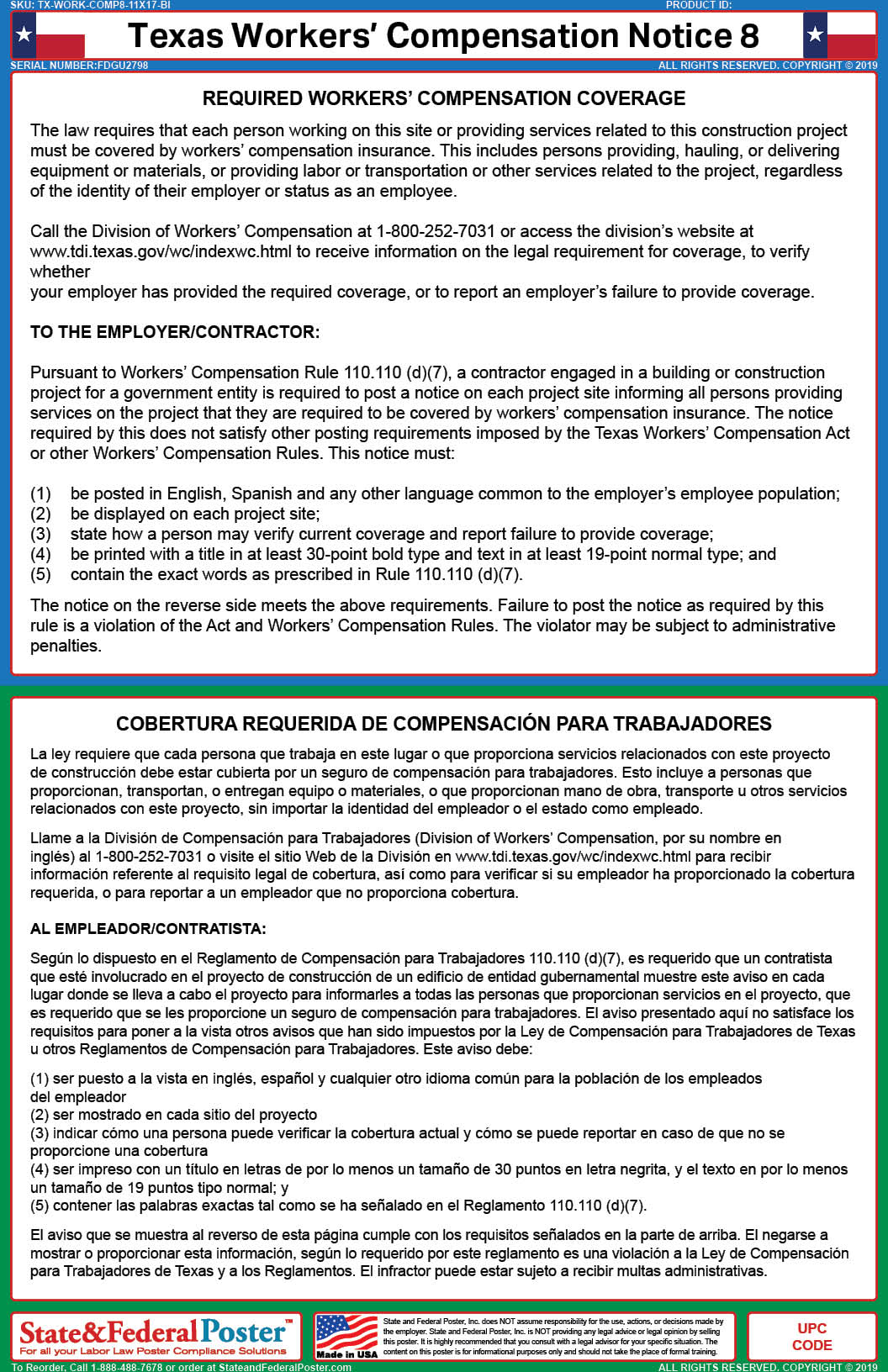
Yes, in the vast majority of U.S. states, employers are legally required to post a workers' compensation notice in a conspicuous location where employees can easily view it. These posters serve as a vital communication link, informing workers of their rights, the process for reporting injuries, and the name of the insurance carrier providing the coverage.
Understanding the Legal Requirement for Posting Notices
Workers' compensation is a state-regulated system designed to provide medical benefits and wage replacement for employees who suffer work-related injuries or illnesses. Because these systems are managed at the state level rather than the federal level, the specific requirements for posters—such as the exact language, size, and location—vary by jurisdiction.
The fundamental intent behind this mandate is transparency. By requiring the employer to display a notice, the state ensures that employees are aware that they are covered under the state’s workers' compensation system. This notice acts as an "insurance policy" for the employee’s peace of mind, confirming that if an accident occurs, a structured process exists for their recovery and financial protection.
Failure to display these posters can lead to administrative fines or citations during an inspection by state labor departments. Furthermore, an employer’s failure to inform employees of their rights can complicate the claims process and, in some jurisdictions, create legal vulnerabilities for the employer if a dispute arises regarding whether a worker was properly notified of their coverage.
Determining Your Specific Obligations by State
While the obligation to post a notice is nearly universal, the specific compliance steps depend entirely on where your business operates. You must consult your state’s department of labor or workers’ compensation commission to obtain the official notice template.
In many states, the Department of Workers' Compensation provides a downloadable, print-ready document. This is often an "all-in-one" labor law poster that includes the workers' compensation notice alongside other mandatory federal and state labor law disclosures. Employers should avoid using third-party, private companies that charge exorbitant fees for posters that are freely available through state government websites.
Key Variables in Compliance
- The "Conspicuous Location" Rule: Statutes generally mandate that the poster be placed in a common area. Common interpretations include breakrooms, near time clocks, in a main hallway, or inside a human resources office that is accessible to all staff. If you have remote employees, states often allow for electronic delivery of this notice via company portals or email, though physical offices must still display the hard copy.
- Insurance Carrier Details: Many state-mandated posters require you to fill in specific blanks, such as the name of your insurance carrier, the policy number, or the contact information for the claims administrator. This information is critical because it tells the injured worker exactly who to contact to initiate a claim.
- Language Requirements: In states with significant non-English speaking populations, the law may require the notice to be posted in both English and the predominant secondary language of the workforce (typically Spanish).
The Role of Workers' Compensation Posters in Injury Reporting
The workers' compensation poster is not merely a bureaucratic hurdle; it is the first step in the claims management process. When an employee is injured, their initial point of reference for "what to do next" is often the posted notice.
If an employer fails to post the notice, an injured worker may become confused about how to report the injury or which doctor to visit. This lack of information often leads to delayed reporting, which can jeopardize the claim. Under most state laws, an employee has a specific timeframe—sometimes as short as 30 days—to report a work-related injury. If they are unaware of the rules because the notice was missing, they may miss this window, leading to unnecessary litigation and tension between the employer and the employee.
Comparing Compliance Requirements: A Brief Overview
The following table provides a general comparison of how various state requirements manifest for employers. Note that these are illustrative of the regulatory landscape and do not replace the specific statutes of your state.
| Feature | Requirement Status | Purpose |
|---|---|---|
| Physical Display | Mandatory (Almost all states) | Provides immediate, visible access to rights. |
| Electronic Notice | Supplemental (Growing trend) | Covers remote workers and digital-first workplaces. |
| Multilingual Notice | State-Specific | Ensures equitable access for all workers. |
| Policy Details | Often Required | Facilitates direct contact with the insurer. |
| Penalty for Non-Posting | Varies by State | Enforces regulatory compliance and safety. |
Common Pitfalls and Troubleshooting
One of the most common mistakes employers make is assuming that having an insurance policy is equivalent to being compliant with notice requirements. You may pay your premiums faithfully and keep your account in good standing, but if you have not printed and hung the poster, you are technically out of compliance.
Common issues include:
- Outdated Posters: If a state changes its notice requirements or increases penalties, it may release an updated poster. Using a version from several years ago can be considered non-compliant. Always verify the "revision date" on the bottom of the state-issued form.
- Obscured Notices: Hanging a notice in a basement, a locked room, or behind a door that is rarely used does not satisfy the "conspicuous" requirement. The law intends for the notice to be visible to the average employee during their normal workday.
- Lack of Coverage Information: Some employers hang a generic "Workers' Compensation" sign purchased from a hardware store. This is insufficient. Most states require an official document that explicitly lists the insurance provider and the specific procedures for filing a claim within that state’s legal framework.
Recommended Steps for Business Owners
To ensure your business is fully compliant as of 2026, follow this systematic approach:
- Audit Your State Requirements: Visit the official website of your state’s Department of Labor or Workers' Compensation Board. Search for "required labor law posters" or "workers' compensation employer notice."
- Verify Your Carrier Information: Ensure that the information printed on your poster—specifically the contact information for your claims administrator—is accurate and currently in use by your insurance provider.
- Designate a Compliance Officer: Even in small businesses, appoint one person to be responsible for reviewing and updating labor law posters annually. This ensures that when a new version of the poster is released, it is printed and displayed promptly.
- Implement Digital Redundancy: If you have employees working from home, supplement your physical posting by uploading a digital copy of the required notice to your company’s internal document portal or employee handbook.
- Review During Onboarding: Include the information on the poster as part of your employee onboarding process. When a new hire starts, point out where the notices are located. This fulfills a secondary "duty to inform" and fosters a culture of transparency and safety.
Frequently Asked Questions
Does the size of my business affect the requirement to post? Generally, no. Whether you have one employee or one thousand, if you are required to carry workers' compensation insurance, you are required to post the notice. Some states have specific exceptions for very small employers who may not be required to carry insurance, but those exceptions are narrow and strictly defined by state statute.
Can I be fined solely for not having the poster? Yes. Labor inspectors can issue fines for missing, defaced, or outdated labor law posters. While these fines may be modest compared to other regulatory penalties, they can trigger a more thorough audit of your business practices, which could lead to further scrutiny of your insurance coverage and payroll reporting.
Does a digital posting replace the need for a physical one? In most jurisdictions, a digital version is considered a supplement rather than a replacement. The law typically dictates that the notice must be displayed in a physical location frequented by employees. Always maintain a physical copy unless your specific state’s laws clearly state that an electronic-only policy is permitted.
How often should I update the poster? Check the state website at least once per year, typically at the start of the calendar year or at the beginning of the fiscal year. If there has been no change to the regulatory language or the official form, your existing poster remains valid. However, if your insurance carrier changes, you must update the contact information on the poster immediately.
What should I do if an employee claims they never saw the notice? If a claim is filed, documentation is your best defense. Keeping a record of your compliance, such as photos of the breakroom showing the posted notices or acknowledgment forms signed by employees during orientation, serves as evidence that you fulfilled your legal duty to inform.
Final Next Action
Your immediate priority should be to navigate to your specific state's Department of Workers' Compensation website and verify that the poster currently displayed in your workplace matches the official version available for download. If your contact information for the claims administrator is outdated or the form looks several years old, download the latest version, fill in the required details, and print a fresh copy to be displayed in a high-traffic area of your office or job site.