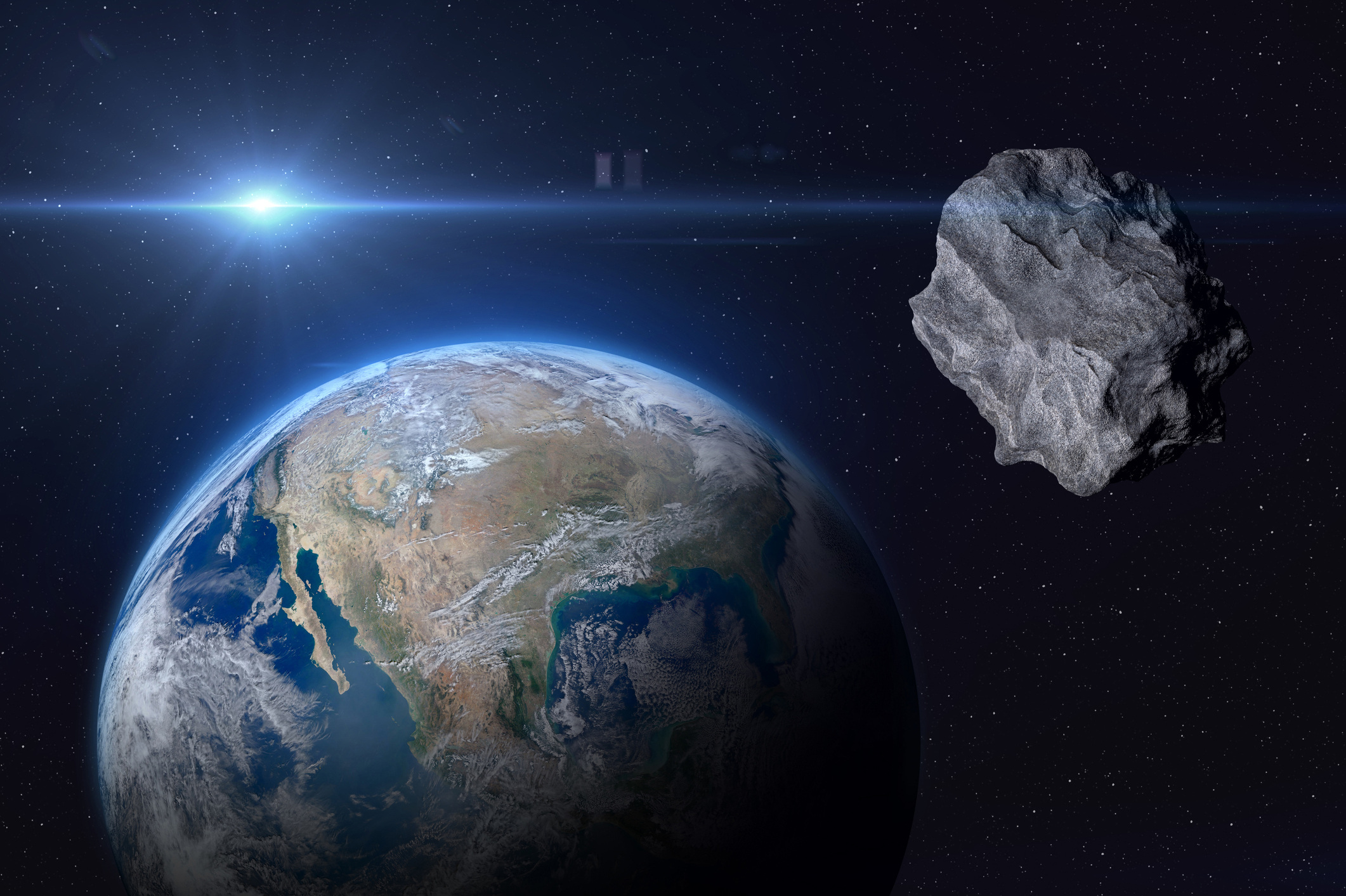
Asteroid 99942 Apophis presents zero risk of impacting Earth for at least the next 100 years, according to precise radar tracking by NASA and the European Space Agency (ESA). Furthermore, at roughly 340 to 375 meters across, Apophis lacks the size and mass required to cause planetary destruction or global extinction even in a theoretical collision.
Discovery and Physical Profile of 99942 Apophis
Discovered in June 2004 by astronomers at the National Optical Astronomy Observatory’s Kitt Peak Observatory in Arizona, asteroid 99942 Apophis immediately captured international headlines. Initial orbital calculations assigned it an unprecedentedly high rating on threat scales, leading to widespread sensationalism. To evaluate the actual threat posed by Apophis, it is necessary to examine its physical characteristics and orbital properties.
Apophis is an S-type (silicaceous) asteroid composed predominantly of nickel-iron mixed with silicate materials (magnesium and iron silicates). Its physical dimensions have been refined across multiple observation campaigns using thermal infrared observations and radar imaging:
- Mean Diameter: Approximately 340 to 375 meters (roughly 1,100 to 1,230 feet), comparable in height to the Empire State Building or the Eiffel Tower.
- Mass: Estimated at roughly $6.1 \times 10^{10}$ kilograms ($61\text{ million metric tons}$).
- Shape: Irregular and elongated, often described as peanut-shaped or bi-lobed, tumbling complexly as it orbits the Sun.
- Orbital Period: Approximately 323 days, bringing it across Earth's orbital path twice per solar orbit as an Aten-class asteroid.
While an object of this size is substantial in human terms, it is modest on a celestial scale. Understanding the physical scale of Apophis is essential when comparing its kinetic energy to the thresholds required for planetary-scale destruction.
The Math of Orbital Mechanics: How Impact Risks Were Eliminated
When Apophis was first tracked in late 2004, early orbital calculations indicated a 2.7% chance (1 in 37) of impacting Earth on April 13, 2029. This alarming probability caused Apophis to reach Level 4 on the Torino Impact Hazard Scale—the highest alert level ever recorded for a near-Earth object.
Resolving the 2029 and 2036 Gravitational "Keyholes"
The high initial uncertainty stemmed from a limited observation window. In orbital mechanics, early observations of an asteroid yield an "uncertainty ellipse"—a region of space where the object might pass. Astronomers identified a key concern: if Apophis passed through a narrow region of space during its 2029 flyby known as a gravitational keyhole (roughly 800 meters wide), Earth’s gravity would alter its trajectory just enough to trigger a direct impact on its subsequent return on April 13, 2036.
Additional optical tracking between 2005 and 2013 progressively squeezed this uncertainty window. By tracking Apophis during subsequent approaches, orbital dynamicists confirmed that the asteroid would miss the 2029 keyhole entirely, ruling out an impact in both 2029 and 2036.
The Final Confirmation: March 2021 Radar Observations
Despite ruling out 2029 and 2036, a minor theoretical risk remained for a potential collision in April 2068, largely due to uncertainties in non-gravitational accelerations such as the Yarkovsky effect. The Yarkovsky effect occurs when an asteroid absorbs sunlight and re-radiates heat as thermal radiation, acting like a minuscule thruster that continuously nudges the asteroid's orbit over decades.
In March 2021, Apophis made a distant flyby of Earth at a distance of about 17 million kilometers (10.6 million miles). Astronomers leveraged powerful radio telescopes at the Goldstone Deep Space Communications Complex in California and the Green Bank Telescope in West Virginia to conduct high-precision radar measurements.
Radar Precision Milestone (March 2021):
- Distance Measurement Accuracy: Within 150 meters (490 feet) over 17 million km
- Velocity Measurement Accuracy: Within fractions of a millimeter per second
- Outcome: 2068 impact risk ruled out completely; removed from NASA Sentry Risk Table
The radar measurements pinned down Apophis’s orbit with extreme precision. The NASA Center for Near-Earth Object Studies (CNEOS) and the ESA Near-Earth Objects Coordination Centre (NEOCC) recalculated the long-term trajectory and officially confirmed that Apophis poses no risk of impacting Earth for at least the next 100 years. As a result, Apophis was formally removed from NASA's Sentry Impact Risk Table.
Planetary Destruction vs. Regional Impact: A Physics Breakdown
Beyond the fact that Apophis will not hit Earth, claims that Apophis could "destroy Earth" stem from a fundamental misunderstanding of impact physics and planetary energetics.
Defining "Planetary Destruction"
To literally destroy Earth (fragment the planet against its own gravitational binding energy), an impactor would need to supply approximately $2.24 \times 10^{32}$ Joules of energy. No object in the solar system short of a rogue planet could accomplish this.
Even when "planetary destruction" is defined colloquially as causing a global mass extinction (such as the impact that ended the Cretaceous period 66 million years ago), Apophis falls orders of magnitude short.
Kinetic Energy Equation: E_k = 0.5 * m * v^2
Apophis Kinetic Energy Calculation:
- Mass (m): ~6.1 x 10^10 kg
- Relative Impact Velocity (v): ~12.6 km/s (12,600 m/s)
- Kinetic Energy (E_k): ~4.8 x 10^18 Joules
- Equivalent Yield: ~1,150 Megatons of TNT
Apophis vs. The Chicxulub Impactor
To put the energy of an Apophis impact into context, it must be compared to historic celestial events and global threat thresholds:
- Chicxulub Impactor (Dinosaur Extinction): The asteroid that struck the Yucatán Peninsula 66 million years ago was roughly 10 to 15 kilometers (6 to 9.3 miles) in diameter—over 30 times wider and roughly 30,000 times more massive than Apophis. The energy released during the Chicxulub impact was estimated at 100 million megatons of TNT, generating global firestorms, years of impact winter, and global mass extinction.
- Apophis Impactor (Theoretical): With an energy yield of roughly 1,150 megatons of TNT, an Apophis impact would be devastating on a regional scale, but completely incapable of causing global extinction. It represents roughly 23 times the yield of the Tsar Bomba (the largest nuclear weapon ever detonated, at 50 megatons), but less than 0.001% of the energy of Chicxulub.
| Event | Energy Scale of Impact Events (TNT Equivalent) |
|---|---|
| Tsar Bomba (1961 Detonation) | [50 MT] |
| Apophis Theoretical Impact | [1,150 MT] |
| Tambora Volcanic Eruption 1815 | [33,000 MT] |
| Chicxulub Dinosaur Impactor | [100,000,000 MT] |
What Would a Theoretical Apophis Impact Actually Look Like?
If Apophis were to hit Earth—which its orbit explicitly prevents—it would produce severe local and regional consequences depending on the impact site:
- Land Impact: It would create an impact crater approximately 4 to 5 kilometers across and several hundred meters deep. Blast waves would level structures within a radius of 50 to 100 kilometers, accompanied by extreme thermal radiation and localized ground shaking (seismic shocks).
- Ocean Impact: Striking deep ocean waters would displace enormous volumes of water, excavating a transient ocean cavity and generating regional tsunamis that could inundate coastal settlements surrounding the ocean basin.
However, an Apophis impact would not launch enough dust into the stratosphere to trigger a severe global impact winter, nor would it threaten the survival of human civilization or the Earth itself.
The Historic April 13, 2029 Close Approach
Although Apophis will not strike Earth, its upcoming trajectory on Friday, April 13, 2029, remains one of the most remarkable astronomical events in recorded history.
How Close Will Apophis Pass?
On April 13, 2029, Apophis will pass within approximately 31,600 kilometers (19,600 miles) of Earth’s surface.
To put this proximity into perspective:
- Earth's radius is approximately 6,371 kilometers (3,959 miles).
- Geostationary communications satellites orbit Earth at an altitude of approximately 35,786 kilometers (22,236 miles).
- Apophis will pass inside the geostationary satellite belt, coming closer to Earth than many of our primary weather and telecommunications satellites, though safely missing both Earth and satellite clusters.
- The Moon orbits Earth at an average distance of roughly 384,400 kilometers (238,855 miles)—meaning Apophis will pass less than one-tenth of the distance to the Moon.
Scale of the 2029 Earth Flyby:
- Earth Surface
- Apophis Pass: 31,600 km
- Geostationary Satellites: 35,786 km
- Moon Orbit: 384,400 km
During this close approach, Apophis will be visible to the naked eye from parts of Europe, Africa, and western Asia as a point of light moving rapidly across the night sky, reaching a peak visual magnitude of roughly 3.1. An asteroid of this size becoming visible to the naked eye occurs only once every few thousand years.
The OSIRIS-APEX Science Mission
The 2029 flyby presents an unprecedented opportunity for planetary science. NASA redirected its OSIRIS-REx spacecraft—which successfully collected samples from asteroid Bennu and delivered them to Earth in September 2023—on an extended mission named OSIRIS-APEX (OSIRIS-Asteroid Explorer).
According to the official NASA OSIRIS-APEX mission breakdown, the spacecraft will rendezvous with Apophis shortly after its close encounter with Earth. OSIRIS-APEX will orbit the asteroid for approximately 18 months to observe the physical consequences of Earth's gravitational interaction with the asteroid:
- Tidal Force Analysis: Earth’s gravity will exert tidal forces on Apophis during the flyby, potentially altering its spin rate, triggering surface quakes, and exposing fresh material beneath its surface layer.
- Surface Mapping and Regolith Study: Spacecraft instruments will map the asteroid's surface composition, density, and internal structure.
- Thruster Firing Experiment: OSIRIS-APEX will hover close to the surface and fire its gas thrusters to stir up surface dust and rocks, revealing subsurface properties.
How Celestial Mechanics and Tracking Ensure Planetary Defense
The story of Apophis highlights how modern astronomy tracks, calculates, and predicts the movements of Near-Earth Objects (NEOs). The process of eliminating asteroid threats relies on sophisticated physics modeling and observation networks.
- Optical & Infrared Astronomical Surveys
- Preliminary Orbit Determination
- High-Precision Radar Astronomy (Goldstone)
- Yarkovsky Effect & N-Body Orbit Modeling
- Threat Assessment (CNEOS / NEOCC Sentry)
The Role of Radar Astronomy
Optical telescopes track an asteroid's position across the background sky (angle and position relative to stars), but radar astronomy provides direct distance and velocity measurements. By bouncing microwave pulses off an asteroid using facilities like the Goldstone antenna, scientists can measure the signal's round-trip travel time to determine distance down to meters, and measure the Doppler shift to determine velocity down to millimeters per second.
This precision drops orbital trajectory uncertainties exponentially, allowing dynamicists to project orbits centuries into the future rather than just decades.
Global Near-Earth Object Monitoring Networks
Automated sky survey telescopes, including Pan-STARRS in Hawaii, the Catalina Sky Survey in Arizona, and the Vera C. Rubin Observatory, continuously scan the night sky for moving objects. When a new object is detected, its orbital parameters are calculated and published on the International Astronomical Union’s Minor Planet Center platform.
Algorithms at NASA’s CNEOS (Sentry system) and ESA’s NEOCC (CLOMON2 system) automatically compute trajectory uncertainties and run collision simulations across millions of orbital variations. If risks are identified, targeted radar and optical campaigns are deployed to resolve the trajectory—just as was done to clear Apophis.
Comparative Overview: Apophis vs. Historical Asteroids and Threat Levels
To understand where Apophis fits within planetary defense, the following table compares its physical and orbital properties against other historic Near-Earth Objects and global impact thresholds:
| Object / Event | Estimated Diameter | Impact Probability (Next 100 Yrs) | Kinetic Energy Yield | Primary Impact Consequence |
|---|---|---|---|---|
| Chelyabinsk Meteor (2013) | ~20 meters | Impacted in 2013 | ~0.5 Megatons | Atmospheric airburst; localized window damage and minor injuries |
| Tunguska Event (1908) | ~50–60 meters | Impacted in 1908 | ~10–15 Megatons | Airburst flattening 2,150 km² of Siberian forest; no crater |
| Asteroid 99942 Apophis | ~340–375 meters | 0% (Safe for 100+ Years) | ~1,150 Megatons | Severe regional devastation (crater/blast); ZERO planetary threat |
| Asteroid 101955 Bennu | ~490 meters | 0.037% (Year 2182) | ~1,400 Megatons | Regional impact; zero risk of global extinction |
| Chicxulub Impactor | ~10–15 kilometers | Impacted 66M Yrs Ago | ~100,000,000 Megatons | Mass extinction event; global climate collapse (dinosaurs) |
| Global Threat Threshold | > 1–2 kilometers | N/A (Monitored) | > 100,000 Megatons | Global ecological disruptions and agricultural failure |
Frequently Asked Questions
Could Apophis be nudged off course by another space object into Earth?
No. The space between asteroids in our solar system is vast, making high-energy collisions extraordinarily rare. Furthermore, for a collision to shift Apophis's mass enough to redirect its trajectory toward Earth during its 2029 pass, a substantial impactor would have to strike it at precise vectors. Astronomers continuously track objects in Apophis's vicinity and have confirmed no such threats exist.
Will Apophis be visible to the naked eye during its 2029 flyby?
Yes. On April 13, 2029, Apophis will reach a visual magnitude of roughly 3.1. It will be visible to the naked eye under dark skies from parts of Europe, Africa, and Asia as it moves rapidly across the constellation of Cancer and toward Hydra.
What happens to Apophis after its 2029 pass?
As Apophis passes Earth, Earth's gravitational pull will alter the asteroid's orbit around the Sun. Its orbit will transition from an Aten-class orbit (orbits primarily inside Earth's orbit) to an Apollo-class orbit (orbits primarily outside Earth's orbit). This change in trajectory has been precisely modeled, and it does not bring the asteroid onto an impact course with Earth for the foreseeable future.
What would have happened if Apophis had hit Earth?
If Apophis had hit Earth, it would not have caused global extinction or planet destruction. An ocean impact would have generated regional tsunamis affecting coastal zones, while a land impact would have created a 4-to-5-kilometer-wide crater, causing intense regional destruction across a hundred-kilometer radius. However, the effects would remain regional rather than planet-wide.
Why was Apophis originally thought to be so dangerous?
When discovered in 2004, astronomers had only a few days of observation data. Short observation arcs leave a wide range of positional uncertainty. Because Earth fell inside that initial zone of uncertainty, statistical models indicated a 2.7% impact probability for 2029. As months and years of additional optical and radar data were collected, the uncertainty shrank, reducing the calculated impact risk to zero.
Summary and Key Takeaways
The statement that "Apophis cannot destroy Earth" is true for two distinct reasons grounded in astronomy and orbital dynamics:
- Zero Probability of Collision: High-precision radar tracking conducted by NASA and ESA has officially ruled out any risk of Apophis impacting Earth for at least the next century.
- Insufficient Physical Mass: At 340 to 375 meters across, Apophis is physically incapable of causing global extinction or planetary destruction. Planetary-scale catastrophes require impactors measuring multiple kilometers across.
For space enthusiasts and the general public, the April 13, 2029 flyby of Apophis should be viewed not as a threat, but as a rare and safe natural phenomenon. It provides an extraordinary chance to observe a naked-eye asteroid pass closer than geostationary satellites while enabling missions like NASA's OSIRIS-APEX to unlock fundamental insights into asteroid structure and planetary evolution.
To monitor verified near-Earth object trajectories and real-time hazard assessments directly from space agencies, consult the NASA JPL CNEOS Database or the ESA Near-Earth Objects Coordination Centre.