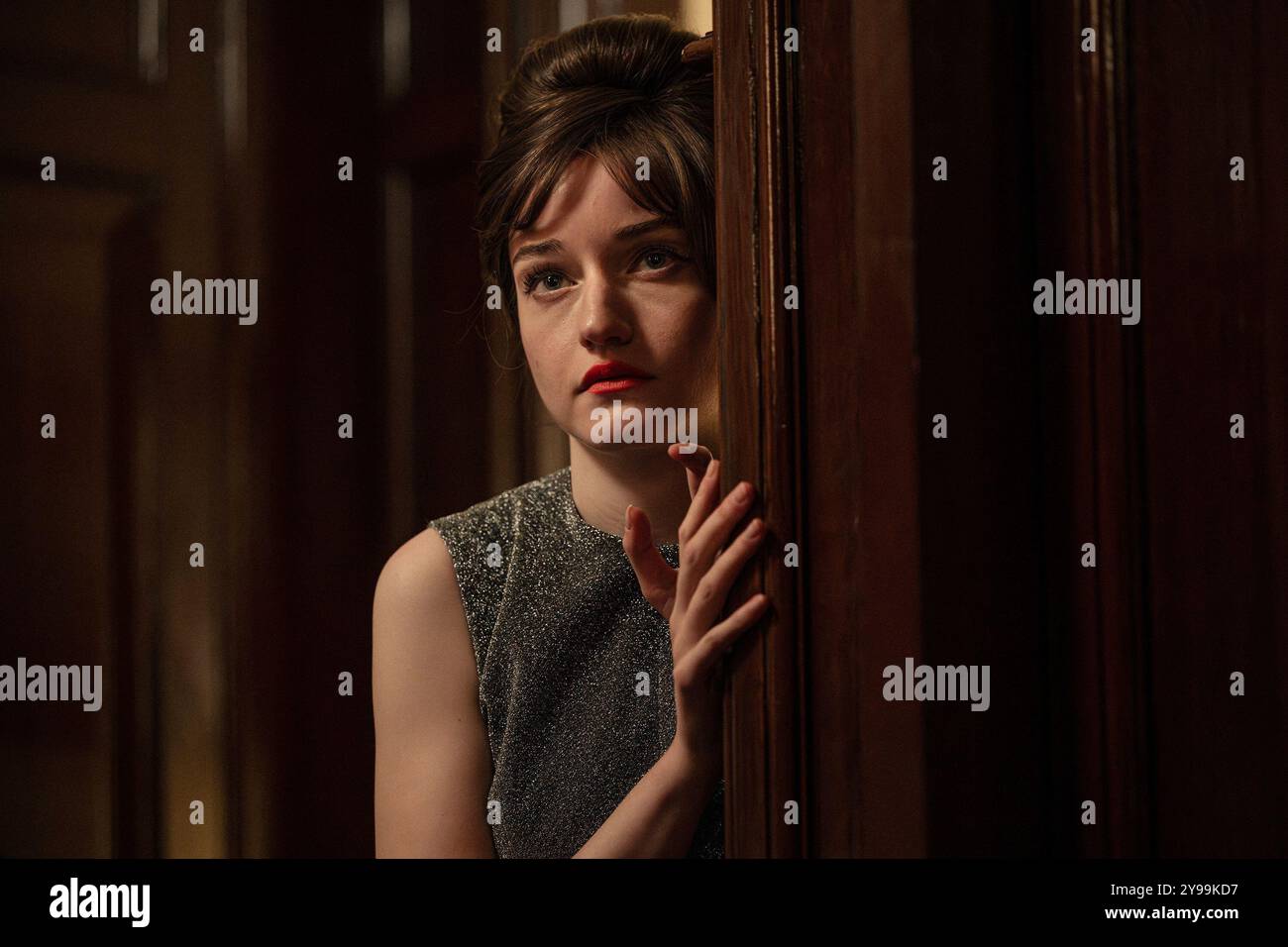
Apartment 7A is a psychological horror film starring Julia Garner that serves as a direct prequel to the 1968 classic Rosemary’s Baby. Released in late 2024 and currently available on Paramount+, the film follows Terry Gionoffrio, a struggling dancer who encounters the sinister Castevets before the events of the original story.
Apartment 7A marks a significant entry in the modern horror landscape, particularly for its attempt to bridge the gap between 1960s psychological dread and contemporary cinematic techniques. As of 2026, the film has found a permanent home in the libraries of horror aficionados, noted primarily for Julia Garner’s transformative performance and its meticulous recreation of the Bramford’s gothic atmosphere. This guide explores the film’s narrative depth, its connection to the broader "Rosemary" mythos, and the technical execution that defines this prequel.
The Narrative Foundation: Who is Terry Gionoffrio?
In the original 1968 film Rosemary’s Baby, Terry Gionoffrio is a minor character—a young woman Rosemary meets in the laundry room of the Bramford. Her story is cut short almost immediately when she is found dead on the sidewalk, an apparent suicide. Apartment 7A seeks to fill the void of her history, transforming her from a plot device into a fully realized protagonist.
The film is set in 1965 New York City. Terry, portrayed by Julia Garner, is an ambitious dancer whose career is sidelined by a devastating ankle injury. This injury is more than just a physical setback; it represents the loss of her identity and her only path to upward mobility in a competitive city. When she collapses, she is taken in by Minnie and Roman Castevet, the eccentric elderly couple who would later become the primary antagonists for Rosemary Woodhouse.
The story follows Terry’s gradual seduction by the Castevets and the promise of a miraculous recovery. As her health improves and her career prospects brighten, she begins to suspect that her newfound success comes at a supernatural cost. The film meticulously tracks her descent into paranoia, mirroring the structural beats of the original film while providing a fresh perspective on the "deal with the devil" trope.
Julia Garner’s Performance and Casting Brilliance
Julia Garner, known for her Emmy-winning work in Ozark and her chameleon-like turn in Inventing Anna, brings a raw, nervous energy to the role of Terry. In 2026, critics still point to this performance as one of the strongest in recent horror history. Garner’s background in physical acting is particularly relevant here, as much of Terry’s character is communicated through her movement—or lack thereof.
The role required Garner to convey the desperation of a performer losing her instrument. When Terry is injured, Garner portrays the physical agony and the subsequent psychological fragility that makes her a prime target for the Castevets. Her interpretation of the character is distinct from Mia Farrow’s Rosemary; where Rosemary was often seen as an innocent caught in a web, Terry is portrayed as someone whose own ambition is weaponized against her.
Supporting Cast: Reviving the Castevets
One of the greatest challenges of Apartment 7A was recasting Minnie and Roman Castevet, roles originally made iconic by Ruth Gordon (who won an Oscar for her portrayal) and Sidney Blackmer.
- Dianne Wiest takes on the role of Minnie Castevet. Wiest avoids a direct imitation of Ruth Gordon, instead opting for a performance that balances grandmotherly warmth with a chilling, predatory undercurrent.
- Kevin McNally portrays Roman Castevet, bringing a sophisticated but equally manipulative presence to the screen.
- Jim Sturgess plays Alan Marchand, a powerful Broadway producer who becomes a pivotal figure in Terry’s career and her eventual entrapment.
The chemistry between Garner and Wiest is the engine of the film. The relationship oscillates between a surrogate mother-daughter dynamic and a captive-captor scenario, providing the tension necessary to sustain the prequel's runtime.
The Bramford: A Character in Its Own Right
The setting of the film is the Bramford, a fictionalized version of the real-world Dakota building in New York. In Apartment 7A, the building is presented as a labyrinthine, gothic structure that feels alive. The production design, led by Natalie Erika James (who also directed), emphasizes the claustrophobia of the 1960s New York apartments.
Technically, the film excels in its use of space. The transition from the bright, hopeful stage lights of Broadway to the shadowed, oppressive hallways of the Bramford serves as a visual metaphor for Terry's journey. The use of practical sets over heavy CGI ensures that the film maintains a grounded, historical feel that aligns perfectly with the aesthetic established by Roman Polanski in the 1968 original.
Connection to the Original Rosemary’s Baby
For viewers coming to Apartment 7A as fans of the original Ira Levin novel or the Polanski film, the prequel offers several "easter eggs" and narrative bridges. It explains the origins of the "Tannis root" charm and provides a deeper look into the cult’s operations before they perfected their approach with the Woodhouses.
The film's climax is particularly significant. It must reconcile Terry’s story with her known fate in the 1968 film. Director Natalie Erika James manages this by blending a surreal, dance-heavy hallucination sequence with the grim reality of the cult’s requirements. This sequence has been widely discussed for its innovative choreography, which uses horror elements to depict the "birth" of a new era for the coven.
Comparison: Apartment 7A vs. Rosemary's Baby
| Feature | Apartment 7A (2024) | Rosemary's Baby (1968) |
|---|---|---|
| Protagonist | Terry Gionoffrio (Dancer) | Rosemary Woodhouse (Housewife) |
| Primary Theme | Ambition and Career Sacrifice | Gaslighting and Paranoia |
| Director | Natalie Erika James | Roman Polanski |
| Visual Style | Saturated, Surreal, Modern Gothic | Naturalistic, Muted, 60s Realism |
| Core Conflict | Bodily recovery vs. Moral cost | Maternal instinct vs. Societal betrayal |
| Ending Tone | Tragedy and Resignation | Ambiguous acceptance |
Technical Execution and Direction
Natalie Erika James, who gained acclaim for her debut feature Relic, brings a specific focus on "body horror" and the psychological impact of physical decline. In Apartment 7A, she uses the dancer's body as a canvas for horror. The sounds of cracking bones and the visual representation of Terry's strained muscles heighten the visceral nature of the film.
The cinematography by Arnaud Potier utilizes a wide-angle lens in the apartment sequences to make the rooms feel both vast and impossibly small, a technique that mirrors Terry’s increasing isolation. By 2026, the film is often cited in film school curricula for its effective use of "negative space" to build dread without relying on traditional jump scares.
Themes of Ambition and Autonomy
At its core, Apartment 7A is an exploration of what people are willing to trade for success. Unlike Rosemary, who was largely an unwitting victim of her husband Guy’s ambition, Terry is offered a direct deal. She is a woman in a male-dominated industry in the 1960s, facing the end of her dreams.
The film tackles the theme of bodily autonomy with a modern lens. Terry’s struggle to regain control over her legs—and eventually her entire body—resonates with contemporary discussions regarding women’s rights and medical gaslighting. The Castevets represent a system that provides support only as a means of total extraction.
Viewing Requirements and Access
To fully appreciate Apartment 7A, it is recommended (though not strictly necessary) to have seen the original Rosemary’s Baby. The prequel is designed to be self-contained, but the emotional weight of the ending is significantly amplified if the viewer knows Terry's eventual fate.
Where to Watch (Status in 2026)
- Platform: Paramount+ (Exclusive Streaming Home)
- Purchase Options: Available on 4K UHD and Blu-ray for physical media collectors.
- Rating: Rated R for horror violence, language, and some sexual content.
The film is best viewed in a dark environment with a high-quality sound system to capture the subtle foley work—specifically the unsettling ambient noises of the Bramford building itself.
Critical Reception and Legacy
Upon its release, Apartment 7A received a polarized but generally positive reception. Critics praised Julia Garner’s "tour de force" performance and the film’s atmospheric tension. However, some purists felt that explaining the mystery of the Castevets diminished the power of the original film.
As of 2026, the film’s legacy has stabilized. it is viewed as a successful example of a "legacy prequel"—a film that respects its predecessor while introducing enough new thematic material to justify its existence. It has also cemented Natalie Erika James as a major voice in the horror genre, particularly for her ability to blend high-concept art with genre tropes.
Frequently Asked Questions
Do I need to watch Rosemary's Baby before Apartment 7A?
While Apartment 7A is a standalone story that explains its own plot, watching the original film first provides essential context for the characters of Minnie and Roman Castevet. Knowing the outcome of the original film adds a layer of tragic irony to Terry’s journey that first-time viewers might miss.
Is Apartment 7A a true story?
No, Apartment 7A is a work of fiction. It is based on the characters created by author Ira Levin in his 1967 novel Rosemary's Baby. While the setting (the Bramford/The Dakota) is a real location in New York, the events and the satanic cult are entirely fictional.
How does the ending of Apartment 7A link to the original film?
The ending shows Terry realizing the full extent of the cult's plans for her. In an act of defiance and despair, she chooses to end her life by jumping from the apartment window. This leads directly into the beginning of Rosemary’s Baby, where Rosemary and Guy see Terry's body on the sidewalk shortly after they move into the building.
Who directed Apartment 7A?
The film was directed by Natalie Erika James. She is known for her mastery of psychological horror and her ability to create atmosphere through sound and production design. She also co-wrote the screenplay with Christian White and Skylar James.
What is the significance of the "7A" in the title?
Apartment 7A is the specific unit within the Bramford where Terry resides during her recovery. It is positioned as the precursor to Apartment 5A (occupied by the Woodhouses in the original film), serving as the staging ground for the cult’s initial attempts at their ritual.
Practical Recommendation for Viewers
If you are a fan of psychological horror that prioritizes character development over cheap thrills, Apartment 7A is a mandatory watch. For the best experience, watch it as part of a double feature with the 1968 Rosemary’s Baby. Pay close attention to Julia Garner’s physical performance in the dance sequences, as they contain subtle clues about her character's internal state and the encroaching supernatural influence. For those interested in the technical side of filmmaking, the production design of the Bramford offers a masterclass in building tension through architecture.