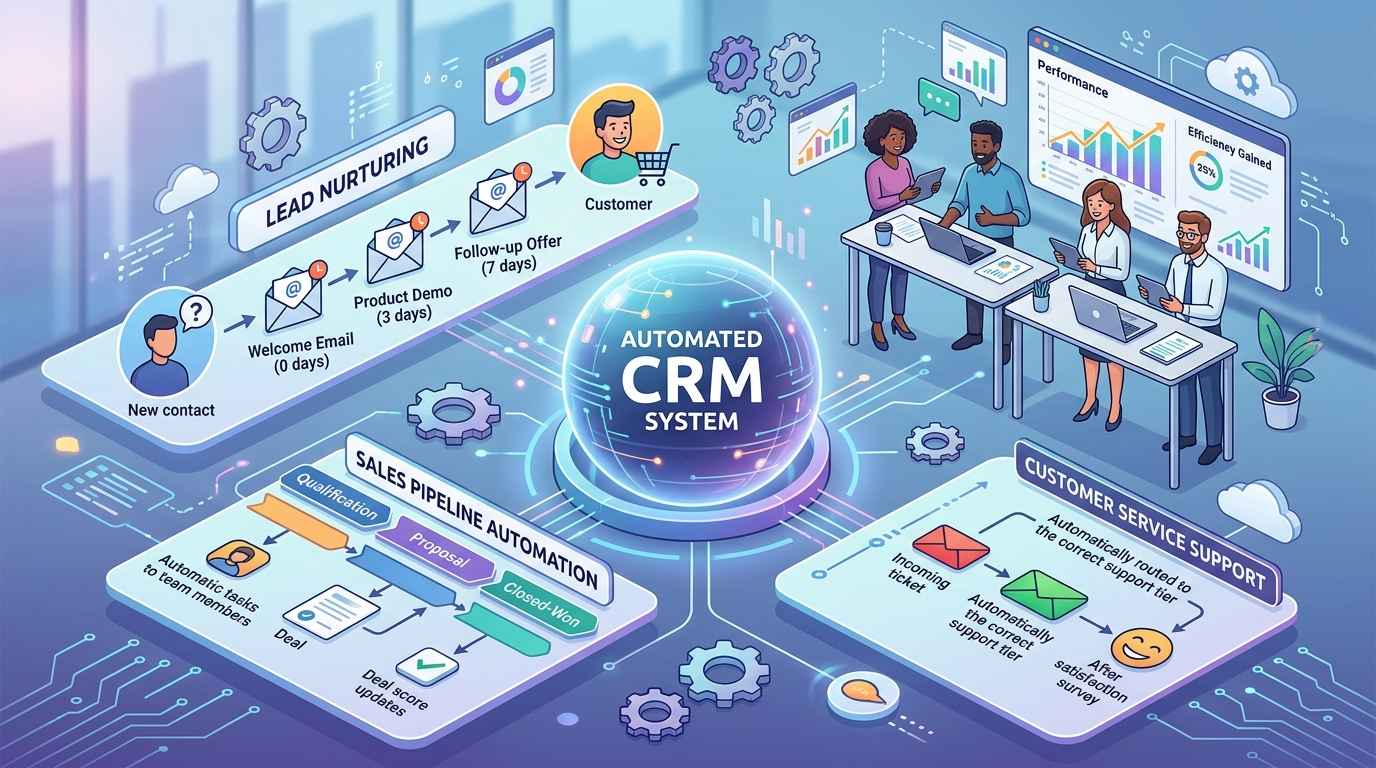
AI CRM software in 2026 represents the convergence of generative intelligence, autonomous data processing, and predictive analytics within customer relationship management platforms. These systems function by automating complex workflows, personalizing customer interactions at scale, and providing real-time decision support, allowing organizations to shift from reactive data logging to proactive relationship orchestration.
The Evolution of CRM Architecture
By 2026, the definition of Customer Relationship Management (CRM) has expanded significantly. Where legacy systems primarily served as static databases or digital Rolodexes for sales teams, modern AI-integrated CRM architectures act as the "central nervous system" of the enterprise. The transition from rule-based automation—where a system performs a task only when a specific trigger is met—to agentic AI has been the defining shift of the current calendar year.
In this landscape, AI models are no longer bolted-on features but are deeply embedded into the database schema. This integration allows for "natural language querying," where a manager can ask, "Which high-value accounts show signs of churn risk based on recent support ticket sentiment?" and receive an instantaneous, evidence-backed answer. The technical depth of these platforms has reached a point where manual data entry is largely obsolete, replaced by background ingestion and analysis of emails, calls, video conferences, and purchase history.
Key Capabilities to Prioritize
When evaluating AI CRM software in 2026, functionality must be assessed against specific operational needs. Not all AI is created equal, and platforms vary significantly in their underlying architecture and intended scale.
Predictive Lead Scoring
Modern AI scoring has moved beyond simple behavioral tracking (like clicks or page visits). It now incorporates firmographic data, external market indicators, and historical conversion patterns to assign a probability score to every lead. This enables sales teams to prioritize outreach to prospects who are statistically most likely to close, rather than those who simply engaged with marketing collateral.
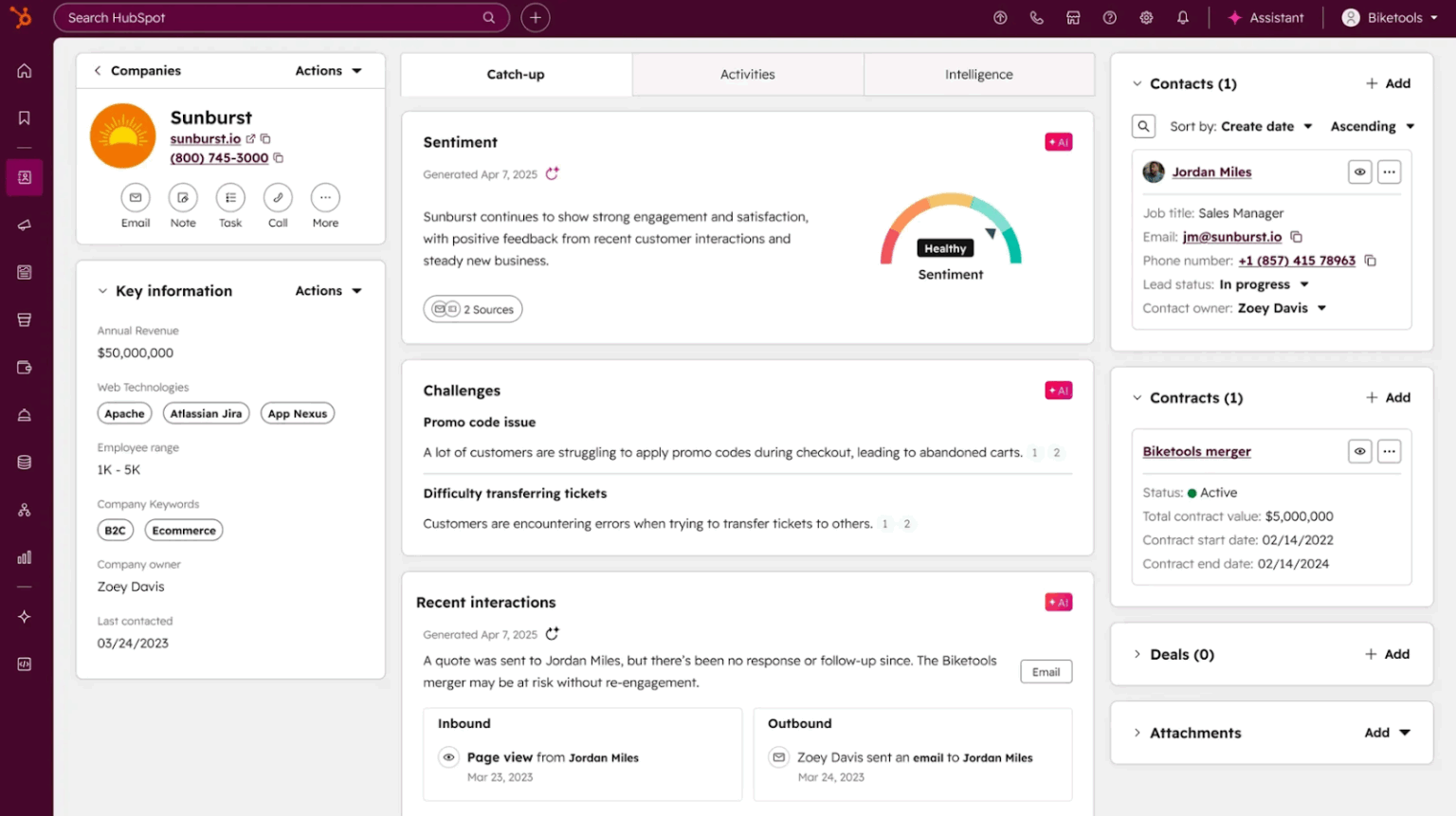
Sentiment Analysis and Intent Detection
Voice and text processing models now provide real-time guidance during customer interactions. For example, during a client call, the CRM may detect frustration or price sensitivity and prompt the representative with real-time objection-handling scripts or discount approvals. This capability transforms a standard representative into a highly informed consultant.
Automated Content Generation
Generative models now draft follow-up emails, internal reports, and personalized marketing assets based on the context of the relationship. This is not template-based automation; the system generates unique content that references past discussions, specific pain points mentioned in previous interactions, and the current stage of the deal cycle.
Comparative Framework for Selection
Selecting the right platform requires a balance between technical robustness and internal adoption capacity. Many enterprises fail to achieve ROI on AI CRM investments because they treat the implementation as a software migration rather than a process re-engineering project.
Comparison Table: Strategic Considerations
| Feature Category | Basic AI CRM | Advanced AI CRM |
|---|---|---|
| Data Ingestion | Manual/API-based batching | Real-time, multi-modal ingestion |
| Automation | Rule-based (If-Then) | Agentic/Autonomous (Goal-oriented) |
| User Interface | Traditional menus | Natural language/Conversational AI |
| Implementation | Weeks to months | Requires specialized architecture setup |
| Primary Goal | Efficiency/Data storage | Revenue growth/Relationship optimization |
Implementation Prerequisites and Infrastructure Requirements
Implementing an AI-driven CRM is not merely a software procurement task; it is a data hygiene and security undertaking. Before deployment, organizations must ensure their data pipeline is prepared for AI utilization.
- Data Centralization: AI models require a "single source of truth." If customer data is siloed across disconnected legacy databases, the AI will produce fragmented or incorrect insights. Integration via middleware or native data lakes is a critical prerequisite.
- Security and Compliance: Given the rise of sophisticated data privacy regulations in 2026, organizations must ensure that the AI models utilized by their CRM comply with regional data sovereignty laws. This includes confirming how the AI vendor handles PII (Personally Identifiable Information) and whether customer data is used to train public models.
- Internal Data Governance: AI is prone to "hallucinations" if fed poor-quality data. Implementing strict schema definitions and automated data validation rules is essential to ensure that the AI makes recommendations based on accurate records.
Common Pitfalls and Troubleshooting
The most common mistake in 2026 implementations is "automation bias," where staff members blindly trust the AI's recommendations without human verification.
- Over-reliance on AI Insights: If the CRM suggests a specific outreach strategy, it is a recommendation, not an absolute truth. Sales managers should implement human-in-the-loop (HITL) checkpoints for high-value negotiations.
- Insufficient Staff Training: AI tools often change the nature of work. Employees who previously focused on data entry must now be trained on data analysis and AI-prompt management. Neglecting this training often leads to low adoption rates.
- The "Black Box" Problem: If an AI model flags an account as a "churn risk" but cannot explain why, the sales team will be unable to act on the information effectively. When choosing a vendor, prioritize systems that offer "Explainable AI" (XAI) features, which provide the rationale or evidence behind each recommendation.
Assessing Return on Investment
ROI in 2026 is measured by the reduction in "time-to-first-value." Organizations should measure how much faster a lead moves from initial contact to qualified opportunity following the implementation of AI-driven scoring.
Cost considerations extend beyond the subscription fee. Most enterprise AI CRMs charge based on a combination of seat count and "AI consumption units" or token usage. This variable pricing model can lead to budget volatility if usage is not monitored closely. It is standard practice to establish clear usage quotas and alerts to prevent billing spikes before they occur.
Frequently Asked Questions
How does generative AI change the role of the sales representative in 2026?
Generative AI acts as a co-pilot, handling administrative burdens like data entry and routine follow-ups. This allows representatives to focus on high-EQ (emotional intelligence) tasks, such as negotiation, complex problem-solving, and building genuine human rapport, which AI cannot replicate.
Is my data safe when using AI-enhanced CRM features?
Leading providers now offer "Private Instance" deployments where the AI models are contained within your organization's specific security perimeter. Always verify the vendor's data-sharing policy to ensure your proprietary customer insights are not used to train global, public-facing models.
Can AI CRM software integrate with my existing legacy stack?
Most 2026-era platforms utilize robust API frameworks and "connector" services to integrate with older databases. However, expect a period of data cleansing during integration to ensure that legacy records are formatted in a way that modern AI can process accurately.
What is the biggest limitation of AI in CRM?
The primary limitation is "contextual blind spots." AI operates within the data it is provided. If your team fails to log interactions—or if those interactions happen through unmonitored channels—the AI will work with incomplete information, leading to degraded performance.
How do I choose between a specialized AI CRM and a generalist suite?
Specialized CRMs offer deeper industry-specific models (e.g., healthcare-compliant or manufacturing-specific workflows). Generalist suites provide broader ecosystem integrations but may require more "prompt engineering" and manual configuration to achieve the same level of industry-specific accuracy.
Recommended Next Steps
To begin your transition, conduct a comprehensive audit of your current data quality. Before purchasing, run a pilot program with a small segment of your team, specifically focusing on a "clean" subset of data. This will allow you to measure the accuracy of the AI’s predictions against your historical actuals without disrupting your entire sales pipeline. Once the baseline is established, scale the implementation to your wider team, focusing first on the highest-friction points in your sales or support lifecycle.