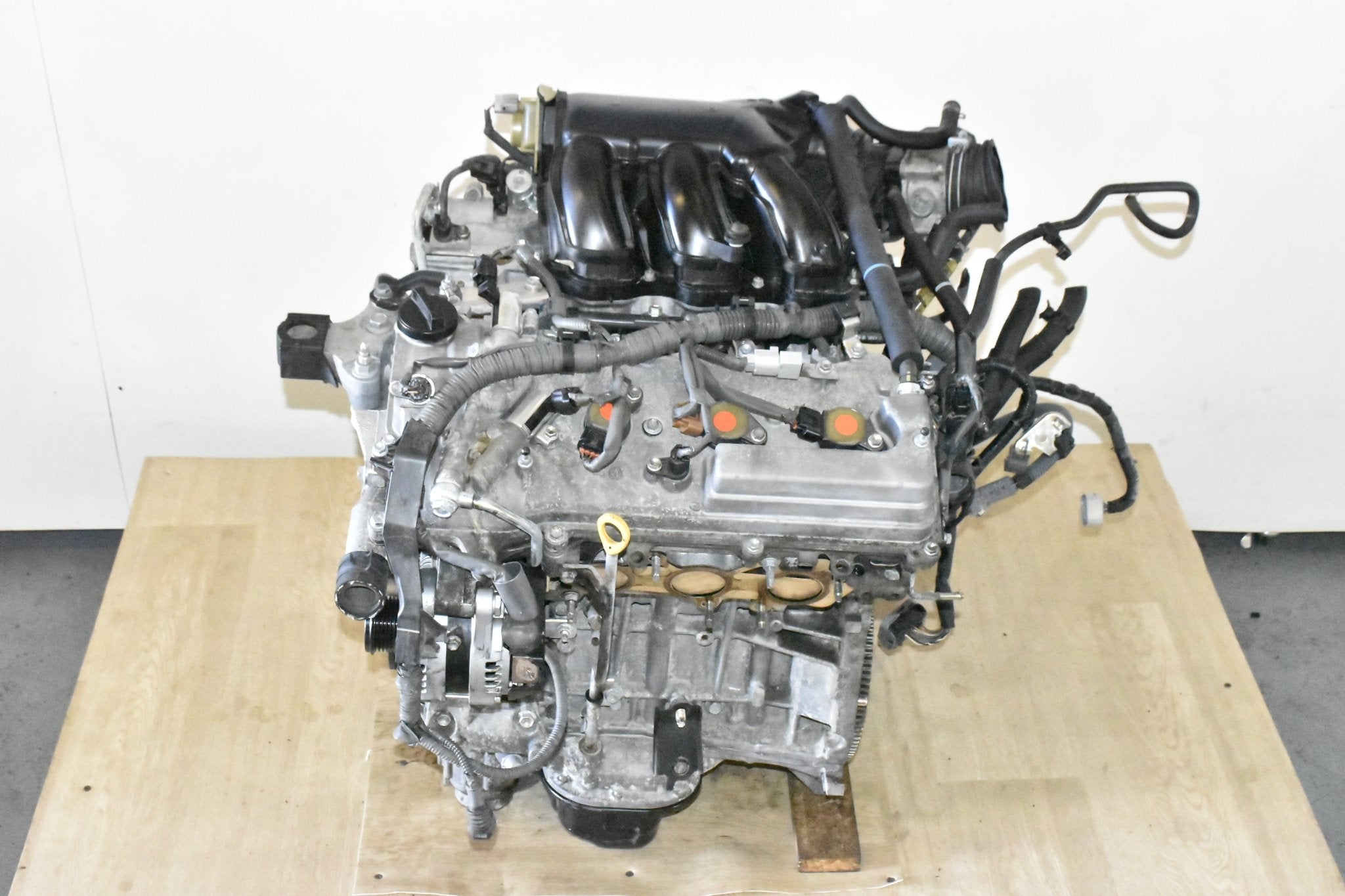
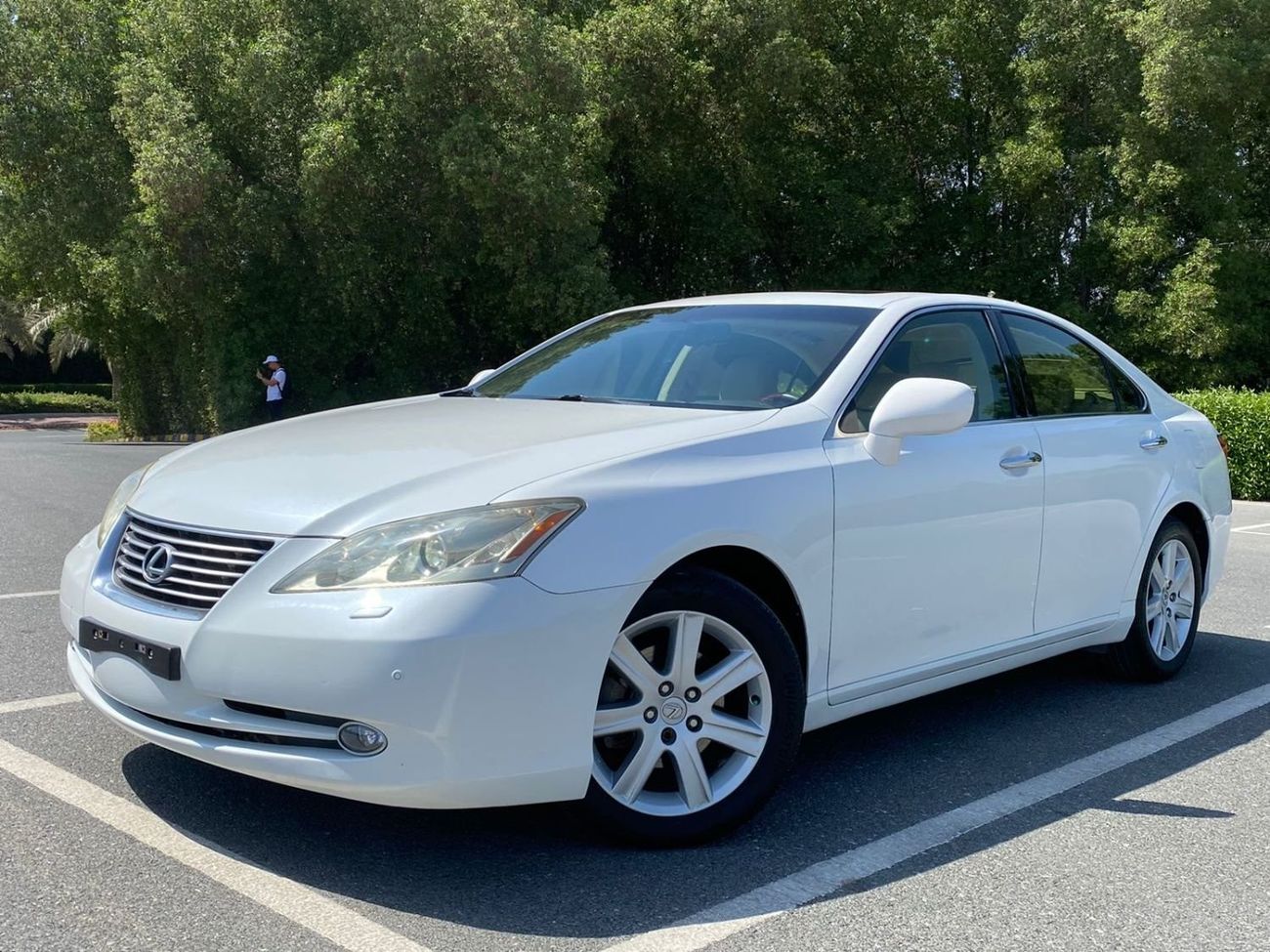
The 2008 Lexus ES 350 is powered by Toyota’s 3.5-liter 2GR-FE V6 engine, producing 272 horsepower and 254 lb-ft of torque. Featuring aluminum construction, dual overhead camshafts, and Dual VVT-i, this naturally aspirated, port-injected engine marked a major shift from timing-belt-driven predecessors toward timing-chain-driven architecture, delivering refined power, high reliability, and low operational maintenance.
Core Engine Specifications of the 2008 Lexus ES 350
The 2008 model year represents the second year of the fifth-generation Lexus ES (XV40 chassis), which debuted for the 2007 model year. At the center of this generation was the total replacement of the outgoing 3.3-liter 3MZ-FE engine with the 3.5-liter 2GR-FE V6. This engine was engineered to deliver smooth, linear power output suitable for an entry-level luxury sedan while achieving strict emissions standards and competitive fuel economy.
Architectural Foundation and Block Design
The 2GR-FE is a 60-degree V6 engine built around a die-cast aluminum cylinder block with cast-iron cylinder liners. The 60-degree V-angle provides inherent primary mechanical balance, minimizing engine vibration without requiring power-sapping balance shafts.
- Displacement: 3,456 cc (3.5 liters)
- Bore × Stroke: 94.0 mm × 83.0 mm (3.70 in × 3.27 in)
- Compression Ratio: 10.8:1
- Valvetrain: Double Overhead Camshafts (DOHC), 4 valves per cylinder (24 valves total)
- Block/Head Material: Open-deck aluminum alloy block / Aluminum alloy cylinder heads
- Fuel Delivery: Electronic Sequential Multiport Fuel Injection (SFI / Port Injection)
- Engine Weight: Approximately 359 lbs (163 kg) dry
The cylinder heads feature cross-flow pentroof combustion chambers designed to optimize fuel flame propagation across the piston crown. Unlike direct-injected variants in the GR family, the 2GR-FE relies entirely on port fuel injection, which continuously sprays fuel across the back of the intake valves. This design eliminates the heavy carbon buildup on intake valves that commonly afflicts direct-injection engines over long mileage cycles.
Performance Ratings and Power Curve
In the 2008 Lexus ES 350, the 2GR-FE was rated at 272 horsepower at 6,200 RPM and 254 lb-ft of torque at 4,700 RPM. Power is routed exclusively to the front wheels through an Aisin U660E six-speed electronically controlled automatic transmission with intelligence (ECT-i).
The engine’s torque curve is notably flat, providing over 80% of its peak torque from as low as 2,000 RPM up to the redline at 6,400 RPM. This wide powerband allows the 3,500-pound ES 350 to accelerate from 0 to 60 mph in approximately 6.8 seconds, placing it near the top of its midsize luxury segment during its production era.
Key Technologies Behind the 2GR-FE V6
The smooth power delivery and high mechanical efficiency of the 2008 ES 350 engine stem from three major mechanical and electronic control systems developed by Toyota engineers.
- Air Intake Assembly
- Acoustic Control Induction (ACIS) (Adjusts runner length via ECU)
- Dual VVT-i Camshaft Controls (Intake & Exhaust timing optimized)
- Pentroof Chamber Port Fuel Injection
- Smooth Power Output
Dual VVT-i (Variable Valve Timing with Intelligence)
Unlike earlier engines that varied timing only on the intake side, the 2GR-FE incorporates Dual VVT-i. This system independently adjusts the timing of both the intake and exhaust camshafts continuously based on engine speed, load, throttle position, and coolant temperature.
- Intake Adjustment: Up to 50 degrees of crankshaft rotation adjustment.
- Exhaust Adjustment: Up to 35 degrees of crankshaft rotation adjustment.
By advancing intake timing during light load, the system creates an internal exhaust gas recirculation (EGR) effect, reducing pumping losses and lowering nitrogen oxide ($NO_x$) emissions. By retarding exhaust timing under high load, it maximizes exhaust scavenging, allowing the engine to draw in a fresh air-fuel mixture more rapidly.
Acoustic Control Induction System (ACIS)
The intake manifold of the 2GR-FE utilizes an variable-length intake tract called the Acoustic Control Induction System (ACIS). Controlled by the Engine Control Module (ECM), a vacuum-actuated valve inside the aluminum/composite intake manifold alters the effective length of the intake runners:
- Low-to-Mid RPM: The ACIS valve closes, creating a long intake runner path. This long path utilizes air pulsation resonance to force air into the cylinders, raising mid-range torque.
- High RPM: The ACIS valve opens, creating a short intake runner path. The shortened distance allows air to flow with minimal resistance, maximizing high-end horsepower output.
Timing Chain Drive vs. Belt Systems
A structural improvement of the 2GR-FE over predecessor engines (such as the 3MZ-FE) was the switch from a rubber timing belt to a single, maintenance-free primary roller timing chain coupled with secondary chains for the camshafts. This design eliminated the expensive 90,000-mile timing belt replacement maintenance cycle, relying instead on engine oil pressure to maintain chain tensioner pressure across the life of the engine.
Evolution of the Lexus ES Engine Lineage
The engine inside the 2008 Lexus ES 350 represents a pivotal moment in the historical evolution of Lexus midsize powertrains. To appreciate its place in automotive history, it is helpful to examine the generations preceding and following the XV40 chassis.
- 1MZ-FE / 3MZ-FE (3.0L / 3.3L V6) [Belt Drive / Port Inject]
- 2GR-FE (3.5L V6) [Chain Drive / Port]
- 2GR-FKS (3.5L V6) [D-4S Direct+Port / Atkinson]
The Transition from the MZ Family to the GR Family
Throughout the 1990s and early 2000s, Lexus utilized the MZ engine family (1MZ-FE 3.0L and later 3MZ-FE 3.3L) in the ES 300 and ES 330. While quiet and durable, the MZ series featured iron cylinder sleeves inside cast aluminum, non-variable or single VVT-i valvetrains, and timing belts.
By 2005, Toyota introduced the GR engine series to standardize V6 production globally. When the XV40 Lexus ES launched for the 2007 model year—continuing through 2008 and up to 2012—it received the 2GR-FE. The engine offered a 20% increase in horsepower over the 3.3-liter 3MZ-FE (272 hp vs. 225 hp) while improving EPA fuel economy ratings due to lighter valvetrain components and lower internal friction.
Evolution to 2GR-FSE, 2GR-FXE, and 2GR-FKS
The 2GR engine platform evolved into several distinct variants across different Lexus vehicles and subsequent ES generations:
- 2GR-FSE (2006–2017): Used in rear-wheel-drive platforms (Lexus IS 350, GS 350), this engine introduced Toyota's D-4S system, combining direct fuel injection with traditional port injection to push output past 300 horsepower.
- 2GR-FXE (2010–2018): A specialized variant running an Atkinson cycle combustion process, paired with electric motor-generators in hybrid powertrains like the Lexus RX 450h and later ES hybrid models.
- 2GR-FKS (2016–2024): Introduced in the late sixth-generation ES 350 and carried into the seventh generation, the 2GR-FKS superseded the 2GR-FE. It incorporated D-4S direct and port injection, VVT-iW (Variable Valve Timing-intelligent Wide) allowing full switching between Otto and Atkinson cycles, and pushed horsepower up to 302 hp.
Comparing Lexus ES Powertrain Generations
The table below contrasts the 2008 ES 350 engine (2GR-FE) against its historical predecessor and its immediate successor in the Lexus ES lineup.
| Specification / Feature | 4th Gen ES 330 (2004–2006) | 5th Gen ES 350 (2007–2012) | 7th Gen ES 350 (2019–2024) |
|---|---|---|---|
| Engine Code | 3MZ-FE | 2GR-FE | 2GR-FKS |
| Displacement | 3.3 Liters (3,310 cc) | 3.5 Liters (3,456 cc) | 3.5 Liters (3,456 cc) |
| Valvetrain | DOHC 24V, Single VVT-i | DOHC 24V, Dual VVT-i | DOHC 24V, VVT-iW & VVT-i |
| Fuel System | Port Fuel Injection | Port Fuel Injection | D-4S (Direct + Port) |
| Horsepower | 225 hp @ 5,600 RPM | 272 hp @ 6,200 RPM | 302 hp @ 6,600 RPM |
| Torque | 240 lb-ft @ 3,600 RPM | 254 lb-ft @ 4,700 RPM | 267 lb-ft @ 4,700 RPM |
| Cam Drive | Timing Belt (90k interval) | Timing Chain (Lifetime) | Timing Chain (Lifetime) |
| Transmission | 5-Speed Automatic | 6-Speed Automatic | 8-Speed Automatic |
| Fuel Requirement | 87 Octane Regular | 91 Octane Premium | 87 Octane Regular |
| EPA MPG (City/Hwy) | 18 / 27 mpg | 19 / 27 mpg | 22 / 32 mpg |
Critical Maintenance Considerations and Known Vulnerabilities
While the 2GR-FE is widely regarded as one of the most reliable V6 engines of its era, early production years—specifically 2007 through 2009—exhibit specific mechanical failure points that owners and mechanics must monitor.
Rubber VVT-i Oil Line Failure
The most critical factory flaw on the 2007–2009 2GR-FE engines involves the external VVT-i oil supply line located on the rear cylinder bank (Bank 1).
The Problem: Toyota originally manufactured this oil line using a three-piece design: two metal end fittings joined by a flexible rubber center section. Over time, heat cycling and oil exposure degrade the rubber, causing it to rupture suddenly under engine oil pressure (which can exceed 60 PSI).
The Risk: A ruptured rubber line can spray out the entire engine oil capacity (6.4 quarts) in under five minutes while driving, leading to total oil starvation, rod bearing failure, and engine destruction before the low oil pressure warning light can effectively protect the engine.
The Solution: Lexus issued a Limited Service Campaign (LSC 90L) and subsequent technical updates. The fix replaces the rubber-and-metal line with a solid, one-piece all-metal oil pipe (Part # 15520-31010). Any 2008 ES 350 currently operating should be inspected immediately to confirm an all-metal line is installed.
Unsafe Original Design: [Metal Pipe] / [Rubber Hose Section] / [Metal Pipe] (Prone to burst)
Factory Updated Design: [All-Metal Solid Pipe] (Permanent fix)
Water Pump Leakage and Failure
The factory water pump on the 2GR-FE engine is known to develop shaft seal weeping or bearing failure, often between 60,000 and 100,000 miles.
- Symptom: Pink, crusty coolant buildup (Toyota Super Long Life Coolant) around the water pump pulley area, low coolant reservoir levels, or a high-pitched whining noise from the front engine accessory drive belt area.
- Service Notes: Replacing the water pump on a transverse 2GR-FE in the ES 350 is labor-intensive due to tight clearances between the front of the engine and the passenger-side frame rail. Mechanics often unbolt the engine mounts and lift the engine slightly to clear the water pump body and bolts.
Ignition Coils and Spark Plug Access
The 2GR-FE uses direct ignition with individual coil packs (Coil-on-Plug) over each spark plug. The factory specifies iridium-tipped spark plugs with a 120,000-mile replacement interval.
- Front Bank (2, 4, 6): Extremely easy to access at the front of the engine bay.
- Rear Bank (1, 3, 5): Positioned against the firewall under the windshield cowl. Replacing the rear spark plugs or coil packs requires removing the upper intake plenum manifold, surge tank, and wiper cowl assembly, adding roughly 1.5 to 2 hours of labor to routine maintenance.
Alternator Replacement Challenges
The alternator on the 2008 ES 350 sits low on the front lower right section of the engine block. Due to spatial constraints inside the XV40 engine compartment, removing the alternator requires draining the cooling system, removing the radiator cooling fan assembly, or loosening the air conditioning compressor to swing the alternator out.
Real-World Performance, Fuel Economy, and Longevity
In everyday operation, the 2008 Lexus ES 350 engine delivers a high degree of luxury refinement. Noise, vibration, and harshness (NVH) levels are exceptionally low, thanks in part to active vacuum-controlled engine mounts that adjust compliance at engine idle to dampen mechanical vibration.
Fuel Requirements and Mileage
Lexus engineered the 2008 ES 350 2GR-FE engine to operate optimally on 91-octane premium unleaded fuel. While the engine's knock sensors allow it to safely run on 87-octane regular unleaded without engine damage, the Engine Control Module will retard ignition timing under heavy acceleration, causing a slight drop in horsepower (approximately 5 to 10 hp) and a minor reduction in fuel efficiency.
- EPA Fuel Economy Ratings (2008): 19 MPG City / 27 MPG Highway / 22 MPG Combined.
- Real-World Average: Drivers typically report 20–22 MPG in mixed driving conditions and up to 28–30 MPG during flat highway cruising at steady speeds.
Engine Longevity Expectancy
When properly maintained with high-quality 5W-30 synthetic motor oil (or updated 0W-20 standard oil according to technical updates) and provided the VVT-i oil line has been updated to all-metal, the 2GR-FE engine regularly exceeds 250,000 to 300,000 miles without requiring major bottom-end or cylinder head overhauls.
Key preventative maintenance practices to ensure max longevity include:
- Oil Change Intervals: 5,000 miles or 6 months (using full synthetic oil and OEM Denso/Toyota filter inserts).
- Coolant Flushes: Every 50,000 miles using genuine Toyota Super Long Life Coolant (Pink) to prevent premature water pump seal corrosion.
- PFC Valve & Intake Cleaning: Cleaning the throttle body butterfly valve every 60,000 miles to maintain smooth engine idle calibration.
Buyer and Owner Checklist for the 2008 ES 350 Engine
If evaluating or maintaining a 2008 Lexus ES 350, follow this practical checklist to verify the health of the 2GR-FE engine:
- Inspect VVT-i Oil Line: Look down behind the front right side of the engine (near the dipstick and timing cover area). Verify that the line leading to the cylinder head is constructed entirely of hard silver metal, with no flexible black rubber hose in the center.
- Check Water Pump Pulley: Use a flashlight to examine the bottom of the serpentine belt area. Look for dried pink residue or wet liquid coolant underneath the water pump housing.
- Check Oil Level and Color: The 2GR-FE holds 6.4 quarts of oil. Low oil on the dipstick may indicate an undetected slow leak or extended service neglect.
- Listen for Cold-Start Rattle: On initial startup after sitting overnight, listen for a brief 1-to-2 second metallic rattling noise from the top of the engine. A short rattle can indicate worn VVT-i camshaft gear actuators.
- Scan for Fault Codes: Use an OBD-II scanner to check for pending codes such as P0011, P0012, P0021, or P0022 (VVT-i positioning codes), or generic misfire codes (P0300–P0306).
Frequently Asked Questions
Does the 2008 Lexus ES 350 engine have a timing belt or a timing chain?
The 2008 Lexus ES 350 uses a maintenance-free timing chain system instead of a rubber timing belt. Under normal operation with regular engine oil changes, the timing chain is designed to last the full service lifespan of the vehicle without routine replacement.
Can I use 87 octane regular gasoline in my 2008 Lexus ES 350?
Yes, the engine control unit can adjust timing to run safely on 87 octane regular unleaded fuel without damaging the engine. However, Lexus officially recommends 91 octane premium fuel to achieve maximum rated horsepower (272 hp), optimal torque response, and maximum fuel economy.
What is the VVT-i oil line recall for the 2008 Lexus ES 350?
Early 2GR-FE engines utilized a multi-piece rubber and metal VVT-i oil line that could crack, burst, and rapidly leak engine oil, leading to total engine failure. Toyota/Lexus issued a service campaign to replace the rubber section with a solid, one-piece all-metal line. Owners should visually confirm that their vehicle has the all-metal replacement installed.
How much oil does the 2008 Lexus ES 350 engine take?
When changing engine oil along with the oil filter, the 3.5-liter 2GR-FE V6 engine requires 6.4 US quarts (6.1 liters) of motor oil. The recommended oil viscosity from the factory is 5W-30, though standard synthetic 0W-20 is acceptable under updated technical guidelines depending on operating temperatures.
Is the 2008 Lexus ES 350 engine direct-injected?
No, the 2GR-FE engine in the 2008 ES 350 uses traditional sequential multiport fuel injection (PFI). It does not use direct injection (D-4S). This design prevents the severe carbon buildup on the intake valves commonly associated with early direct-injected engines.
Final Summary and Next Actions
The 2.4-liter and 3.5-liter engines in mid-2000s Lexus and Toyota vehicles were major technological steps forward. Specifically, the 2008 Lexus ES 350's 2GR-FE 3.5L V6 represents an optimal balance of smooth output, durability, and standard maintenance design. With 272 horsepower, a timing chain, and port fuel injection, it avoids modern high-pressure direct injection complications while providing competitive acceleration and longevity.
- For Current Owners: Perform a immediate visual inspection of the rear bank VVT-i oil line. If rubber components remain, schedule an appointment with a technician to retrofit the all-metal oil line immediately.
- For Prospective Buyers: Prioritize vehicles with documented service histories showing routine 5,000-mile oil changes and evidence that the water pump and spark plugs have been serviced within the last 60,000 miles.