The 1990s served as a transformative decade for science fiction television, bridging the gap between nostalgic, episodic space-opera adventures of the past and the serialized, high-concept mythologies that dominate contemporary streaming culture. Driven by rapid advancements in computer-generated imagery (CGI), practical creature effects, and shifting broadcast networks, creators produced ambitious universes exploring complex themes of artificial intelligence, alien diplomacy, dystopian governance, and cosmic horror. Examining these landmark productions reveals how the era shaped modern speculative fiction on screen.
The Evolution of the Genre in the 1990s
Before the 1990s, television science fiction was largely defined by anthology formats like The Twilight Zone or episodic space adventures such as the original Star Trek, where storylines reset cleanly by the end of each hour. The launch of the Fox network, the expansion of cable television, and the eventual rise of first-run syndication created a commercial environment hungry for fresh, loyal audiences. Networks began to realize that viewers would tune in weekly to follow sprawling, multi-season arcs, deep character growth, and dense political intrigue across star systems.
At the same time, visual effects technology matured significantly. While expensive motion-control miniature models remained a staple for spacecraft battles, early digital compositing and computer-generated modeling allowed for more dynamic camera movements and vast planetary vistas. This technical leap coincided with an era of cultural anxiety regarding the impending turn of the millennium, technological dependency, and rapid globalization. Consequently, 1990s science fiction television frequently grappled with surveillance, corporate hegemony, environmental collapse, and the ethics of human enhancement.
1. Star Trek: The Next Generation (1987–1994)
Although Star Trek: The Next Generation debuted in late 1987, its seven-season run firmly established the cultural template for 1990s episodic television. Led by Patrick Stewart as Captain Jean-Luc Picard, the series followed the crew of the USS Enterprise-D as they explored uncharted space, engaged in interstellar diplomacy, and tackled complex philosophical dilemmas.
The show relied heavily on high-concept science fiction premises, often employing allegories to examine contemporary social and political issues. Episodes featuring data-driven inquiries into the nature of sentience—particularly regarding the android officer Data—foreshadowed modern debates surrounding artificial intelligence. Its production standards set a benchmark for syndicated television, while its massive commercial success paved the way for a 1990s franchise expansion that included multiple spin-offs running concurrently.
2. The X-Files (1993–2002)
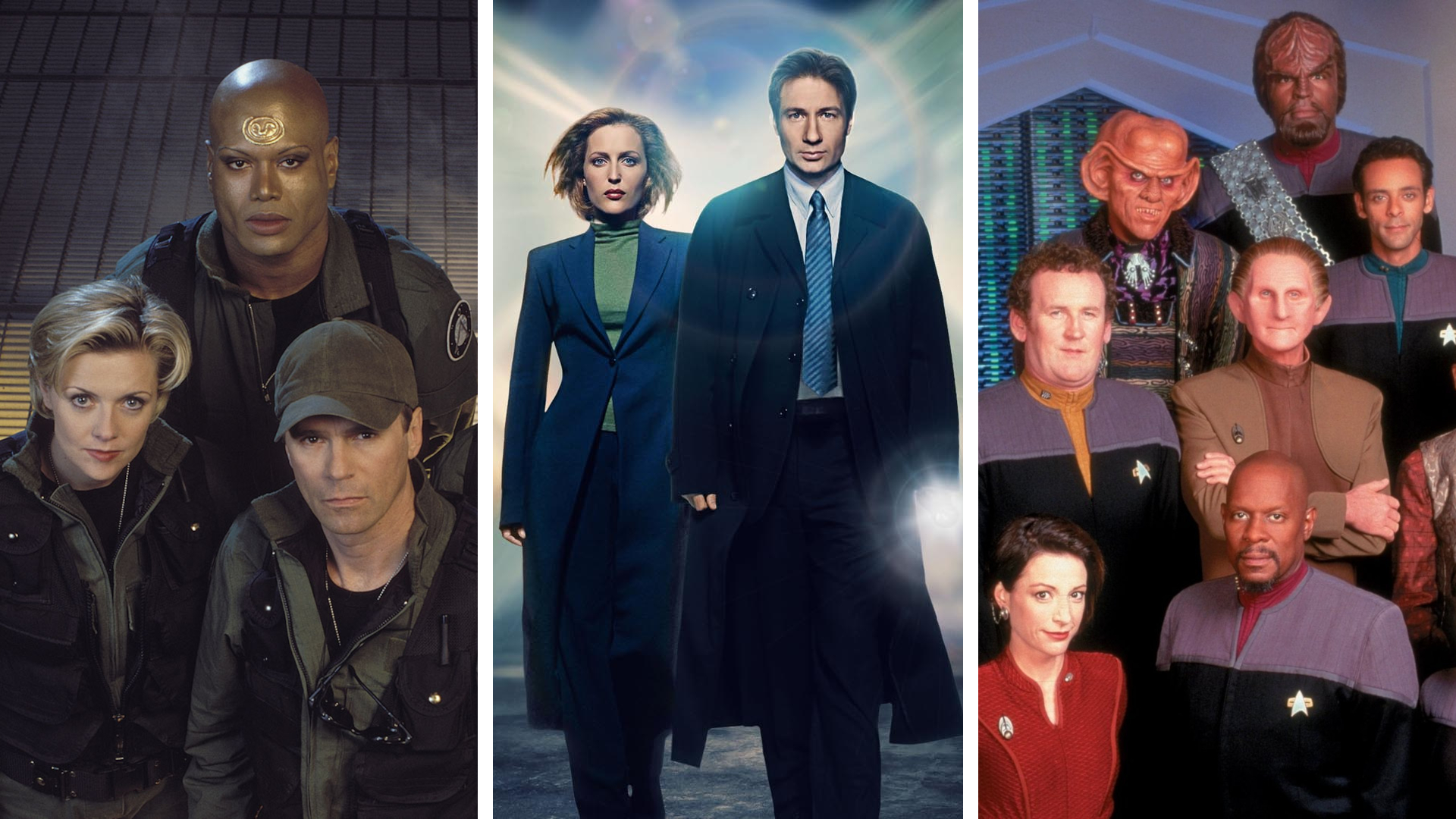
Created by Chris Carter, The X-Files fundamentally altered the landscape of network television by blending procedural detective work with serialized mythological horror and government conspiracy. Special Agents Fox Mulder (David Duchovny), a true believer in extraterrestrial life, and Dana Scully (Gillian Anderson), a skeptical medical doctor and FBI scientist, investigated unexplained phenomena known as "X-Files."
The series successfully married "monster-of-the-week" standalone episodes with a dense, overarching conspiracy involving alien colonization and shadowy government syndicates. Its atmospheric cinematography, moody electronic score by Mark Snow, and the palpable chemistry between its leads captured the cultural paranoia of the pre-millennial era. The X-Files proved that a sci-fi series could achieve mainstream critical acclaim, winning numerous awards and spawning a dedicated global fandom that analyzed every broadcast frame for clues.
3. Babylon 5 (1994–1998)
Created by J. Michael Straczynski, Babylon 5 was pioneering for its intentional use of a predetermined five-year narrative arc—often referred to as a "novel for television." Set on a five-mile-long neutral space station designed to act as a diplomatic hub for various galactic civilizations, the series explored the fragile peace between warring alien empires and an ancient, malevolent cosmic force.
Straczynski’s ambitious vision relied heavily on early adoption of computer-generated imagery for space combat, moving away from traditional physical models to achieve dynamic, fluid choreography. The show tackled mature themes including religious fanaticism, systemic corruption, and the erosion of civil liberties during wartime. Its intricate plotting and forward-thinking structural design made Babylon 5 a crucial forerunner to modern serialized prestige television.
4. Star Trek: Deep Space Nine (1993–1999)
Stationed aboard a stationary space station near a stable wormhole rather than a sleek starship, Star Trek: Deep Space Nine (DS9) offered a grittier, more politically nuanced perspective than its predecessors. Under the command of Commander (later Captain) Benjamin Sisko (Avery Brooks), the station served as a focal point for interstellar commerce, post-occupation recovery on the nearby planet Bajor, and an escalating cold war.
DS9 broke franchise conventions by embracing serialized storytelling, examining the psychological toll of prolonged warfare, and questioning the utopian ideals of the Federation. When the Dominion War broke out in later seasons, the series did not shy away from moral compromise, espionage, and the difficult choices required to preserve democratic societies. Its complex characters, including the morally ambiguous Cardassian tailor Garak, remain beloved by fans.
5. Stargate SG-1 (1997–2007)
Based on the 1994 feature film directed by Roland Emmerich, Stargate SG-1 expanded the cinematic premise into a long-running television powerhouse. The series followed an elite military and scientific team using an ancient ring-shaped device known as a Stargate to travel instantly across the universe, defending Earth from predatory alien pantheons such as the Goa'uld.
Blending hard science fiction concepts with military action, ancient mythology, and a distinct sense of humor, the show cultivated a loyal audience over its decade-long run. It excelled at world-building, introducing vast political alliances, advanced technologies, and moral dilemmas regarding cultural interference. The series proved that cable and syndicated television could sustain sprawling, multi-year mythologies anchored by charismatic ensemble casts.
6. Farscape (1999–2003)
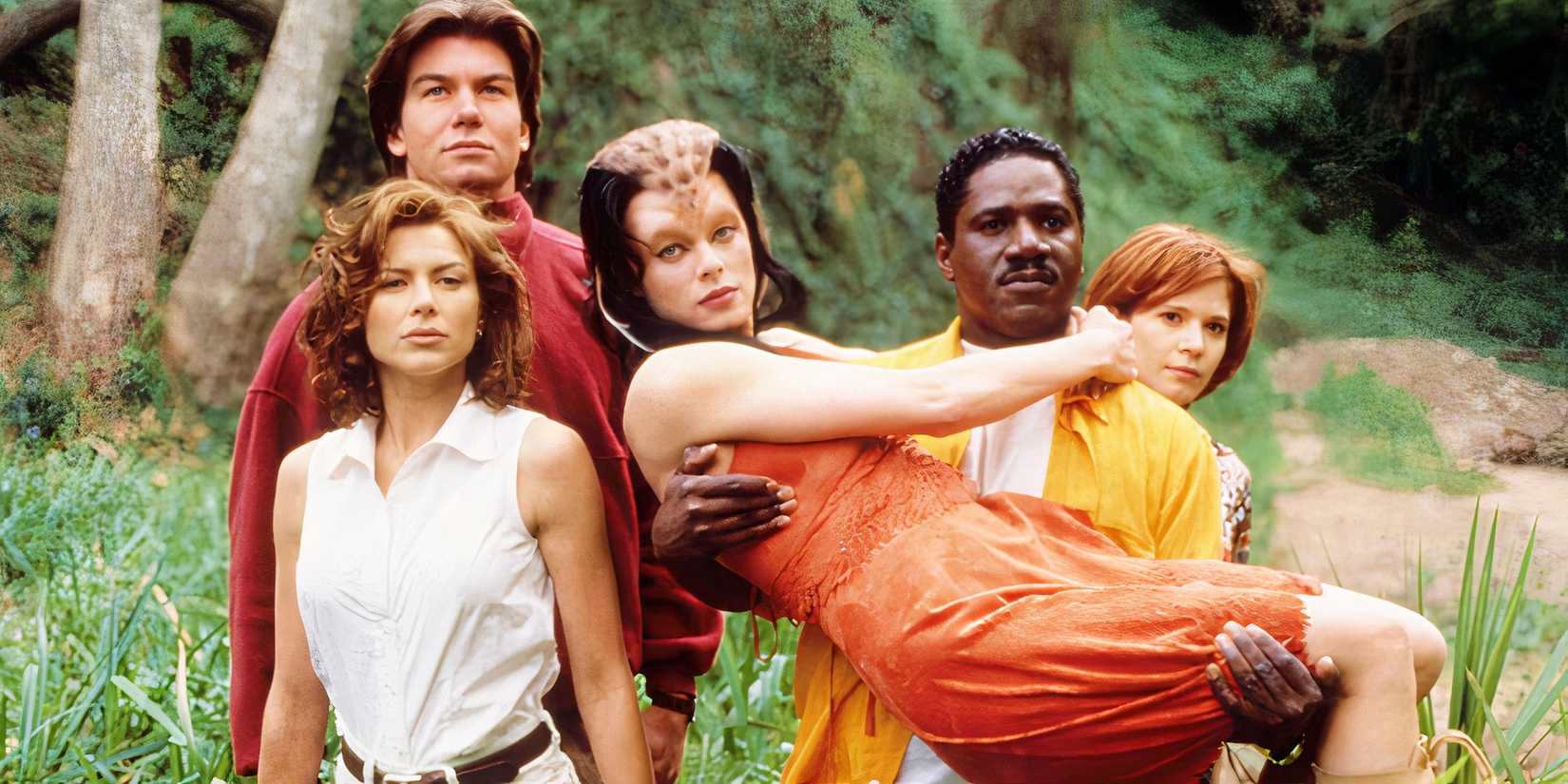
Produced by Jim Henson’s Creature Shop and creator Rockne S. O'Bannon, Farscape brought an unprecedented level of physical puppet artistry and vibrant alien design to television. The series followed John Crichton (Ben Browder), an American astronaut accidentally launched through a wormhole into a distant, chaotic part of the universe, where he found refuge aboard a living, biomechanical spaceship populated by fugitive alien prisoners.
Unlike traditional clean-cut sci-fi heroes, the crew of Moya was fractious, desperate, and morally gray. The show combined high-stakes space opera with psychological drama, dark humor, and bizarre visual aesthetics. Farscape pushed boundaries with its unconventional narrative style, intense character transformations, and rejection of standard television tropes.
7. Quantum Leap (1989–1993)
Bridging the 1980s and 1990s, Quantum Leap captured the imagination of viewers through its innovative premise and emotional resonance. Dr. Sam Beckett (Scott Bakula), a brilliant physicist trapped in a time-travel experiment gone wrong, "leaped" into the bodies of various individuals throughout history, forced to correct historical mistakes before moving to the next life.
Assisted only by the holographic projection of his wisecracking friend Admiral Al Calavicci (Dean Stockwell), Sam addressed themes of civil rights, personal regret, and human empathy. The episodic format allowed the show to explore different historical eras and social issues every week while maintaining an overarching mystery surrounding Sam's desperate quest to find his way home.
8. SeaQuest DSV (1993–1996)
Capitalizing on public interest in high-tech oceanic exploration, executive producer Steven Spielberg helped launch SeaQuest DSV. Set in the mid-21st century, the series followed the crew of an advanced submarine patrolling the Earth's oceans, which had been largely colonized and exploited for resources. Captain Nathan Bridger (Roy Scheider) led a crew dedicated to maintaining peace and ecological balance.
While the first season attempted a hard science fiction approach grounded in plausible marine biology and geopolitics, subsequent seasons shifted toward more fantastical sci-fi tropes, including alien encounters and time travel. Despite behind-the-scenes creative shifts and cast changes, SeaQuest remains a memorable artifact of early-90s ecological optimism and high-budget network ambition.
9. Lexx (1997–2002)
A Canadian-German co-production, Lexx stood out as a bizarre, darkly satirical, and sexually liberated space opera that defied standard television conventions. The series followed a ragtag crew of miscreants—including a disgruntled security guard, a love slave, an undead assassin, and a floating robotic head—stowaway aboard the Lexx, the most powerful destructive force in two universes.
Known for its campy aesthetic, surreal humor, and distinct rejection of mainstream censorship norms, Lexx explored dystopian totalitarianism through an absurdist lens. It earned a dedicated cult following by prioritizing bizarre world-building and subversive storytelling over conventional network formulas.
10. The Outer Limits (1995–2002)
As a spiritual successor to the classic anthology series, the 1990s revival of The Outer Limits delivered standalone science fiction tales centered on technological hubris, alien contact, and ethical paradoxes. Each episode featured an introduction and conclusion delivered by an enigmatic voice inviting viewers to take control of their television sets.
The revival benefited from advances in practical and digital effects, allowing creators to bring complex speculative concepts to life weekly. By featuring high-profile guest stars and exploring morally ambiguous endings where humanity did not always triumph, The Outer Limits preserved the vital tradition of cautionary, thought-provoking anthology storytelling for a new generation.
Comparative Overview of 1990s Sci-Fi Series
| Series Title | Primary Format | Key Themes | Notable Technical Innovation |
|---|---|---|---|
| Star Trek: The Next Generation | Episodic / Arc | Diplomacy, AI sentience, philosophy | High-standard syndication production |
| The X-Files | Hybrid / Procedural | Conspiracy, horror, government secrecy | Cinematic lighting and moody digital grading |
| Babylon 5 | Serialized Arc | War, politics, religious fanaticism | Full-season CGI space combat models |
| Star Trek: Deep Space Nine | Serialized Arc | Warfare, religion, moral compromise | Sustained serialized character growth |
| Stargate SG-1 | Procedural / Arc | Mythology, military tactics, exploration | Expansive multi-planet set design |
| Farscape | Serialized Arc | Survival, psychological strain, exile | Advanced animatronic puppetry |
| Quantum Leap | Episodic | History, empathy, personal redemption | Seamless historical body-swapping format |
| SeaQuest DSV | Episodic | Ecology, oceanography, geopolitics | Large-scale underwater vehicle models |
| Lexx | Serialized Arc | Satire, totalitarianism, absurdity | Surreal digital set extension and design |
| The Outer Limits | Anthology | Ethics, technology, cautionary tales | High-concept monster and prosthetic design |
Frequently Asked Questions
Why was the 1990s considered a golden age for syndicated science fiction?
The rise of independent television stations and growing cable networks created a massive demand for original programming that could be sold directly to regional markets. Studios recognized that science fiction appealed to a dedicated, demographically desirable audience, which justified the production budgets required for elaborate sets, costumes, and early digital effects.
How did visual effects change in 1990s television sci-fi?
The decade marked the transition period between traditional physical miniature models and computer-generated imagery. While shows like Babylon 5 fully embraced digital rendering for spacecraft, others combined physical puppets, animatronics, and digital compositing to create more immersive alien landscapes than had previously been possible on a weekly television budget.
Which 1990s sci-fi series first introduced multi-season narrative arcs?
While several shows experimented with serialized storytelling, Babylon 5 was groundbreaking for planning a strict, five-year narrative arc from its inception. This structure heavily influenced how modern television writers plan long-form stories today.
Are these 1990s series still relevant for contemporary viewers?
Yes. Many core themes explored during this era—such as artificial intelligence, surveillance capitalism, environmental collapse, and political corruption—remain deeply relevant. Furthermore, the character-driven writing of shows like Deep Space Nine and The X-Files holds up against modern prestige television.
Practical Next Steps for Viewers
For enthusiasts looking to revisit or explore 1990s science fiction television, start by identifying your preferred narrative style. If you enjoy dense political plotting and serialized world-building, commit to the multi-season journey of Babylon 5 or Star Trek: Deep Space Nine. If you prefer standalone mysteries with an eerie atmosphere, begin with The X-Files or The Outer Limits. Most of these series are widely accessible through major streaming platforms and digital rental services, offering hours of visionary storytelling that laid the groundwork for modern speculative fiction.