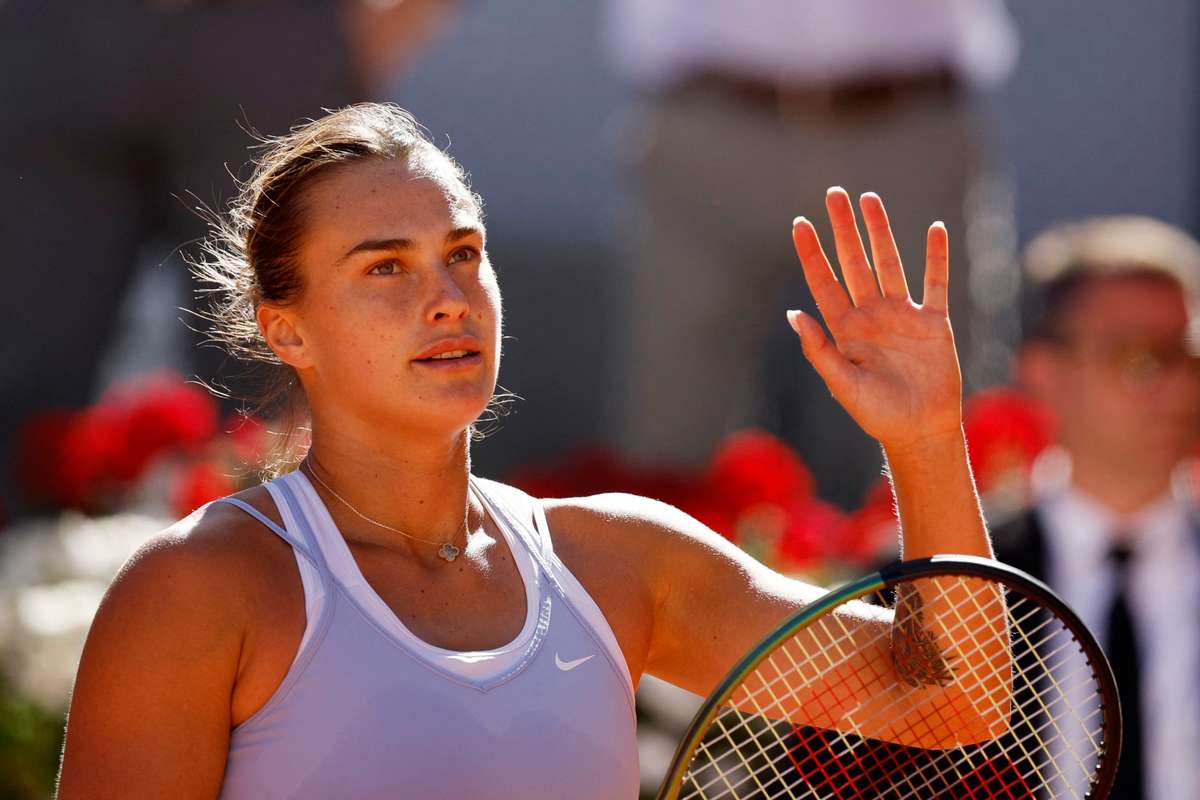
The debate surrounding the title of the world’s best female tennis player often centers on the distinct, contrasting dominance of Aryna Sabalenka and Iga Swiatek. While Swiatek’s tactical precision and consistency on clay have historically anchored her at the top of the rankings, Sabalenka’s power-based evolution and hard-court supremacy have led many analysts and fans to conclude she holds the edge for the current mantle of the world’s best.
The Evolution of the Rivalry
The rivalry between Aryna Sabalenka and Iga Swiatek is frequently cited as the defining narrative of modern women’s tennis. Entering 2026, the contrast between their styles of play remains a fundamental element of their competitive dynamic. Swiatek, the Polish powerhouse, is widely regarded as the master of surface-specific dominance, particularly on European red clay, where her heavy topspin and court coverage make her an almost impenetrable defensive and offensive force. Her game is built on a high-percentage foundation, relying on rhythm and tactical execution to force errors from opponents.
Conversely, Sabalenka has successfully transitioned from a high-risk, high-reward power hitter into a more disciplined, clinical athlete. Her ability to dictate play from both wings—supported by one of the fastest serves on the WTA tour—provides her with a distinct advantage on faster hard courts and grass surfaces. Throughout the last several seasons, Sabalenka has significantly improved her movement and mental fortitude during high-pressure points, a development that has allowed her to capture multiple Grand Slam titles and contend for the year-end No. 1 ranking consistently.
Statistical Benchmarks and Grand Slam Performance
When determining who holds the title of the world's best, objective performance metrics—specifically Grand Slam outcomes and head-to-head records—serve as the primary evidence. As of 2026, both players possess stellar resumes that complicate any definitive ranking.
Swiatek’s resume is heavily bolstered by her repeated successes at Roland Garros. Her capacity to string together multiple major titles on clay underscores her psychological toughness and specialized technical skill. However, critics often point to her variance in performance on faster surfaces compared to her baseline clay performance. Sabalenka, meanwhile, has achieved a more balanced portfolio of success across different surfaces. Her triumphs at the Australian Open and her deep runs in the U.S. and Wimbledon have signaled a "surface-agnostic" versatility that many experts argue is the hallmark of a true world-best player.
Tactical Differences and Player Archetypes
To understand why the verdict often leans toward Sabalenka in the broader context of the "best player" discussion, one must analyze their respective technical archetypes.
- Iga Swiatek (The Precision Architect): Swiatek utilizes a heavy, looping forehand that forces opponents to play from higher strike zones. Her ability to redirect pace is peerless, and her defensive transitions—moving from a defensive position back to neutral or offensive—are arguably the best in the game. Her game plan is usually proactive; she builds points with controlled aggression, waiting for the precise moment to strike.
- Aryna Sabalenka (The Power Catalyst): Sabalenka’s game is defined by "first-strike tennis." She seeks to minimize the duration of rallies by creating insurmountable pace. Her serve is a massive weapon that serves as an extension of her groundstrokes, allowing her to hold serve with higher efficiency than most of her peers. Her evolution in 2024 and 2025 involved curbing unforced errors while maintaining this velocity, creating a high-pressure environment for any opponent.
Comparative Analysis of Playing Surfaces
The following table provides a breakdown of how these two competitors perform across the standard professional surface types, illustrating why the "best in the world" title is so frequently contested.
| Surface Type | Iga Swiatek's Advantage | Aryna Sabalenka's Advantage |
|---|---|---|
| Clay | Exceptional; unmatched topspin and movement. | Strong, but often vulnerable to sliding variations. |
| Hard (Fast) | Very good; relies on timing and movement. | Elite; power and serve provide maximum leverage. |
| Grass | Developing; movement remains a primary constraint. | High; raw pace is difficult to return on slick surfaces. |
| Indoor | Tactically sound; high-percentage play. | Explosive; benefits from lack of wind and predictable bounce. |
The Psychological Component of the Matchup
Tennis is often a game of margins, and nowhere is this more apparent than in the head-to-head matchups between Sabalenka and Swiatek. When they meet, the match often becomes a question of whether Swiatek can absorb the pace long enough to frustrate Sabalenka, or whether Sabalenka can maintain her composure long enough to crack Swiatek’s defensive shell.
Recent years have shown that Sabalenka has begun to solve the "Swiatek puzzle" by playing deeper into matches and refusing to over-hit when she faces a defensive wall. This mental shift—moving away from the "all or nothing" approach—has been the critical factor in changing the perception of the rivalry. Analysts have noted that Sabalenka’s belief in her own defensive capabilities has grown, allowing her to stay in rallies that she previously would have ended with a forced error.
Requirements for Maintaining the Top Ranking
Being the world's best is not merely a reflection of talent but a requirement of consistent health and scheduling. Both athletes face the strenuous demands of the WTA tour, which includes mandatory high-tier events and the rigorous physical toll of deep runs in Grand Slams.
- Physical Conditioning: The ability to recover between three-set matches in humid or high-altitude conditions.
- Tournament Selection: Managing the balance between defending points and pursuing new titles without risking burnout.
- Adaptive Coaching: Incorporating data-driven scouting into match preparation, particularly against emerging challengers who study their film extensively.
Factors Influencing the Public and Media Verdict
Why does the verdict frequently favor Sabalenka in recent discourse? Much of it comes down to the "eye test" regarding surface diversity. While Swiatek’s clay-court streak was historic, the tennis world tends to weigh Grand Slam titles won on hard courts—the most common surface—more heavily. Sabalenka’s success on these surfaces, combined with her aggressive, crowd-pleasing style, has solidified her status as the player most likely to win on any given day, regardless of the venue.
Common Misconceptions in the Debate
A common mistake in this discourse is conflating "most consistent" with "best." Swiatek has often spent more cumulative weeks at the World No. 1 ranking, which suggests higher overall consistency over a calendar year. However, if "best" is defined as the player who possesses the highest peak capability and the broadest potential for victory across the entire global tour, the argument shifts toward Sabalenka. It is essential to recognize that "consistency" and "peak talent" are distinct metrics that serve different purposes in player evaluation.
Addressing Related Questions
Does surface speed dictate the winner of a Sabalenka vs. Swiatek match? Generally, yes. Faster surfaces tend to favor Sabalenka’s style, as they require less time for the opponent to react to her pace. Slower, high-friction surfaces like clay favor Swiatek, as they provide the time necessary to set up her precision-based game.
How much does the head-to-head record matter? While head-to-head records are a common talking point, they are often a snapshot in time. In professional tennis, the mental evolution of a player can render older head-to-head data less relevant. Current form and recent match results carry more weight for prognosticators.
What is the role of coaching in this rivalry? Coaching has been pivotal for both. Sabalenka’s work on her serve mechanics and mental routines has transformed her from a talented wildcard into a disciplined champion. Swiatek’s team has focused on tactical versatility, ensuring she can adjust her game plan mid-match when her primary strategy is neutralized.
Is it possible for one to be "better" while the other is "ranked higher"? Yes. Rankings are a mathematical accumulation of points over a rolling 52-week window. A player can be "better" in terms of current form or peak ability, yet be ranked lower due to a mid-season injury or a failure to defend points from the previous year.
Final Assessment: The Path Forward
The competition between Aryna Sabalenka and Iga Swiatek has elevated the standards of women's tennis. While the debate regarding who is the "best" will continue to shift as they face off in future tournaments, the current verdict acknowledges Sabalenka’s exceptional ability to dominate across diverse conditions. For fans and analysts, the next steps involve watching how both players manage the physical demands of the 2026 season and whether they can continue to evolve their games to counter the rising threats from younger players on the tour.
If you are following their progress, focus on their performance in the mandatory WTA 1000 events, as these tournaments provide the most reliable indicators of their readiness for the next Grand Slam cycle. Pay close attention to Sabalenka’s service percentages and Swiatek’s success rate on second-serve returns, as these specific technical areas often determine the outcome of their high-stakes encounters.