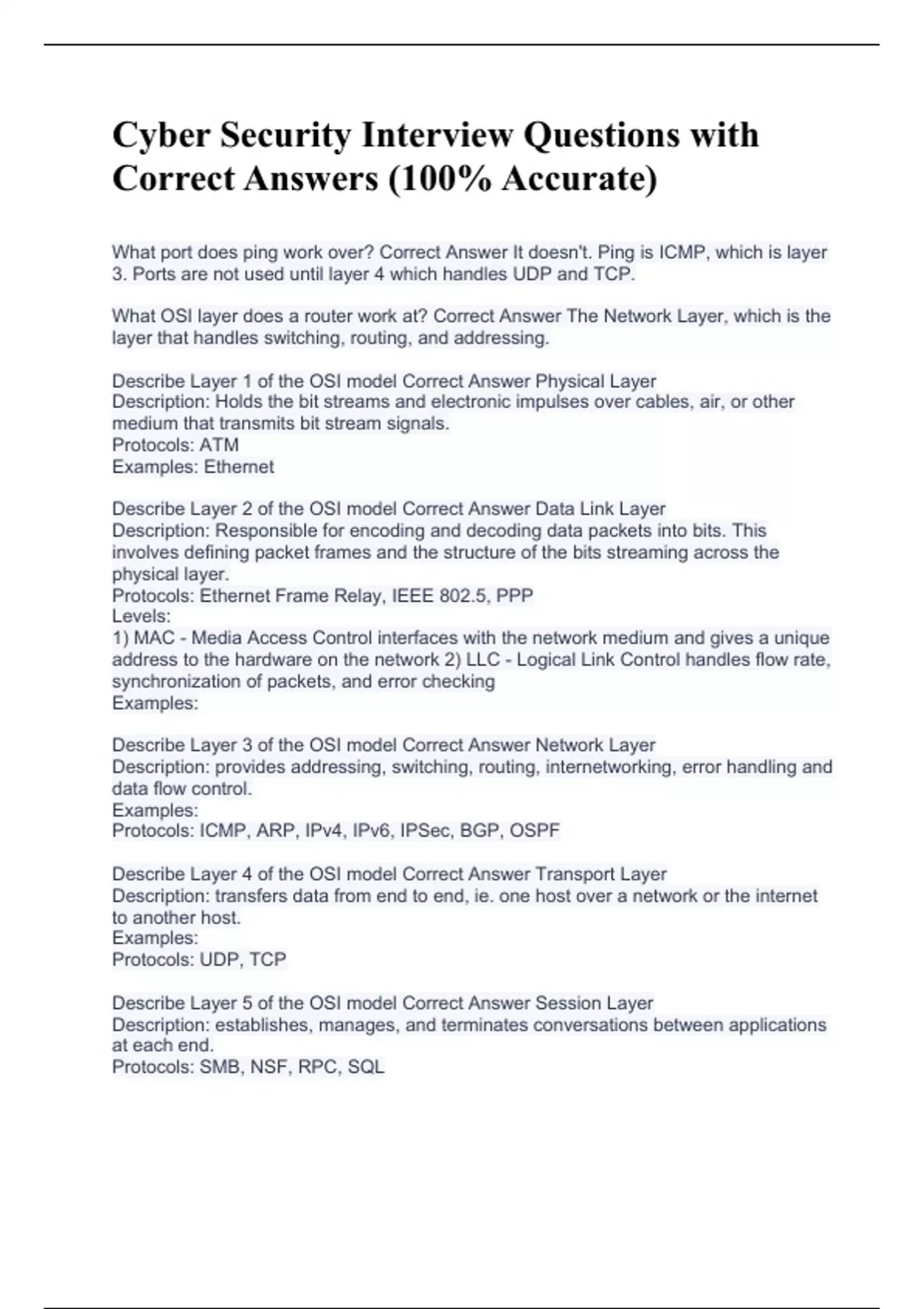
Navigating the interview process for a global IT security specialist role requires demonstrating a mastery of cross-border regulatory compliance, standardized risk management frameworks, and the ability to mitigate threats across distributed cloud and on-premises infrastructures in 2026.
As organizations operate with increasingly borderless digital footprints, the role of a Global IT Security Specialist has evolved from a localized network administration function into a high-level strategic position. A successful candidate must reconcile the technical requirements of cybersecurity—such as zero-trust architecture and automated incident response—with the complex legal and operational realities of operating in multiple jurisdictions.
The Evolution of the Global Security Role
In 2026, the global IT security landscape is defined by the convergence of artificial intelligence-driven attacks and the maturation of international data privacy regulations. A specialist today is no longer just a "firewall manager." They act as a translator between technical vulnerabilities and business risk, ensuring that the company’s posture remains compliant with regional mandates like the EU’s Data Governance Act, evolving iterations of the GDPR, and various sector-specific cybersecurity directives in North America and Asia-Pacific.
The fundamental challenge for any global security professional is achieving operational uniformity without sacrificing local agility. You must manage security policies that are global in scope while allowing for the specific technical adaptations required by regional regulations or unique local threat vectors.
Technical Foundations and Core Competencies
To excel in an interview for this position, you must demonstrate proficiency in four distinct domains: regulatory navigation, cloud identity management, cross-border incident response, and threat intelligence orchestration.
1. Regulatory Navigation and Compliance
A global specialist must understand that security is rarely just a technical concern; it is a legal one. When asked about compliance, you must address the difficulty of keeping data residency requirements aligned with global data availability.
- The Strategy: Focus on "Compliance by Design." Instead of treating regulations as a checklist, discuss how to integrate privacy-preserving technologies (like homomorphic encryption or localized data sharding) into the enterprise architecture.
- The Nuance: Be prepared to discuss how you reconcile the conflicting requirements of data localization laws (e.g., mandates that require data to stay within a country's borders) with the need for global analytics and centralized monitoring.
2. Cloud Identity and Zero Trust
In 2026, the perimeter is essentially non-existent. Global specialists must prioritize Identity and Access Management (IAM) as the primary security control.
- Implementation: Discuss your experience with modern IAM protocols like FIDO2/WebAuthn and the transition toward passwordless authentication.
- Zero Trust: You should be able to articulate how to enforce granular, context-aware access controls that verify every user, device, and connection regardless of location or network origin.
3. Cross-Border Incident Response (IR)
Incident response on a global scale involves navigating time zones, local labor laws, and reporting requirements.
- Coordination: A top-tier answer focuses on the "Follow-the-Sun" model. How do you ensure that an alert generated in Singapore at 2:00 AM local time is handled by a team in London or New York without friction or loss of context?
- Communication: Mention the importance of pre-negotiated playbooks that define exactly who is authorized to disclose a breach to local regulators versus internal stakeholders.
4. Threat Intelligence Orchestration
Global threats are rarely localized. A specialized role requires you to take intelligence gathered in one region—such as a new phishing campaign targeting branch offices in South America—and proactively deploy defensive measures across the entire global enterprise.
Comparative Framework: Security Strategies
The following table compares the typical approaches taken by specialists when balancing global centralization against regional requirements.
| Strategy Focus | Centralized Security Control | Localized Security Control |
|---|---|---|
| Primary Goal | Consistency and Auditability | Regulatory Compliance and Speed |
| Best For | Global Infrastructure/SaaS | Data Residency/Regional Laws |
| Key Risk | Bottlenecks/Rigid Policies | Security Silos/Inconsistency |
| Primary Tool | Global SIEM/SOAR Platforms | Localized Data Gateways |
Anticipating Interview Questions: The Professional Deep Dive
When preparing for an interview, expect questions that probe your ability to handle "real-world" friction. Here are four common themes and how to approach them.
Question: "How do you manage security policy updates across regions with conflicting privacy laws?"
Do not answer by simply saying "we follow the strictest law." While that is a baseline, a senior specialist knows that the strictest law in one region might be illegal or impossible to implement in another. Discuss your process for conducting a Gap Analysis and how you create a modular policy framework that includes a "Global Baseline" with "Regional Addendums."
Question: "Describe a time you handled a security incident that involved multiple global stakeholders."
Use the STAR method (Situation, Task, Action, Result). Focus on the communication layer. In global teams, the biggest failure point is often not the technical fix but the delay in alerting the legal, PR, and local management teams in the affected jurisdictions. Explain how you utilized established communication protocols to ensure everyone was informed of their responsibilities.
Question: "What is your approach to securing remote talent across diverse geopolitical climates?"
In 2026, the "Global Remote Workforce" is the standard. Your answer should cover endpoint detection and response (EDR) solutions that can function effectively without a VPN, as well as the implementation of device-health posture checks that prevent compromised home equipment from accessing corporate assets.
Question: "How do you justify security spend to stakeholders who view security as a cost center?"
Transition the conversation from "protection" to "enablement." Frame security as a business enabler that allows for safer expansion into new markets, faster cloud adoption, and increased customer trust. Use metrics such as Mean Time to Remediate (MTTR) and risk-reduction percentages to quantify your value.
Common Mistakes to Avoid
- Over-relying on Tools: Don't talk about specific products (like a particular firewall vendor) as the solution. Focus on the architectural intent behind why you chose that class of tool.
- Ignoring the Human Factor: A global specialist who forgets about employee training, phishing awareness, and cultural differences in digital hygiene will struggle to maintain a secure environment.
- Technological Tunnel Vision: If you focus only on the tech and ignore the compliance or budget constraints, you are not functioning as a specialist but as an administrator. You must demonstrate a business-aligned mindset.
Practical Next Actions for Candidates
- Map Your Experience to Frameworks: Align your past projects with NIST, ISO 27001, or CIS benchmarks. Being able to cite which framework you used to solve a specific problem signals professional maturity.
- Audit Your Certifications: While soft skills are paramount, ensure your technical certifications (such as CISSP, CISM, or CIPP/E) are active and relevant to the 2026 landscape.
- Prepare a "Case Study" Portfolio: Have one or two detailed examples ready where you identified a security gap, proposed a solution, managed the cross-departmental pushback, and successfully implemented the change.
- Stay Current on Global Directives: Familiarize yourself with the current status of the Digital Operational Resilience Act (DORA) and similar upcoming legislation, as these will be central to many 2026 interviews.
The role of a Global IT Security Specialist is defined by the tension between protection and operational flow. By focusing on scalability, standardized compliance frameworks, and cross-functional communication, you demonstrate that you are prepared to manage the security needs of a modern, global enterprise.