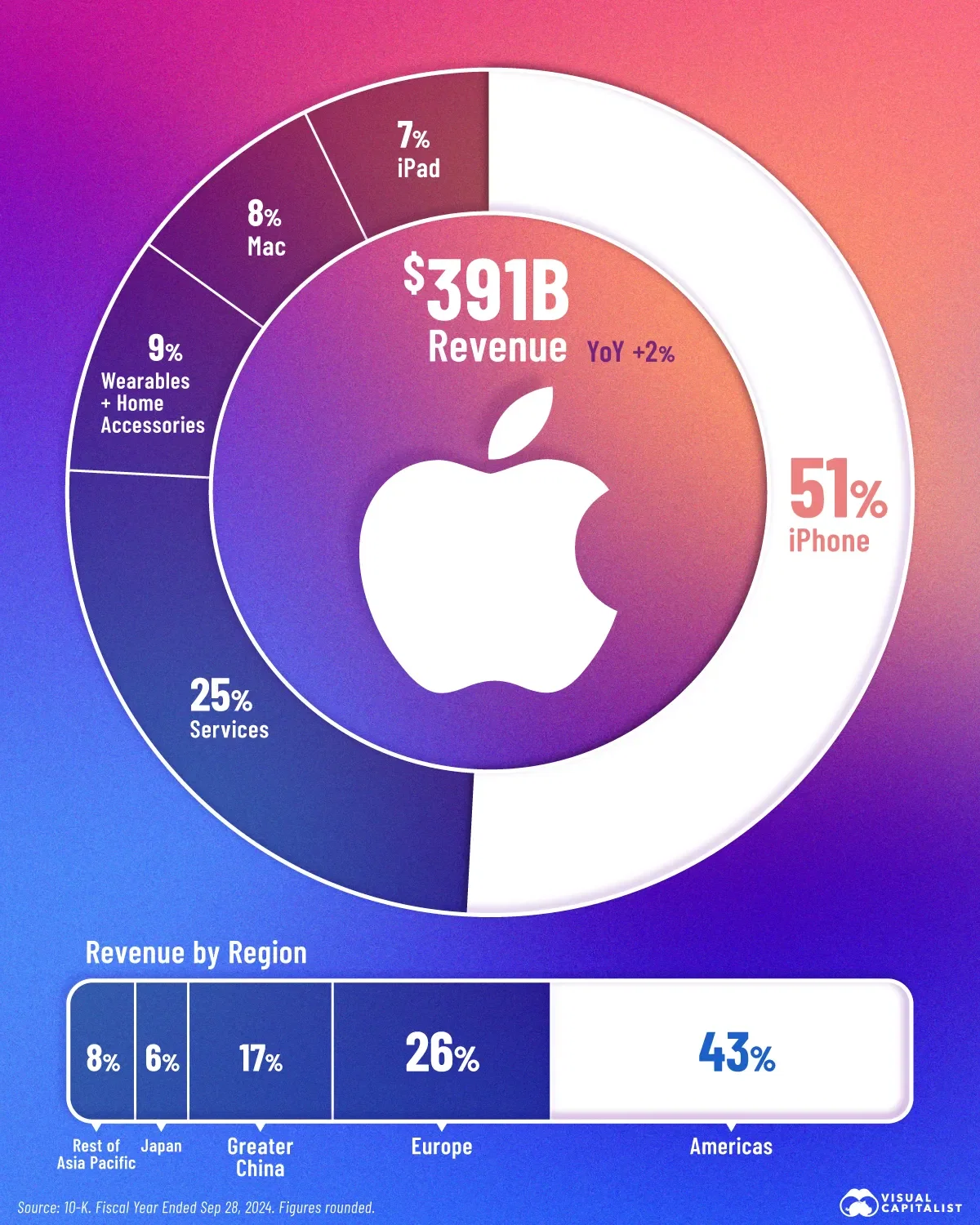
Apple Inc. (NASDAQ: AAPL) operates on a 52- or 53-week fiscal year ending on the last Saturday of September, shifting its quarterly earnings announcements relative to standard calendar quarters. For fiscal years 2024 and 2025, Apple announced its quarterly results across eight earnings releases scheduled between February 2024 and October 2025.
Understanding Apple’s Unique Fiscal Calendar System
To track Apple’s financial results accurately, investors and financial analysts must understand how the company structures its financial reporting year. Unlike companies that follow the standard calendar year (ending December 31), Apple uses a fiscal calendar that divides the year into four 13-week quarters (with an occasional 14-week quarter every five to six years to align with the calendar).
Apple's fiscal quarters are defined as follows:
- First Quarter (Q1): Covers October, November, and December. This period includes the critical holiday shopping season and the first full quarter of sales for newly launched flagship iPhone models. Results are typically released in late January or early February.
- Second Quarter (Q2): Covers January, February, and March. This quarter reflects post-holiday consumer activity and seasonal rebalancing. Results are typically released in late April or early May.
- Third Quarter (Q3): Covers April, May, and June. This period often coincides with mid-year hardware refreshes and Apple's annual Worldwide Developers Conference (WWDC). Results are typically released in late July or early August.
- Fourth Quarter (Q4): Covers July, August, and September. This quarter captures initial sales from Apple's annual September hardware announcements (including new iPhone releases). Results are typically released in late October or early November.
Because Apple’s fiscal year ends in late September, Fiscal Year 2024 (FY24) ran from October 1, 2023, to September 28, 2024. Fiscal Year 2025 (FY25) ran from September 29, 2024, to September 27, 2025.
Apple Earnings Calendar for Fiscal Year 2024
Fiscal Year 2024 represented a significant period of corporate transition for Apple, marked by expanding Services revenue, hardware category updates, and capital allocation milestones. Below is the detailed breakdown of Apple's FY2024 earnings release dates and financial contexts.
Q1 FY2024 (First Quarter Ended December 30, 2023)
- Earnings Release Date: Thursday, February 1, 2024
- Conference Call Time: 2:00 PM PT / 5:00 PM ET
- Period Context: The first quarter of FY24 represented the first full three months of availability for the iPhone 15, iPhone 15 Plus, iPhone 15 Pro, and iPhone 15 Pro Max. It also captured peak holiday retail volume. Apple reported quarterly revenue of $119.58 billion, up 2% year-over-year, driven by record Services revenue and iPhone growth, alongside quarterly diluted earnings per share (EPS) of $2.18.
Q2 FY2024 (Second Quarter Ended March 30, 2024)
- Earnings Release Date: Thursday, May 2, 2024
- Conference Call Time: 2:00 PM PT / 5:00 PM ET
- Period Context: Q2 FY24 covered early-year hardware performance and the initial deployment of the Apple Vision Pro spatial computing headset in the United States. During this earnings release, Apple reported revenue of $90.75 billion and announced a historic authorization of up to $110 billion in additional share repurchases—the largest share buyback program in U.S. corporate history—alongside an increase in its quarterly dividend.
Q3 FY2024 (Third Quarter Ended June 29, 2024)
- Earnings Release Date: Thursday, August 1, 2024
- Conference Call Time: 2:00 PM PT / 5:00 PM ET
- Period Context: The third quarter included the rollout of redesigned iPad Pro and iPad Air models powered by the M4 and M2 chips, as well as developer reaction to Apple's artificial intelligence platform, Apple Intelligence, introduced at WWDC in June 2024. Apple posted quarterly revenue of $85.78 billion, up 5% year-over-year, supported by an all-time high in its active installed base of devices.
Q4 FY2024 (Fourth Quarter Ended September 28, 2024)
- Earnings Release Date: Thursday, October 31, 2024
- Conference Call Time: 2:00 PM PT / 5:00 PM ET
- Period Context: The final quarter of FY24 included early launch sales for the iPhone 16 lineup, Apple Watch Series 10, and updated AirPods. Apple reported Q4 revenue of $94.93 billion, up 6% year-over-year. Diluted EPS was $0.97, reflecting the impact of a one-time income tax charge of $10.2 billion related to the European General Court decision on Irish state aid (adjusted diluted EPS without the charge was $1.64).
Apple Earnings Calendar for Fiscal Year 2025
Fiscal Year 2025 focused on the broader consumer rollout of generative AI features via Apple Intelligence, expansion of hardware lines, and continued margin expansion within the Services division.
Q1 FY2025 (First Quarter Ended December 28, 2024)
- Earnings Release Date: Thursday, January 30, 2025
- Conference Call Time: 2:00 PM PT / 5:00 PM ET
- Period Context: Q1 FY25 reflected performance across the peak holiday purchasing season. This quarter evaluated global consumer demand for the iPhone 16 family following the gradual release of software updates carrying Apple Intelligence features in key geographic markets and languages.
Q2 FY2025 (Second Quarter Ended March 29, 2025)
- Earnings Release Date: Thursday, May 1, 2025
- Conference Call Time: 2:00 PM PT / 5:00 PM ET
- Period Context: The second quarter of FY25 measured mid-cycle hardware demand, updated Mac configurations (including M4-generation desktops and notebooks), and subscription expansion across App Store, Apple Music, iCloud, and Apple Pay platforms. As is customary in Q2, Apple's Board of Directors provided its annual authorization update for share repurchases and dividend dividend payouts.
Q3 FY2025 (Third Quarter Ended June 28, 2025)
- Earnings Release Date: Thursday, July 31, 2025
- Conference Call Time: 2:00 PM PT / 5:00 PM ET
- Period Context: Q3 FY25 covered late-spring hardware updates and software announcements from Apple's June developer ecosystem event. Analysts focused on gross margin performance, Wearables, Home, and Accessories segment stabilization, and regional sales trajectories across Greater China and emerging markets.
Q4 FY2025 (Fourth Quarter Ended September 27, 2025)
- Earnings Release Date: Thursday, October 30, 2025
- Conference Call Time: 2:00 PM PT / 5:00 PM ET
- Period Context: The final quarter of FY25 summarized full-year financial achievements and included opening-weekend shipments for the next-generation iPhone portfolio announced in September 2025. It provided consolidated 10-K figures for the entire 2025 fiscal year.
Comprehensive Summary Table: FY2024 vs. FY2025
The following table summarizes the key dates, reporting periods, and core operational focuses for Apple’s earnings calendar across fiscal years 2024 and 2025.
| Fiscal Quarter | Period End Date | Earnings Announcement Date | Webcast Call Time | Primary Analytical Focus Areas |
|---|---|---|---|---|
| Q1 FY2024 | Dec 30, 2023 | Feb 1, 2024 | 5:00 PM ET / 2:00 PM PT | Holiday iPhone 15 launch performance & holiday sales volume |
| Q2 FY2024 | Mar 30, 2024 | May 2, 2024 | 5:00 PM ET / 2:00 PM PT | $110B buyback record, Vision Pro release, capital return plan |
| Q3 FY2024 | Jun 29, 2024 | Aug 1, 2024 | 5:00 PM ET / 2:00 PM PT | M4 iPad Pro launch, WWDC software platform announcements |
| Q4 FY2024 | Sep 28, 2024 | Oct 31, 2024 | 5:00 PM ET / 2:00 PM PT | iPhone 16 debut weekend, European tax ruling impact |
| Q1 FY2025 | Dec 28, 2024 | Jan 30, 2025 | 5:00 PM ET / 2:00 PM PT | Holiday sales, initial Apple Intelligence feature uptake |
| Q2 FY2025 | Mar 29, 2025 | May 1, 2025 | 5:00 PM ET / 2:00 PM PT | Annual capital allocation update, M4 Mac line expansion |
| Q3 FY2025 | Jun 28, 2025 | Jul 31, 2025 | 5:00 PM ET / 2:00 PM PT | Services revenue growth, enterprise ecosystem progress |
| Q4 FY2025 | Sep 27, 2025 | Oct 30, 2025 | 5:00 PM ET / 2:00 PM PT | Full FY25 year-end totals, initial iPhone late-year launch data |
Key Financial Metrics to Analyze on Apple Earnings Days
When Apple releases its quarterly financial report, financial markets evaluate several core metrics beyond top-line revenue and diluted earnings per share.
- Apple Quarterly Financial Reporting Metrics
- Net Revenue Breakdown
- Hardware (iPhone, Mac, iPad, Wearables)
- Services (iCloud, App Store, Music, Pay)
- Operating Profitability
- Total Gross Margin %
- Products Gross Margin
- Services Gross Margin
- Capital Allocation
- Share Buybacks
- Dividend Payments
- Cash & Investment Position
- Net Revenue Breakdown
1. Revenue by Product Category
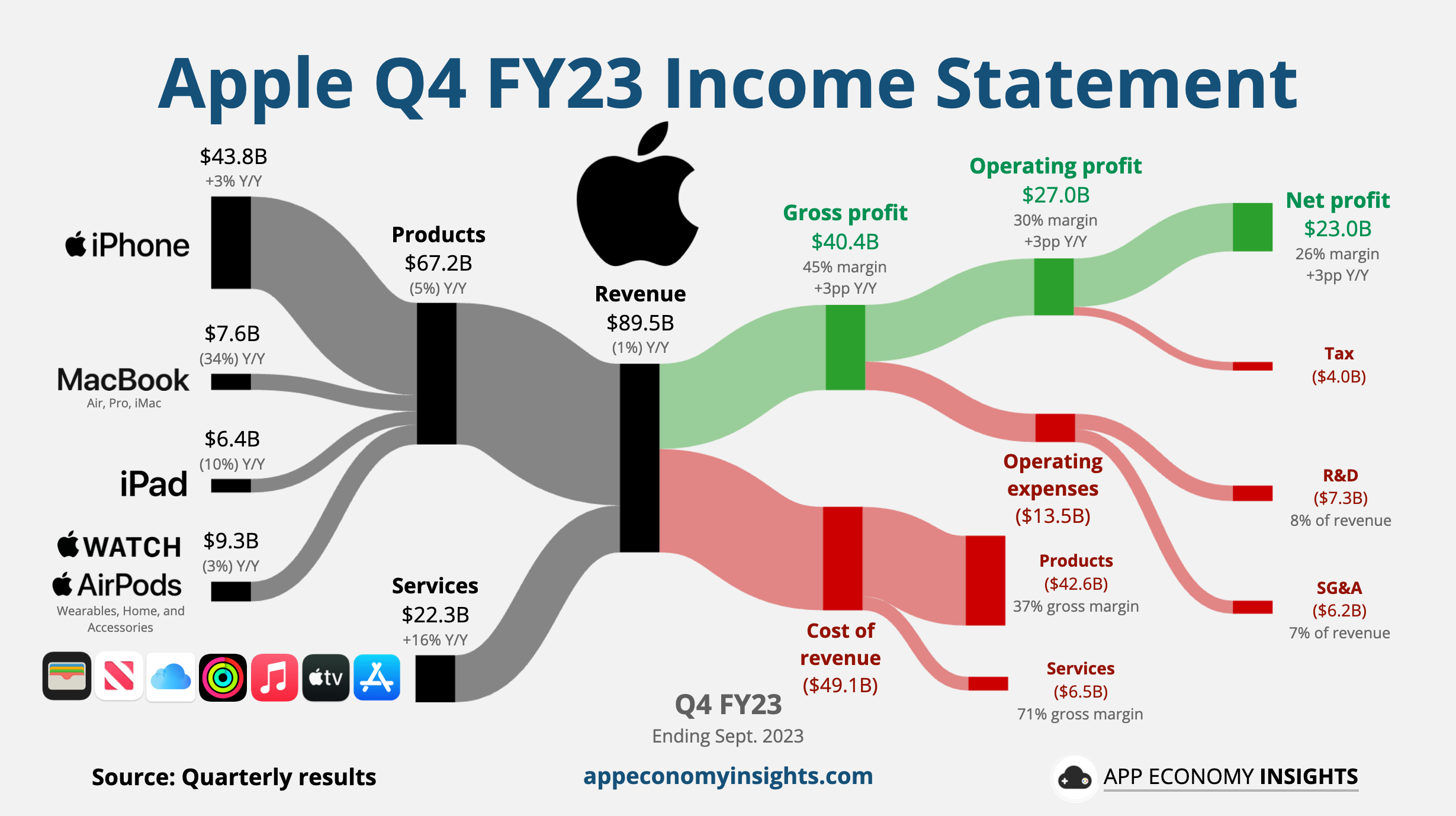
Apple details revenue across five major business segments:
- iPhone: Historically generates 45% to 60% of total quarterly revenue, making it the central engine of product cash flow.
- Services: Includes the App Store, Apple Music, Apple TV+, iCloud, Apple Pay, AppleCare, and licensing agreements. Services carry significantly higher gross margins (often exceeding 70%) than physical hardware.
- Mac: Includes MacBook Pro, MacBook Air, iMac, Mac mini, Mac Studio, and Mac Pro sales. Performance often fluctuates based on the timing of Apple Silicon chip updates.
- iPad: Covers iPad, iPad Air, iPad Pro, and iPad mini models. Sales cycles depend on hardware update cadences.
- Wearables, Home, and Accessories: Includes Apple Watch models, AirPods, HomePod speakers, Beats products, and official accessories.
2. Geographic Segment Revenue
Apple breaks down revenue into five regional market segments:
- Americas: North and South American markets (typically Apple's largest regional market).
- Europe: Includes European countries, India, the Middle East, and Africa.
- Greater China: Covers Mainland China, Hong Kong, and Taiwan. This region is closely evaluated by analysts due to local market competition and regional economic trends.
- Japan: A dedicated high-margin market segment.
- Rest of Asia Pacific: Encompasses Australia, Southeast Asia, and South Korea.
3. Consolidated Gross Margin Percentage
Gross margin measures total profitability after subtracting the direct costs of production and content delivery. Apple reports both overall gross margin percentage and separate gross margins for Products (hardware) and Services. Expanding gross margins generally indicate pricing power, cost efficiencies, or a higher proportion of Services revenue.
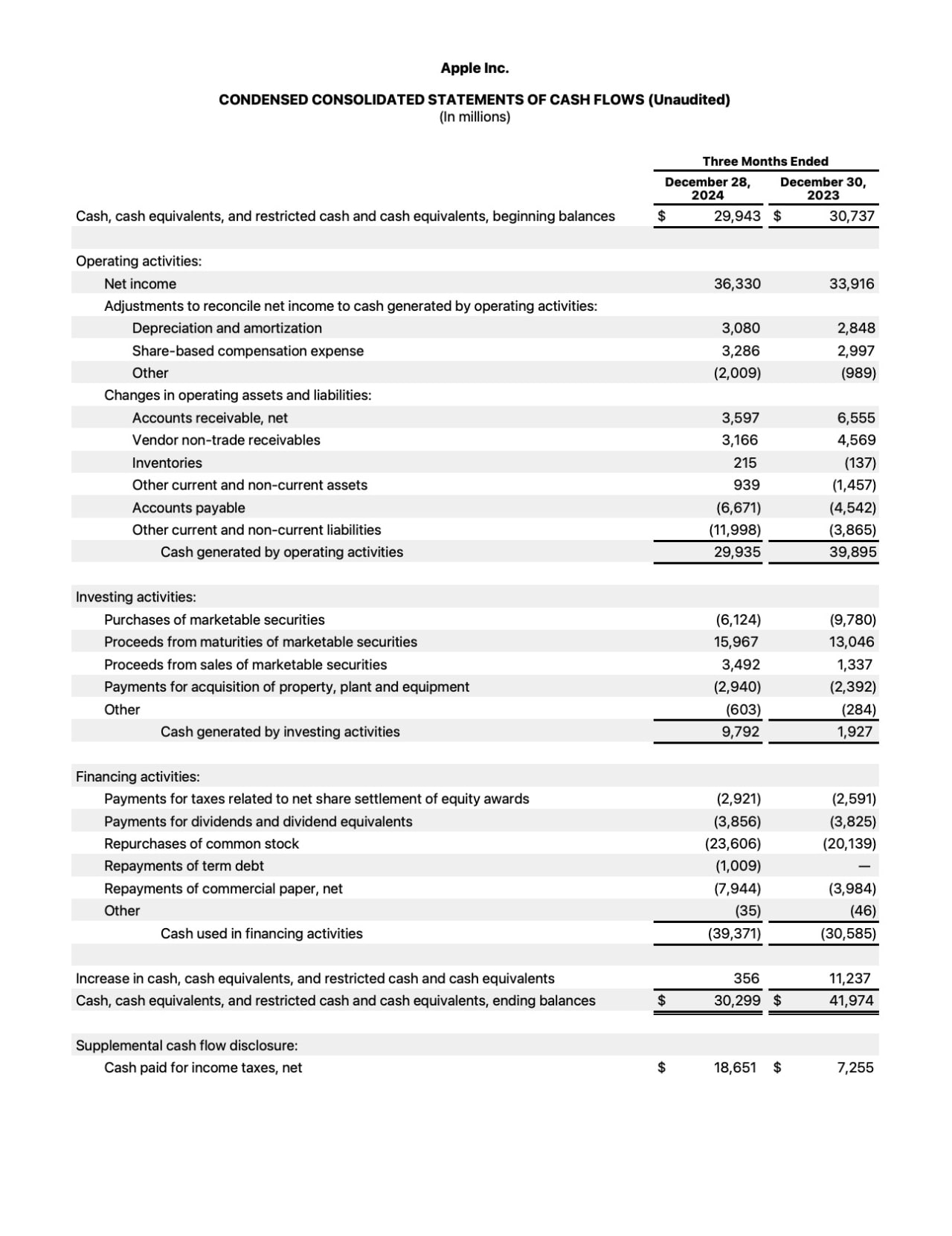
4. Capital Return and Cash Position
Apple maintains an explicit target of reaching a "cash neutral" net balance over time. Analysts track:
- Operating Cash Flow: Net cash generated by operational activities.
- Share Repurchases: Total dollar value spent buying back AAPL common stock.
- Dividends Paid: Total capital returned via cash dividends to shareholders of record.
- Net Cash Position: Total cash, cash equivalents, and marketable securities minus total commercial paper and term debt.
How to Access Apple Earnings Reports and Webcasts
Apple provides financial reports, investor webcasts, and SEC documentation directly to the public.
1. The Financial Schedule Timeline
On a scheduled earnings day, Apple follows a strict disclosure timeline:
- 1:30 PM PT / 4:30 PM ET: Market trading closes for the regular NYSE/NASDAQ session. Apple issues its quarterly earnings press release via business wire services and posts the document directly to the Apple Investor Relations Portal.
- 2:00 PM PT / 5:00 PM ET: Executive leadership hosts a live audio webcast. The call typically begins with prepared remarks from the Chief Executive Officer (CEO) and Chief Financial Officer (CFO), followed by a live question-and-answer session with equity analysts.
2. Official Access Sources
- Live Webcast Stream: Accessible to the public on the Apple Investor Relations site (
investor.apple.com). An audio replay is available for approximately two weeks following the call. - SEC Filings (Forms 8-K, 10-Q, and 10-K): The earnings release is filed under Form 8-K. Detailed quarterly reports are filed under Form 10-Q (for Q1, Q2, and Q3), while the comprehensive annual report is filed under Form 10-K (concurrently with Q4 results). These filings are available on the U.S. Securities and Exchange Commission EDGAR Database and on Apple's IR site.
Market Dynamics Around Apple Earnings
Because Apple carries one of the largest market capitalizations in global equity indices (such as the S&P 500 and Nasdaq-100), its earnings announcements heavily influence equity indexes, technology ETFs, and overall market sentiment.
- Apple Earnings Market Dynamics
- Options Volatility Implied
- Implied Volatility (IV) Peak
- Post-Earnings IV Crush
- Options Straddle Pricing
- Index & ETF Broader Impact
- S&P 500 Index Weighting
- Nasdaq-100 Volatility
- Tech ETF Flows (XLK, QQQ)
- Options Volatility Implied
1. Options Pricing and Volatility
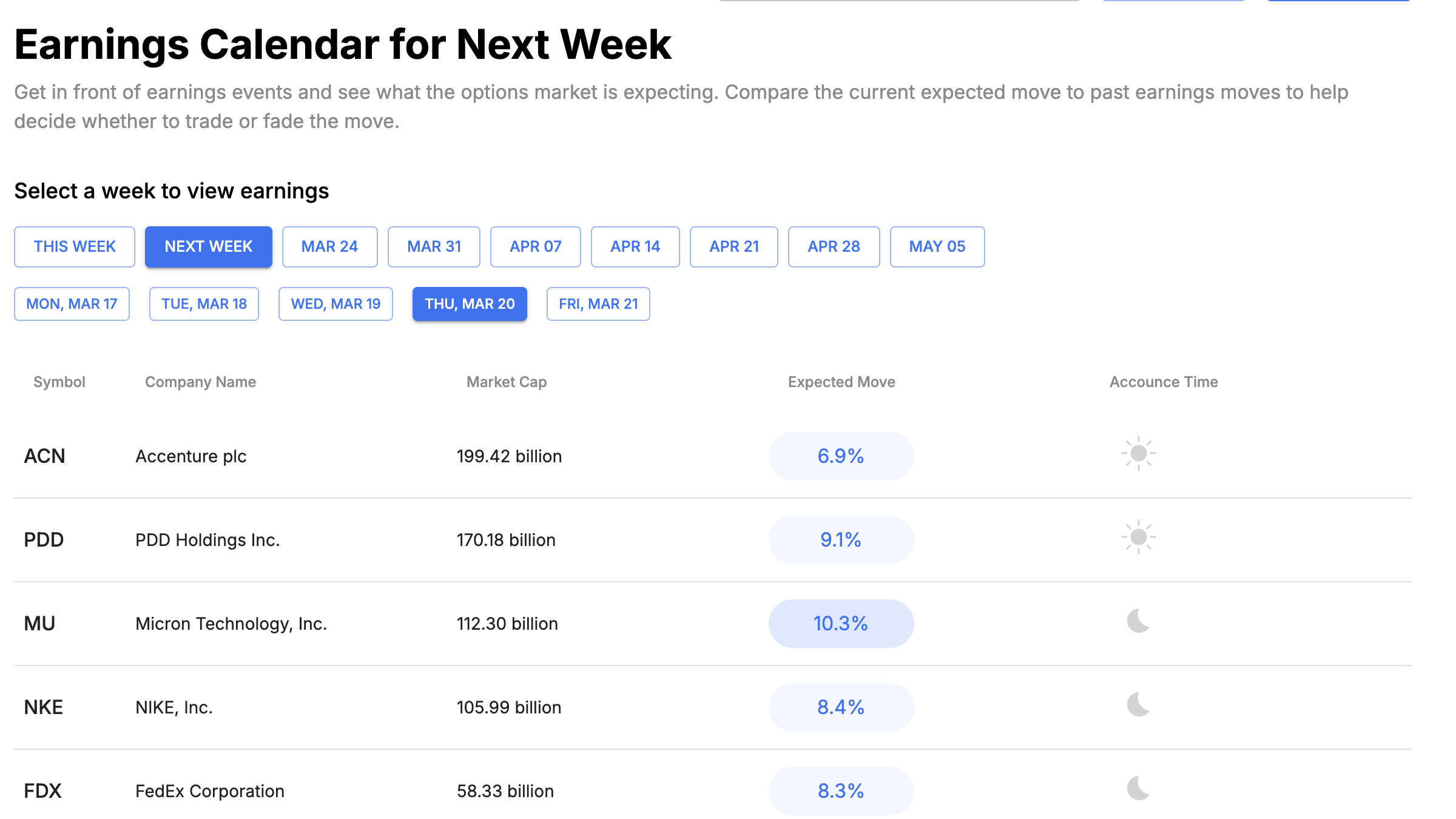
Leading up to earnings releases, options pricing for AAPL stock reflects elevated Implied Volatility (IV). The options market prices in an expected price move based on the straddle cost expiring immediately after the earnings release. Immediately following the disclosure, Implied Volatility drops rapidly—a phenomenon known in derivatives trading as an "IV crush."
2. Quantitative Guidance vs. Qualitative Direction
Following 2020, Apple adapted its policy regarding formal forward guidance. Rather than issuing strict numerical ranges for future quarterly revenue and operating expenses, executive management frequently provides directional metrics during the live call Q&A (e.g., directional target growth rates for total revenue, gross margin estimates, and expected tax rates for the upcoming quarter).
Frequently Asked Questions (FAQs)
Why does Apple’s Q1 earnings report cover the previous calendar year?
Apple's fiscal year ends on the last Saturday of September. As a result, Fiscal Quarter 1 covers October, November, and December. Because this calendar period ends in December, the corresponding earnings call takes place in late January or early February of the following calendar year.
What time of day does Apple publish its earnings press release?
Apple releases its quarterly earnings press release at approximately 1:30 PM Pacific Time (4:30 PM Eastern Time) on the designated earnings date, shortly after the close of regular stock market trading.
How long does Apple’s earnings webcast call last?
The live executive webcast call usually lasts approximately one hour. It features opening comments from the CEO and CFO summarizing quarterly results, followed by 30 to 40 minutes of questions submitted by financial research analysts.
Where can I read the full transcript of an Apple earnings call?
Transcripts are made available shortly after the audio call concludes. Official transcripts and audio archives can be accessed on Apple's Investor Relations website or through financial media services such as Seeking Alpha, Bloomberg, and Reuters.
How often does Apple update its share repurchase program?
Apple historically updates its corporate share repurchase program and quarterly dividend rate alongside its Second Quarter (Q2) earnings release, announced annually in late April or early May.
Investor Guidance: Tracking Apple Earnings Schedules
For investors, analysts, and traders tracking Apple Inc., establishing an organized routine around quarterly earnings disclosures ensures accurate monitoring of corporate trajectory:
- Mark Key Target Windows: Expect Apple earnings announcements on Thursdays in late January/early February (Q1), late April/early May (Q2), late July/early August (Q3), and late October/early November (Q4).
- Verify Filings on SEC EDGAR: Review the quarterly Form 10-Q and annual Form 10-K documents for detailed breakdowns of regional revenue, tax disclosures, legal risk factors, and off-balance-sheet commitments.
- Evaluate Long-Term Services Trajectory: Pay close attention to gross margins within the Services segment relative to hardware product sales, as Services revenue typically produces recurring margin expansion over time.
Disclaimer: This article is strictly for informational and educational purposes and does not constitute financial, investment, or legal advice. Investors should consult a certified financial advisor or carry out independent research before making investment decisions regarding Apple Inc. (AAPL) or related securities.