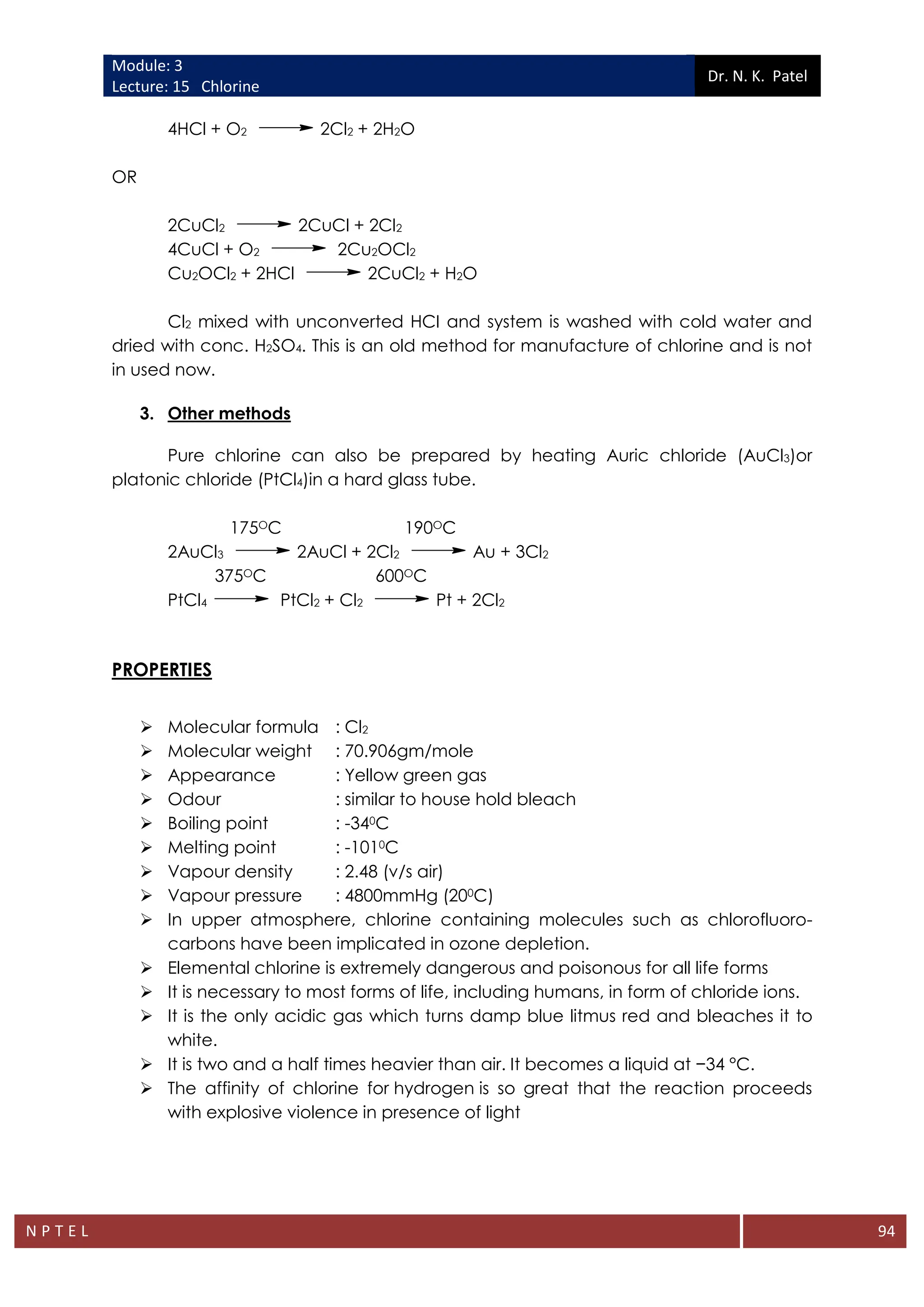
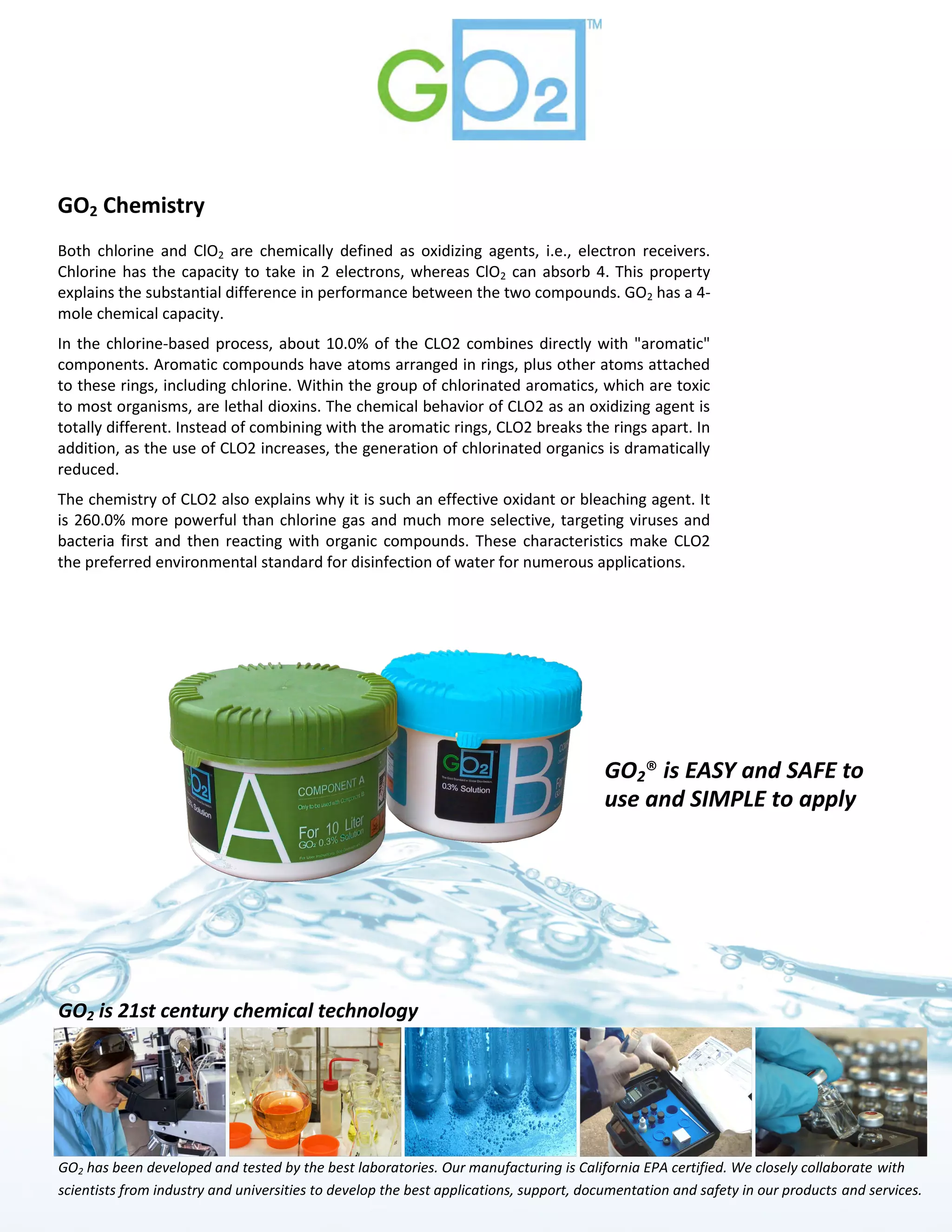
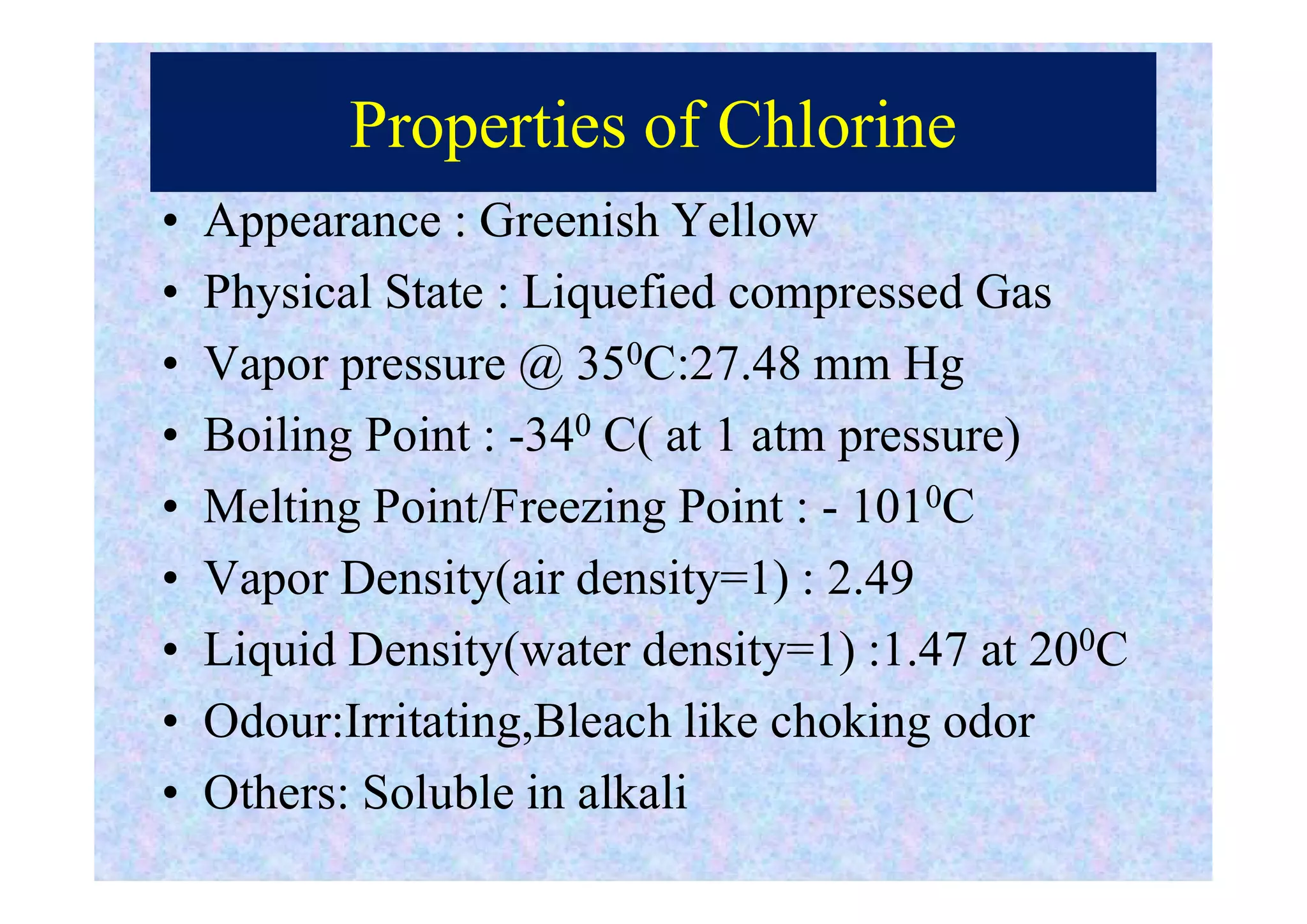
In its pure elemental form at room temperature and standard atmospheric pressure, chlorine ($Cl_2$) appears as a pale yellow-green gas. When pressurized or cooled below its boiling point of -34.04 °C (-29.27 °F), elemental chlorine condenses into a clear, amber-yellow translucent liquid. At extreme cryogenic temperatures below -101.5 °C (-150.7 °F), it solidifies into a pale yellow crystalline solid. Commercial chlorine products, such as pool pucks or liquid bleach, range visually from dense white solids to faint yellowish aqueous solutions.
Physical Appearance of Elemental Chlorine ($Cl_2$) Across States of Matter
Chlorine is a halogen element (atomic number 17) that exists naturally as a homonuclear diatomic molecule ($Cl_2$). Because electron transitions within the chlorine molecule absorb light primarily in the blue and violet wavelengths of the visible spectrum, the transmitted and reflected light appears distinctly yellow-green to the human eye. However, the exact visual appearance of pure chlorine changes substantially depending on temperature, pressure, and physical phase.
Gaseous Chlorine: The Yellow-Green Atmospheric Hazard
Under standard conditions ($0\ \text{°C}$ and $1\ \text{atm}$) or ambient room conditions ($20\ \text{°C}$ to $25\ \text{°C}$), elemental chlorine is a translucent, pale yellow-green gas. The color intensity of chlorine gas depends directly on its concentration and the path length of light passing through the gas volume:
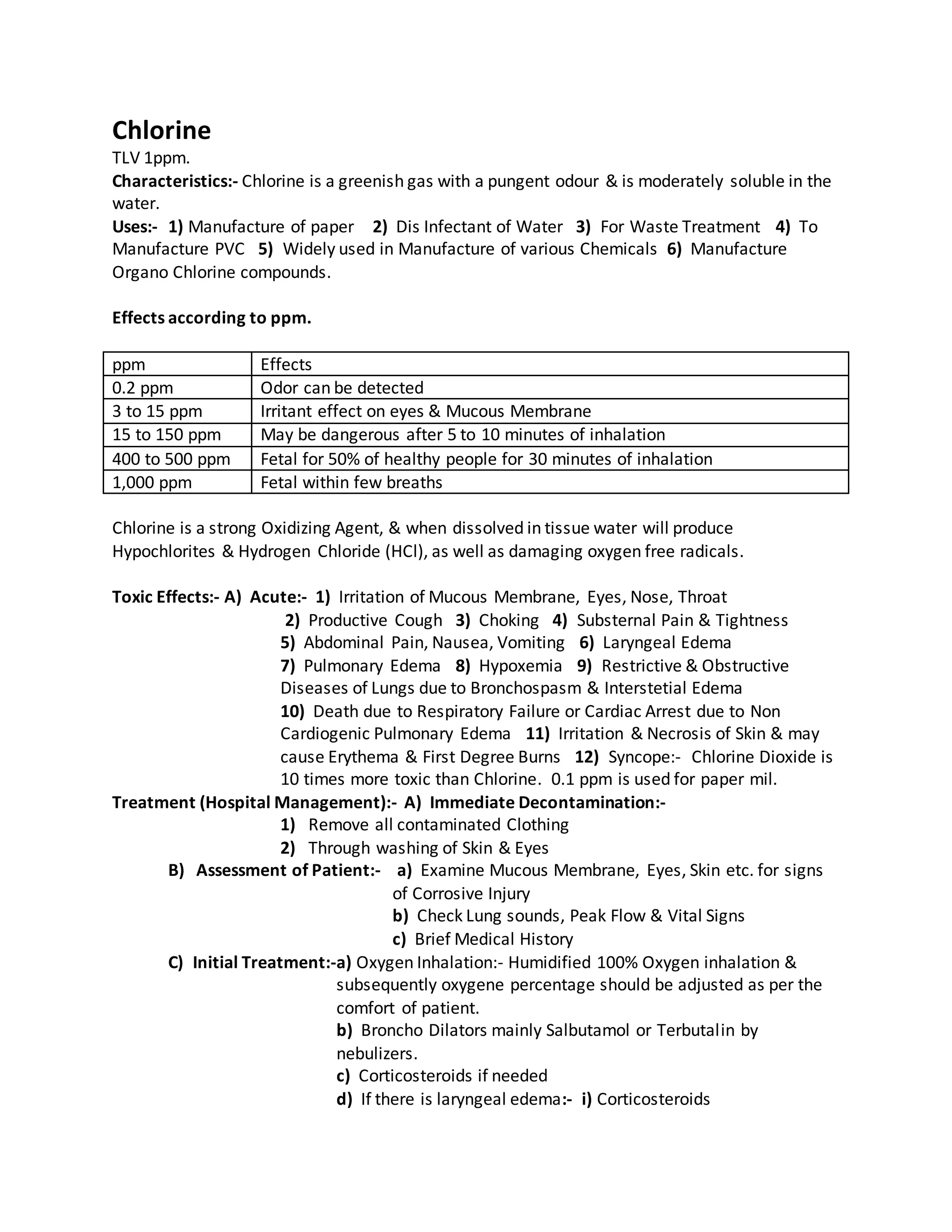
- Low Concentrations (Below 10 ppm): In ambient air, low concentrations of chlorine gas are typically invisible to the naked eye. While human olfactory receptors can detect its characteristic bleach-like, pungent odor at concentrations as low as 0.2 to 0.4 parts per million (ppm), the pale yellow-green hue generally requires higher concentrations or long optical paths to become visually distinct.
- Moderate to High Concentrations (Above 50 ppm): At higher concentrations—such as those encountered during industrial cylinder leaks or chemical mixing accidents—chlorine gas manifests as a distinct greenish-yellow fog or plume.
- Plume Dynamics: Chlorine gas has a vapor density of approximately $2.49$ relative to dry air (which has a density of $1.0$). Because it is nearly 2.5 times heavier than air, gaseous chlorine does not rise rapidly into the upper atmosphere. Visually, a releasing plume of chlorine gas flows downward, hugging the ground, pooling in low-lying areas, trenches, basements, and floor drains.
When moist air contacts a high-concentration chlorine leak, the gas reacts with ambient water vapor to form a fine aerosol mist of hydrochloric acid ($HCl$) and hypochlorous acid ($HClO$). This creates a dense, cloudy white vapor plume that partially masks the underlying yellow-green tint of the pure gas. Detailed chemical profiles of elemental chlorine are maintained by the PubChem Compound Database at NCBI.
| Solid Phase | Liquid Phase | Gas Phase |
|---|---|---|
| Below -101.5 °C | -101.5 °C to -34 °C | Above -34.04 °C |
| Pale Yellow Crystals | Clear Amber-Yellow Dense Liquid | Pale Green-Yellow Gas |
Liquid Chlorine: Translucent Amber in Pressurized Systems
Chlorine cannot exist as a liquid under standard atmospheric pressure at room temperature. To liquefy chlorine for storage, transportation, or industrial processing, chemical facilities either cool the gas below its atmospheric boiling point of -34.04 °C (-29.27 °F) or compress it under pressure. At room temperature ($20\ \text{°C}$), chlorine requires roughly 6.8 atmospheres ($688\ \text{kPa}$) of pressure to maintain a liquid state.
Visually, liquid chlorine differs markedly from its gaseous form:
- Color and Optics: Liquid chlorine is an oily, bright amber-yellow or reddish-yellow fluid. It is clear and translucent when free of contaminants.
- Refractive Index: Liquid chlorine has a refractive index of approximately 1.385, giving it an optical transparency similar to light oils or concentrated liquid hydrocarbons.
- Behavior Upon Release: When liquid chlorine is released from a pressurized container into ambient pressure, it immediately undergoes rapid flash-boiling (autorefrigeration). The liquid violently expands into a mixture of fine liquid droplets and expanding pale green-yellow gas, forming a cold cloud that stays close to the ground.
Industrial handling safety standards published by the National Institute for Occupational Safety and Health (NIOSH) highlight that visual identification of liquid leaks is often obscured by instantaneous frost formation around cryogenic or expanding discharge valves.
Solid Chlorine: Cryogenic Crystalline Structure
Solid elemental chlorine is rarely encountered outside laboratory settings or specialized cryogenic research facilities. Elemental chlorine freezes at -101.5 °C (-150.7 °F) under atmospheric pressure.
- Crystalline Form: Upon freezing, chlorine forms an orthorhombic crystal lattice structure.
- Color and Texture: In its solid phase, chlorine appears as a pale yellow, slightly opaque crystalline mass or brittle sheet. As the temperature drops closer to absolute zero, the pale yellow coloration lightens slightly due to changes in molecular lattice vibration frequencies and light absorption profiles.
Visual Attributes of Commercial Chlorine Products and Solutions
In everyday residential, commercial, and water treatment contexts, the word "chlorine" rarely refers to pure elemental $Cl_2$. Instead, it refers to chemical compounds that release available chlorine when dissolved in water. The physical appearance of these commercial formulations varies extensively based on chemical composition and state of matter.
- Commercial Chlorine Product Forms
- Liquid Solutions
- Sodium Hypochlorite
- Pale Yellow-Green
- Clear Viscous Liquid
- Solid Compounds
- Calcium Hypochlorite (Granules/Tabs)
- Dense White Pucks / Off-White Powder
- Trichlor / Dichlor Tablets
- Liquid Solutions
Liquid Bleach and Sodium Hypochlorite Solutions
Sodium hypochlorite ($NaClO$) is the active ingredient in liquid household bleach and liquid pool shock. Because elemental chlorine gas is bubbled through aqueous sodium hydroxide ($NaOH$) to manufacture bleach, the resulting liquid retains visual characteristics tied to chlorine chemistry:
- Color: Aqueous sodium hypochlorite solutions typically exhibit a clear, faint yellowish-green or pale chartreuse color. Industrial-strength pool shock (10% to 12.5% concentration) shows a visibly deeper yellow-green hue than typical household laundry bleach (5% to 6% concentration).
- Clarity: Pure sodium hypochlorite solutions are completely transparent. If a solution appears cloudy, milky, or brown, it usually indicates contamination, chemical precipitation of calcium or iron salts, or product degradation due to age and heat.
Solid Pool Chlorine: Calcium Hypochlorite and Isocyanurates
Solid chlorine compounds are engineered for stability, ease of transport, and controlled dissolution rates in swimming pools, drinking water systems, and industrial cooling towers.
- Calcium Hypochlorite ($Ca(ClO)_2$): Commonly sold as "calmic" shock or granular pool chlorine, this compound appears as a white or off-white granular powder or compressed tablet. Higher-grade technical preparations (65% to 73% available chlorine) are crisp white, while lower-purity grades may exhibit a faint gray or yellowish tint due to manufacturing impurities like sodium chloride or calcium carbonate.
- Trichloroisocyanuric Acid (Trichlor, $C_3Cl_3N_3O_3$): Formulated as 3-inch pool pucks, 1-inch sticks, or coarse granules, Trichlor is a dense, bright white solid. It is highly compressed to dissolve slowly over several days.
- Sodium Dichloroisocyanurate (Dichlor, $C_3Cl_2KN_3O_3$): Typically sold as fast-dissolving fine granules or small tablets, Dichlor appears as a clean, dry white powder.
Aqueous Chlorine Solutions and Swimming Pool Water
A common source of confusion regarding chlorine's visual appearance is the appearance of chlorinated water in public or residential swimming pools:
- Sanitized Pool Water: When chlorine compounds are added to pool water at standard operational levels (typically 1.0 to 4.0 ppm of free available chlorine), the water remains completely colorless and crystal-clear. The vibrant blue visual appearance of a clean swimming pool is not caused by chlorine; rather, it results from Rayleigh scattering of natural sunlight and light absorption by water molecules in the red spectrum.
- Concentrated Chlorine Water: In contrast, saturated laboratory solutions of elemental chlorine dissolved in water (often termed "chlorine water") exhibit a distinct pale yellow-green translucent tint, proportional to the amount of dissolved $Cl_2$ gas.
Key Physical Properties Influencing Chlorine's Visual Behavior
Understanding why chlorine looks and behaves the way it does requires reviewing its core thermodynamic, optical, and physical properties.
| Parameter / Property | Gaseous Phase ($Cl_2$) | Liquid Phase ($Cl_2$) | Commercial Liquid Bleach ($NaClO$) | Solid Trichlor Pucks |
|---|---|---|---|---|
| Primary Color | Pale Yellow-Green | Bright Amber-Yellow | Pale Yellow-Green | Bright White |
| Optical Clarity | Translucent / Transparent | Clear Translucent | Clear / Transparent | Opaque |
| Density (Relative) | 2.49 (Air = 1.0) | 1.47 (Water = 1.0 at $20\ \text{°C}$) | 1.15–1.25 (Water = 1.0) | ~2.19 g/cm³ (Solid) |
| Boiling Point | -34.04 °C (-29.27 °F) | N/A (Standard Pressure) | ~101 °C (Decomposes) | Decomposes before melting |
| Melting Point | -101.5 °C (-150.7 °F) | -101.5 °C (-150.7 °F) | ~ -6 °C (12% solution) | Decomposes at ~225 °C |
| Common Application | Water treatment, chemical synthesis | Bulk transport, paper bleaching | Household sanitization, pool shock | Slow-release pool sanitizer |
The high relative density of gaseous chlorine is the primary factor driving its visual profile during an accidental release. Because the gas is 2.49 times heavier than ambient air, a chlorine gas cloud does not mix rapidly upwards. Instead, it forms a cohesive, visible ground-hugging layer that flows downhill into valleys, ditches, and structural basements. Standard thermodynamic values and physical constants for elemental chlorine can be cross-referenced via the NIST Chemistry WebBook.
Visual Identification and Hazard Recognition in Industrial and Domestic Settings
Visual cues provide critical early warnings during chemical emergencies involving chlorine. Recognizing the distinct visual appearance of chlorine in various environments helps personnel take prompt protective measures.
- VISUAL DETECTION FLUID FLOW
- Does the cloud hug the ground?
- YES: Visibly Yellow-Green or White Dense Fog (High Probability: $Cl_2$)
- NO: Lighter-than-air Gas (e.g., Ammonia, Natural Gas)
- Does the cloud hug the ground?
Recognizing Chlorine Gas Leaks
In industrial settings—such as water treatment plants, paper mills, or chemical manufacturing facilities—chlorine is typically stored under pressure as a liquefied gas in steel cylinders or railcars. A breach in a piping system or valve assembly exhibits predictable visual steps:
- High-Pressure Gas Venting: A high-pressure gas leak creates a high-velocity jet. Near the point of release, moisture in the air rapidly condenses due to Joule-Thomson cooling, forming a dense white cloud of water vapor and acid aerosols mixed with pale yellow-green gas.
- Liquid Phase Release: If a cylinder leaks below the liquid line, liquid chlorine escapes directly. The escaping amber fluid rapidly boils into a vapor stream, creating an intense white fog cloud that obscures vision, accompanied by rapid ice or frost accumulation on adjacent metal pipework.
- Ground-Level Dispersion: As the vapor plume moves away from the source, it spreads outward as a heavy, low-lying, yellowish haze.
Distinguishing Chlorine Gas from Other Hazardous Gases
Industrial facilities frequently store multiple compressed gases. Visual inspection can assist emergency responders in differentiating chlorine from other common gaseous hazards:
- Chlorine ($Cl_2$): Distinctly yellow-green, heavy, forms low-lying plumes, creates localized white moisture clouds in humid air.
- Nitrogen Dioxide ($NO_2$): Dark reddish-brown to amber-brown gas, highly toxic, heavier than air, but lacks the greenish spectrum of chlorine.
- Fluorine ($F_2$): Extremely reactive, pale yellow to greenish-yellow gas, but reacts so violently with ambient moisture that it immediately produces intense white HF mist and smoke.
- Sulfur Dioxide ($SO_2$): Completely colorless gas under standard conditions, though it creates thick white vapor clouds when reacting with atmospheric humidity.
- Ammonia ($NH_3$): Completely colorless gas, but lighter than air (density 0.59), causing plumes to rise and disperse upward rather than pooling on the ground.
Comprehensive chemical hazard profiles and visual safety metrics are documented by the Occupational Safety and Health Administration (OSHA).
Common Visual Misconceptions About Chlorine
Several widespread myths exist regarding the visual appearance of chlorine in daily life.
Myth 1: Green Pool Water Is Caused by Excess Chlorine
When a swimming pool turns bright green or cloudy lime-green, pool owners often assume that an excessive dose of chlorine has given the water a green color.
In reality, the opposite is true:
- Algae Growth: Green pool water is almost always caused by an bloom of green algae (Chlorophyta). Algae thrive when free available chlorine levels drop too low to prevent microbial growth.
- Copper Oxidation: A clear bright green tint without cloudiness can also occur when dissolved copper equipment components (such as heater exchangers) oxidize in high-acid, low-pH water. The copper ions ($Cu^{2+}$) impart a deep turquoise or emerald green hue to the water. Adding chlorine oxidizes these metals further, sometimes intensifying the green color without chlorine itself being green in dilute form.
| CAUSE OF GREEN SWIMMING POOL WATER |
|---|
| Misconception: Excess chlorine turned the pool water green. |
| Actual Cause 1: Insufficient chlorine allowed green algae to bloom. |
| Actual Cause 2: Dissolved copper ions ($Cu^{2+}$) oxidized in water. |
Myth 2: Chlorine Gas Cloud Is Always Easily Visible
While high concentrations of chlorine gas exhibit a clear yellow-green color, life-threatening concentrations can exist without any visible coloration. The OSHA Permissible Exposure Limit (PEL) ceiling for chlorine is 1 ppm, and the Immediately Dangerous to Life or Health (IDLH) threshold established by NIOSH is 10 ppm.
At 10 to 20 ppm, chlorine gas is extremely dangerous to human respiratory tissue, yet at these levels, the pale yellow-green color is often too faint to see across short distances or in low light. Therefore, the absence of a visible yellow fog does not mean an area is safe from chlorine gas.
Myth 3: Mixing Bleach with Other Cleaners Creates Visible Chlorine Gas Smoke
A dangerous household error involves mixing sodium hypochlorite bleach with acids (like toilet bowl cleaners or vinegar) or ammonia products.
- Bleach + Acid: Adding an acid to bleach lowers the pH, rapidly shifting the chemical equilibrium to convert hypochlorite ions ($ClO^-$) into free elemental chlorine gas ($Cl_2$). While this reaction generates dangerous gas, it often produces tiny, invisible bubbles without creating a dramatic cloud of smoke. People may inhale toxic chlorine gas before noticing any visual change in the cleaning solution.
- Bleach + Ammonia: Mixing bleach with ammonia generates toxic chloramine vapors ($NH_2Cl$, $NHCl_2$), which are completely colorless gases.
Safety Protocol: Responding to Visual Cues of Chlorine Exposure
Because chlorine gas is toxic, corrosive, and a severe respiratory irritant, recognizing visual indicator cues requires immediate defensive action.
- VISUAL ALARM: Yellow-Green Fog / Heavy Vapor Cloud
- EVACUATE UPHILL & UPWIND: Move perpendicular to wind direction to exit the trailing plume path.
- DO NOT CROUCH / SEEK LOW AREAS: Chlorine settles in basements, trench lines, and low floor zones.
- NOTIFY EMERGENCY SERVICES: Call 911 / Hazardous Materials (HazMat)
- Evacuate Upwind and Uphill: If you observe a ground-hugging pale green-yellow gas cloud or a dense white vapor cloud near chemical storage areas, immediately move upwind and to higher ground. Do not walk through a visible cloud.
- Avoid Low-Lying Basements and Pit Zones: Because chlorine gas is 2.5 times denser than air, it collects rapidly in ditches, storm sewers, basements, and lower floor levels. Seek upper floors or elevated topography during an evacuation.
- Remove Contaminated Clothing: If exposed to liquid chlorine drops or high-density vapor mist, remove clothing immediately, as trapped gas off-gasses into breathing zones. Wash affected skin thoroughly with clean water.
- Professional Hazard Guidance: Refer to emergency guidance documents provided by public health authorities, such as the ATSDR Toxicological Profile for Chlorine, to understand post-exposure triage and safety procedures.
Frequently Asked Questions
What color is pure chlorine gas?
Pure chlorine gas is pale yellow-green (often described as chartreuse or greenish-yellow). Its color intensity increases with higher concentrations and longer optical viewing paths, though dangerous low-concentration exposures can appear completely colorless in daylight.
Why does liquid chlorine look amber instead of green?
When chlorine gas is pressurized or cryogenically cooled into a liquid, its molecular density increases dramatically. This denser arrangement shifts its optical absorption spectrum, causing it to absorb blue and violet light more intensely and reflect a deep translucent amber-yellow or reddish-yellow color.
Is chlorine gas visible at low concentrations?
No. At low concentrations near or slightly above toxic threshold limits (1 to 10 ppm), chlorine gas is usually invisible to the naked eye. The distinctive pale yellow-green hue typically becomes visually obvious only at concentrations exceeding 30 to 50 ppm, depending on lighting conditions and background contrast.
What does chlorine look like when mixed into pool water?
At normal swimming pool operational levels (1.0 to 4.0 ppm), chlorine dissolves completely into aqueous hypochlorous acid and hypochlorite ions, remaining entirely colorless and transparent. The characteristic blue color of pool water is caused by light scattering in water, not by chlorine.
What solid form does pool chlorine usually take?
Pool chlorine solid compounds—such as calcium hypochlorite, Trichlor, and Dichlor—are solid white or off-white. They are manufactured as dense 3-inch pucks, 1-inch sticks, granules, or fine white powders.
What should I do if I see a greenish-yellow gas cloud?
If you observe a heavy, ground-hugging greenish-yellow gas cloud, immediately evacuate the area by moving upwind and uphill. Avoid low-lying terrain, basements, and enclosed spaces where the dense gas accumulates, and contact local emergency responder services (such as HazMat teams) immediately.
Practical Recommendations for Safe Identification and Handling
When working with or managing chlorine compounds in residential, commercial, or industrial applications, follow these evidence-based safety guidelines:
- Rely on Gas Detection Devices, Not Sight: Never rely on visual identification alone to determine whether an environment is clear of chlorine gas. Use calibrated electronic gas detectors equipped with electrochemical sensors to monitor trace concentrations below visual thresholds.
- Store Solid Chlorine in Clean, Dry Conditions: Keep calcium hypochlorite and Trichlor pucks in their original containers in a cool, dry, well-ventilated area away from organic compounds, fuels, and acids. Contact between solid chlorine pucks and moisture or organic contaminants can trigger rapid heating and toxic off-gassing.
- Inspect Storage Containers for Discoloration: Inspect liquid bleach containers periodically. If a clear plastic bottle of liquid chlorine shock develops a dark brownish sediment or heavy yellow-green crust around the cap, it indicates product degradation and potential pressure buildup from outgassing oxygen.
- Verify Chemical Compatibility Before Mixing: Never mix different forms of solid pool chlorine (such as mixing Trichlor pucks with calcium hypochlorite shock), as explosive chemical reactions can occur. Always add solid or liquid chlorine directly to water; never add water into concentrated dry chemicals.