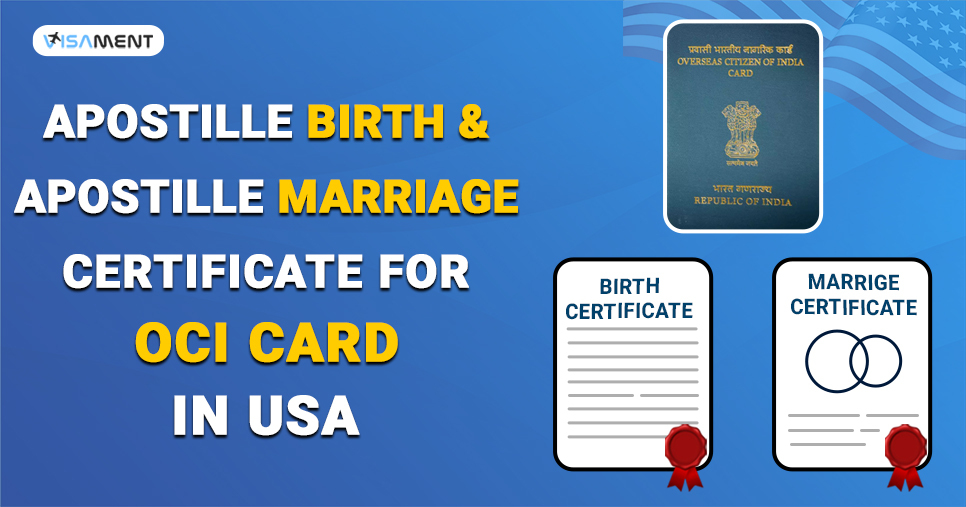
Applying for an Overseas Citizen of India (OCI) card requires proof of eligibility through official civil status documents. If you or your child were born outside of India, Indian consulates and VFS Global mandate that the foreign birth certificate be officially authenticated. For documents issued in countries that are signatories to the Hague Apostille Convention, this authentication takes the form of an apostille. An apostilled birth certificate verifies the origin and signature of the issuing public official, making the document legally recognized by the Ministry of External Affairs (MEA) and Indian diplomatic missions.
Why an Apostilled Birth Certificate Is Required for OCI
The OCI card is a legal identity and travel document granted to foreign citizens of Indian origin, as well as foreign spouses of Indian citizens or OCI holders. Because the Government of India must verify legal parentage, lineage, and place of birth, foreign civil registry documents cannot simply be submitted as plain photocopies or standard unverified certificates.
India is a contracting state to the Hague Convention of 5 October 1961 Abolishing the Requirement of Legalisation for Foreign Public Documents (commonly known as the Hague Apostille Convention). Under this international treaty, public documents executed in the territory of one contracting state and produced in the territory of another do not require traditional, multi-tiered diplomatic or consular legalization. Instead, a simplified certificate called an apostille is issued by the competent authority of the country where the document originated.
The Purpose of Document Legalization
When you submit a birth certificate issued by a foreign municipal authority—such as a U.S. county clerk, a UK register office, or an Australian Registry of Births, Deaths and Marriages—the Indian diplomatic mission (or its processing partner, VFS Global) has no direct mechanism to verify the authenticity of local foreign signatures or seals.
The apostille acts as a standardized seal of authenticity. It confirms three specific details:
- The authenticity of the signature on the birth certificate.
- The capacity in which the person signing the document acted.
- The identity of the seal or stamp affixed to the document.
Without an apostille (or consular attestation for non-Hague nations), your OCI application will be rejected during preliminary document verification, leading to processing delays and administrative re-submission fees.
Who Needs an Apostilled Birth Certificate for OCI?
Not every applicant submits a foreign birth certificate, but for specific categories of applicants, an apostilled birth certificate is a non-negotiable requirement.
- OCI Birth Certificate Requirement
- Born Outside India
- Requires Apostille (or Attestation)
- Born in India
- No Apostille Req. (Standard Copy)
- Born Outside India
1. Minor Children Born Outside India
If a minor child was born in a country outside India (e.g., the United States, United Kingdom, Canada, or Germany) and is applying for OCI based on their parents’ Indian origin, the child’s original or official long-form birth certificate must be apostilled. The birth certificate serves dual purposes: it establishes the child’s identity and proves the legal parent-child relationship.
2. Adult Applicants Born Outside India
Adults born abroad who derive their eligibility for OCI through their parents or grandparents must present their own foreign birth certificate to prove the family link. If the applicant was born outside India, their birth certificate must be apostilled by the authority of the birth country.
3. Spousal OCI Applicants
Foreign spouses of Indian citizens or foreign spouses of existing OCI cardholders who have been married for at least two continuous years can apply for an OCI card. In addition to an apostilled marriage certificate, consulates often require the applicant's foreign birth certificate, properly apostilled, to verify full legal identity, parental names, and birthplace.
Prerequisites: Long-Form Birth Certificate vs. Short-Form
Before applying for an apostille, you must ensure you hold the correct type of birth certificate. Submitting the wrong document format is one of the most common reasons apostille offices and VFS Global reject OCI applications.
- Birth Certificate Selection
- Short-Form / Card
- ❌ REJECTED FOR OCI (Missing parent info, signatures, or details)
- Long-Form / Vault
- ✅ ACCEPTED FOR OCI (Includes full parent names, birth details)
- Short-Form / Card
Understanding the Differences
- Short-Form / Informational Abstract: Often issued as a small wallet card or a brief certificate, this format usually lists only the individual's name, date of birth, and gender. It typically omits parents' full names, birthplaces, and official registrar signatures. Short-form certificates are not accepted for OCI applications.
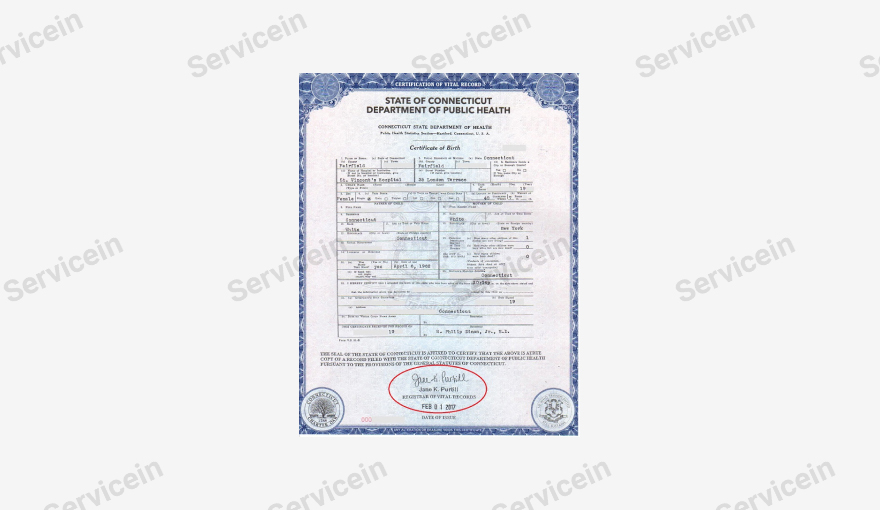
- Long-Form / Vault Copy / Full Civil Registry Copy: This comprehensive document contains complete vital statistics, including the child’s full name, exact place of birth, hospital details, and—most importantly—the full legal names, dates of birth, and places of birth of both parents.
Key Document Requirements for OCI Compliance
- Parental Names Match Passports: The names of both parents on the birth certificate must match their respective passports exactly. Discrepancies in maiden names, middle names, or initial usage must be supported by official legal name-change documents or affidavits.
- Official Registrar Signature: The birth certificate must be signed by an authorized municipal, county, state, or national registrar. A hospital-issued birth record or commemorative footprint certificate is an informal record and cannot be apostilled.
- Exemplification or Certified Seals: In certain jurisdictions (such as New York City), an apostille can only be issued if the birth certificate is accompanied by a "Letter of Exemplification" or an official raised seal from the county clerk. Always check local vital statistics requirements prior to submitting.
Step-by-Step Guide: How to Get an Apostille for OCI
The process for obtaining an apostille varies by country and state, but the sequence generally follows standard legal authentication pathways. The following guide details the process for foreign-issued documents, with specific emphasis on U.S. and Commonwealth procedures.
- Obtain Official Long-Form Certificate
- Verify State / Local Certification
- Submit to Competent Apostille Office
- File OCI App via VFS Global
Step 1: Obtain a Certified Copy of the Birth Certificate
Contact the official vital statistics office in the jurisdiction (state, county, province, or council) where the birth occurred. Request a certified long-form birth certificate for international use.
- Do not attempt to send a personal photocopy or an uncertified digital printout.
- Ensure the document bears an embossed seal, raised stamp, or multi-colored security watermark of the issuing authority.
Step 2: Determine the Appropriate Apostille Authority
Apostilles are issued strictly by designated "Competent Authorities" under the Hague Convention.
- United States: For state-issued birth certificates (the majority of U.S. births), the apostille is issued by the Secretary of State (or state Department of State) in the specific state where the birth was registered. If the birth occurred on a military base abroad or was recorded by a consulate, a Consular Report of Birth Abroad (CRBA) must be apostilled by the U.S. Department of State Authentications Office.
- United Kingdom: The Foreign, Commonwealth & Development Office (FCDO) handles all apostille authentications for UK civil registry certificates.
- Canada: Canada formally joined the Hague Apostille Convention in January 2024. Canadian birth certificates are apostilled either by Global Affairs Canada or provincial authentication services (such as Ontario’s Official Documents Services or Alberta’s Deputy Provincial Secretary), depending on where the document was issued.
- Australia: The Department of Foreign Affairs and Trade (DFAT) issues apostilles through Australian Passport Offices or state offices.
Step 3: Prepare the Apostille Submission Package
Most authentication offices allow submissions by mail, while some offer walk-in counter services. A complete application package typically requires:
- The original certified long-form birth certificate.
- The state or national apostille application form (specifying "India" as the destination country, although an apostille is universally valid in all Hague member nations).
- Applicable government processing fees (payable via cashier's check, credit card form, or money order as specified by the authority).
- A self-addressed, stamped return envelope (often requiring tracked shipping such as FedEx, UPS, or Priority Mail).
Step 4: Receive and Inspect the Apostilled Document
When your document returns, the apostille will be attached directly to the original birth certificate. It may take the form of:
- A printed certificate permanently stapled or riveted to the document.
- An official sticker with tamper-evident ribbons or seals.
- A digital/electronic apostille (e-Apostille) containing a QR code for online verification (accepted by Indian authorities provided the verification portal is active).
Important Caution: Do not separate, un-staple, or detach the apostille sheet from the birth certificate. Removing staples or altering the physical attachment immediately voids the legal authentication.
Comparison Matrix: Apostille vs. Legalization Requirements by Region
Because document authentication rules depend entirely on the country of issue, consult the breakdown below to ensure compliance with Indian diplomatic guidelines.
| Country / Region | Primary Issuing Authority | Competent Apostille / Legalization Body | Legalization Type Required for OCI | Average Processing Time |
|---|---|---|---|---|
| United States (State Births) | State Vital Statistics / County Clerk | Secretary of State (State-Level) | Apostille | 1 to 4 Weeks (Varies by State) |
| United States (CRBA / Federal) | U.S. Department of State | U.S. Department of State Authentications Office | Apostille | 4 to 8 Weeks |
| United Kingdom | General Register Office (GRO) / Local Registry | Foreign, Commonwealth & Development Office (FCDO) | Apostille | 3 to 10 Working Days |
| Canada | Provincial Registrar General | Global Affairs Canada or Provincial Ministry | Apostille (Effective Jan 2024) | 1 to 6 Weeks |
| Australia | State/Territory Registry of BDM | Department of Foreign Affairs and Trade (DFAT) | Apostille | 2 to 5 Working Days |
| Non-Hague Nations (e.g., UAE, Qatar) | Ministry of Health / National Registry | Ministry of Foreign Affairs (MOFA) + Indian Embassy | Consular Attestation (Not Apostille) | 2 to 4 Weeks |
Note: For non-Hague member states, the document must complete a two-step chain attestation: first by the local Ministry of Foreign Affairs, followed by official attestation at the nearest Embassy or Consulate General of India.
Submitting the Apostilled Birth Certificate with Your OCI Application
Once the birth certificate is successfully apostilled, you must follow the official Indian government and VFS Global submission protocol.
- Online Application Filing (passport.gov.in/oci portal)
- Upload Document Scans (PDF: Max size per portal)
- VFS Physical Package Mail-in (Original + Self-Attested)
1. Online Application Portal (OCI Services)
When filling out the application on the official Ministry of Home Affairs OCI portal, select the document type corresponding to your proof of origin or parentage (e.g., "Relationship Certificate" or "Proof of Indian Origin of Parent").
- Scan the birth certificate along with the attached apostille page into a single PDF document.
- Ensure the scan clearly displays the seal, signature, and apostille certificate number.
- Strictly follow the file size limit specified on the portal (typically under 500 KB per PDF).
2. Physical Document Submission via VFS Global
After submitting the online application, print the completed web application form and assemble the physical application package for VFS Global (or the relevant consulate handling OCI processing in your jurisdiction).
- Original Document: Consulates frequently require you to present or send the original apostilled birth certificate for physical verification. It will be returned after inspection.
- Photocopies: Include self-attested photocopies of both the birth certificate and the attached apostille sheet. Self-attestation requires the applicant (or parent/guardian, in the case of a minor) to sign and date the photocopy with the phrase "True Copy of Original."
Troubleshooting Common Issues and Name Mismatches
Discrepancies on civil documents cause the majority of OCI application rejections and delays. Understanding how Indian consular posts view foreign legal records helps prevent processing failures.
1. Name Discrepancies Between Birth Certificate and Passports
A very common issue arises when a parent's name on a child’s foreign birth certificate does not match the parent's current Indian or foreign passport.
- Middle Names and Maiden Names: If a mother’s maiden name appears on the birth certificate but her current passport lists her married surname, submit an official marriage certificate linking both names.
- Truncated Names or Initials: If a parent’s full middle name is spelled out on the birth certificate but initialized in their Indian passport (or vice versa), the consulate may require a Name Verification Affidavit or an official One and the Same Person Affidavit notarized prior to submission.
2. Non-English Birth Certificates
If the original birth certificate and apostille are issued in a foreign language (e.g., French, German, Spanish, or Dutch), Indian consulates require a certified English translation.
- The translation must be performed by a sworn/certified translator.
- The translation itself must be notarized or submitted alongside the original foreign apostilled document.
- Do not attempt self-translation; uncertified translations are rejected automatically.
3. Missing Father’s Name or Single Parent Applications
If a minor's birth certificate lists only one parent, additional legal documentation is mandatory.
- For single-parent OCI applications, provide official custody court orders, proof of legal guardianship, or a death certificate if one parent is deceased.
- A notarized consent affidavit (such as the standard VFS No-Objection Form) signed by the sole legal guardian must accompany the apostilled birth certificate.
Frequently Asked Questions (FAQs)
Does India require an apostille on Indian birth certificates?
No. An apostille is only required for documents issued by a foreign government for use in India. Birth certificates issued by Indian municipal corporations (such as BBMP, MCD, or local Registrars of Births and Deaths) are domestic public documents and do not require an apostille when submitting an OCI application.
Can I get an apostille at the Indian Embassy or Consulate?
No. Indian diplomatic missions (Embassies, Consulates General, or VFS Global application centers) cannot issue an apostille for a foreign birth certificate. The apostille must be issued by the designated government authority of the country where the document was originally created (such as a U.S. State Secretary of State office or the UK FCDO).
Does an apostille on a birth certificate ever expire?
Under international law and the Hague Apostille Convention standards, an apostille does not carry an expiration date. Once an apostille is affixed to a birth certificate, it remains permanently valid. However, the underlying birth certificate must remain legible, undamaged, and meet current consular standards.
What should I do if my country of birth is not part of the Hague Convention?
If your birth certificate was issued in a country that has not ratified the Hague Apostille Convention (such as the UAE, Kuwait, or Singapore), you cannot obtain an apostille. Instead, you must undergo chain legalization (consular attestation):
- Certify the birth certificate at the issuing country's Ministry of Foreign Affairs (MOFA).
- Submit the document to the Indian Embassy or Consulate within that host country for final consular attestation stamp.
Can I submit a notarized copy of a birth certificate instead of an apostille?
No. A public notary merely certifies the signature of the person signing in their presence or attests that a copy matches an original presented to them; a notary cannot legalize a public record. Indian authorities strictly require an official state/national apostille on the certified vital statistics document.
Is an e-Apostille accepted for OCI applications?
Yes, most Indian diplomatic posts accept e-Apostilles (digital apostilles backed by cryptographic signatures and online verification portals) issued by authorized countries like the UK or select U.S. states. However, you must print the complete e-Apostille sheet along with the verified digital certificate details when submitting your physical document package to VFS Global.
Summary Checklist and Next Actions
To ensure your OCI application proceeds smoothly without document rejection, execute the following actions in order:
- Verify Your Birth Certificate Format: Confirm you possess an official, certified long-form birth certificate listing both parents' complete legal names and official registrar signatures.
- Submit to the Correct Apostille Authority: Send the certified certificate to the designated competent authority (e.g., Secretary of State for U.S. births, FCDO for UK births) to receive the official apostille stamp or certificate.
- Audit Legal Names: Compare the names on the birth certificate and apostille against current applicant and parent passports. Secure name-change certificates or notary affidavits for any spelling differences.
- Prepare Certified Translations: If your apostille or birth certificate is in a language other than English, obtain an official certified English translation.
- Keep Apostille Attached: Keep the physical apostille page permanently attached to the birth certificate. Do not alter or un-staple the document bundle.
- Upload and Submit: Scan the complete document bundle (birth certificate + apostille + translation) as a unified PDF for your online OCI portal filing, then include the original and self-attested copies in your physical VFS Global submission package.
Disclaimer: Document authentication rules and consular requirements for Overseas Citizen of India (OCI) applications are set by the Ministry of Home Affairs and Ministry of External Affairs of India. Requirements may change based on bilateral treaties and updated administrative policies. Always consult the official VFS Global portal or the appropriate Embassy/Consulate General of India for local jurisdictional guidance prior to submitting sensitive legal documents.