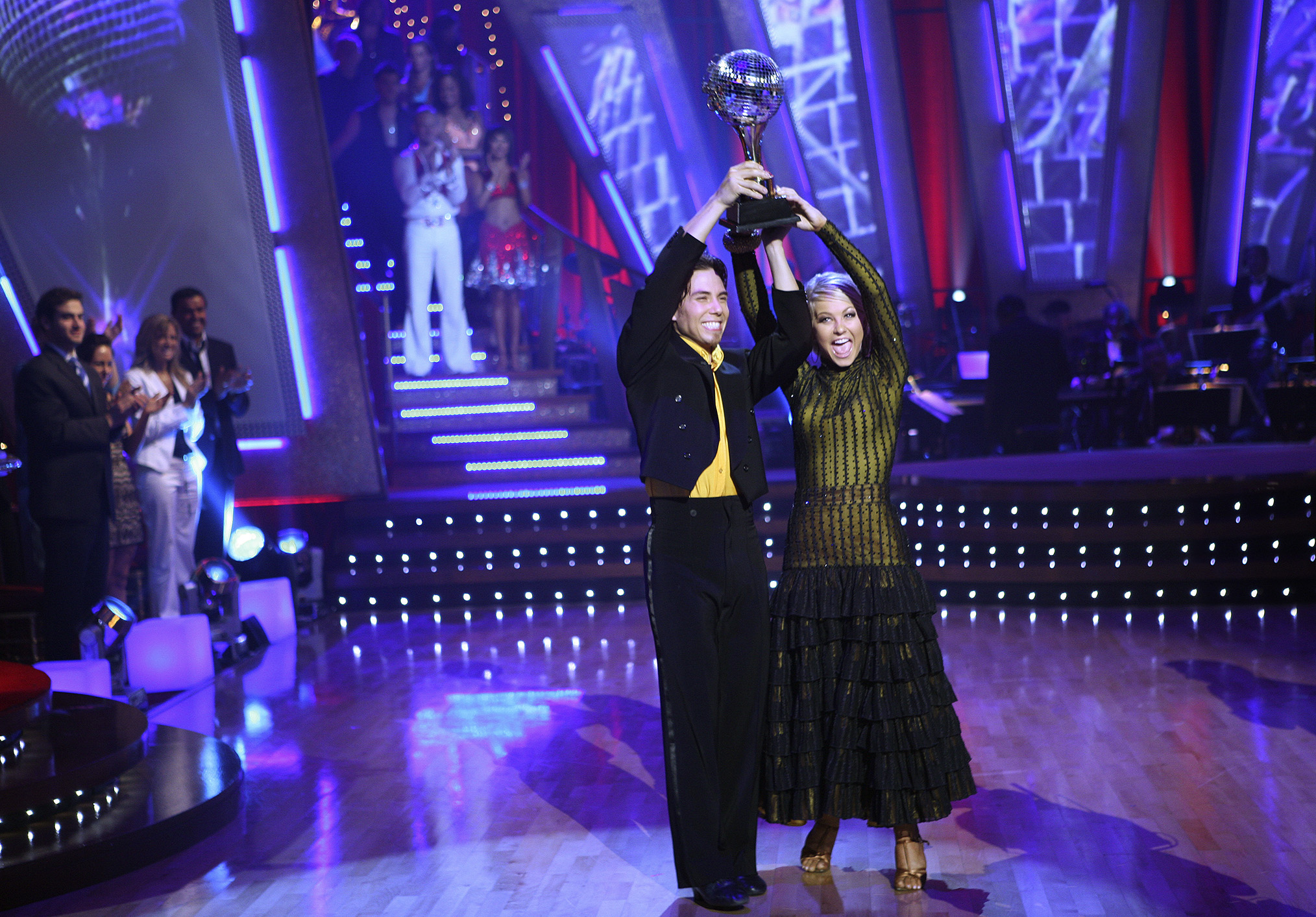
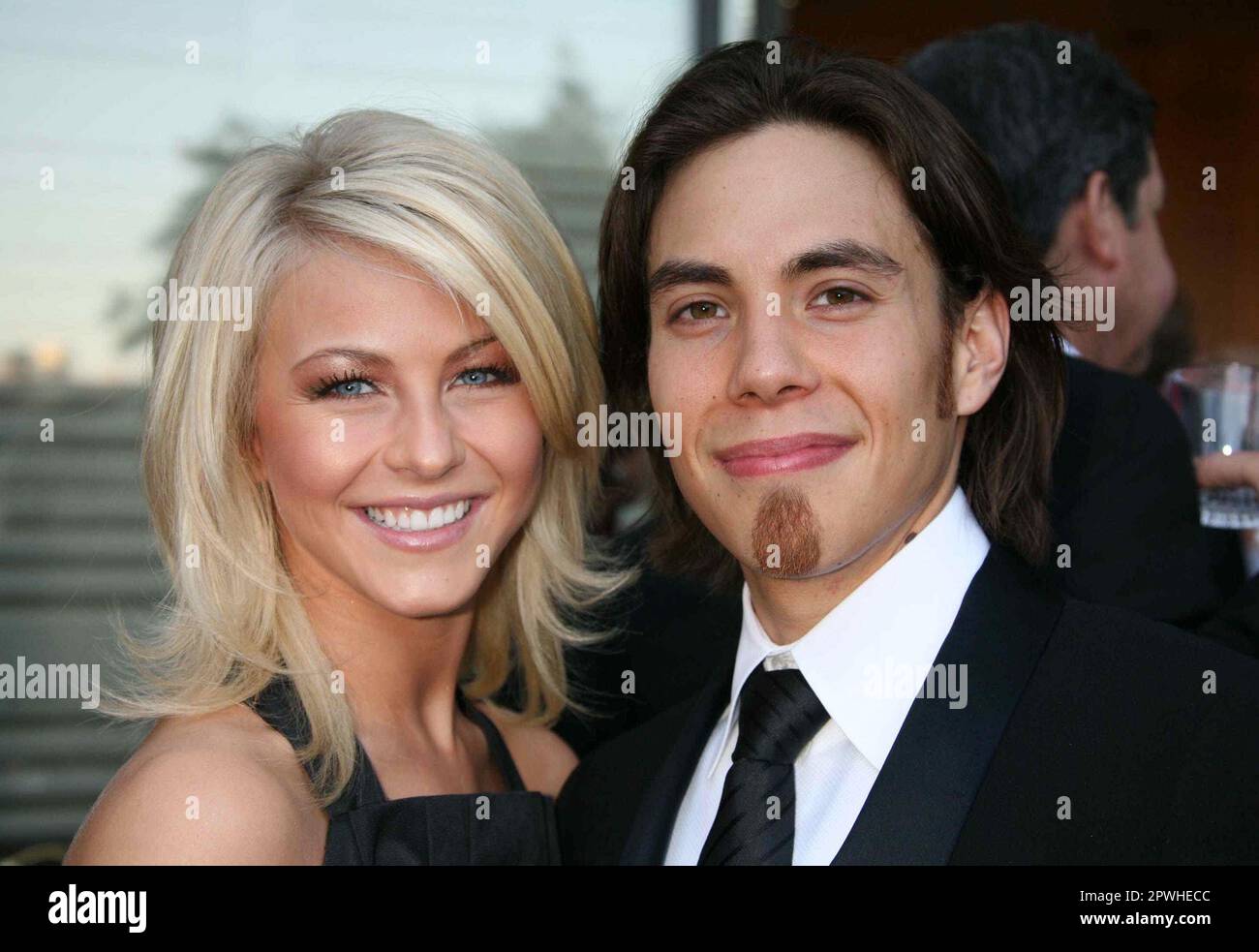
Apolo Anton Ohno competed on ABC’s Dancing with the Stars during Season 4 in spring 2007 and returned for Season 15 (All-Stars) in fall 2012. Partnered with rookie professional dancer Julianne Hough in Season 4, the eight-time Olympic medalist short-track speed skater won the Mirrorball Trophy. He later placed fifth with Karina Smirnoff in Season 15.
From Short-Track Ice to the Ballroom Floor
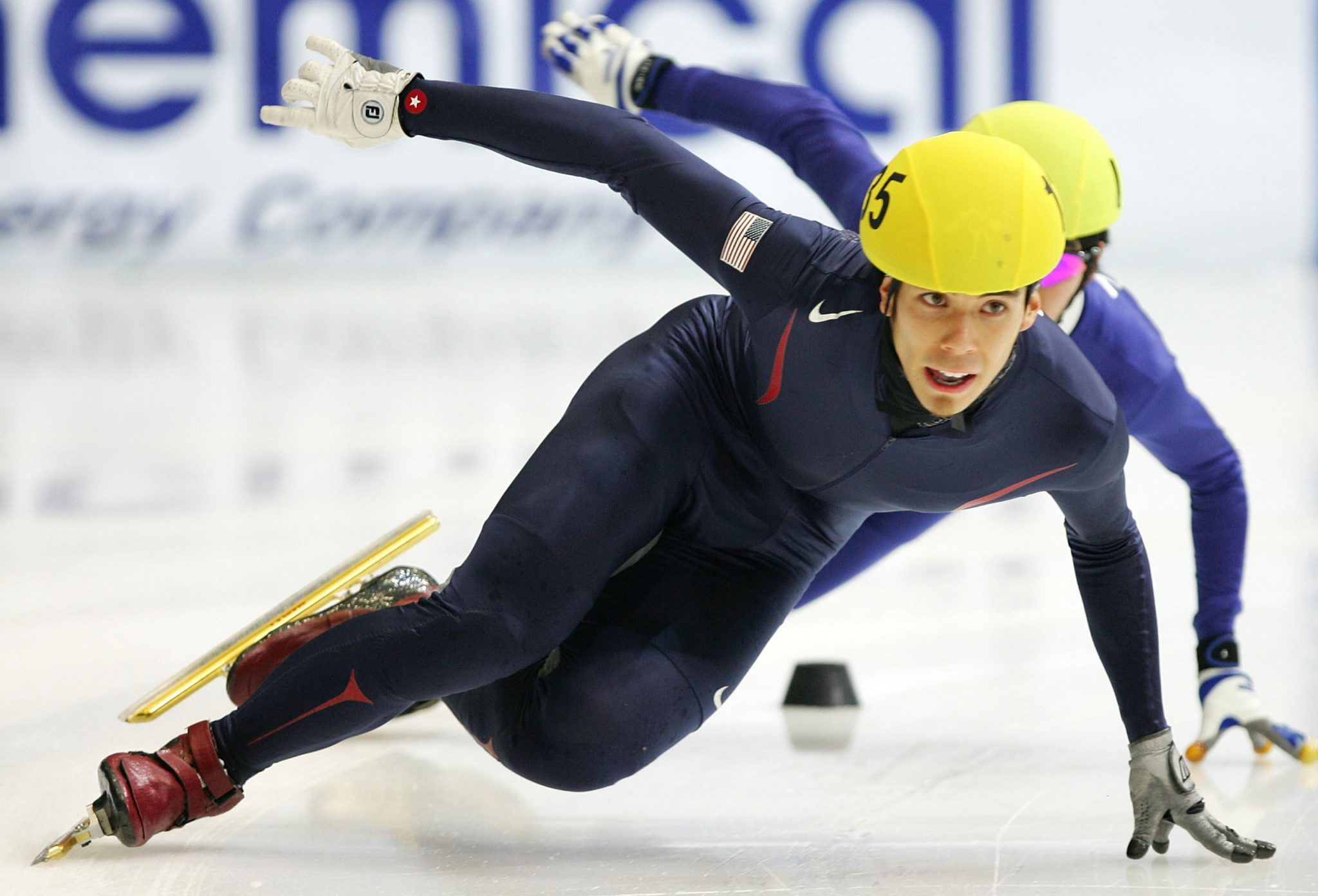
When ABC announced that short-track speed skater Apolo Anton Ohno would join the cast of Dancing with the Stars for its fourth season in early 2007, viewers were eager to see how an elite winter athlete would adapt to competitive ballroom dancing. At 24 years old, Ohno was already the most decorated American short-track speed skater in Winter Olympics history, celebrated for his explosive lower-body power, tactical intelligence on the ice, and composure under pressure.
Ballroom dancing presents physical and artistic demands distinct from elite sports. Speed skating relies on forward propulsion, deep knee flexion, lateral power production from the glutes and quadriceps, and maintaining a compressed posture over an edge. Ballroom dancing, by contrast, requires posture shifts, thoracic extension, heel-to-toe footwork rolls, partner connection, and rhythmic timing dictated by musical cadence rather than lap times.
Despite these differences, Ohno's athletic baseline provided immediate competitive advantages:
- Exceptional Core and Lower-Body Strength: The leg drive required for short-track cornering translated into rapid directional changes, dynamic hip action in Latin dances, and strong stability during lifts and turns.
- Proprioception and Balance: Years of leaning into sharp turns at 30 miles per hour on narrow steel blades equipped Ohno with balance and spatial awareness.
- Professional Discipline: Trained under intense Olympic regimens, Ohno approached daily dance rehearsals with focused repetition, physical conditioning, and performance adjustments based on critique.
Ohno’s crossover success expanded the show's audience beyond standard entertainment viewers, drawing sports fans and establishing a blueprint for winter and summer Olympians who followed him on the show.
Season 4 (2007): The Mirrorball Trophy Championship Run
Season 4 of Dancing with the Stars premiered on March 19, 2007, featuring a diverse cast that included former NSYNC member Joey Fatone, professional boxer Laila Ali, model Paulina Porizkova, and actor Ian Ziering. Ohno was paired with 18-year-old Julianne Hough, a former Junior Latin World Champion making her debut as a professional dancer on the series.
Season 4 Final Standings (Spring 2007): 1. Apolo Anton Ohno & Julianne Hough (Winners) 2. Joey Fatone & Kym Johnson (Runners-Up) 3. Laila Ali & Maksim Chmerkovskiy (3rd Place)
Partnering Dynamics with Julianne Hough
The pairing of Ohno and Hough proved pivotal to the season's trajectory. As a first-year pro, Hough brought innovative, high-tempo choreography that leveraged Ohno's athleticism rather than hiding his lack of formal dance training.
Hough identified Ohno's mechanical strengths early in rehearsals: rapid foot speed, balance, and physical stamina. Her choreography incorporated sharp changes of direction, demanding lift sequences, and complex footwork patterns that challenged traditional ballroom norms.
The duo maintained a disciplined, athlete-style training regime, often rehearsing for six to eight hours a day to master muscle memory and execution.
Key Routines and Scoring Progression
Ohno's campaign in Season 4 demonstrated steady mechanical refinement and emotional growth on stage.
1. The Early Weeks (Weeks 1–3)
Ohno opened the competition with a Cha-Cha-Cha to "Never Gonna Get It" by En Vogue (scoring 21 out of 30) followed by a Quickstep to "Two Hearts" by Phil Collins (scoring 26 out of 30). While judges Carrie Ann Inaba, Len Goodman, and Bruno Tonioli praised his foot speed and physical commitment, head judge Len Goodman cautioned Ohno against rigid upper-body posture, a residual habit from his speed skating stance.
2. The Breakthrough: Paso Doble (Week 7)
By Week 7, the competition narrowed, requiring two dances per night. Ohno and Hough performed a Paso Doble set to "Song 2" by Blur. The routine emphasized aggressive line extensions, dramatic matador positioning, and sharp rhythmic accents. The judges awarded the pair a perfect score of 30 out of 30, marking a turning point where Ohno transitioned from a skilled athlete into a top contender for the title.
3. The Samba Rematch (Week 9)
In Week 9, the couple performed a Samba to "I Like to Move It" by Reel 2 Real, earning another perfect score of 30. The routine demonstrated improved hip action, fluid rhythm transfer, and natural partner interaction, proving that Ohno could handle complex Latin styles alongside ballroom standards.
Key Score Progression (Season 4): Week 1 (Cha-Cha-Cha): 21 / 30 Week 3 (Jive): 23 / 30 Week 7 (Paso Doble): 30 / 30 (First Perfect Score) Week 9 (Samba): 30 / 30 Week 10 (Freestyle): 30 / 30 (Finale)
The Finale: Freestyle Victory
The Season 4 finale took place on May 22, 2007. The championship came down to three finalists: Apolo Anton Ohno, Joey Fatone, and Laila Ali.
In the final round, couples performed a unconstrained Freestyle routine, which historically sways judge and viewer voting. Hough crafted a high-energy routine set to a remix of "Ultimate" by Bryan Adams, blending traditional hip-hop elements, breakdancing flourishes, synchronized partner moves, and dynamic lifts.
Final Leaderboard Scores (Week 10 - Combined Finals): • Apolo Anton Ohno & Julianne Hough: 28 (Rumba) + 30 (Freestyle) = 58 / 60 • Joey Fatone & Kym Johnson: 26 (Cha-Cha) + 30 (Freestyle) = 56 / 60 • Laila Ali & Maksim Chmerkovskiy: 29 (Paso Doble) + 26 (Freestyle) = 55 / 60
The judges awarded the Freestyle performance a unanimous 30 out of 30. Combined with viewer votes, Ohno and Hough were crowned Season 4 Champions, awarding Hough her first Mirrorball Trophy in her debut season and making Ohno the first speed skater to win the competition.
Season 15 (2012): Returning for the All-Stars Edition
In autumn 2012, ABC produced Dancing with the Stars: All-Stars (Season 15), bringing back thirteen past champions, finalists, and fan favorites to compete in a field of returning performers. Ohno returned to the ballroom five years after his Season 4 victory.
Partnering with Karina Smirnoff
Because Julianne Hough had transitioned into feature films and television production, Ohno was paired with veteran professional dancer Karina Smirnoff, who won Season 13 alongside soap opera actor J.R. Martinez.
Smirnoff brought a rigorous, traditional Latin dance technique to the partnership. Her choreography focused on technical precision, intricate footwork, and precise body mechanics. The dynamic differed from Season 4: Ohno was now an experienced performer facing elevated standards from judges and viewers alike.
Season 15 Competition Context: • Returning Champions: Apolo Anton Ohno, Shawn Johnson, Kelly Monaco, Emmitt Smith, Helio Castroneves • Key Rivals: Melissa Rycroft (Season 15 Winner), Shawn Johnson (Runner-Up) • Partner: Karina Smirnoff • Final Position: 5th Place (Eliminated Week 9)
Competition Journey and Semi-Final Exit
Season 15 featured tough competition from the start. Contestants were expected to deliver finale-caliber routines in the opening weeks. Ohno and Smirnoff delivered consistent performances across multiple disciplines:
- Week 1 (Cha-Cha-Cha): Performed to "Jump" by Flo Rida, scoring 22.0 out of 30.
- Week 4 (Dance Duel - Rumba): Scored 25.5 out of 30, demonstrating refined partner framing.
- Week 7 (Viennese Waltz): Performed to "Skinny Love" by Birdy, earning a season-high score of 27.0 out of 30 for artistic fluid movement and frame control.
Despite consistent judges' scores averaging over 8.5 out of 10 throughout the season, the All-Stars field offered little room for error. In Week 9 (the semi-finals), Ohno and Smirnoff performed a Big Band Jazz routine (scoring 27.0) and a Rumba (scoring 27.0).
During a double-elimination night prior to the finals, Ohno and Smirnoff were eliminated alongside fellow past champion Emmitt Smith, finishing in fifth place. Television personality Melissa Rycroft went on to win the Season 15 Mirrorball Trophy.
Performance & Scoring Summary
The following table details Apolo Anton Ohno’s performance journey across both Season 4 and Season 15 of Dancing with the Stars, detailing dance styles, music selections, judges' scores, and competitive outcomes.
| Season | Week | Dance Style | Song / Artist | Judges' Score | Result / Notes |
|---|---|---|---|---|---|
| Season 4 | Week 1 | Cha-Cha-Cha | "Never Gonna Get It" / En Vogue | 21 (7, 7, 7) | Safe |
| Season 4 | Week 2 | Quickstep | "Two Hearts" / Phil Collins | 26 (8, 9, 9) | Safe |
| Season 4 | Week 3 | Jive | "You May Be Right" / Billy Joel | 23 (7, 8, 8) | Safe |
| Season 4 | Week 4 | Waltz | "If You Don't Know Me by Now" / Simply Red | 26 (9, 8, 9) | Safe |
| Season 4 | Week 5 | Samba | "I Know You Want Me" / Pitbull | 25 (8, 8, 9) | Safe |
| Season 4 | Week 6 | Rock 'n' Roll | "Rock Around the Clock" / Bill Haley | 28 (9, 9, 10) | Highest score of the night |
| Season 4 | Week 7 | Foxtrot / Paso Doble | "Steppin' Out" / "Song 2" | 26 + 30 = 56 | First perfect 30 (Paso Doble) |
| Season 4 | Week 8 | Tango / Cha-Cha | "Jessie's Girl" / "Push It" | 28 + 30 = 58 | Perfect score on Cha-Cha |
| Season 4 | Week 9 | Argentine Tango / Samba | "El Tango de Roxanne" / "I Like to Move It" | 29 + 30 = 59 | Semi-Finals; 30 on Samba |
| Season 4 | Week 10 | Rumba / Freestyle | "Midnight Train to Georgia" / "Ultimate" | 28 + 30 = 58 | Won Mirrorball Trophy |
| Season 15 | Week 1 | Cha-Cha-Cha | "Jump" / Flo Rida | 22.0 (7.5, 7.0, 7.5) | All-Stars premiere |
| Season 15 | Week 3 | Quickstep | "Mr. Pinstripe Suit" / Big Bad Voodoo Daddy | 25.5 (8.5, 8.0, 9.0) | Safe |
| Season 15 | Week 5 | Country Jive | "What I Like About You" / The Romantics | 27.0 (9.0, 9.0, 9.0) | Safe |
| Season 15 | Week 7 | Viennese Waltz | "Skinny Love" / Birdy | 27.0 (9.0, 9.0, 9.0) | Safe |
| Season 15 | Week 8 | Tango / Paso Doble | "Guantanamera" / "España Cañí" | 27.0 + 27.0 = 54 | Safe |
| Season 15 | Week 9 | Big Band Jazz / Rumba | "Man with the Hex" / "It's a Man's World" | 27.0 + 27.0 = 54 | Semi-Finals; Eliminated (5th) |
Speed Skating Mechanics vs. Ballroom Dance Technique
Ohno’s success on Dancing with the Stars provides a case study in how specific athletic traits transfer into motor learning for elite movement disciplines.
Athletic Transfer Matrix: Speed Skating Stance Ballroom & Latin Dance Requirements -------------------- ----------------------------------- • Low center of gravity • Upright posture & spine extension • Deep knee flexion (ankle hinge) • Weight balance over ball of foot • Lateral force push-off • Heel-to-toe rolls & rotational hips • Fixed torso compression • Thoracic isolation & arm extensions
1. Center of Gravity and Weight Transfer
In short-track speed skating, athletes keep their center of mass low to maximize blade traction and counteract centrifugal force in turns.
In ballroom dancing, particularly in Standard disciplines (Waltz, Foxtrot, Quickstep), dancers must maintain an upright spine while shifting weight smoothly across the floor.
Ohno initially tended to hunch his shoulders forward—a habit from his aerodynamic skating stance. Through coaching from Hough and Smirnoff, he learned to lift his sternum, broaden his chest frame, and tilt his weight slightly forward onto the balls of his feet rather than sinking into his heels.
2. Rotational Force and Core Control
Short-track skaters generate movement from hip extension and core stabilization.
In Latin dances like the Cha-Cha, Samba, and Rumba, dancers use rotational hip movement (Cuban motion), which requires flexing and straightening alternate knees while keeping the shoulders level. Ohno leveraged his strong obliques and hip flexors to execute rapid hip rotations, giving his Latin performances rhythm and speed.
3. Footwork Speed and Precision
Short-track racing demands lightning-fast edge adjustments to react to opponents and ice conditions.
This foot speed helped Ohno execute complex Jive and Quickstep routines. While many non-dancer contestants struggle with fast step patterns, Ohno easily matched his partners' foot speed, allowing his choreographers to add intricate sequences that set his routines apart.
Impact on Olympians in Entertainment Television
Before Apolo Anton Ohno’s win in 2007, Olympic athletes were often viewed as dark-horse competitors on Dancing with the Stars—physically fit, but lacking the theatrical flair or performance experience of actors, musicians, and television personalities.
Ohno’s Season 4 victory altered that perception and established a clear precedent for casting production strategies on ABC:
- Validation of Athlete Crossovers: Ohno showed that world-class athletes could master complex dance choreography, handle intense rehearsal schedules, and connect emotionally with voting audiences.
- The Winter Olympian Wave: Following Ohno's success, the show regularly cast elite winter athletes, including figure skaters Kristi Yamaguchi (Season 6 Champion), Evan Lysacek (Season 10 Runner-Up), and Adam Rippon (Season 26 Champion), as well as alpine skier Mikaela Shiffrin in guest appearances.
- Establishment of Julianne Hough’s Career: Partnering with Ohno during her debut season highlighted Hough’s skill as a choreographer. This success paved the way for her second consecutive Mirrorball win with Helio Castroneves in Season 5, her transition into an acting career, and her eventual return as a judge and co-host on the series.
Ohno’s performances demonstrated that the discipline, focus, and physical adaptability of elite Olympic competition translate effectively to the ballroom dance floor.
Frequently Asked Questions
Which seasons of Dancing with the Stars did Apolo Anton Ohno compete in?
Apolo Anton Ohno competed in two seasons of Dancing with the Stars. He first appeared in Season 4 during the spring of 2007, winning the competition. He later returned for Season 15 (Dancing with the Stars: All-Stars) in the fall of 2012, where he finished in fifth place.
Who were Apolo Anton Ohno’s professional dance partners?
In Season 4 (2007), Ohno was partnered with professional dancer Julianne Hough in her debut season on the show. In Season 15 All-Stars (2012), he was paired with veteran professional dancer Karina Smirnoff.
Did Apolo Anton Ohno win Dancing with the Stars?
Yes, Apolo Anton Ohno won Dancing with the Stars Season 4 on May 22, 2007. He and partner Julianne Hough defeated runner-up Joey Fatone (partnered with Kym Johnson) and third-place finisher Laila Ali (partnered with Maksim Chmerkovskiy) in the live finale.
What was Apolo Anton Ohno’s highest-scoring dance on the show?
Ohno received multiple perfect scores of 30 out of 30 during his time on the series. In Season 4, he earned perfect scores for his Week 7 Paso Doble, Week 8 Cha-Cha, Week 9 Samba, and Week 10 Freestyle. In Season 15 All-Stars, his highest score was 27.0 out of 30 across several dances, including his Country Jive, Viennese Waltz, and Rumba.
How did speed skating help Apolo Ohno on Dancing with the Stars?
Speed skating provided Ohno with strong lower-body strength, exceptional balance, quick footwork, and strong physical conditioning. These traits helped him learn fast-paced Latin and ballroom steps quickly, master complex lifts, and maintain high performance energy throughout demanding routine schedules.
Key Takeaways and Viewing Guidance
For television historians, dance enthusiasts, and fans of Olympic athletes, Apolo Anton Ohno’s appearances on Dancing with the Stars remain a benchmark for how elite sports training translates to competitive performance art.
- Watch the Season 4 Freestyle Routine: To see how Hough and Ohno secured their championship win, look for their Season 4 finale Freestyle performance set to Bryan Adams' "Ultimate." It remains one of the show's classic routines, blending hip-hop energy with ballroom technique.
- Analyze the Paso Doble Transformation: Ohno’s Week 7 Paso Doble to Blur’s "Song 2" illustrates his mechanical transition from a rigid speed skater's stance to an extended, expressive ballroom frame.
- Compare Season 4 and Season 15: Comparing Ohno's Season 4 routines with his Season 15 All-Stars performances reveals his technical evolution. Under Karina Smirnoff's guidance in Season 15, Ohno demonstrated refined foot placement and partner framing, facing a significantly more competitive field.
Apolo Anton Ohno’s transition from Olympic ice tracks to the Dancing with the Stars ballroom demonstrated how world-class athleticism, focused discipline, and artistic adaptability can earn performance success across entirely different arenas.