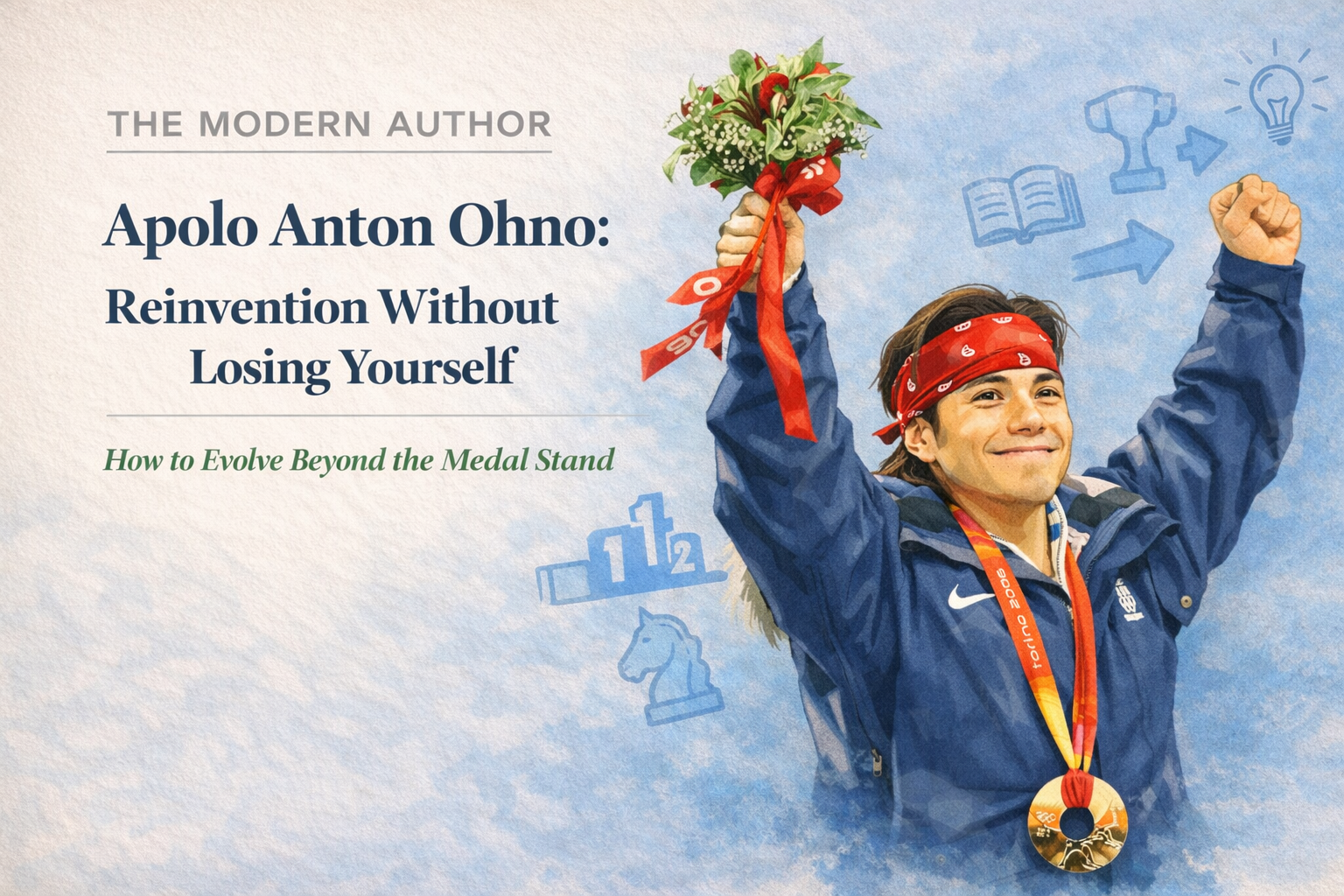
Apolo Anton Ohno is of biracial ethnicity, born to a Japanese father, Yuki Ohno, and a Caucasian American mother, Jerrie Lee. Raised solely by his single father in Seattle, Washington, Ohno identifies as Japanese American. His cultural heritage and family upbringing played a foundational role in shaping his discipline, public identity, and legendary career as an Olympic champion.
Family Background and Parental Heritage
Understanding Apolo Anton Ohno’s ethnicity requires examining his family heritage and early childhood environment. Born on May 22, 1982, in Seattle, Washington, Ohno was raised in a multicultural background, though his primary day-to-day cultural exposure came through his paternal Japanese heritage.
The Influence of His Father: Yuki Ohno
Apolo's father, Yuki Ohno, emigrated from Japan to the United States as a young man to pursue a career as a hair stylist. Settling in Seattle, Yuki established himself professionally, opening a well-known hair salon named Global Artist Hair Design.
When Apolo was just one year old, his parents divorced. Yuki took full custody of Apolo and raised him as a single parent while maintaining a full-time career. Because Yuki was an immigrant navigating single parenthood in a foreign country, he emphasized strong core values in raising his son: rigorous work ethic, personal accountability, emotional resilience, and respect.
To keep his energetic young son out of trouble and channel his restless energy, Yuki enrolled Apolo in competitive sports early on. Initially involved in swimming and inline speed skating, Apolo eventually transitioned to short-track speed skating on ice—a move that would fundamentally redefine his life trajectory. Yuki's role in Apolo’s development extended far beyond parenting; he served as a mentor, grounding influence, and pillar of stability throughout Apolo’s training and international athletic career.
His Mother: Jerrie Lee
Apolo’s biological mother, Jerrie Lee, is of Caucasian descent. Following the divorce when Apolo was an infant, Jerrie Lee was largely absent from his day-to-day upbringing. Ohno has spoken publicly about having minimal contact with his mother during his childhood and teenage years.
Because he was raised entirely by his Japanese-born father, Ohno’s personal values, lifestyle, and domestic influences were predominantly shaped by Japanese cultural norms and the specific dynamics of a single-father household. While his biological identity is half-Japanese and half-Caucasian, his lived experience and social identity remain deeply rooted in his Japanese-American heritage.
Cultural Identity and Upbringing in Seattle
Growing up biracial in Seattle during the late 1980s and 1990s gave Apolo Ohno a distinct perspective on identity. Seattle has long possessed a rich Asian-American community and deep historic ties to Japan, providing a supportive backdrop for Ohno’s development.
- Yuki Ohno (Japanese Immigrant)
- Jerrie Lee (Caucasian American)
- Apolo Anton Ohno (Japanese-American)
- Raised in Seattle, WA by Single Father (Yuki)
- 8-Time Olympic Medalist & Author
- Raised in Seattle, WA by Single Father (Yuki)
- Apolo Anton Ohno (Japanese-American)
Navigating Biracial Identity
During the late 20th century, biracial high-profile athletes were far less common in winter sports than they are today. Short-track speed skating in North America was historically dominated by athletes of European descent, while international powerhouse nations included South Korea, China, and Japan.
Ohno stood out not only for his explosive athleticism, low center of gravity, and tactical intelligence on the ice, but also as a prominent biracial figure representing Team USA. Rather than viewing his mixed heritage as a point of division, Ohno embraced his Japanese-American identity as a source of personal strength and cross-cultural pride.
The Origin and Meaning of His Name
Apolo Anton Ohno’s name itself reflects a blend of cultural influences:
- Apolo: Formed by his father Yuki, who combined the Greek concepts of Apo ("to steer away from" or "lead") and Lo ("to look far ahead" or "vision"). Together, it symbolized a life direction focused on moving forward with long-term vision.
- Anton: A classic European middle name, chosen during his birth.
- Ohno (大野): A traditional Japanese surname meaning "large field" or "broad plain."
This unique naming convention highlights how his father sought to give him an identity that bridged Western and Eastern traditions, encouraging a global mindset from childhood.
Impact of Heritage on His Athletic Career and Global Reception
Apolo Ohno’s ethnic background and distinct appearance made him one of the most recognizable figures in international sports during the 2000s. His signature look—featuring a soul patch, bandana, and explosive skating style—captured public attention around the globe.
Popularity in the United States and Japan
In the United States, Ohno became the face of the Winter Olympics across three consecutive Olympic Winter Games: Salt Lake City 2002, Turin 2006, and Vancouver 2010. For Asian-American youth, his emergence provided crucial representation in winter sports, proving that an athlete of Japanese descent could achieve dominance on the world stage.
In Japan, Ohno enjoyed significant media coverage and public interest. Japanese sports media frequently highlighted his heritage, his father Yuki’s story, and his visits to Japan. While Ohno represented the United States under the American flag, Japanese fans broadly appreciated his respect for Japanese culture, his family background, and his sportsmanship.
International Dynamics: The 2002 Salt Lake City Olympics
Ohno’s ethnic identity and nationality intersected intensely during the 2002 Salt Lake City Winter Olympics. In the men's 1500-meter short-track final, South Korea's Kim Dong-sung crossed the finish line first, but was disqualified for cross-tracking (blocking) Ohno, who raised his arms to signal impeding action. As a result, Ohno was awarded the gold medal.
The decision caused widespread controversy in South Korea, leading to intense public reaction and media scrutiny directed toward Ohno and the judging panel. Despite international tension surrounding the race, Ohno maintained a calm, professional demeanor, emphasizing that short-track speed skating is defined by split-second referee calls and high physical contact. Over time, as short-track rules evolved and video replay systems improved, public perspective normalized, recognizing Ohno’s gold medal as a standard regulatory ruling under ISU rules of that era.
Summary of Apolo Ohno's Heritage and Career Profile
The following overview summarizes key background details, biographical facts, and professional achievements associated with Apolo Anton Ohno:
| Profile Category | Details & Background Specifications |
|---|---|
| Full Name | Apolo Anton Ohno |
| Date of Birth | May 22, 1982 |
| Place of Birth | Seattle, Washington, U.S. |
| Ethnic Background | Biracial (Japanese & Caucasian American) |
| Father | Yuki Ohno (Japanese immigrant, hair stylist/salon owner) |
| Mother | Jerrie Lee (Caucasian American) |
| Primary Upbringing | Raised solely by single father Yuki Ohno in Seattle |
| Sport | Short-track speed skating (Retired) |
| Olympic Career Years | 2002 (Salt Lake City), 2006 (Turin), 2010 (Vancouver) |
| Total Olympic Medals | 8 Medals (2 Gold, 2 Silver, 4 Bronze) |
| World Championship Medals | 21 Medals (including 8 World Championship Gold Medals) |
| Post-Skating Endeavors | Author (Zero Regrets, Hard Pivot), Speaker, DWTS Champion, Entrepreneur |
Post-Skating Career, Authorship, and Identity Evolution
Following his retirement from competitive speed skating after the 2010 Vancouver Games as the most decorated American Winter Olympian at that time, Ohno successfully transitioned into media, business, and executive leadership.
Television and Entertainment Success
In 2007, while still an active athlete, Ohno competed on Season 4 of ABC's hit show Dancing with the Stars alongside professional partner Julianne Hough. His agility, footwork, and work ethic earned him the Mirrorball Trophy. He later returned for the Dancing with the Stars: All-Stars season in 2012, cementing his status as a mainstream American cultural icon beyond elite sports.
Ohno also worked extensively as an NBC Sports Olympic analyst for short-track speed skating during subsequent Winter Games, bringing technical analysis, tactical understanding, and insider knowledge to millions of broadcast viewers worldwide.
APOLO OHNO'S CAREER PATH
- 1990s: Elite Junior Short-Track Speed Skater
- 2002-2010: 8-Time Olympic Medalist (Salt Lake, Turin, Vancouver)
- 2007: Winner, ABC's "Dancing with the Stars" (Season 4)
- 2010s: NBC Sports Olympic Broadcast Analyst
- 2020s: Executive Speaker, Author, Entrepreneur, Advisory Roles
Authorship and Mindset Coaching
Ohno has authored multiple books focusing on personal development, mindset, transition management, and performance psychology:
- Zero Regrets: Be Greater Than Yesterday (2010): A memoir chronicling his upbringing by his single father, his rigorous training regimes, and the mental discipline required to excel at the highest level of Olympic competition.
- Hard Pivot: Embrace Change, Find Purpose, and Show Up Fully (2022): A practical guide detailing how elite performers and everyday individuals navigate major life transitions, loss of identity, and career changes.
Through his writing and keynote speaking engagements, Ohno frequently references the lessons taught by his father Yuki. He speaks openly about how growing up in a single-parent, Japanese-American household taught him to view challenge, discipline, and adaptative mindset as long-term assets.
Common Misconceptions About Apolo Ohno's Heritage
Because public information can sometimes be generalized online, several common misconceptions surround Apolo Ohno's heritage and family background:
Misconception 1: "Apolo Ohno Was Born in Japan"
Fact: Apolo Ohno was born in Seattle, Washington. He is a native-born U.S. citizen. His father, Yuki Ohno, was born in Japan and immigrated to the United States before Apolo was born.
Misconception 2: "He Speaks Fluent Japanese"
Fact: While Ohno understands basic Japanese phrases and deeply respects Japanese culture, his primary language is English. Raised in Seattle in an English-speaking environment, he has noted in interviews that while he absorbed Japanese cultural values and food traditions at home, he is not fully fluent in spoken Japanese.
Misconception 3: "He Was Raised by Both Parents in a Dual-Culture Home"
Fact: Ohno’s parents divorced when he was an infant. He was raised entirely by his single father, Yuki Ohno. Consequently, his childhood home environment was shaped by his father's personal values and discipline rather than a dual-parent household.
Misconception 4: "Ohno Competed for Japan Internationally"
Fact: Throughout his entire competitive short-track speed skating career, Apolo Ohno represented Team USA under the United States Olympic & Paralympic Committee (USOPC). He never competed for the Japanese national federation.
Frequently Asked Questions
What is Apolo Anton Ohno's exact ethnicity?
Apolo Anton Ohno is biracial, with half-Japanese and half-Caucasian American heritage. His father, Yuki Ohno, is an immigrant from Japan, and his mother, Jerrie Lee, is Caucasian American.
Who raised Apolo Ohno after his parents divorced?
Apolo Ohno was raised solely by his single father, Yuki Ohno, in Seattle, Washington. His parents separated when Apolo was approximately one year old, and his father maintained full custody, working as a hair stylist while guiding Apolo’s sports career.
What is the origin and meaning of the name "Apolo"?
His name was constructed by his father Yuki, who combined the Greek-derived terms Apo (meaning to steer away from or lead) and Lo (meaning to look far ahead or have vision). Together, the name represents guiding oneself forward with long-term vision.
How many Olympic medals has Apolo Ohno won during his career?
Apolo Ohno won a total of 8 Olympic medals across three Winter Olympic Games (Salt Lake City 2002, Turin 2006, and Vancouver 2010). His medal count includes 2 Gold medals, 2 Silver medals, and 4 Bronze medals in short-track speed skating.
Does Apolo Ohno have siblings?
Apolo Ohno was raised as an only child by his father Yuki Ohno in Seattle.
Key Takeaways and Legacy
Apolo Anton Ohno’s identity as a Japanese-American athlete remains an integral part of his story. Raised in Seattle by his single father Yuki Ohno, his upbringing combined traditional Japanese values of hard work, discipline, and emotional strength with the opportunities of American sports culture.
His biracial heritage not only broke barriers in winter sports but also inspired a diverse generation of athletes across North America and internationally. Today, Ohno continues to leverage his experiences—from Olympic podiums to corporate boardrooms—to teach resilience, adaptive leadership, and personal growth.