Ambush style marketing is a strategic promotional tactic where a brand attempts to associate itself with a major event, property, or official sponsor without paying the associated sponsorship fees or securing official rights. By creatively capturing public attention near or during high-visibility occurrences like the Olympic Games or the FIFA World Cup, these non-sponsoring brands siphon consumer awareness away from authorized partners, operating in a complex space between clever ingenuity and strict intellectual property infringement.
To fully understand this promotional approach, one must examine its core mechanics, historical evolution, legal boundaries, and real-world execution. This comprehensive guide explores how companies deploy ambush tactics, the risks involved, and how official entities defend their investments.
What is Ambush Style Marketing?
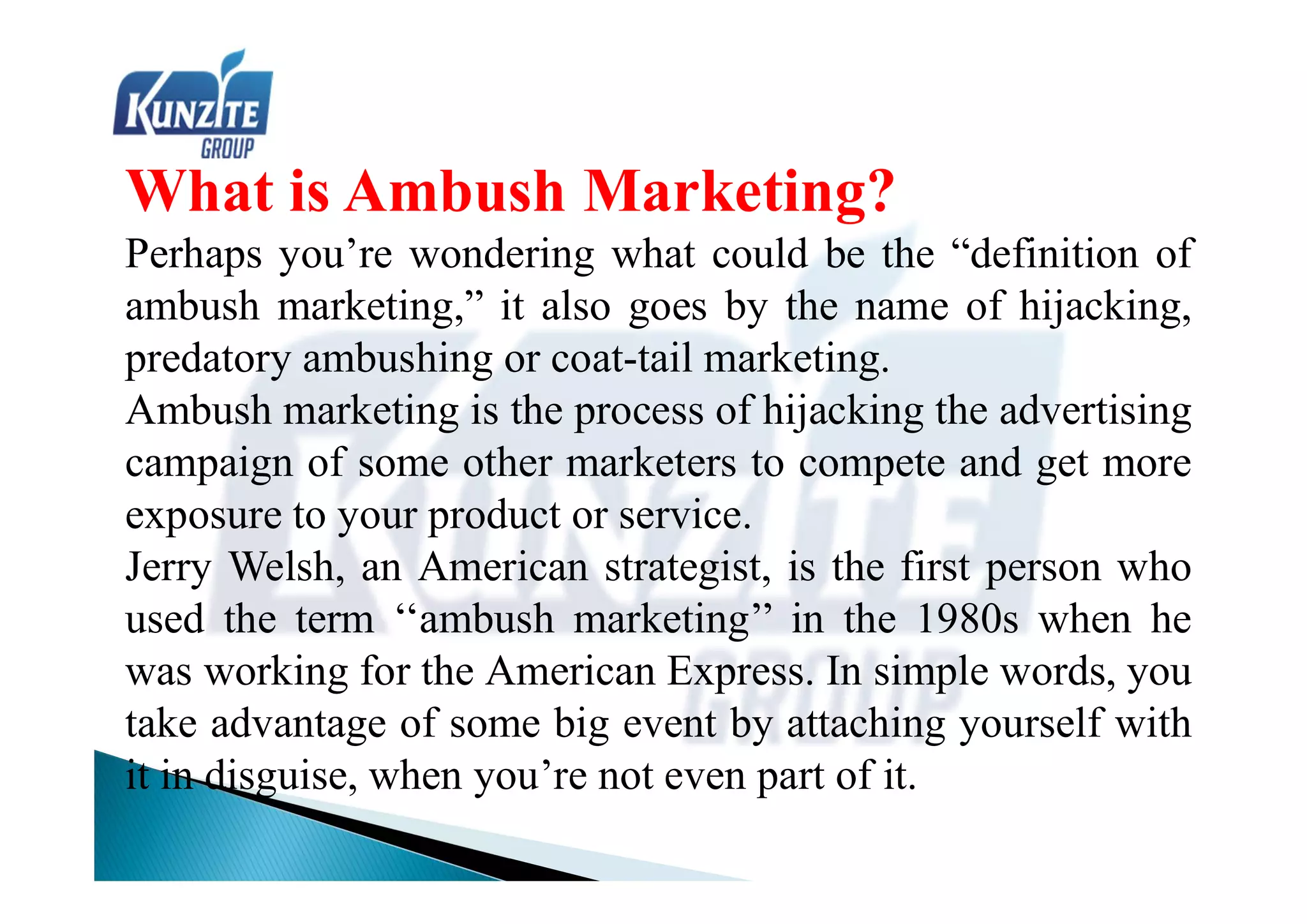
Ambush marketing occurs when a company capitalizes on the publicity of a high-profile event—typically reserved for official sponsors—without actually contributing financial support to the event's organizers. Coined by marketing strategist Jerry Welsh in the 1980s while working for American Express, the term initially described aggressive campaigns designed to counter official sponsorships held by rivals.
Official event sponsorships involve multi-million-dollar investments. Brands pay these hefty fees for exclusive rights to use event logos, sell merchandise on-site, and broadcast commercials tied directly to the occasion. Ambush marketers bypass these costs. They utilize subtle visual cues, thematic messaging, targeted outdoor advertising, and social media stunts to trick consumers into believing they are official partners.
The Strategic Rationale
Why do brands risk controversy or legal pushback to execute ambush campaigns? The answer lies in audience scale and cost efficiency. Major global and domestic events draw billions of eyes. Official sponsorships are often prohibitively expensive, pricing out mid-tier competitors and challengers. Ambush marketing offers a high-reward alternative for brands seeking rapid market penetration and cultural relevance without footing the bill for official status.
Major Categories of Ambush Tactics
Ambush campaigns range from passive association to aggressive, direct imitation. Marketers generally deploy these tactics across several distinct approaches.
Direct Ambush Strategies
Direct strategies involve deliberate attempts to establish a commercial connection to an event. These are often the most legally risky and aggressive forms of ambush marketing.
- Co-Opting Broadcast Sponsorships: A brand purchases heavy ad space during the television broadcast of an event, creating the false impression that they sponsor the event itself rather than just buying commercial breaks from the network.
- Parasitic Advertising: Creative campaigns that directly reference the location, dates, or cultural themes of an event, utilizing clever puns or visual imagery that evoke the occasion without explicitly naming trademarked terms.
- Consumer Contests and Giveaways: Offering event tickets as prizes in promotional sweepstakes, drawing traffic and consumer data by leveraging the allure of the event.
Indirect Ambush Strategies
Indirect tactics are more subtle, relying on contextual association rather than explicit event references. These campaigns are generally designed to stay within legal boundaries while still capturing market share.
- Saturation Advertising: Flooding billboards, transit stations, and digital channels near event venues with brand imagery during the event window.
- Ambushing Athletes and Teams: Sponsoring individual star athletes, coaches, or specific teams participating in an event. When these individuals win or make headlines, the sponsoring brand receives massive exposure during post-event coverage, overshadowing official event sponsors.
- ** guerrilla Marketing Stunts:** Unconventional, on-the-ground activations executed near event zones—such as distributing branded apparel, temporary tattoos, or props to attendees outside stadium perimeters.
Historical Milestones and Landmark Campaigns
The evolution of ambush marketing is marked by legendary campaigns that forced event organizers to tighten regulations and redefine intellectual property law.
1984 Los Angeles Summer Olympics
American Express executed one of the earliest high-profile ambush campaigns against its rival Visa, which was an official Olympic sponsor. While Visa paid heavily for exclusive rights, American Express launched a massive campaign celebrating its support of the US Olympic team and donated money to the arts for every use of its card. Consumers frequently confused the two, leading to a massive public relations and sales victory for American Express.
1996 Atlanta Summer Olympics
Nike, not an official sponsor, purchased massive blocks of billboard space surrounding the Olympic village and built "Nike Center" venues nearby. They also handed out miniature American flags featuring the Nike swoosh to spectators. When athletes won medals wearing official sponsor Reebok gear, television cameras routinely captured fans waving Nike-branded flags in the background, neutralizing Reebok's exclusive rights.
2010 FIFA World Cup in South Africa
During a match between the Netherlands and Denmark, a group of thirty-two young women wearing identical orange dresses entered the stadium. The dresses bore no brand names, but the color and style matched a promotion run by Dutch brewery Bavaria, which was not an official sponsor (Budweiser held the rights). Security ejected the women under suspicion of ambush marketing, triggering international media coverage and securing massive viral exposure for the brand.
Legal Frameworks and Regulatory Defenses
As ambush marketing grew more sophisticated, event organizers and governing bodies lobbied governments to create specialized legal protections. Today, hosting a major global sporting event often requires comprehensive legislative intervention.
Special Legislation and Event Laws
Governments frequently pass bespoke laws to protect official sponsors. For example, ahead of the London 2012 Olympic Games, the British Parliament enacted the London Olympic Games and Paralympic Games Act 2006. This legislation created stringent advertising and trading restrictions within specified zones, prohibiting unauthorized businesses from using protected words like "Games," "Gold," "London," "2012," and "Medal" in commercial contexts. Similar strict protections were implemented for the UEFA European Championships and the FIFA World Cup tournaments.
Intellectual Property Rights
Organizers rely heavily on existing intellectual property laws, including:
- Trademarks: Protecting event names, logos, mascots, and slogans.
- Copyrights: Safeguarding official broadcasts, artistic designs, and promotional materials.
- Passing Off / Unfair Competition: Challenging campaigns that mislead consumers into believing a commercial relationship exists where none does.
| Tactic Category | Core Mechanism | Legal Risk Level | Typical Objective |
|---|---|---|---|
| Broadcast Saturation | Buying heavy ad slots during event broadcasts to mimic official sponsorship. | Low to Moderate | Capture mass audiences without naming the event directly. |
| Athlete Endorsements | Sponsoring key participants to gain visibility during event coverage. | Low | Leverage individual star power for indirect association. |
| Guerrilla Stunts | On-the-ground sampling or visual activations near event venues. | High | Create viral moments and disrupt official sponsor dominance. |
| Direct Trademark Use | Using official logos, slogans, or protected terms without authorization. | Severe | Mislead consumers into direct brand association. |
The Pros and Cons of Ambush Style Marketing
While ambush marketing offers unique commercial advantages, it carries substantial strategic and financial risks that brands must carefully weigh.
Potential Benefits
- Cost Efficiency: Brands achieve massive visibility at a fraction of the cost required for official sponsorship packages.
- Creative Freedom: Unlike official sponsors, who face rigid guidelines and approvals from event organizers, ambush marketers retain total creative control over their messaging.
- Challenger Brand Positioning: It allows smaller brands to punch above their weight, establishing themselves as bold, culturally relevant market disruptors.
Significant Risks
- Legal Liability and Financial Penalties: Infringing on protected trademarks or violating event-specific legislation can result in swift lawsuits, heavy fines, and mandatory injunctions to pull campaigns.
- Brand Reputation Damage: Consumers and industry watchdogs often view aggressive ambush tactics as unfair or predatory, potentially alienating core customer bases.
- Operational Disruption: On-the-ground stunts can be shut down immediately by security or local law enforcement, wasting production budgets and public relations efforts.
How Modern Brands Navigate the Gray Area
Navigating the line between effective marketing and illegal infringement requires precision, creativity, and legal oversight. Modern brands often adopt tactical frameworks to engage with cultural moments without crossing legal thresholds.
Reactive and Real-Time Marketing
Instead of planning pre-scheduled campaigns that infringe on protected windows, brands leverage real-time social media commentary during events. By reacting to unexpected moments, referee calls, or dramatic wins on platforms like X (formerly Twitter) or Instagram, brands tap into trending conversations organically without using trademarked event insignia.
Focusing on Universal Themes
Smart marketers build campaigns around universal human experiences associated with events—such as national pride, community gathering, or athletic perseverance—rather than the specific branded event itself. Cheering for "the home team" or celebrating "summer sports season" avoids trademark violations while aligning the brand with the prevailing cultural mood.
Frequently Asked Questions
Is ambush style marketing illegal?
Ambush marketing is not a single specific crime, but individual campaigns often violate existing laws regarding trademark infringement, copyright, false advertising, or unfair competition. Furthermore, major events frequently secure special government legislation that criminalizes unauthorized commercial association within designated zones.
What is the difference between guerrilla marketing and ambush marketing?
While both rely on unconventional, low-budget tactics, guerrilla marketing is a broad term for surprise promotional events designed to capture attention anywhere. Ambush marketing is specifically targeted at hijacking the attention and cultural relevance of an existing, sponsored event organized by a third party.
Can small businesses engage in ambush marketing safely?
Small businesses face significant risk if they attempt direct ambush tactics, as major event organizers possess deep legal resources to pursue unauthorized commercial use. However, local businesses frequently engage in safe, indirect real-time marketing or community-focused promotions tied loosely to seasonal sports calendars without triggering enforcement.
Why do official sponsors tolerate ambush marketing?
Official sponsors do not tolerate it; they actively pressure event organizers to police violations aggressively. When ambush marketing succeeds, it dilutes the value of official sponsorships, leading brands to demand lower fees or withdraw financial support in future bidding cycles.
Conclusion and Strategic Next Actions
Ambush style marketing remains a high-stakes arena where creative disruption collides with rigid legal boundaries. While it offers smaller or budget-conscious brands a pathway to massive consumer visibility, the expansion of special event legislation and aggressive IP enforcement makes direct imitation increasingly perilous. Marketers looking to capitalize on major cultural moments must balance bold, clever messaging with rigorous legal review to ensure campaigns capture attention without inviting costly litigation. Organizations designing marketing strategies should consult legal counsel familiar with sports and entertainment law before launching campaigns tied to protected public events.