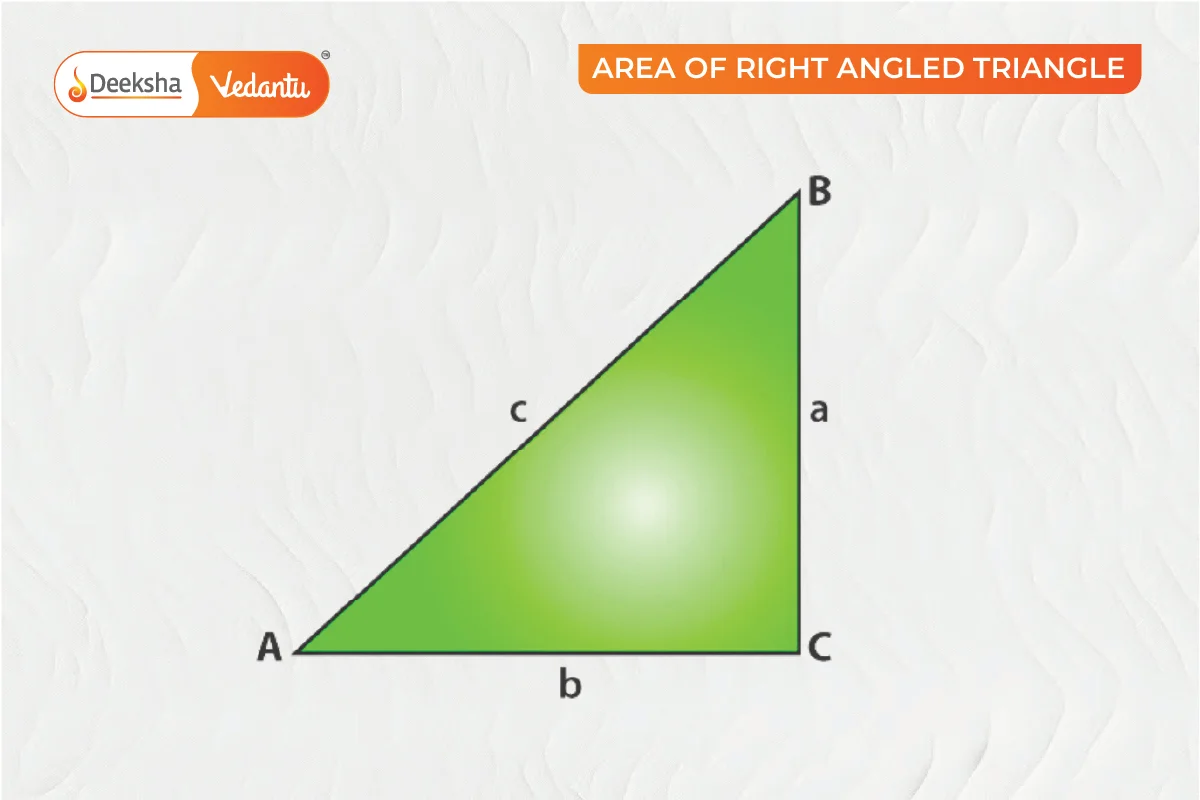
To find the altitude of a right triangle that is drawn to the hypotenuse, you can use two primary formulas depending on the known variables. If you know the lengths of the two legs ($a$ and $b$) and the hypotenuse ($c$), the formula is $h = (a \times b) / c$. If you know the lengths of the two segments ($p$ and $q$) that the altitude creates on the hypotenuse, the formula is $h = \sqrt{p \times q}$.
Understanding the Altitude of a Right Triangle
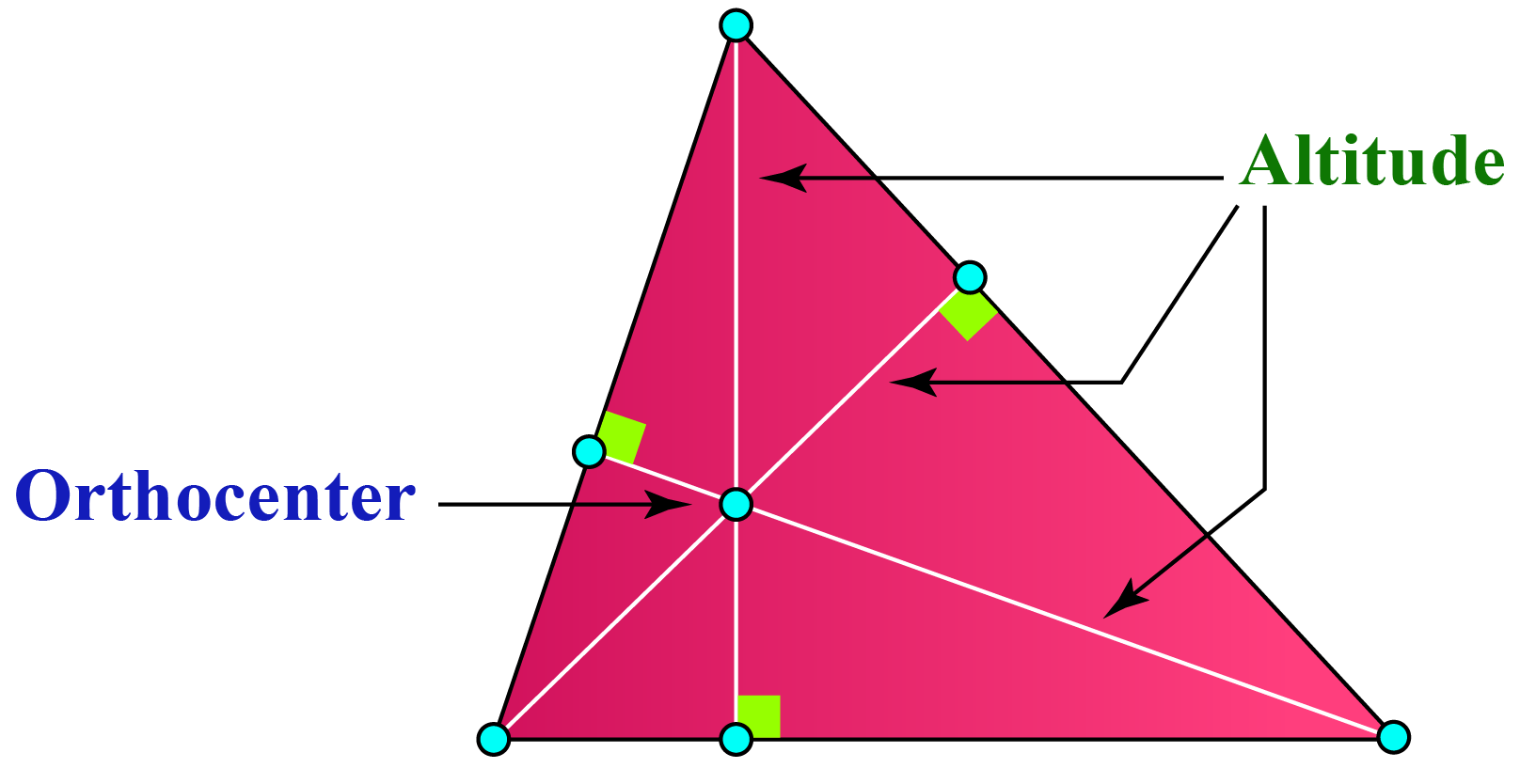
In geometry, an altitude is a line segment through a vertex and perpendicular to (forming a 90-degree angle with) a line containing the base. While every triangle has three altitudes, the altitude drawn from the right-angle vertex to the hypotenuse is a unique and significant feature of right-angled triangles.
As we look at the mathematical standards for 2026, understanding the spatial relationships within right triangles remains a cornerstone of trigonometry, calculus, and structural engineering. This specific altitude does more than just measure height; it divides the original right triangle into two smaller triangles that are both similar to the original and similar to each other. This property, known as the Right Triangle Altitude Theorem (or the Geometric Mean Theorem), is the foundation for the formulas used to solve complex geometric problems.
When you draw this altitude, you effectively create three nested similar triangles. If the original triangle is $\triangle ABC$ with the right angle at $C$, and the altitude meets the hypotenuse at point $D$, then $\triangle ABC \sim \triangle ACD \sim \triangle CBD$. This similarity allows us to derive ratios that lead directly to the altitude formulas.
The Two Essential Altitude Formulas
Depending on what information you have available—whether it is the lengths of the outer sides or the internal segments created on the hypotenuse—you will choose one of two primary methods.
1. The Product of Legs Method (Area Method)
This formula is derived from the standard formula for the area of a triangle. The area of any triangle is $\frac{1}{2} \times \text{base} \times \text{height}$.
In a right triangle, if you use the two legs ($a$ and $b$) as the base and height, the area is: $$Area = \frac{1}{2} \times a \times b$$
However, if you rotate the triangle and use the hypotenuse ($c$) as the base, the altitude ($h$) becomes the height. The area is also: $$Area = \frac{1}{2} \times c \times h$$
Since the area of the triangle remains constant regardless of which side we call the "base," we can set these two equations equal to each other: $$\frac{1}{2} \times a \times b = \frac{1}{2} \times c \times h$$
By canceling the $\frac{1}{2}$ from both sides and solving for $h$, we get: $$h = \frac{a \times b}{c}$$
When to use it: Use this formula when you know the lengths of the two legs and the hypotenuse. If you only know the two legs, you can calculate the hypotenuse first using the Pythagorean theorem ($a^2 + b^2 = c^2$).
2. The Geometric Mean Theorem (Hypotenuse Segment Method)
When the altitude is drawn to the hypotenuse, it splits the hypotenuse into two segments, which we often label as $p$ and $q$. The Right Triangle Altitude Theorem states that the altitude is the geometric mean of these two segments.
Mathematically, a geometric mean of two numbers is the square root of their product. Therefore: $$h = \sqrt{p \times q}$$ (Or expressed as $h^2 = p \times q$)
When to use it: Use this formula when the problem provides the lengths of the two parts of the hypotenuse rather than the lengths of the legs. This is frequently encountered in construction blueprints or coordinate geometry problems where the location of the altitude's "foot" on the hypotenuse is known.
Step-by-Step Derivation through Similarity
To truly master these formulas in 2026, one must understand the "why" behind the math. The Geometric Mean Theorem is not an arbitrary rule; it is a direct consequence of triangle similarity.
Consider a right triangle $\triangle ABC$ where $\angle C = 90^\circ$. Let $h$ be the altitude from $C$ to the hypotenuse $AB$, intersecting $AB$ at point $D$. This creates two smaller triangles: $\triangle ACD$ and $\triangle BCD$.
- Establish Similarity: Since both smaller triangles share an angle with the large triangle and both have a right angle at $D$, all three triangles ($\triangle ABC, \triangle ACD, \triangle BCD$) have identical angles. By the Angle-Angle (AA) Similarity Postulate, they are all similar.
- Set Up Ratios: Because $\triangle ACD \sim \triangle CBD$, the ratios of their corresponding sides must be equal.
- In $\triangle ACD$, the short leg is $AD$ (which we call $p$) and the long leg is $CD$ (which is our altitude $h$).
- In $\triangle CBD$, the short leg is $CD$ ($h$) and the long leg is $BD$ (which we call $q$).
- Cross-Multiply: The ratio of short leg to long leg in both triangles is: $$\frac{p}{h} = \frac{h}{q}$$
- Solve: Cross-multiplying gives $h^2 = p \times q$, which leads to $h = \sqrt{pq}$.
This elegant relationship demonstrates how the internal structure of a right triangle is perfectly proportional.
Detailed Comparison Table: Choosing the Right Formula
| Given Information | Required Formula | Mathematical Expression | Best Use Case |
|---|---|---|---|
| Leg $a$, Leg $b$, Hypotenuse $c$ | Area Method | $h = \frac{ab}{c}$ | Standard textbook problems where all outer sides are known. |
| Hypotenuse segments $p$ and $q$ | Altitude Theorem | $h = \sqrt{pq}$ | Situations where the altitude's intersection point is identified. |
| Leg $a$ and Hypotenuse $c$ | Pythagorean + Area | $b = \sqrt{c^2 - a^2}$ then $h = \frac{ab}{c}$ | Engineering tasks where only one side and the diagonal are measurable. |
| Leg $a$ and Segment $p$ | Leg Rule + Altitude | $h = \sqrt{a^2 - p^2}$ | When working with one of the smaller internal triangles. |
The Geometric Mean "Leg Rule" (Related Theorem)
While the primary focus is the altitude, it is helpful to know the Geometric Mean Leg Theorem. This theorem is often taught alongside the altitude formula because it uses the same similarity principles. It states that each leg of the right triangle is the geometric mean of the hypotenuse and the segment of the hypotenuse adjacent to that leg.
- $a = \sqrt{p \times c}$
- $b = \sqrt{q \times c}$
In these formulas, $c$ is the entire hypotenuse ($p + q$). This is useful if you are asked to find the altitude but are only given one segment of the hypotenuse and one leg. You can use this "Leg Rule" to find the total hypotenuse, then find the other segment, and finally use the $h = \sqrt{pq}$ formula.
Practical Examples and Calculations
Example 1: Finding altitude using legs
Suppose you have a right triangle with legs of 6 cm and 8 cm. You need to find the altitude to the hypotenuse.
- Find the hypotenuse ($c$): Using the Pythagorean theorem, $6^2 + 8^2 = c^2$. $36 + 64 = 100$. Thus, $c = \sqrt{100} = 10$ cm.
- Apply the Area Method formula: $h = (a \times b) / c$.
- Calculate: $h = (6 \times 8) / 10 = 48 / 10 = 4.8$ cm. Result: The altitude is 4.8 cm.
Example 2: Finding altitude using hypotenuse segments
A right triangle has an altitude that divides the hypotenuse into two segments of 4 inches and 9 inches. What is the length of the altitude?
- Identify segments: $p = 4$ and $q = 9$.
- Apply the Geometric Mean formula: $h = \sqrt{p \times q}$.
- Calculate: $h = \sqrt{4 \times 9} = \sqrt{36} = 6$ inches. Result: The altitude is 6 inches.
Common Mistakes to Avoid
When working with these formulas, students and professionals alike can fall into several common traps. Recognizing these early ensures accuracy in technical drawings and exams.
- Confusing the Hypotenuse with Legs: Always identify the longest side (opposite the right angle) as the hypotenuse before plugging numbers into $h = ab/c$. If you accidentally use the hypotenuse as one of the legs in the numerator, your altitude will be incorrectly calculated as longer than the legs, which is physically impossible.
- Forgetting the Square Root: In the Geometric Mean Theorem, a common error is forgetting to take the square root of the product of $p$ and $q$. If $p=2$ and $q=8$, the answer is 4 ($\sqrt{16}$), not 16.
- Mixing up Segments ($p, q$) with Legs ($a, b$): The formula $h = \sqrt{pq}$ only works with the segments of the hypotenuse. You cannot use the lengths of the legs in this specific square root formula.
- Unit Mismatch: Ensure all measurements (cm, inches, meters) are converted to the same unit before performing multiplication or division.
Real-World Applications
The altitude of a right triangle is more than just a school exercise; it has significant applications in various industries as of 2026.
Architecture and Roof Design
In construction, particularly when designing gabled roofs, the altitude represents the height of the ridge board. If a builder knows the run of the rafters (the segments of the "hypotenuse" or the base of the triangle), they can use the geometric mean formula to calculate the exact height required for the center support to ensure a perfect 90-degree peak or specific pitch.
Navigation and Surveying
Surveyors often use triangulation to determine heights of objects that cannot be measured directly. By creating a sightline that forms a right triangle with the ground, and knowing the distance to the point where the altitude would fall (the foot), they can calculate elevation and grade with high precision using the Right Triangle Altitude Theorem.
Computer Graphics and Game Development
In the world of 3D modeling and game engine design (such as those used in 2026's latest virtual reality environments), rendering shadows and light reflections often involves calculating the "normal" (a perpendicular line) to a surface. When working with triangular polygons, finding the altitude is a frequent sub-task in algorithms that determine how light bounces off an angled surface.
Advanced Insights: The Reciprocal Relationship
An interesting, though less common, formula for the altitude of a right triangle involves the reciprocals of the legs. This is known as the Upside-Down Pythagorean Theorem:
$$\frac{1}{h^2} = \frac{1}{a^2} + \frac{1}{b^2}$$
This formula demonstrates that the altitude is deeply integrated into the fundamental properties of the right triangle. If you rearrange this equation, you will eventually arrive back at $h = ab/c$. This relationship is particularly useful in higher-level physics and engineering problems involving fluid dynamics or optics, where reciprocal values often represent resistance or focal lengths.
Frequently Asked Questions
Can the altitude of a right triangle be longer than its legs?
No. In any right triangle, the altitude drawn to the hypotenuse will always be shorter than both legs. This is because the altitude creates two smaller right triangles where the original legs become the hypotenuses of those smaller triangles. Since the hypotenuse is always the longest side of a right triangle, the legs of the original triangle must be longer than the altitude.
What is the difference between an altitude and a median in a right triangle?
An altitude must be perpendicular to the opposite side, whereas a median connects a vertex to the midpoint of the opposite side. In a right triangle, the altitude to the hypotenuse only equals the median if the triangle is an isosceles right triangle (45-45-90). In all other cases, they are different line segments with different lengths.
Does every triangle have an altitude?
Yes, every triangle has three altitudes, one from each vertex. However, in a right triangle, two of the altitudes are actually the legs themselves. The "altitude of a right triangle" usually refers specifically to the third altitude—the one drawn from the right-angle vertex to the hypotenuse.
How do you find the altitude if you only have the area?
If you know the area and the length of the hypotenuse, you can rearrange the area formula: $Area = \frac{1}{2} \times \text{base} \times \text{height}$. Here, the hypotenuse is the base and the altitude is the height. Therefore, $h = (2 \times Area) / \text{hypotenuse}$.
Is the altitude theorem applicable to non-right triangles?
No, the specific geometric mean relationship ($h = \sqrt{pq}$) only applies to right triangles where the altitude is drawn to the hypotenuse. For non-right triangles, you generally must use trigonometric functions (sine, cosine) or Heron's Formula to determine the altitude.
Practical Recommendation
When solving for the altitude, your first step should always be to sketch the triangle and label all known parts. Visualizing whether you have the "outer" sides (legs) or the "inner" segments (parts of the hypotenuse) will immediately tell you which formula to use. If you are a student or a professional working on a project in 2026, keep a scientific calculator handy, but always perform a "sanity check" on your result: the altitude must be shorter than the legs and shorter than the hypotenuse. For further exploration of these concepts, resources like Wolfram MathWorld provide deep mathematical proofs and interactive visualizations.