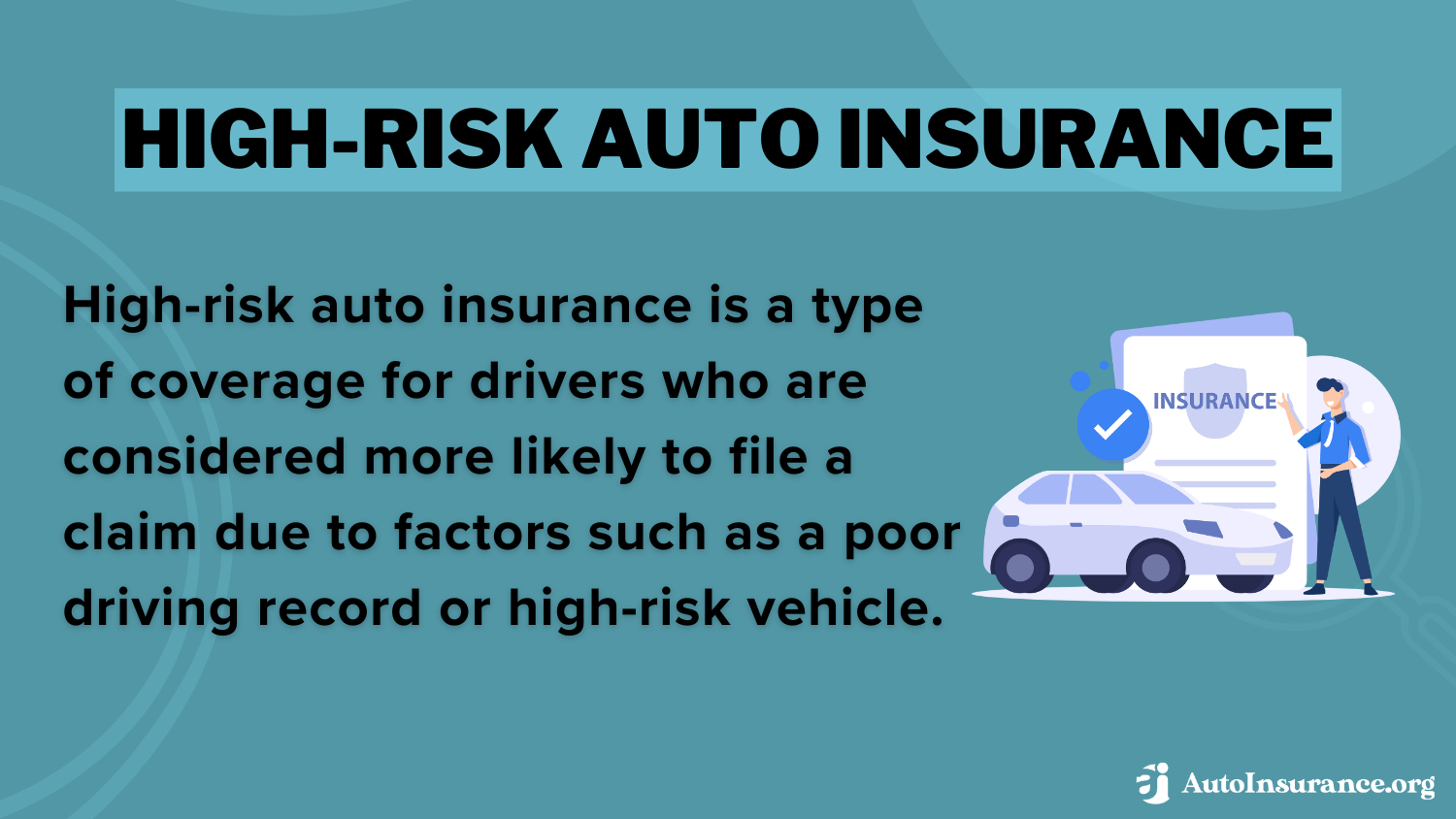
Allstate provides high-risk auto insurance solutions primarily through its subsidiary, National General, and specialized non-standard policy tiers. These programs cater to drivers with multiple traffic violations, DUIs, or significant lapses in coverage. While premiums for high-risk drivers are higher than standard rates, Allstate offers various paths to affordability through SR-22 filing support and telematics-based discount programs like Drivewise.
Obtaining insurance as a "high-risk" driver in 2026 requires a nuanced understanding of how major carriers categorize risk. In the insurance industry, drivers are typically sorted into three tiers: preferred, standard, and non-standard. The "high-risk" label falls squarely into the non-standard category. For a company as large as Allstate, managing this risk involves a delicate balance of proprietary underwriting algorithms and specialized subsidiaries designed to handle the unique administrative needs of high-risk motorists.
Understanding High-Risk Classification in 2026
The definition of a high-risk driver has evolved with the integration of advanced data analytics. In 2026, insurance carriers like Allstate look beyond just your driving record. While a history of accidents remains a primary factor, other elements such as your credit-based insurance score, the length of time you have maintained continuous coverage, and even the safety features of your vehicle play significant roles in your risk profile.
A driver is typically designated as high-risk if they have a "major" violation on their Motor Vehicle Record (MVR). This includes Driving Under the Influence (DUI) or Driving While Intoxicated (DWI), reckless driving, or driving with a suspended license. Additionally, "habitual" offenders—those with three or more minor violations (like speeding or running a stop sign) within a three-year period—are often moved out of the standard pool. Allstate uses these metrics to determine if a driver can be insured under a standard Allstate policy or if they must be moved to their non-standard specialty brand.
The Role of National General in Allstate’s High-Risk Strategy
Following its acquisition of National General several years ago, Allstate has effectively streamlined its high-risk business. If you approach an Allstate agent for coverage but your risk profile exceeds their standard underwriting guidelines, you will likely be offered a policy through National General. This is a strategic move that allows Allstate to provide coverage to a broader range of drivers without diluting the risk pool of its "Preferred" policyholders.
National General specializes in what the industry calls "non-standard auto insurance." They are equipped to handle the administrative complexities that come with high-risk drivers, such as high-frequency claims processing and the filing of state-mandated financial responsibility forms. For the consumer, this means you still benefit from the financial stability and customer service infrastructure of the Allstate brand, but your actual policy is tailored to the specific legal and financial requirements of a high-risk individual.
SR-22 and FR-44 Filings: Technical Requirements
One of the most common requirements for high-risk drivers is the filing of an SR-22 or FR-44 form. It is a common misconception that an SR-22 is a type of insurance; in reality, it is a certificate of financial responsibility. This document is filed by the insurance company with the state’s Department of Motor Vehicles (DMV) to prove that the driver carries the minimum required liability coverage.
Allstate and National General are proficient in handling these filings. When you are convicted of certain offenses, the court or the state may mandate an SR-22 to reinstate your driving privileges. If you already have a policy, you must notify your carrier to add the filing. If you are a new applicant, you must disclose the requirement upfront. The carrier then notifies the state electronically. If the policy lapses for any reason—such as a missed payment—the carrier is legally required to notify the state immediately via an SR-26 form, which usually results in an immediate suspension of the driver's license.
Factors Influencing High-Risk Premiums in 2026
Insuring a high-risk driver is fundamentally a calculation of probability. In 2026, Allstate’s actuarial models suggest that a driver with a recent DUI or a history of multiple at-fault accidents is statistically more likely to file an expensive claim in the future. To offset this risk, premiums are adjusted upward. Several factors specifically influence the cost of an Allstate high-risk policy:
- Violation Severity: A DUI usually results in a much higher premium increase than a single at-fault accident. In some states, a DUI can double or even triple your insurance costs for several years.
- Coverage Gaps: Insurance companies view a "lapse in coverage" as a major red flag. If you have gone more than 30 days without insurance, you may be classified as high-risk regardless of your actual driving record.
- Geographic Location: Risk is assessed by ZIP code. High-risk drivers in densely populated urban areas with high accident rates will pay more than those in rural areas.
- The "Insurance Score": In most states, Allstate uses a credit-based insurance score. Drivers with lower credit scores are statistically tied to higher claim frequencies, which can push a standard driver into the high-risk pricing bracket.
Utilizing Telematics to Mitigate Costs
One of the most effective ways for high-risk drivers to lower their premiums with Allstate in 2026 is through Drivewise. This is Allstate’s telematics program that uses a smartphone app or a plug-in device to monitor driving behavior. For a high-risk driver, telematics offers a way to "prove" to the insurer that their past mistakes do not define their current habits.
Drivewise monitors speed, braking patterns, and the time of day you drive. While a standard driver might use it for a modest discount, a high-risk driver can use it as a tool for rehabilitation. By demonstrating consistently safe driving—avoiding hard braking and late-night trips—drivers can earn significant performance-based discounts that help offset the "high-risk" surcharge. It provides a data-driven path back to standard status by creating a new, positive record of behavior.
Comparison of High-Risk Insurance Features (2026)
The following table compares Allstate’s high-risk approach (via National General) with other major competitors in the non-standard market.
| Feature | Allstate (National General) | Progressive | State Farm | GEICO |
|---|---|---|---|---|
| SR-22 Filing | Yes, highly specialized | Yes, standard process | Case-by-case basis | Yes, standard process |
| Telematics Integration | High (Drivewise) | High (Snapshot) | Moderate (Drive Safe & Save) | Moderate (DriveEasy) |
| DUI Acceptance | High | High | Low to Moderate | Moderate |
| Coverage Lapses | Accepted via NatGen | Accepted | Generally avoided | Accepted |
| Claims Service | 24/7 Digital & Agent | 24/7 Digital | Local Agent Focused | Digital First |
| Financial Strength | Superior (A+) | Superior (A+) | Superior (A++) | Superior (A++) |
Common Mistakes When Seeking High-Risk Coverage
When navigating the high-risk market, many drivers inadvertently make their situation worse. One common mistake is non-disclosure. In 2026, insurance companies have instantaneous access to the Comprehensive Loss Underwriting Exchange (CLUE) reports and state MVR databases. Failing to disclose an accident or a ticket during the application process will not "hide" the violation; instead, it will likely lead to a policy rescission or a massive rate hike mid-term once the carrier runs your reports.
Another mistake is opting for "minimum limits" only to save money. While it is tempting to buy the cheapest policy possible, high-risk drivers are already under scrutiny. Carrying only state-minimum liability (e.g., $25,000/$50,000) leaves you personally vulnerable to lawsuits if you cause another accident. Furthermore, consistently carrying higher limits (e.g., $100,000/$300,000) can actually help you transition back to "standard" status faster, as it demonstrates financial responsibility to future underwriters.
Transitioning Back to Standard Insurance
The "high-risk" label is not permanent. Most violations impact your insurance rates for three to five years, though major offenses like DUIs may influence premiums for up to ten years in certain states. To move from a non-standard Allstate/National General policy back to a standard Allstate policy, drivers should follow a strict protocol:
- Maintain Continuous Coverage: Never allow your policy to lapse, even for a day. Set up automatic payments to ensure the policy remains active.
- Avoid New Violations: This sounds obvious, but even a small speeding ticket can reset the clock on your high-risk status.
- Improve Your Credit Score: Because Allstate uses credit-based insurance scores, improving your financial health can directly lower your car insurance premium.
- Request a MVR Review: Once a major violation falls off your state driving record, contact your agent. Allstate does not always automatically lower your rate the day a ticket expires; you often need to trigger a re-underwriting process.
Frequently Asked Questions
Does Allstate offer SR-22 insurance for non-owners?
Yes, Allstate and National General offer "Non-Owner" policies that include SR-22 filings. This is designed for individuals who do not own a vehicle but need to maintain their license or fulfill a court requirement. It provides liability coverage when you drive a vehicle borrowed from someone else (with permission), though it does not cover vehicles owned by members of your household.
How much more will I pay for Allstate high-risk insurance?
On average, high-risk drivers can expect to pay between 40% and 150% more than a standard driver. For example, a driver with a clean record might pay $1,500 annually, while a driver with a DUI might see that rate jump to $3,500 or more. The exact amount depends heavily on your state’s regulations and the specific nature of your "high-risk" triggers.
Can Allstate cancel my policy if I become high-risk?
In most states, Allstate cannot cancel your policy in the middle of a term just because you got a ticket or had an accident. However, they can choose "non-renewal." This means that at the end of your six-month or one-year policy term, they may decline to offer you a new policy under the Allstate brand, at which point they would typically refer you to National General.
Does Drivewise penalize high-risk drivers for bad driving?
In many states, telematics programs are "discount-only," meaning bad driving won't raise your rates—it just won't lower them. However, for high-risk drivers, some policies in 2026 may be structured where the initial premium assumes a certain level of safe driving. If the data shows aggressive behavior, the premium may adjust to reflect that actual risk level. Always check your specific state’s terms for Drivewise.
How long does high-risk status last with Allstate?
Generally, Allstate looks at the last three to five years of your driving history. If you remain accident-free and ticket-free for three years, you will likely see a significant decrease in your premiums. After five years, most drivers are eligible to move back into the standard or preferred risk pools, provided their credit score and other factors are also in good standing.
Practical Recommendations
If you currently fall into the high-risk category and are seeking coverage with Allstate, your first step should be to contact a captive Allstate agent rather than trying to use the online quote tool alone. An agent can navigate the transition between Allstate’s standard brand and National General, ensuring that your SR-22 filings (if required) are handled correctly.
Additionally, immediately enroll in the Drivewise program. Even if you only earn a 10% discount, that represents a significant dollar amount when applied to a high-risk premium. Finally, audit your current coverage limits. While it may be tempting to drop to the state minimum to save money, maintaining higher liability limits is one of the most effective ways to signal to underwriters that you are a responsible driver, which can shorten your time in the high-risk pool.