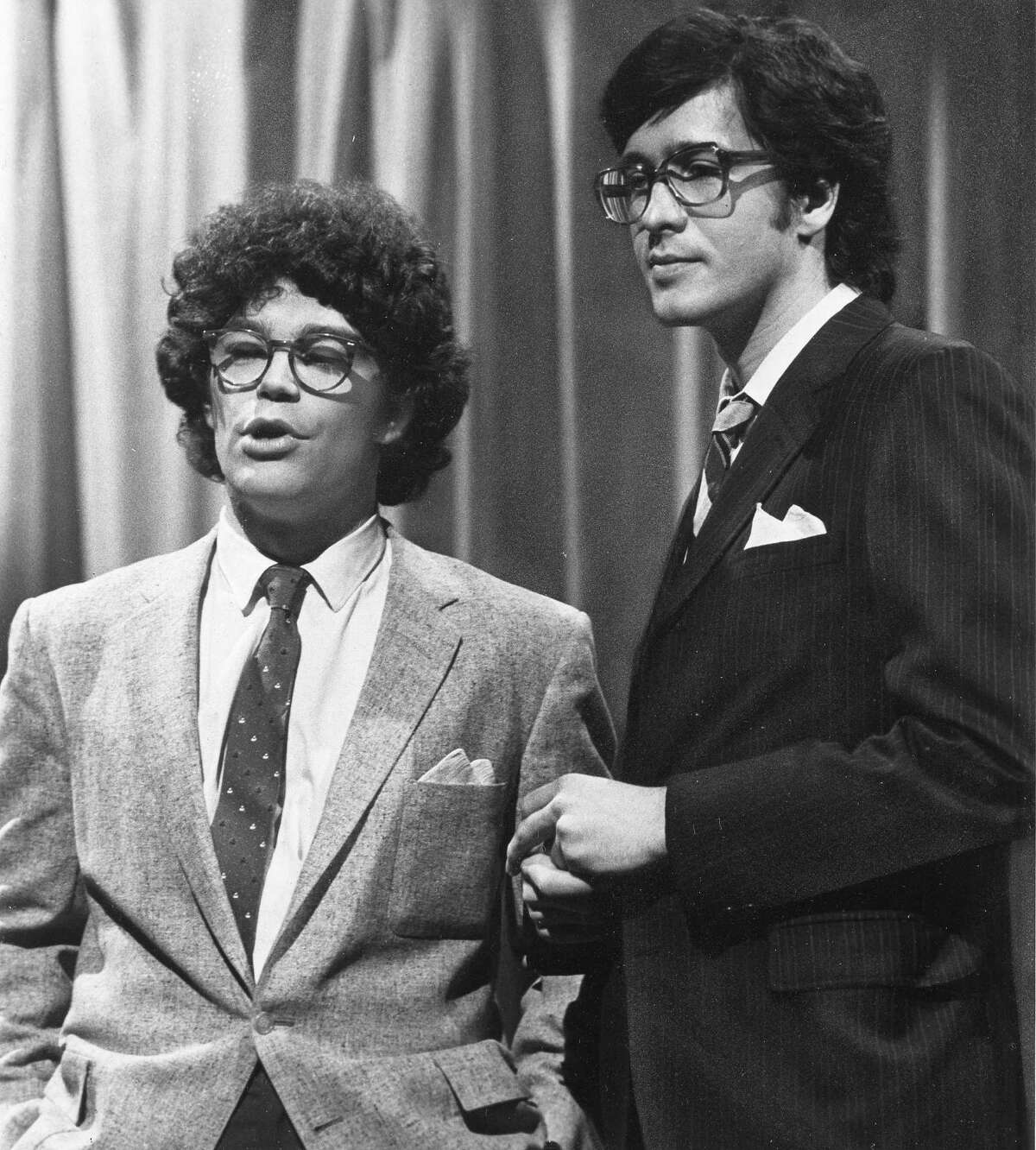
Al Franken’s tenure on Saturday Night Live (SNL) represents one of the most significant intersections of sketch comedy and American political life, bridging the show's chaotic early years with the polished political satire of the late 1980s and 1990s. As both a foundational writer and a recurring on-screen performer, Franken helped shape the comedic voice of a generation before embarking on a career in federal politics as a United States Senator.
The Origins: Joining the Original Not Ready for Prime Time Players
Al Franken’s association with Saturday Night Live began before the show even premiered in October 1975. Alongside his longtime creative partner Tom Davis, Franken was hired by creator Lorne Michaels as part of the original writing staff for NBC’s late-night experiment. Both men were part of the tight-knit Minneapolis comedy scene that also produced future Minnesota Governor Jesse Ventura and writer Jim Downey, but it was Franken and Davis who managed to break into the prestigious New York writers' room.
During the initial 1975–1980 era—frequently referred to as the Golden Age of SNL—Franken and Davis operated primarily behind the scenes. They conceptualized and scripted sketches that captured the absurdist, counter-cultural humor of the 1970s. However, getting their material on air was a notoriously cutthroat battle against heavyweights like Michael O'Donoghue, Dan Aykroyd, and John Belushi. Despite these internal rivalries, Franken established himself as a reliable joke writer capable of anchoring complex ensemble pieces and delivering sharp conceptual premises.
While their writing partnership yielded dozens of memorable segments, Franken and Davis also made occasional on-screen appearances, establishing a recognizable presence for viewers who paid attention to the credits. Their early work laid the groundwork for Franken's eventual transition from a behind-the-scenes wordsmith to a prominent featured player and anchor of the show's political commentary units.
Key Eras and Evolution Across Four Decades
Franken’s relationship with Saturday Night Live was not a single continuous run; instead, it spanned four distinct decades, interrupted by departures, creative disputes, and his eventual pivot to public service. His time on the show can be broken down into three major phases:
- The Golden Era (1975–1980): Focused primarily on writing alongside Tom Davis, contributing to iconic recurring bits and helping establish the show's rebellious tone.
- The Transitional and Ebersol Years (1985–1988): Returned under Lorne Michaels' second-generation revival and Dick Ebersol's production era as both a writer and a more visible on-air performer.
- The Political Satire Era (1988–1995): Emerged as the show’s de facto political satirist, introducing recurring characters, anchoring "Weekend Update" segments, and famously missing out on a promotion that changed his career trajectory.
This fragmented timeline allowed Franken to witness the evolution of television comedy from late-night counter-culture to corporate-backed institutional satire. His longevity on the program gave him a unique institutional memory, making him a bridge between the Belushi-Aykroyd generation and the later Sandler-Farley-Carvey era.
Iconic Characters, Sketches, and "Weekend Update" Work
As Franken stepped in front of the camera more frequently during the late 1980s and early 1990s, he created several memorable characters and recurring segments that defined the show's political commentary.
Stuart Smalley and "Daily Affirmations"
Franken’s most famous original creation was Stuart Smalley, an earnest, self-help-obsessed, codependent host of the public-access cable show Daily Affirmations. Introduced in 1991, Smalley famously looked into a mirror and repeated the catchphrase: "I'm good enough, I'm smart enough, and doggone it, people like me."
The character was a satirical critique of the emerging 1990s self-help culture, 12-step recovery movements, and the psychological vernacular popularized by talk shows like Oprah Winfrey's. Smalley interviewed real-life celebrities and politicians—including Michael Jordan and Al Gore—subjecting them to awkward therapeutic interventions. The success of the character led to a bestselling book, Stuart Smalley's Hollywood Diary, and the feature film Stuart Saves His Family (1995).
Political Commentary and Al Franken Decades
Franken frequently used his platform to skewer contemporary political figures, notably George H.W. Bush, Michael Dukakis, and Dan Quayle. His dry, intellectual delivery made him well-suited for unpacking complex policy debates through a comedic lens.
| Character / Segment | Active Years | Core Premise | Cultural Impact |
|---|---|---|---|
| Tom and Al | 1970s–1980s | Deadpan, meta-comedy routines with Tom Davis. | Established alternative, self-referential humor on late-night TV. |
| Stuart Smalley | 1991–1995 | Neurotic, cardigan-wearing self-help guru hosting public-access TV. | Produced a catchphrase, a feature film, and a pop-culture archetype. |
| Weekend Update Contributor | Late 1980s–1990s | Sharp partisan and media commentary, including the "Al Franken Decade" bits. | Cemented Franken as SNL’s primary political pundit before becoming a senator. |
The 1995 Controversy and Departure
Franken’s tenure on Saturday Night Live came to an abrupt and controversial end in the summer of 1995. Following the departure of head writer and "Weekend Update" anchor Norm Macdonald (temporarily) and overall cast restructuring, Franken believed he had been promised the role of "Weekend Update" anchor and head writer by Lorne Michaels.
When Michaels ultimately chose Colin Quinn for the anchor desk and decided not to elevate Franken, Franken publicly voiced his frustration to the press. In a classic piece of SNL lore, Franken aired a sketch during the final episode of the 1994–1995 season titled "A Stroll Down Memory Lane," which executives interpreted as a direct lobbying effort for his promotion. The resulting fallout led to Franken leaving the show permanently, prompting him to pivot toward writing political books like Rush Limbaugh Is a Big Fat Idiot and eventually entering electoral politics.
Comparison: Franken vs. Contemporaries in SNL Political Satire
To understand Franken's unique contribution, it is helpful to compare his style with other prominent political satirists from Saturday Night Live's history.
- Chevy Chase (1975–1976): Focused on physical comedy and arrogant delivery during early "Weekend Update" broadcasts, leaning away from deep policy critique in favor of slapstick and headlines.
- Dana Carvey (1986–1993): Relied heavily on hyper-specific impersonations and physical tics (such as George H.W. Bush's hand gestures), creating caricature rather than ideological commentary.
- Al Franken (1975–1995): Emphasized policy-wonk satire, structural critique of media, and original characters that parodied cultural shifts rather than just imitating politicians.
Frequently Asked Questions
Did Al Franken write for SNL from the very beginning?
Yes. Al Franken was hired as part of the original writing staff alongside his partner Tom Davis before the show premiered in October 1975. They contributed material to the first five seasons and returned in subsequent decades.
What was Al Franken's most famous recurring character?
His most famous character was Stuart Smalley, a neurotic, cardigan-wearing self-help host known for the catchphrase, "I'm good enough, I'm smart enough, and doggone it, people like me."
Why did Al Franken leave Saturday Night Live?
Franken left the show in 1995 following a creative dispute with creator Lorne Michaels over the "Weekend Update" anchor desk and head writer position, which was ultimately given to Colin Quinn.
Did Al Franken run for political office after leaving SNL?
Yes. After leaving the show, writing several political books, and hosting a radio show on Air America, Franken successfully ran for the United States Senate representing Minnesota, serving from 2009 to 2018.
Did Al Franken ever anchor Weekend Update?
While he frequently contributed political commentary segments that functioned similarly to Weekend Update, he was never officially named the permanent anchor of the desk, which was a central point of contention in his 1995 departure.
Final Recommendation
For viewers interested in exploring Al Franken's comedic output on Saturday Night Live, start by examining his work from the 1991–1995 seasons, particularly the Stuart Smalley sketches and his political commentary segments. Understanding his trajectory provides essential context on how sketch comedy evolved from absurdist counter-culture into a major vehicle for political discourse in modern media.