Abortion statistics by race in the United States reveal significant demographic disparities, with data collected by agencies like the Centers for Disease Control and Prevention (CDC) and the Guttmacher Institute showing that Black and Hispanic women experience higher abortion rates and ratios compared to white women, influenced by factors such as socioeconomic disparities, access to healthcare, and systemic inequalities.
Understanding Abortion Surveillance and Data Collection
Examining abortion statistics by race in the United States requires an understanding of how public health data is collected, categorized, and reported. Two primary entities track national abortion trends: the Centers for Disease Control and Prevention (CDC), a federal agency within the Department of Health and Human Services, and the Guttmacher Institute, a research organization focused on reproductive health.
The CDC compiles its annual abortion surveillance reports using voluntary data submitted by state health departments, central health agencies, and New York City. Because reporting is voluntary and state-level legal requirements vary, the completeness of demographic data varies by jurisdiction. For example, some states do not mandate the collection of race or ethnicity data on abortion reporting forms, or they utilize reporting categories that differ from federal standards. Consequently, CDC reports frequently note that a subset of total reported abortions lacks a specified racial or ethnic classification.
The Guttmacher Institute, conversely, conducts periodic census-style surveys of all known abortion providers in the United States, supplemented by health department records. While Guttmacher often captures a higher total volume of abortions because it surveys providers directly rather than relying on state health agency reporting, both organizations consistently illustrate the same core demographic patterns over decades of tracking.
Demographic Breakdown of Abortion Rates and Ratios
To analyze abortion statistics by race accurately, public health researchers distinguish between two primary metrics: the abortion rate (the number of abortions per 1,000 women of reproductive age within a specific racial or ethnic group) and the abortion ratio (the percentage of total pregnancies or live births that end in abortion within a specific group).
National datasets consistently demonstrate that Black women experience both the highest abortion rates and the highest abortion ratios in the United States. According to multi-year trends published by the CDC, Black women account for a disproportionately large percentage of total legal induced abortions relative to their share of the overall female population of reproductive age (typically defined as ages 15–44).
| Racial / Ethnic Group | Approximate Share of U.S. Female Population (Ages 15–44) | Approximate Share of Total Reported Abortions | Relative Abortion Rate / Ratio Status |
|---|---|---|---|
| White (Non-Hispanic) | ~50% – 55% | ~30% – 35% | Lower than population share; lower rates overall. |
| Black (Non-Hispanic) | ~13% – 14% | ~35% – 40% | Disproportionately high; highest rates and ratios. |
| Hispanic | ~24% – 25% | ~20% – 25% | Moderate to high; varies by state and region. |
| Other / Multiracial / Asian | ~8% – 10% | ~5% – 8% | Lower overall volume; diverse demographic subsets. |
Note: Population shares and abortion proportions fluctuate slightly year-to-year based on demographic shifts and changing state reporting participation. Percentages reflect aggregated multi-year CDC surveillance benchmarks.
Hispanic women also experience abortion rates and ratios that are higher than those of non-Hispanic white women, though generally lower than those of non-Hispanic Black women. Non-Hispanic white women consistently account for the lowest abortion rates per 1,000 women, despite representing the largest overall segment of the U.S. female population of reproductive age.
Socioeconomic and Structural Determinants of Disparities
Public health researchers, sociologists, and medical professionals emphasize that racial disparities in abortion statistics are not driven by race as a biological construct, but rather by complex socioeconomic, geographic, and structural determinants of health. These factors shape reproductive health outcomes across generations.
Income Inequality and Poverty Rates
Poverty is one of the strongest predictors of unintended pregnancy and abortion access. Due to historical and systemic economic inequalities, Black and Hispanic populations experience higher poverty rates in the United States than white populations. According to U.S. Census Bureau data, lower-income women face severe barriers to accessing reliable, consistent contraception. When unintended pregnancies occur, lower-income individuals are significantly more likely to lack the financial resources required to carry a pregnancy to term and raise a child, making abortion a necessary economic decision as well as a healthcare choice.
Access to Healthcare and Contraception
Access to comprehensive healthcare services, including preventative reproductive healthcare and affordable family planning clinics, varies significantly by race and socioeconomic status. Communities of color are disproportionately represented among uninsured or underinsured populations. While programs like Medicaid provide coverage for millions of low-income individuals, federal policies such as the Hyde Amendment prohibit the use of federal Medicaid funds for abortion services in most circumstances, except for cases of rape, incest, or endangerment to the life of the pregnant person. This restriction places a disproportionate financial burden on low-income women of color, who rely on public health insurance at higher rates.
Geographic Distribution and State-Level Restrictions
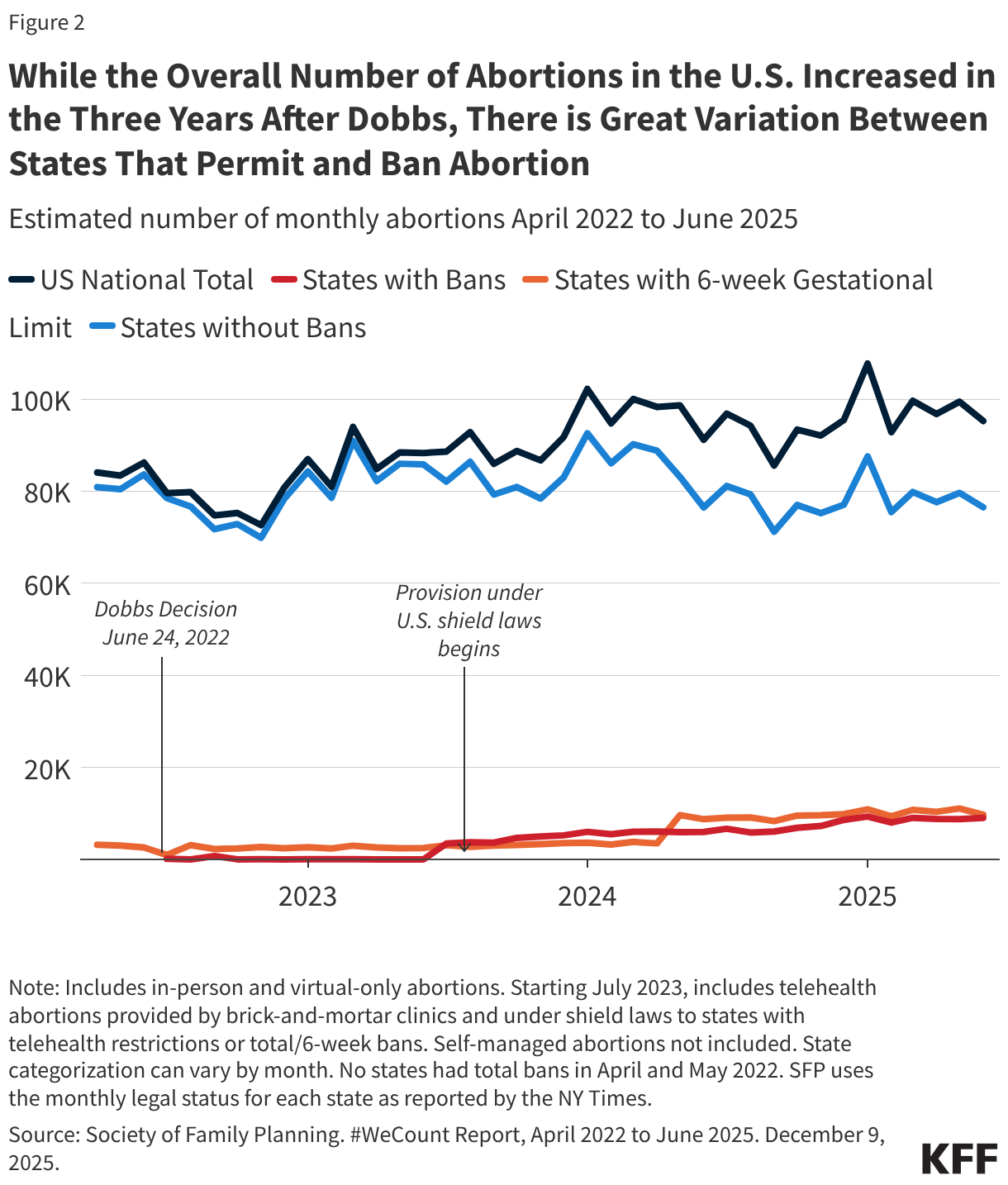
The legal landscape surrounding abortion access has shifted dramatically following judicial rulings, most notably the Supreme Court's 2022 decision in Dobbs v. Jackson Women's Health Organization, which eliminated the federal constitutional right to abortion and returned authority to individual states. Many southern and midwestern states—regions with substantial Black and Hispanic populations—have enacted near-total abortion bans or severe gestational limits. Consequently, patients in these states often must travel hundreds of miles to access legal care, a logistical hurdle that requires financial resources, paid time off work, and childcare—resources that are less accessible to marginalized demographic groups.
Historical Context and Long-Term Trends
Abortion statistics by race have exhibited stable relative patterns for decades, even as the overall national abortion rate has fluctuated. Following the legalization of abortion nationwide via Roe v. Wade in 1973, public health agencies began systematic tracking of demographic variables.
During the late 1970s and 1980s, total annual abortions rose before peaking in the early 1990s. Throughout this entire era, the proportion of abortions obtained by minority women remained elevated relative to their population size. Over the subsequent decades, the overall U.S. abortion rate experienced a gradual, multi-year decline, driven largely by increased access to highly effective long-acting reversible contraception (LARC) such as intrauterine devices (IUDs) and hormonal implants. However, the ratio of disparities among racial groups remained relatively constant: Black women continued to experience the highest rates, followed by Hispanic women and white women.
Public health analysts emphasize that these long-term trends underscore the profound impact of systemic social determinants of health. Changes in public policy, economic downturns, and the expansion or restriction of safety-net programs uniformly influence these demographic groups, but the baseline disparities persist due to underlying structural inequalities in wealth, housing, education, and healthcare access.
Limitations of Official Abortion Data
Interpreting government and institutional abortion statistics requires caution due to several persistent data collection challenges:
- Inconsistent State Reporting: States are not federally mandated to report abortion data to the CDC. Important states, such as California, have historically experienced periods of incomplete demographic reporting or utilized reporting systems that did not capture race and ethnicity consistently.
- Categorization Limitations: Standard demographic categories (e.g., Black, white, Hispanic, Asian/Pacific Islander, American Indian/Alaska Native) often obscure significant subgroup diversity. For instance, the "Hispanic" category encompasses individuals of diverse national origins, cultural backgrounds, and socioeconomic realities. Similarly, immigrant populations may face unique language or documentation barriers that affect healthcare utilization and data capture.
- Self-Reporting and Misclassification: Information regarding race and ethnicity on abortion clinical records is frequently self-reported by patients or observed and recorded by administrative staff, introducing potential misclassification errors.
Despite these limitations, independent public health researchers cross-reference CDC datasets with Guttmacher Institute surveys and academic studies, confirming that the core demographic trends—higher rates and ratios among Black and Hispanic women—are statistically robust and consistent across multiple methodologies.
Frequently Asked Questions
Which racial group has the highest number of abortions in the U.S.?
In terms of absolute numbers, non-Hispanic Black women account for the highest total number of abortions in many national datasets, despite representing a smaller percentage of the total U.S. population than white women. This results in both high total volume and high per capita rates.
Why are abortion rates higher among Black and Hispanic women?
Public health research attributes these higher rates primarily to socioeconomic factors, including higher rates of poverty, reduced access to consistent and effective contraception, lower rates of private health insurance coverage, and systemic barriers to comprehensive healthcare and educational resources.
Does the federal government fund abortions for low-income women?
Under the federal Hyde Amendment, enacted in 1976, federal funds—including Medicaid—cannot be used to pay for abortions except in cases of life endangerment, rape, or incest. Some individual states use their own state revenues to fund abortion services for low-income residents enrolled in state Medicaid programs, but many do not.
How did the overturning of Roe v. Wade impact racial disparities in abortion?
Following state-level bans and restrictions enacted after 2022, many clinics in southern and western states closed. Because Black and Hispanic populations are heavily concentrated in several states that implemented severe restrictions, women of color often face greater travel distances and financial obstacles to reach states where abortion remains legal, potentially widening healthcare disparities.
Where can I find official reports on abortion statistics?
The primary official sources for national abortion surveillance data are the Centers for Disease Control and Prevention (CDC), which publishes annual surveillance summaries in its Morbidity and Mortality Weekly Report (MMWR), and the Guttmacher Institute, which periodically releases comprehensive national and state-level abortion provider censuses.
Next Actions and Further Research
For researchers, policymakers, and public health professionals seeking a deeper understanding of reproductive health demographics, reviewing primary source documents is essential. Consult the annual CDC Abortion Surveillance reports available through the CDC MMWR website for state-by-state breakdowns and methodological notes. For broader contextual analysis regarding unintended pregnancy, contraceptive access, and state policy impacts, review research publications and data toolkits provided by the Guttmacher Institute and academic journals specializing in public health and obstetrics-gynecology.