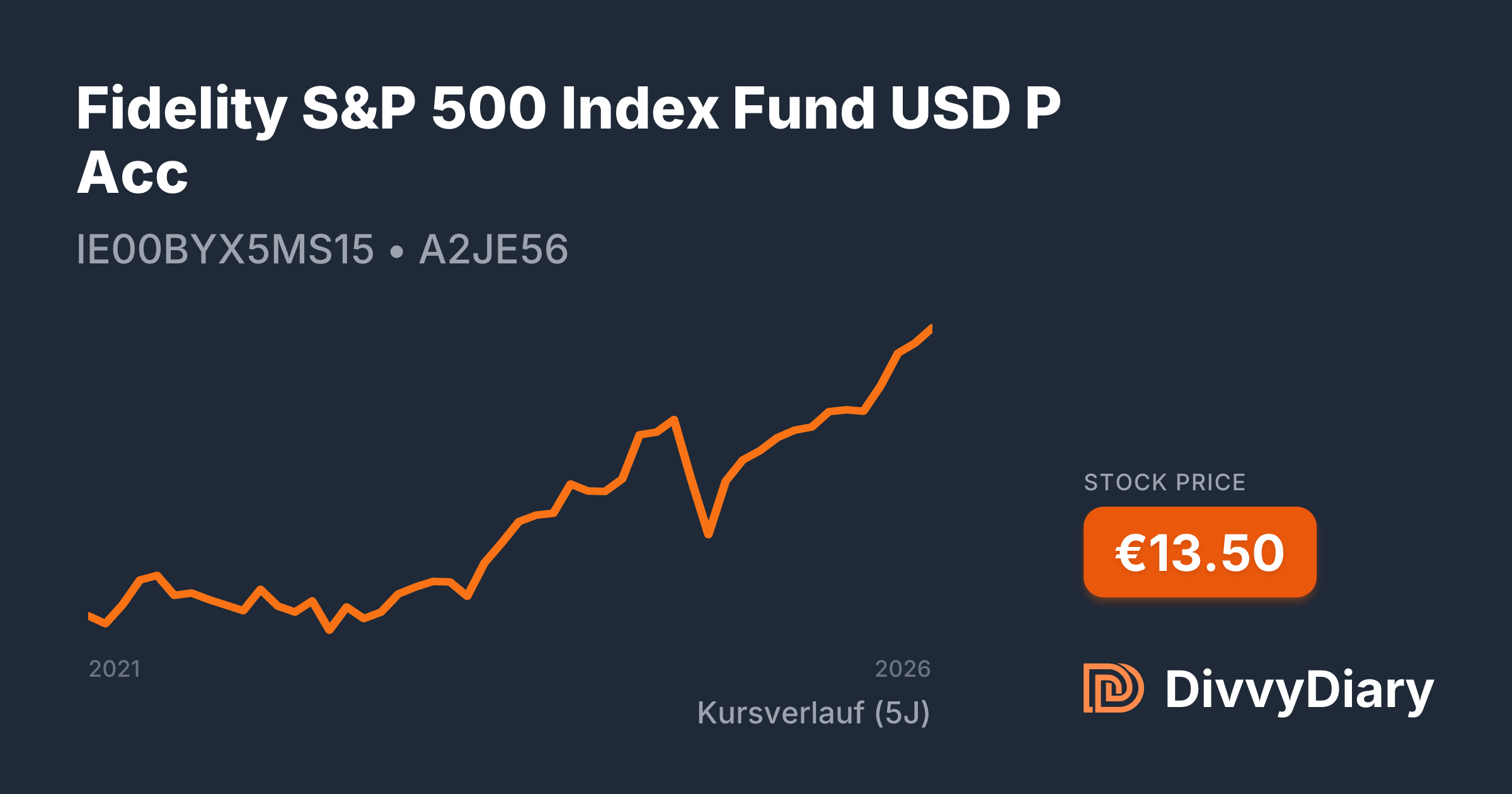
The Fidelity 500 Index Fund (FXAIX) is a low-cost, capitalization-weighted mutual fund designed to track the performance of the S&P 500 Index. It offers investors broad exposure to large-cap US equities, featuring an exceptionally low expense ratio, zero minimum investment requirements, and broad representation across major market sectors.
Introduction to FXAIX and the S&P 500 Index
For individual and institutional investors alike, building a resilient, long-term portfolio often starts with the core foundations of the United States equity market. Among the most popular vehicles for achieving this objective is the Fidelity 500 Index Fund (FXAIX). As a mutual fund that tracks the performance of the S&P 500 Index, FXAIX captures approximately 80% of the total US stock market capitalization.
Understanding FXAIX requires looking beyond its ticker symbol to examine its underlying index, structural costs, operational mechanics, and role within a diversified financial strategy. This overview breaks down everything an investor needs to evaluate FXAIX accurately, from its historical benchmark to its modern fee structures, account requirements, and common portfolio integration strategies.
What Is the S&P 500 Index?
Before examining FXAIX specifically, it is essential to understand the benchmark it tracks. Maintained by S&P Dow Jones Indices, the S&P 500 is widely considered a premier gauge of large-cap US equities.
Criteria for Inclusion
To be selected for the S&P 500, a company must meet stringent financial and structural criteria. These include:
- Market Capitalization: Must meet a specified threshold, which is periodically adjusted upward by the index committee.
- Liquidity and Public Float: A high proportion of shares must be publicly traded and actively liquid.
- Profitability: The company must report positive cumulative earnings over the most recent four consecutive quarters.
- Geographic Stance: Although many constituent corporations are multinational, the firm must be a US-based entity.
Market-Capitalization Weighting
The S&P 500 is a capitalization-weighted index. This means that constituent companies are not all weighted equally; instead, a company's weight in the index is directly proportional to its total market capitalization (share price multiplied by the number of outstanding shares). Consequently, mega-cap technology and financial giants exert a significantly larger influence on the daily fluctuations of the index compared to smaller constituent firms near the bottom of the 500-company threshold.
Core Characteristics of FXAIX
Fidelity Investments manages FXAIX to mirror the total return of the S&P 500. While several mutual funds and exchange-traded funds (ETFs) track this same index, FXAIX stands out due to specific structural advantages.
Expense Ratios and Cost Efficiency
In modern investing, minimizing friction—specifically management fees—is critical to maximizing long-term compounding growth. FXAIX is renowned for its ultra-low expense ratio. Fidelity charges an expense ratio of 0.015% for FXAIX (meaning $1.50 annually for every $10,000 invested). This minimal fee ensures that the vast majority of the fund's gross returns flow directly back to the investor.
Zero Investment Minimums
Historically, mutual funds required significant upfront capital commitments—often $1,000, $3,000, or more—just to open a position. Fidelity removed investment minimums for its proprietary index funds, meaning investors can purchase fractional or whole shares of FXAIX with virtually any dollar amount. This accessibility democratizes institutional-grade portfolio construction for beginning retail investors.
Dividends and Distributions
As a fund holding hundreds of dividend-paying corporations, FXAIX receives regular dividend payments from its underlying holdings. The fund typically distributes these dividends to shareholders quarterly, alongside any net realized capital gains distributed annually (usually in December). Investors can choose to take these distributions as cash or automatically reinvest them to purchase additional shares.
Comparison: FXAIX vs. Competitors
Investors analyzing large-cap index options frequently compare Fidelity's fund against equivalent offerings from Vanguard and Charles Schwab. The table below outlines how FXAIX compares structurally to other premier S&P 500 tracking vehicles.
| Fund Name | Ticker | Asset Class | Expense Ratio | Minimum Investment | Structure |
|---|---|---|---|---|---|
| Fidelity 500 Index Fund | FXAIX | Mutual Fund | 0.015% | $0 | Open-End Mutual Fund |
| Vanguard 500 Index Fund Admiral | VFIAX | Mutual Fund | 0.04% | $3,000 | Open-End Mutual Fund |
| Vanguard S&P 500 ETF | VOO | ETF | 0.03% | 1 Share | Exchange-Traded Fund |
| Schwab S&P 500 Index Fund | SWPPX | Mutual Fund | 0.02% | $0 | Open-End Mutual Fund |
Mutual Funds vs. ETFs
A key consideration when choosing FXAIX is its structure as a mutual fund rather than an ETF.
- Mutual Fund Pricing: FXAIX prices once per business day after the market closes (typically around 4:00 PM EST). Orders placed during market hours execute at that closing Net Asset Value (NAV).
- Intraday Trading: Unlike ETFs (such as VOO), which can be bought and sold continuously throughout the trading day at fluctuating market prices, mutual funds do not offer intraday liquidity. For long-term buy-and-hold investors, this difference is usually operationally negligible.
Sector Allocation and Concentration Risk
Because FXAIX mirrors the S&P 500, its sector weights reflect the current composition of corporate America. Over the past decade, market-cap weighting has led to a noticeable concentration in the information technology, communication services, and consumer discretionary sectors.
Understanding Concentration
When a handful of mega-cap corporations dominate market capitalization, the index's performance becomes closely tied to the fortunes of those specific businesses. While this concentration has historically driven strong returns during bull markets fueled by technological innovation, it also exposes the fund to sector-specific drawdowns during broader economic corrections. Investors building a holistic portfolio should evaluate whether their broader holdings adequately balance this large-cap growth tilt.
How to Purchase and Hold FXAIX
Investing in FXAIX is a straightforward process, provided the investor utilizes the correct platform and account infrastructure.
Account Prerequisites
- Fidelity Brokerage Account: Because FXAIX is a proprietary Fidelity product, it is most efficiently purchased through a Fidelity brokerage account. While it may be available on select external platforms, purchasing outside of Fidelity can sometimes incur platform transaction fees or administrative friction.
- Account Types: FXAIX can be held in taxable brokerage accounts as well as tax-advantaged accounts, including Traditional IRAs, Roth IRAs, 401(k) plans (if offered by the employer's plan lineup), and Health Savings Accounts (HSAs) managed through Fidelity.
Step-by-Step Execution
- Log into the Fidelity online portal or mobile application.
- Navigate to the trade ticket and select Trade.
- Enter the ticker symbol FXAIX.
- Choose the action (e.g., Buy).
- Specify the dollar amount or share quantity. Because Fidelity supports fractional shares for mutual funds, investors can input exact dollar figures (e.g., $150.00).
- Review the order details and submit the trade. If submitted during market hours, the trade will execute at that day's closing NAV.
Tax Efficiency and Considerations
Tax management is a vital aspect of portfolio construction, particularly for taxable brokerage accounts.
Capital Gains Distributions
Index funds generally exhibit high tax efficiency compared to actively managed funds because they experience low portfolio turnover. When the index manager buys or sells securities to match index adjustments, it can trigger taxable events. However, because the S&P 500 changes relatively infrequently, capital gains distributions from FXAIX are typically modest.
Tax-Advantaged vs. Taxable Placement
- Tax-Advantaged Accounts (Roth IRA, Traditional IRA, 401(k)): Holding FXAIX in these accounts shields dividend distributions and capital appreciation from immediate annual taxation, maximizing the power of tax-deferred or tax-free compounding.
- Taxable Brokerage Accounts: While FXAIX is tax-efficient enough for taxable accounts, investors should prepare for annual tax reporting on qualified dividends and any year-end capital gains distributions generated by the fund.
Common Mistakes to Avoid
Even with simple index-based investments, investors occasionally fall into common behavioral or strategic traps:
- Panic Selling During Market Corrections: The S&P 500 experiences periodic downturns and bear markets. Abandoning a long-term investment strategy during market volatility locks in paper losses and harms long-term performance.
- Overlooking Diversification: While the S&P 500 contains 500 large companies, it is exclusively US-centric and large-cap focused. Investors should recognize that it does not provide exposure to international equities, emerging markets, or small-cap value stocks without supplementary holdings.
- Ignoring Account Fees on External Platforms: Attempting to purchase proprietary Fidelity mutual funds through external brokerage platforms without verifying fee structures can lead to unexpected transaction or custody charges.
Frequently Asked Questions
Is FXAIX a mutual fund or an ETF?
FXAIX is an open-end mutual fund, not an exchange-traded fund. This means it prices once per day after the market closes, and transactions settle at that day's closing Net Asset Value rather than trading continuously throughout the day.
Does FXAIX have an investment minimum?
No. Fidelity maintains a $0 investment minimum for FXAIX, allowing investors to purchase fractional shares with any desired dollar amount.
How often are dividends paid out by FXAIX?
FXAIX typically distributes dividend income to shareholders on a quarterly basis, with any net realized capital gains distributed annually in December. Shareholders can elect to receive these as cash or automatically reinvest them into additional fund shares.
Can I hold FXAIX in a Roth IRA?
Yes. FXAIX can be held within tax-advantaged accounts, including Roth IRAs, Traditional IRAs, employer-sponsored plans, and standard taxable brokerage accounts.
How does FXAIX differ from VFIAX?
Both FXAIX and VFIAX track the S&P 500 Index. The primary differences lie in the provider (Fidelity versus Vanguard) and the expense ratio. FXAIX carries a slightly lower expense ratio (0.015%) compared to VFIAX (0.04%), and VFIAX historically required a traditional investment minimum, though administrative policies across platforms continue to evolve.
Conclusion and Next Actions
The Fidelity 500 Index Fund (FXAIX) represents a cornerstone option for investors seeking low-cost, broad-market exposure to large-cap US equities. Its ultra-low expense ratio, zero investment minimums, and reliable tracking of the S&P 500 make it a durable building block for both novice and sophisticated portfolios.
To take the next step, evaluate your current asset allocation across your retirement and taxable accounts. If you already utilize Fidelity for your brokerage needs, review whether incorporating FXAIX aligns with your long-term wealth accumulation goals, risk tolerance, and diversification strategy. Always consult a certified financial planner or tax professional before making significant structural changes to your investment portfolio.