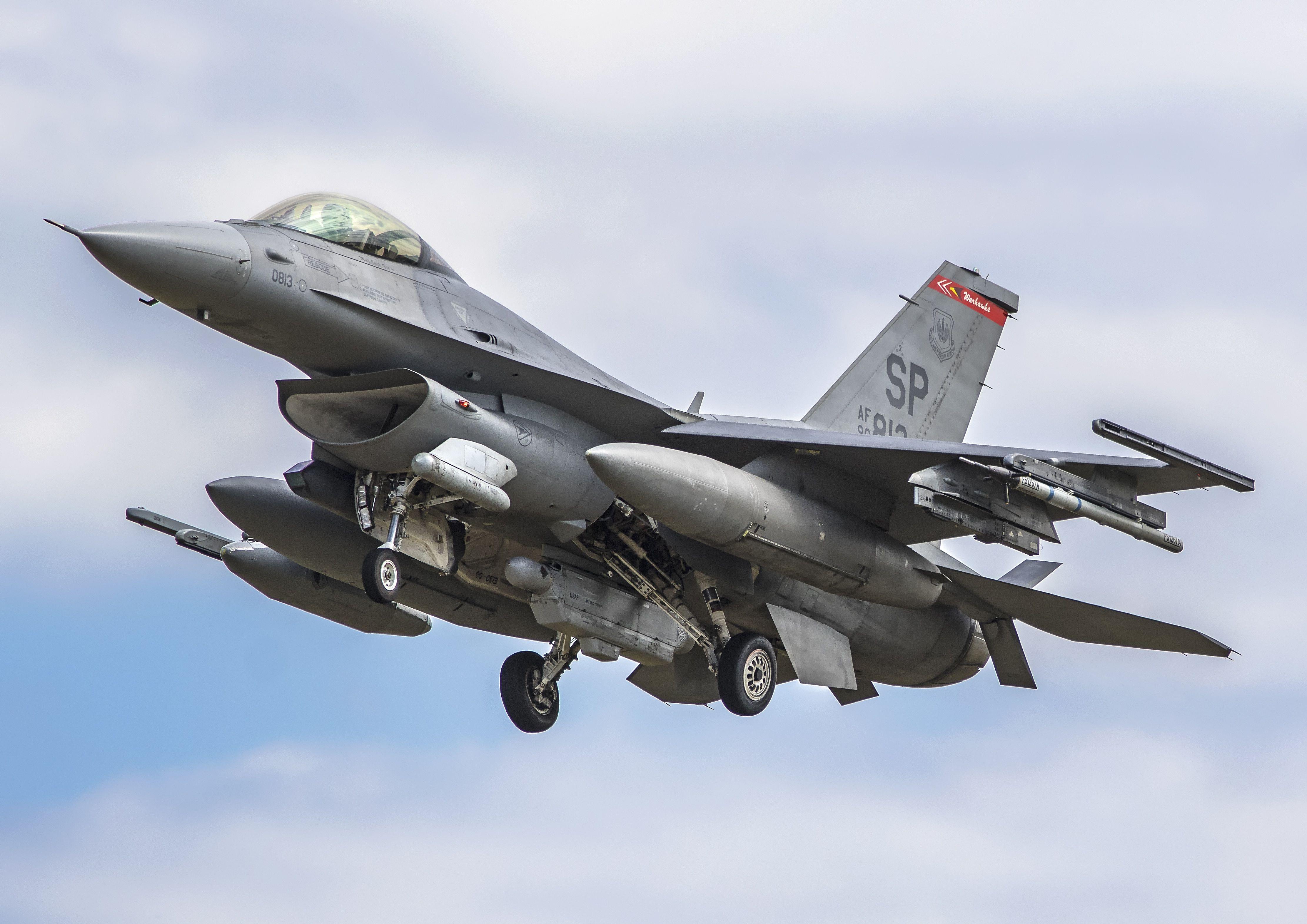
The F-16E/F Fighting Falcon—specifically the Block 60 variant developed for the United Arab Emirates Air Force—is one of the most advanced iterations of General Dynamics' iconic multirole fighter. Distinctive for its conformal fuel tanks, powerful engine, and cutting-edge active electronically scanned array radar, this variant stands out in modern military aviation history.
Introduction to the F-16E/F Fighting Falcon
The F-16 Fighting Falcon has served as a foundational pillar of tactical air power for decades, flown by air forces around the globe. While standard variants like the F-16C/D are familiar to aviation enthusiasts, specialized configurations developed for international partners showcase the airframe's adaptability. Among these, the F-16E (single-seat) and F-16F (two-seat) Block 60, often referred to locally as the "Desert Falcon," represents a comprehensive redesign of the classic Viper.
Commissioned and co-funded by the United Arab Emirates, this variant was engineered to meet the demanding operational requirements of the Persian Gulf region. Rather than relying on standard upgrades, Lockheed Martin integrated an entirely new suite of avionics, structural enhancements, and propulsion systems. To fully understand what makes this aircraft unique, it is necessary to examine the five defining features that separate the F-16E from its predecessors.
1. Advanced Active Electronically Scanned Array (AESA) Radar
At the heart of the F-16E's combat capability is its radar system: the Northrop Grumman AN/APG-80 Active Electronically Scanned Array (AESA). This marked a monumental leap forward for the F-16 family, as it was one of the first operational AESA radars integrated into a tactical fighter of its size.
Technical Advantages of AESA Technology
Unlike traditional mechanical scanning radars that rely on a physically moving antenna dish, the AN/APG-80 uses hundreds of small transmit/receive modules. This architectural shift provides several operational benefits:
- Simultaneous Multi-Role Tasks: The radar can interleave air-to-air and air-to-ground modes seamlessly. A pilot can track multiple airborne threats while simultaneously mapping terrain or targeting ground installations.
- Enhanced Reliability: With no moving mechanical parts to wear out, the mean time between failures is significantly higher than older mechanical systems.
- Low Probability of Intercept (LPI): AESA emissions are harder for enemy electronic support measures to detect, giving the aircraft a crucial stealth-like tactical advantage in radar-dense environments.
This radar system allows the F-16E to detect and engage targets at extended ranges, process high-resolution synthetic aperture radar (SAR) maps in all-weather conditions, and direct precision-guided munitions with pinpoint accuracy.
2. Conformal Fuel Tanks (CFTs)
Range and payload capacity have historically been limiting factors for lightweight single-engine fighters. To address this without sacrificing aerodynamic performance or taking up valuable underwing hardpoints, the F-16E is equipped with specially contoured Conformal Fuel Tanks (CFTs).
Engineering and Operational Impact
Mounted flush against the upper fuselage on either side of the cockpit spine, these tanks hold an additional 450 gallons (roughly 3,000 pounds) of fuel.
- Preserving Hardpoints: By moving fuel storage to the upper fuselage, the underwing pylons remain free to carry heavy ordnance, electronic warfare pods, or additional external fuel tanks.
- Aerodynamic Efficiency: Unlike traditional drop tanks that create significant drag and restrict the aircraft's maneuverability, CFTs are engineered to blend with the aircraft's lines, minimizing the drag penalty.
- Extended Loiter Time: The added fuel capacity drastically increases combat radius and patrol duration, allowing the F-16E to operate far from its home base without immediate tanker support.
While CFTs do add structural weight and slightly reduce maximum instantaneous turn rates when fully loaded, the operational trade-off heavily favors the massive extension in combat reach.
3. The General Electric F110-GE-132 Turbofan Engine
To offset the increased weight of the Conformal Fuel Tanks, advanced avionics suite, and heavier defensive systems, the F-16E required a substantial boost in thrust. Lockheed Martin selected the General Electric F110-GE-132 turbofan engine to power the Block 60.
Performance and Reliability
The F110-GE-132 is a derivative of the proven F110 family, but it incorporates advanced technology from the Joint Strike Fighter program and other modern propulsion initiatives:
- Thrust Output: The engine produces up to 32,500 pounds of thrust with afterburner, providing the aircraft with a high thrust-to-weight ratio.
- FADEC Integration: A Full Authority Digital Engine Control (FADEC) system manages fuel flow, temperature, and engine health in real-time, optimizing performance and preventing compressor stalls during high-angle-of-attack maneuvers.
- Thermal Management: Given the searing ambient temperatures of the Middle East, the engine and its associated cooling systems were designed to operate reliably in high-density-altitude environments without performance degradation.
This powerplant ensures that despite carrying a heavier baseline combat load, the F-16E retains the legendary agility, acceleration, and energy-management characteristics inherent to the Viper family.
4. Integrated Internal FLIR and Targeting System (Falcon Star / IFTS)
Many legacy fighters require external podded systems—such as the LANTIRN or Sniper pods—to execute targeting and navigation duties at night or in adverse weather. The F-16E eliminates external aerodynamic drag and radar signature penalties by integrating its targeting sensors internally.
Dual-Pod Architecture
The Block 60 features the Internal Forward Looking Infrared (FLIR) and Targeting System (IFTS), which consists of two distinct components housed in fairings on the forward fuselage:
- Navigation FLIR: Mounted ahead of the canopy on the port side, this sensor provides the pilot with a high-resolution thermal image projected onto the Head-Up Display (HUD) or helmet-mounted display for low-level, high-speed night navigation.
- Targeting FLIR and Laser Designator: Mounted on the starboard side of the lower nose, this system allows the pilot to acquire, track, and laser-designate targets for precision-guided munitions independently.
By housing these systems internally, the aircraft maintains a cleaner aerodynamic profile, reduces fuel consumption, and frees up external stations for a heavier weapon loadout.
5. Comprehensive Electronic Warfare and Defensive Suite
In modern aerial warfare, survival depends as much on electronic self-defense as it does on raw speed and missile capability. The F-16E features an advanced, integrated Electronic Warfare (EW) suite tailored to counter modern radio-frequency and infrared threats.
Defensive Architecture
The Block 60 incorporates the Falcon Edge electronic warfare system, which works in concert with advanced radar warning receivers, missile approach warners, and chaff/flare dispensers.
- Digital Radio Frequency Memory (DRFM): The system can capture enemy radar signals, manipulate them, and retransmit them to create false targets, effectively confusing hostile surface-to-air missile guidance systems.
- Automated Countermeasures: The EW suite is integrated directly into the aircraft's central mission computers, allowing for automated threat prioritization and rapid deployment of countermeasures.
- Cockpit Integration: Sensor fusion presents threats clearly on multi-function displays, reducing pilot workload during high-stress engagement scenarios.
F-16E/F Block 60 vs. Standard F-16C/D Block 50/52 Comparison
| Feature Category | F-16C/D Block 50/52 | F-16E/F Block 60 (Desert Falcon) |
|---|---|---|
| Radar System | AN/APG-68 Mechanical Scan | AN/APG-80 AESA Radar |
| Engine | GE F110-GE-129 or Pratt & Whitney F100-PW-229 | General Electric F110-GE-132 |
| Fuel Capacity | Standard internal + external drop tanks | Internal + Conformal Fuel Tanks (CFTs) |
| Targeting Systems | External pods (Sniper, LANTIRN) | Internal FLIR and Targeting System (IFTS) |
| Primary Operator | United States Air Force & international users | United Arab Emirates Air Force |
Frequently Asked Questions
What makes the F-16E different from the F-16C?
The F-16E represents a major structural and avionics evolution over the F-16C. Most notably, the E-model incorporates an AESA radar, internal targeting sensors, conformal fuel tanks for extended range, and a more powerful engine, making it a generation ahead in combat capability.
Why is the F-16E called the Desert Falcon?
The nickname "Desert Falcon" was given to the F-16E/F Block 60 because the aircraft was specifically developed, funded, and customized to meet the extreme environmental and operational demands of the United Arab Emirates Air Force operating in desert conditions.
Can the F-16E carry standard F-16 weapons?
Yes. Despite its specialized internal systems and conformal fuel tanks, the F-16E retains compatibility with standard NATO and U.S.-origin air-to-air missiles, precision-guided bombs, and general-purpose ordnance utilized across the global F-16 fleet.
Does the F-16E use external targeting pods?
No, one of the defining features of the Block 60 variant is its Internal Forward Looking Infrared (IFTS) system. This removes the need for external targeting and navigation pods, reducing aerodynamic drag and freeing up weapon stations.
Conclusion and Next Actions
The F-16E/F Fighting Falcon demonstrates how a classic airframe can be modernized through targeted engineering. By integrating an AESA radar, internal targeting, conformal fuel tanks, and an upgraded engine, this variant bridges the gap between fourth-generation fighters and advanced modern combat systems. For further research, examine contemporary defense procurement reports or technical analyses of AESA radar integration in tactical aviation.