The 5-7-10 split in bowling occurs when a bowler leaves the center 5-pin alongside the far-left 7-pin and far-right 10-pin. Frequently referred to as the "Sour Apple" or "Lily," this rare leave results from a weak pocket hit where the ball lacks sufficient energy or proper entry angle, leaving three widely separated pins that are exceptionally difficult to convert.
What Is the 5-7-10 Split?
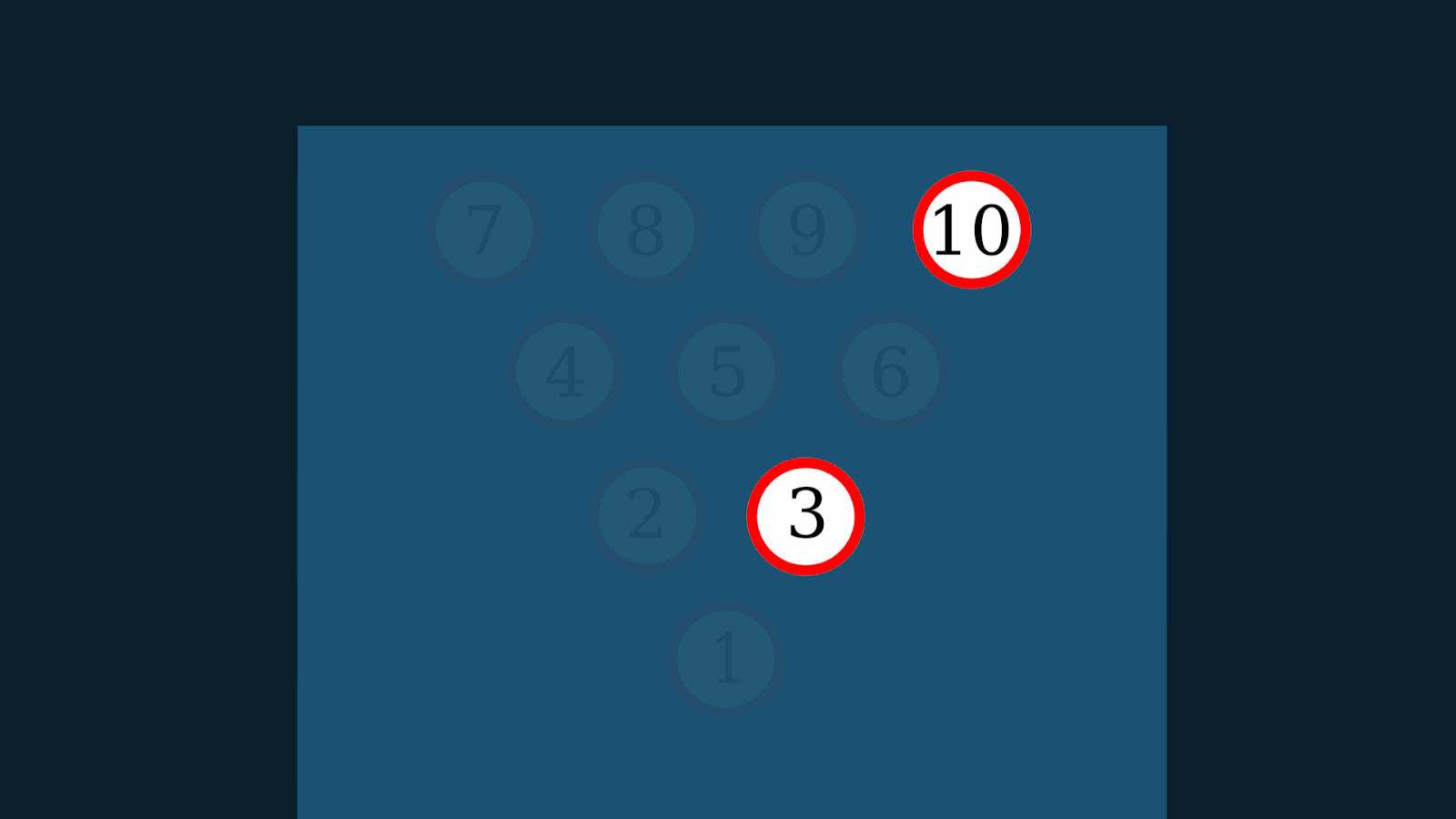
In ten-pin bowling, pins are arranged in an equilateral triangle with 12 inches of center-to-center spacing between adjacent pins. The deck consists of four distinct rows:
- Row 1: The 1-pin (headpin)
- Row 2: The 2-pin (left) and 3-pin (right)
- Row 3: The 4-pin (left), 5-pin (center), and 6-pin (right)
- Row 4: The 7-pin (far left), 8-pin (middle-left), 9-pin (middle-right), and 10-pin (far right)
The 5-7-10 split leaves the 5-pin standing directly in the center of the third row while the back-corner pins—the 7-pin on board 3.5 and the 10-pin on board 36.5—remain untouched. The headpin, front pins, and middle back-row pins (8 and 9) are completely swept away into the pit.
7 . . 10 (Row 4) . 5 . (Row 3) . . (Row 2) . (Row 1)
Because the 5-pin sits roughly 20.6 inches diagonally from both the 7-pin and the 10-pin, and the 7-pin and 10-pin are separated by 36 inches across the lane, bridging the gap between all three pins in a single fill shot represents one of the greatest mechanical challenges in bowling.
Historically, standard league players and professional bowlers alike refer to the 5-7-10 leave as the "Lily" or "Sour Apple." In traditional bowling lore, a Sour Apple signifies a pocket strike attempt that looked promising from the release point but resulted in a disastrous leave due to inadequate ball performance at the deck.
Why the 5-7-10 Split Happens
Leaving a 5-7-10 split is rarely an accident of random pin action. It is almost always the direct physical consequence of improper ball motion, misaligned entry angles, or oil transition on the lane surface.
1. Deflection and Weak Pocket Entry
When a bowling ball enters the pocket (the 1-3 gap for right-handed bowlers or 1-2 gap for left-handed bowlers), it must maintain its path through the pin deck. A high-performing strike shot strikes the headpin, deflects slightly to hit the 3-pin, deflects again to take out the 5-pin, and finishes through the 8-pin spot.
If the ball enters the pocket too light (too far toward the 3-pin for righties) or with a flat, shallow entry angle (less than the ideal 4 to 6 degrees), the ball suffers severe deflection. The headpin and 3-pin collapse outward, taking down the 2, 4, 6, 8, and 9 pins through domino pin action, but the bowling ball loses kinetic energy before reaching the center of the deck. As a result, the ball deflects around the 5-pin without touching it, leaving the 5-pin standing alongside the untouched corner pins.
2. Excessive Skid and Carrydown
Lane oil plays a massive role in pin leaves. As a bowling session progresses, oil from the front of the lane is pushed down toward the pin deck by rolling balls—a phenomenon known as oil carrydown.
When a bowling ball encounters carrydown, its coverstock fails to create friction with the lane boards in the mid-lane. The ball continues to skid past its intended break point, preserving speed but failing to transition into a true roll. Upon hitting the pins, the skidding ball lacks the rotational torque necessary to drive through the deck. It hits the pocket "soft," deflecting sideways into the pit while leaving the center 5-pin and the corner pins standing.
3. Equipment Mismatch
Using a ball with dynamics unsuitable for the volume of lane oil can cause the 5-7-10 split. For example:
- Low-RG / High-Differential Balls on Heavy Oil: If the ball hooks too early, it burns off its rotational energy before reaching the pocket, hitting flat and deflecting.
- Polished Plastic or Weak Urethane Balls on Medium-Heavy Oil: If the ball lacks aggressive coverstock teeth, it fails to grip the lane surface, pushing straight through the oil pattern without establishing an entry angle.
Theoretical vs. Practical Conversion Physics
Converting the 5-7-10 split requires extremely precise spatial geometry and vector physics. Because a bowling ball is 8.5 inches in diameter and a pin is 4.75 inches wide at its maximum diameter, hitting all three targets directly with the ball is physically impossible.
The Conversion Mechanism
To convert the 5-7-10, a bowler must utilize pin-to-pin deflection combined with ball deflection:
- The Thin Hit: The bowler must aim to clip the absolute outer edge of the 5-pin.
- Pin Velocity Vector: For a right-to-left clip (hitting the right side of the 5-pin), the impact must transfer force horizontally across the lane deck, sliding the 5-pin sideways into the 7-pin on the far left.
- Ball Continuation: Simultaneous with the 5-pin sliding left, the bowling ball must pass through the gap and continue straight back (or deflect slightly right) to collide directly with the 10-pin on the right.
Alternatively, a bowler can attempt to slide the 5-pin into the 10-pin while driving the ball into the 7-pin by hitting the left side of the 5-pin thin.
[7] <-- (5-Pin Slides Left) [10] <-- (Ball Strikes 10-Pin) \ / \ / \ / [5] (Thin Right Hit) ^ | (Ball Trajectory)
Conversion Probability
According to historical data tracked by professional statistical databases and sanctioning bodies like the United States Bowling Congress (USBC), the conversion rate for the 5-7-10 split in sanctioned competition is under 1%. It ranks among the rarest spare conversions in bowling alongside the infamous 7-10 split and 4-6-7-10 (Big Four) split.
While the 7-10 split requires a kickback wall bounce (rebound off the side pit walls), the 5-7-10 split is theoretically controllable through direct ball contact because the 5-pin acts as a focal deflection point. However, the margin of error on the 5-pin impact zone is less than a millimeter. Hitting the 5-pin even slightly too full causes the pin to fly straight back into the pit without sliding laterally toward the corner.
Step-by-Step Spare Attempt Strategy
When faced with a 5-7-10 split during a game, your primary objective should be maximizing your count while giving yourself a controlled chance at the full spare conversion.
Step 1: Assess Your Ball Selection
Switch from a high-hooking reactive resin ball to a hard plastic spare ball or a stiff urethane ball with a polished surface. Reactive resin balls hook as they travel down the lane, making precision targeting on a specific edge of the 5-pin unpredictable. A plastic ball follows a linear trajectory, ensuring that your target line remains true regardless of carrydown or dry boards.
Step 2: Establish Your Target Line
Decide which side of the 5-pin is easier for your dominant hand to isolate:
- Right-Handed Bowlers (Slide Left to 7-Pin): Stand on the far right side of the approach (boards 30 to 35). Aim across the center arrow (board 20) toward the right edge of the 5-pin. This angle ensures your ball hits the right side of the 5-pin to slide it toward the 7-pin while the ball deflects into the 10-pin.
- Left-Handed Bowlers (Slide Right to 10-Pin): Stand on the far left side of the approach (boards 5 to 10). Cross the lane over the center arrow toward the left edge of the 5-pin to send it toward the 10-pin while your ball strikes the 7-pin.
Step 3: Match Speed and Axis Rotation
- Increase Ball Speed: Throwing the ball faster reduces the time friction can alter the trajectory, resulting in a straighter path.
- Flatten Your Wrist: Avoid putting heavy side rotation (axis tilt) on the ball. A end-over-end, zero-hook release creates the predictable, straight line required to clip the millimeter-wide target zone on the 5-pin.
Step 4: Execute the Shot
Focus entirely on the target arrow on the lane rather than looking at the pins. Focus on hitting the exact board that aligns your ball path with the target edge of the 5-pin.
Technical Comparison: Infamous Bowling Splits
Understanding how the 5-7-10 split compares to other tough split leaves helps clarify execution strategies and equipment requirements.
| Split Name | Remaining Pins | Geometry / Layout | Main Cause | Conversion Mechanism | Estimated Professional Conversion Rate |
|---|---|---|---|---|---|
| 5-7-10 (Sour Apple / Lily) | 5, 7, 10 | Center 3rd row pin; both 4th row corner pins | Extremely light pocket hit; severe ball deflection | Clip 5-pin thin to slide to one corner; ball hits opposite corner | < 1% |
| 7-10 (Bedposts / Snake Eyes) | 7, 10 | Opposite 4th row corner pins (36 inches apart) | Light pocket hit or heavy nose hit driving ball straight back | Rebound one pin off pit wall (kickback) into opposite pin | ~0.7% |
| 4-6-7-10 (Big Four) | 4, 6, 7, 10 | Both 3rd row outer pins; both 4th row corner pins | High nose hit destroying center/headpin structure | Slide 4-pin into 7-pin or 6-pin into 10-pin; ball deflects | < 1% |
| 2-8-10 | 2, 8, 10 | Left 2nd row; left 4th row inner; right corner pin | Light hit for righties; poor entry angle | Hit 2-pin thin right side; deflection drives ball/pins back | ~8–12% |
| 4-7-10 | 4, 7, 10 | Left 3rd row outer; left corner; right corner | Light hit leaving right corner and full left side | Slide 4-pin across to 10-pin; ball takes out 7-pin | ~3–5% |
Common Equipment and Technique Mistakes
When trying to prevent or convert the 5-7-10 split, bowlers frequently make tactical errors:
1. Attempting Spare Shots with Reactive Coverstocks
Using an aggressive reactive resin ball for a 5-7-10 spare attempt creates unpredictable hook in the backend. If the ball hooks even half a board as it approaches the 5-pin, it will hit the center of the 5-pin rather than the thin edge, driving the pin into the pit and failing to generate lateral slide.
2. Over-Adjusting Feet Without Changing the Ball Path
Bowlers often shift their starting position on the approach without altering their target arrow on the lane. Changing your stance without re-calculating your visual target changes your entry angle relative to the 5-pin, resulting in missed target lines.
3. Misdiagnosing the Root Cause
Many bowlers assume leaving a 5-7-10 split means they missed their target entirely. In reality, modern lane oils cause high-end balls to lose energy mid-lane, making a hit look perfect until impact. Misdiagnosing oil carrydown as an execution error leads bowlers to make mechanical changes to their swing rather than tactical changes to their ball selection or alignment.
How to Prevent Leaving the 5-7-10 Split
The best strategy for handling the 5-7-10 split is preventing it from occurring during your strike frames. Adjusting your equipment and alignment when you notice weak pin action keeps your ball driving through the deck.
1. Move Parallel on the Approach
If your ball hits the pocket but leaves weak pins (like the 5-pin or 10-pin), your entry angle is too shallow.
- Move 2 Boards Left with Feet and 1 Board Left with Target (Right-Handed): Moving inside allows the ball to stay in the oil longer, preserving energy so it can snap sharper into the pocket and drive through the 5-pin spot.
2. Change Ball Surface or Shell
If carrydown prevents your ball from gripping the lane:
- Switch to a ball with a lower grit surface (e.g., 2000-grit dull sand finish instead of a 4000-grit polished finish). A dull surface creates friction earlier, helping the ball hook into the pocket at a steeper angle rather than sliding soft into the headpin.
3. Control Ball Speed
If you throw the ball too fast, it will overrun its break point and fail to roll into the pocket. Decreasing your ball speed by 0.5 to 1.0 mph gives the coverstock time to grip the lane boards, creating the necessary entry angle to carry the 5, 7, and 10 pins out.
Frequently Asked Questions
What pins make up the 5-7-10 split in bowling?
The 5-7-10 split consists of the center pin in the third row (5-pin), the far-left corner pin in the back row (7-pin), and the far-right corner pin in the back row (10-pin).
Why is the 5-7-10 split called a "Sour Apple" or "Lily"?
The 5-7-10 split earned the nickname "Sour Apple" or "Lily" in traditional bowling terminology because it represents a disappointing outcome on what initially looked like a good pocket hit. The term highlights how a soft, deflecting ball turns a prospective strike into a difficult leave.
Can you convert a 5-7-10 split?
Yes, but it is extremely rare. To convert it, you must hit the extreme outer edge of the 5-pin with your bowling ball. Hitting the 5-pin thin slides it sideways into one corner pin (e.g., sending the 5-pin into the 7-pin), while the bowling ball deflects through the gap to knock down the opposite corner pin (10-pin).
Is the 5-7-10 split harder than the 7-10 split?
Both splits are extraordinarily difficult, featuring conversion rates below 1% in sanctioned play. However, the 5-7-10 split provides a direct target (the 5-pin) on the lane surface that can be physically hit to slide into a corner, whereas a 7-10 split requires a blind rebound off the pit side walls (kickbacks).
What adjustments prevent leaving the 5-7-10 split?
To prevent leaving the 5-7-10 split, adjust your strike ball to create a steeper entry angle into the pocket. Move your feet 1 to 2 boards inside to find fresh oil, reduce ball speed slightly, or switch to a duller coverstock ball that grips the mid-lane better to reduce ball deflection at impact.
Recommended Next Actions
If you are repeatedly leaving the 5-7-10 split during league play, follow these immediate practice steps:
- Add a Plastic Spare Ball to Your Bag: Use a dedicated plastic spare ball for all multi-pin split attempts to ensure straight, predictable tracking across lane transition areas.
- Practice Edge-Hitting Drills: During open bowling sessions, practice shooting at single pins (like a solo 5-pin) while aiming specifically for the left or right edge of the pin rather than the center. Mastering control over pin deflection vectors is essential for converting complex splits.
- Evaluate Your Breakpoint: Work with a certified USBC coach or pro shop operator to measure your ball speed, axis rotation, and entry angle to ensure your equipment surface matches the local lane house oil patterns.