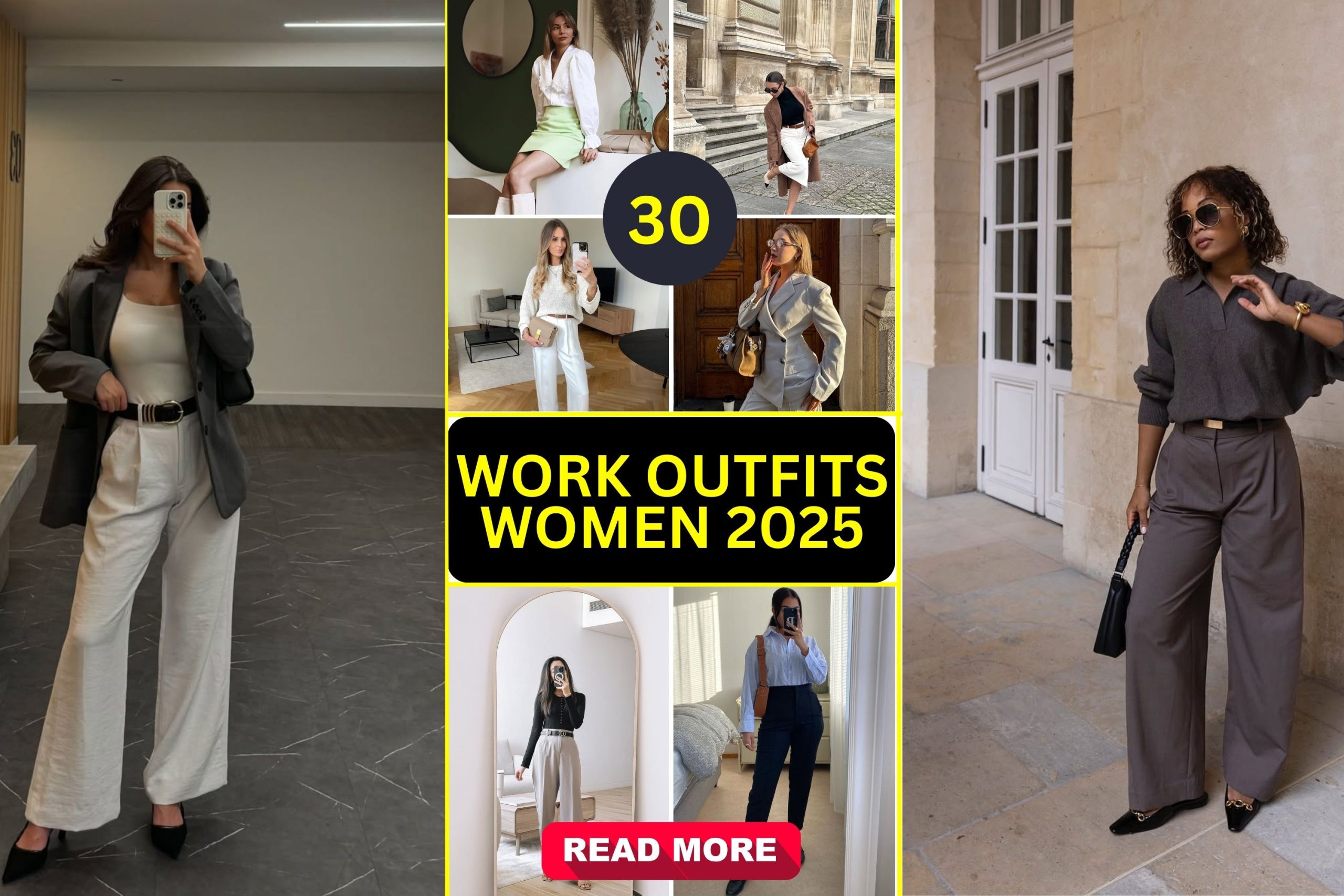
The 2025 office outfits landscape is defined by "Elevated Utility" and "Relaxed Tailoring," representing a permanent shift away from rigid corporate uniforms toward versatile, high-quality pieces. Professionals can expect a dominance of wide-leg trousers, structured waistcoats, and tech-infused fabrics that prioritize movement and breathability while maintaining a polished, authoritative aesthetic.
As we move through 2026, it is clear that the fashion choices established in 2025 were not mere fleeting trends but a fundamental restructuring of professional identity. The "Power Casual" movement reached its peak last year, blending the comfort requirements of a hybrid workforce with the sharp silhouettes needed for high-stakes in-person meetings.
The Shift Toward "Corporate Cool" in 2025
The 2025 professional wardrobe was shaped by a desire for longevity and "quiet luxury." This meant moving away from fast-fashion cycles and investing in pieces that offer both durability and style. The primary driver of this shift was the realization that office wear needs to be as functional as it is aesthetic.
The Rise of Relaxed Tailoring
In 2025, the "slim fit" finally took a backseat to more generous, flowing silhouettes. Relaxed tailoring does not mean sloppy dressing; rather, it involves expert draping and high-quality textiles. We saw a surge in wide-leg pleated trousers for all genders, often paired with more fitted tops to balance the proportions.
The benefit of this style is two-fold: it provides a modern, high-fashion look that mimics the runways of Paris and Milan, and it offers unparalleled comfort for long hours spent at a desk or commuting. According to reporting from Vogue Business, the demand for "comfort-first" professional wear grew by nearly 30% leading into 2025, forcing traditional retailers to rethink their standard patterns.
The Death of the Traditional Suit
While the suit isn't gone, the matched suit became less mandatory in 2025. Instead, "separates" became the gold standard. Mixing a charcoal blazer with navy trousers or a camel wool skirt with a textured cream cardigan allowed for more personal expression. This modular approach to dressing also supports the growing trend of the "capsule wardrobe," where fewer, better items are mixed and matched to create a variety of looks.
Core Elements of the 2025 Professional Wardrobe
To understand what to expect from 2025 office outfits, one must look at the specific garments that defined the year. These items transitioned from "trendy" to "essential" and continue to anchor professional closets today in 2026.
The Structured Waistcoat (Vest)
One of the most significant arrivals in 2025 was the return of the waistcoat as a standalone top. For women, the "vest-as-a-shirt" trend provided a sharp, sleeveless option for summer months that looked significantly more professional than a standard camisole. For men, the knitted or tech-fabric vest became a layering staple, providing warmth without the bulk of a full jacket.
Performance Fabrics in Formal Wear
In 2025, the gap between "athletic wear" and "office wear" closed significantly through fabric innovation. Brands began utilizing 4-way stretch wools, moisture-wicking linens, and wrinkle-resistant recycled polyesters. These "performance suits" look identical to traditional high-end tailoring but allow the wearer to cycle to work or sit on a cross-country flight without arriving looking disheveled.
The "Power Loafer" and Footwear Transitions
Footwear in 2025 saw a pivot away from the ubiquitous white sneaker toward more formal, yet comfortable, alternatives. The "Power Loafer"—featuring chunky soles or elegant hardware—became the default shoe for both men and women.
- For Women: Pointed-toe flats and "kitten heels" (under 2 inches) replaced high stilettos, reflecting a focus on orthopedic health and mobility.
- For Men: The Chelsea boot and the lug-sole loafer provided a sturdier, more modern alternative to the traditional Oxford shoe.
2025 Style Comparison: Evolution of the Office Look
The following table outlines the key differences between the previous era of office fashion and the standards established in 2025.
| Feature | Pre-2025 Standard | 2025 Evolution | Why it Changed |
|---|---|---|---|
| Silhouette | Slim/Skinny Fit | Relaxed/Fluid | Focus on comfort and inclusivity of body types. |
| Primary Color | Black/Navy/Grey | Earth Tones/Burgundy | Shift toward "Warm Minimalism" and approachability. |
| Top Layer | Heavy Blazer | Unstructured Jacket/Cardigan | Need for pieces that transition from home to office. |
| Fabrics | Static Cottons/Wools | Tech-Wools/Stretch Blends | Demand for wrinkle-resistance and durability. |
| Accessories | Minimalist/Tiny Bags | Oversized Totes/Tech Bags | Re-emergence of "commuter culture" requiring more space. |
| Footwear | Standard Sneaker | Refined Loafer/Mary Jane | Desire to re-establish professional boundaries. |
Seasonal Trends and Color Palettes
The 2025 office outfits were heavily influenced by a specific color story that moved away from the stark blacks and whites of the early 2020s.
The Dominance of "Warm Minimalism"
The 2025 palette was anchored in "Butter Yellow," "Rich Espresso," and "Sage Green." These colors are professional yet softer than traditional corporate colors, making the wearer appear more approachable in collaborative environments. Monochrome dressing—wearing various shades of the same color from head to toe—remained a powerful way to look "put together" with minimal effort.
Summer 2025: Linen and Silk Blends
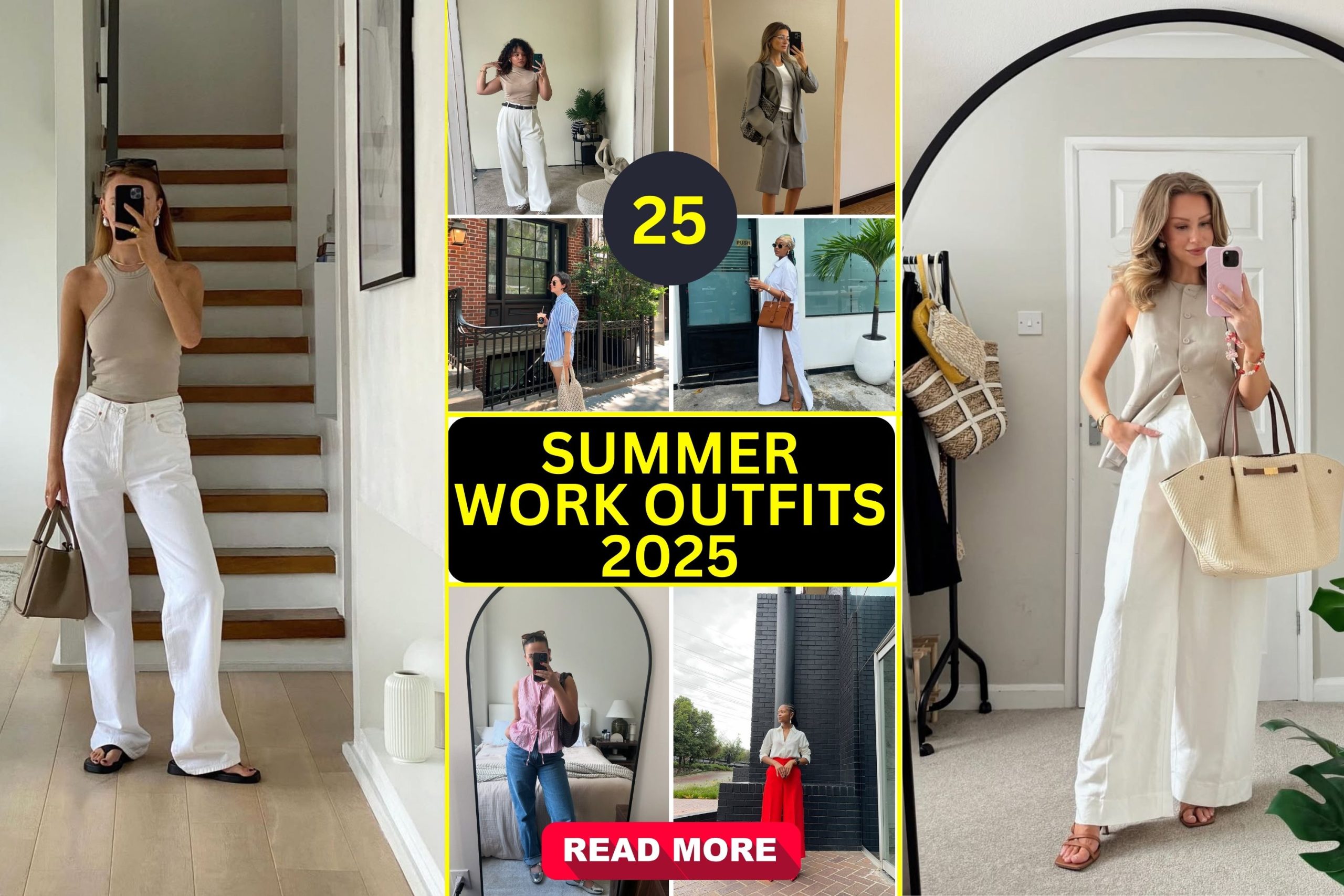
Summer office wear in 2025 focused on heat management. We saw a massive uptick in "City Shorts"—tailored, knee-length shorts paired with blazers—in creative and tech-heavy hubs like San Francisco and London. This was a direct response to rising global temperatures and the need for breathable professional attire.
Winter 2025: Texture and Layering
As the weather cooled, the 2025 look shifted toward heavy textures. Bouclé jackets, corduroy trousers, and oversized cashmere turtlenecks were staples. The "third piece rule" became a popular styling tip: an outfit isn't complete without a third element (a blazer, a statement belt, or a silk scarf) to add depth and intentionality.
Industry-Specific Dress Codes in 2025
While the general trend moved toward "Power Casual," different sectors maintained their own specific expectations for 2025 office outfits.
- Corporate & Legal: Still the most formal, but with a "softened" edge. Expect navy and charcoal, but with knit ties or loafers instead of Oxfords.
- Creative & Marketing: Here, the "Eclectic Grandpa" trend took hold—mixing vintage pieces with modern tailoring, characterized by patterned sweaters and wide-leg chinos.
- Technology & Startups: The hoodie was replaced by the "Work Jacket" or "Chore Coat." It provides a structured look that is still rugged and informal enough for a casual culture.
- Healthcare Administration: A shift toward "scrub-adjacent" professional wear—highly durable, washable silks and tech-fabrics that look like business casual but feel like lounge wear.
The Role of Sustainability and Ethics
By 2025, "who made my clothes" became as important as "how do I look." The European Union's Strategy for Sustainable and Circular Textiles heavily influenced global fashion production. Professionals in 2025 began prioritizing brands with transparent supply chains and high-quality natural fibers.
The "Cost Per Wear" (CPW) metric became a standard way for office workers to justify higher price points for luxury basics. Instead of buying five cheap blazers, the 2025 professional bought one high-quality, ethically sourced blazer designed to last a decade. This move toward conscious consumption significantly changed the aesthetic of the office, favoring timeless designs over "fast" trends.
Common Mistakes to Avoid in 2025 Office Styling
Even with the more relaxed standards of 2025, there are several pitfalls that can undermine a professional image.
- Over-Accessorizing: With the trend toward "Quiet Luxury," loud logos and excessive jewelry can appear dated. Stick to one or two statement pieces.
- Neglecting Tailoring: "Relaxed" is not a synonym for "unaltered." Even wide-leg trousers often need to be hemmed to the correct length to avoid looking messy.
- Misjudging Transparency: With the rise of lighter fabrics for summer, ensuring proper lining and undergarments is essential to maintaining office appropriateness.
- Fading Fabrics: High-tech fabrics require specific care. Using high-heat dryers on performance wools can ruin the elasticity and sheen, leading to a "cheap" appearance over time.
Frequently Asked Questions
Are jeans acceptable in the 2025 office?
Yes, but they must be "Elevated Denim." This means dark washes (indigo or black), no distressing or holes, and a structured fit like a straight-leg or wide-leg silhouette. Pairing jeans with a blazer and a leather loafer is the standard way to make denim work-appropriate in 2025.
What is the most important accessory for 2025 office outfits?
The "Work-Life Tote" is the essential accessory. In 2025, these bags evolved to include dedicated compartments for laptops, gym gear, and even insulated sections for lunch, all while looking like a high-end leather handbag or a sleek, minimalist backpack.
Is the necktie officially dead in 2025?
Not dead, but "optional and ornamental." In most corporate environments, the tie is no longer a daily requirement. However, it has seen a resurgence in "Preppy" or "Academic" styles, where it is worn more creatively—often with a cardigan or an unbuttoned collar—rather than as part of a stiff formal suit.
How do I transition my wardrobe from 2024 to 2025 styles?
Start with the silhouette. The easiest way to update your look is to swap slim-fit trousers for a pair of relaxed, pleated pants. Keep your existing shirts, but consider layering them under a knit vest or a structured blazer to align with the 2025 "layered" aesthetic.
What colors should I avoid for the office in 2025?
Neon colors and overly bright "high-vis" shades generally fell out of favor for professional settings in 2025. The focus shifted toward "muted saturation"—colors that have depth but aren't distracting, such as terracotta, deep forest green, and slate blue.
Practical Recommendation for Building Your 2025 Wardrobe
To successfully navigate the 2025 office outfit landscape, focus on the "60/30/10 Rule." Devote 60% of your wardrobe to high-quality basics in neutral tones (relaxed trousers, silk blouses, quality tees). Allocate 30% to structured layering pieces (blazers, vests, cardigans) that define your professional silhouette. Finally, use the remaining 10% for "trend pieces" or personal flair, such as a statement belt, a bold-colored shoe, or a unique piece of jewelry.
By prioritizing fit and fabric quality over quantity, you ensure that your office attire remains relevant not just through 2025, but well into the future. For more insights on the business of fashion, the Business of Fashion offers comprehensive reports on how professional dress codes continue to evolve globally.