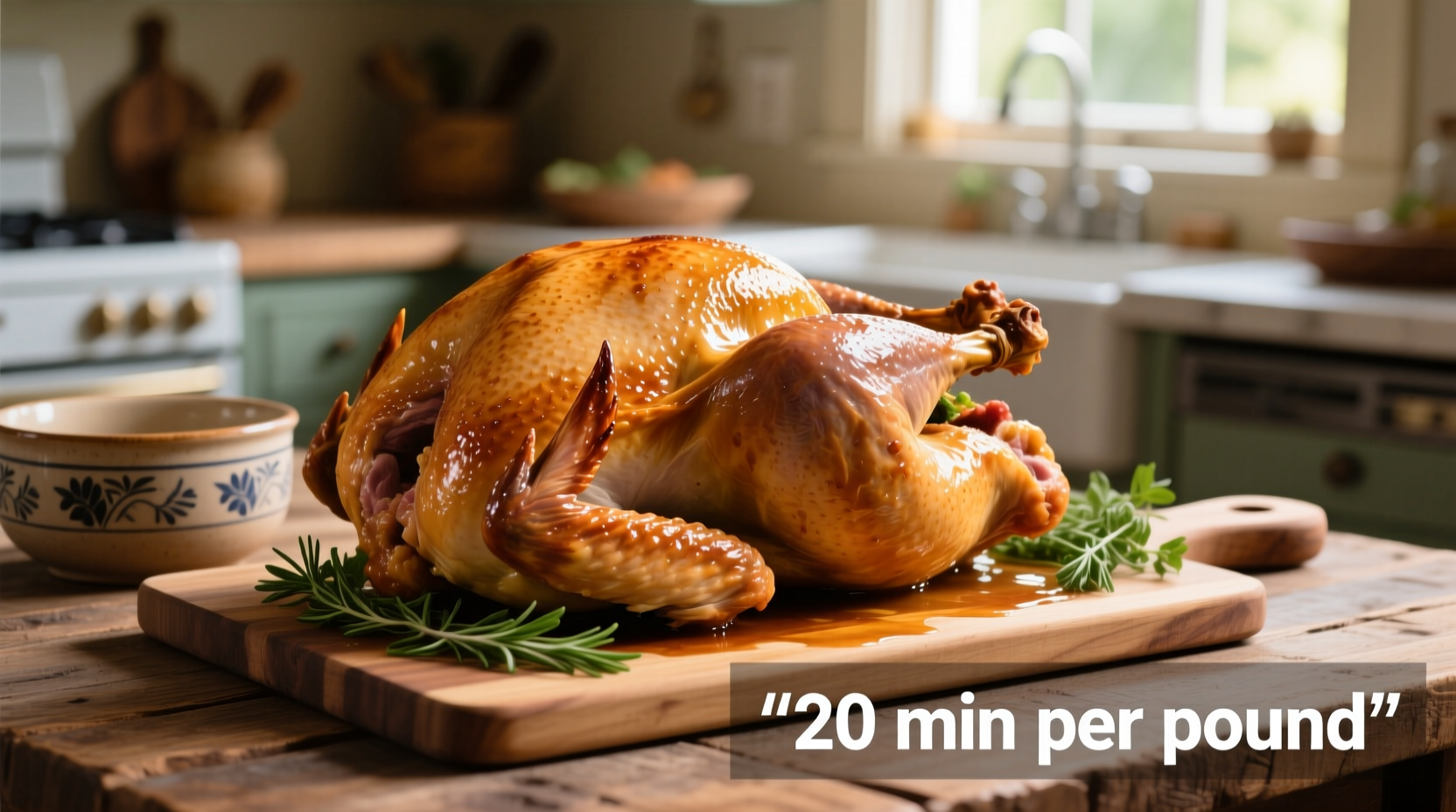
Roasting a 20-pound turkey generally requires 3.75 to 4.25 hours of cooking time at an oven temperature of 325°F (165°C) when completely thawed and unstuffed, reaching a safe internal temperature of 165°F (74°C) in the deepest part of the breast and the innermost part of the thigh.
Roasting a large holiday centerpiece like a 20-pound turkey requires precision, careful planning, and an understanding of thermodynamics to ensure that every slice is safe, succulent, and evenly browned. Preparing a bird of this magnitude involves navigating extended thawing timelines, precise oven calibration, and accurate internal temperature tracking. Whether you are hosting a large family gathering for Thanksgiving, Christmas, or any seasonal celebration, mastering the cooking time and temperature for a 20-pound turkey eliminates guesswork and guarantees a successful meal.
Understanding Turkey Sizing, Scaling, and Planning
When planning a holiday meal for a large crowd, a 20-pound turkey is a substantial bird that typically serves between 15 and 20 guests, allowing for a standard estimate of one pound per person, or slightly more if you desire generous leftovers. Because of its sheer mass, a 20-pound turkey cannot be rushed through the preparation stages. Proper execution depends on orchestrating two major phases before the bird ever enters the oven: safe thawing and structural preparation.
Calculating Portions and Weight Requirements
A whole turkey consists of significant bone weight, skin, and moisture loss during cooking. For 15 to 20 guests, a 20-pound whole turkey provides a healthy margin of meat. If your guest list leans heavily toward hearty eaters or if you want guaranteed leftovers for sandwiches and casseroles, estimating 1.25 pounds per person is a reliable culinary standard. Conversely, if you are serving multiple heavy protein alternatives, a 20-pound bird can stretch to feed up to 22 guests.
Safe Thawing Protocols
Before worrying about cooking times, you must ensure the turkey is completely thawed. Cooking a partially frozen 20-pound turkey is a food safety hazard because the outer layers will overcook and dry out long before the dense center reaches a safe temperature.
- Refrigerator Thawing (Recommended): This method is the safest and yields the most uniform texture. Allow approximately 24 hours for every 4 to 5 pounds of turkey. For a 20-pound bird, this means transferring the turkey from the freezer to the refrigerator 4 to 5 days in advance. Place the bird in a large rimmed pan or tray on the bottom shelf of your refrigerator to catch any escaping juices.
- Cold Water Thawing (Emergency Method): If you are short on time, submerge the wrapped turkey in cold tap water, changing the water every 30 minutes. Estimate about 30 minutes per pound. For a 20-pound turkey, this requires roughly 10 hours of active monitoring and a consistently cold water supply. Never use warm or hot water, as it promotes rapid bacterial growth on the outer surfaces of the meat.
Core Cooking Parameters: Time, Temperature, and Thermodynamics
The golden rule of roasting poultry safely and deliciously relies on the interplay between oven temperature and internal meat temperature. For standard oven roasting, 325°F (165°C) is universally recommended by food safety authorities, including the United States Department of Agriculture (USDA). This temperature provides a balanced environment: it is high enough to render subcutaneous fat and crisp the skin, yet gentle enough to prevent the outer layers of breast meat from drying out before the deep inner thigh meat finishes cooking.
Baseline Cooking Time Estimates
For an unstuffed, completely thawed 20-pound turkey roasted at 325°F (165°C), expect a total cooking time of 3 hours and 45 minutes to 4 hours and 15 minutes (approximately 11 to 13 minutes per pound). If you choose to stuff the cavity of the turkey, the thermal mass increases significantly, requiring additional time for the stuffing inside the cavity to reach 165°F (74°C). Stuffed turkeys generally require 4 hours and 15 minutes to 4 hours and 45 minutes.
However, time estimates are strictly guidelines. Variations in oven calibration, pan thickness, the shape of the bird, and whether the turkey is trussed can all alter actual cooking duration. The only true indicator of doneness is a calibrated digital meat thermometer.
Essential Internal Temperature Benchmarks
To guarantee food safety and optimal texture, monitor two critical anatomical zones using an instant-read digital meat thermometer inserted into the thickest part of the meat without touching bone:
- Breast Meat: Must reach 165°F (74°C). Removing the turkey when the breast registers 160°F is acceptable if you factor in residual carryover cooking during the resting period, provided the temperature holds for several minutes.
- Thigh Meat: Must reach 165°F to 170°F (74°C to 77°C). Because dark meat contains more connective tissue and fat, cooking it slightly higher than the breast yields a tender, melt-in-your-mouth texture.
- Cavity/Stuffing (If Applicable): The center of the stuffing inside the cavity must reach 165°F (74°C) to eliminate pathogens absorbed from raw poultry juices.
Step-by-Step Roasting Guide for a 20-Pound Turkey
Executing a flawless roast requires a methodical approach from prep to plate. Follow these structured steps to ensure your 20-pound turkey is cooked evenly, retains its natural juices, and boasts a golden, crisp exterior.
1. Equipment and Preparation
- Roasting Pan: Use a heavy-duty, low-sided roasting pan with a rack. Low sides are essential because they allow heat to circulate freely around the lower half of the bird and enable proper air convection.
- Thermometer: An oven-safe probe thermometer or a high-speed digital instant-read thermometer is mandatory.
- Aromatics and Fats: Softened butter, olive oil, kosher salt, freshly cracked black pepper, herbs (such as rosemary, thyme, and sage), and rough-chopped mirepoix (onion, carrot, celery) for the bottom of the pan.
2. Prepping the Bird
- Remove the thawed turkey from the refrigerator, unwrap it, and discard the packaging. Remove the giblets and neck from the main and neck cavities.
- Pat the entire surface of the turkey thoroughly dry with paper towels. Dry skin is the single most important factor in achieving crisp, golden skin.
- Allow the turkey to sit at room temperature for 45 to 60 minutes to take the chill off the meat, promoting more even cooking in the oven.
- Season the main cavity generously with salt and pepper, and stuff it with halved onions, garlic heads, and fresh herb bundles if desired.
- Rub the exterior skin with softened butter or oil, and season evenly with kosher salt and pepper. Tuck the wing tips underneath the back of the bird to prevent burning.
3. Oven Placement and Roasting Schedule
- Preheat your oven to 325°F (165°C). Ensure your oven racks are adjusted so that the large roasting pan sits directly in the center of the oven.
- Place the turkey breast-side down for the first hour of cooking, or place it breast-side up on a V-rack. (Starting breast-side down allows rendered juices to flow into the lean breast meat, keeping it moist during the longest phase of heat exposure).
- If starting breast-side down, carefully flip the turkey breast-side up using clean kitchen towels or heavy-duty tongs after 1.5 to 2 hours to brown the skin.
- Begin checking the internal temperature at the 3-hour and 30-minute mark. Insert the thermometer into the thickest part of the breast and the inner thigh, avoiding contact with bone or gristle.
Turkey Roasting Method Comparison
Choosing the right cooking technique depends on your equipment, schedule, and texture preferences. The table below compares conventional oven roasting with alternative methods for a 20-pound turkey.
| Roasting Method | Temperature Setting | Estimated Cook Time (20 lbs) | Pros | Cons |
|---|---|---|---|---|
| Conventional Oven (Standard) | 325°F (165°C) | 3.75 – 4.25 hours | Reliable, allows for basting, creates traditional pan drippings for gravy. | Takes up oven space for hours; lower skin crispiness unless managed. |
| High-Heat Start to Finish | 400°F (200°C) for 30 mins, then 325°F | 3.25 – 3.75 hours | Speeds up overall cooking time; renders skin very crisp. | Requires active monitoring to prevent the skin from scorching early on. |
| Spatchcocked (Butterflied) | 425°F (218°C) | 2.0 – 2.5 hours | Dramatically reduces cooking time; yields exceptionally even meat doneness. | Extremely difficult to fit a 20-pound bird; requires removing the backbone. |
| Electric Roaster Oven | 325°F (165°C) | 3.75 – 4.25 hours | Frees up main kitchen oven for side dishes; portable. | Takes up counter space; skin may lack the dry convection crispness of an oven. |
Crucial Troubleshooting and Best Practices
Even with meticulous planning, variables can disrupt your timeline. Understanding how to troubleshoot common challenges ensures your holiday meal stays on track.
Managing Hot Spots and Browning
Large birds often brown unevenly depending on your oven's heating elements. If the tips of the wings or the top of the breast begin to darken too quickly—typically halfway through the cooking time—create a loose tent using heavy-duty aluminum foil over those specific areas. This shields the skin from direct radiant heat while allowing the internal meat to continue absorbing thermal energy.
Dealing with Stalling or Slow Cooking
If your 20-pound turkey has been in the oven for over 4 hours and the internal temperature has stalled below 160°F (71°C), do not panic. First, verify your oven temperature using an independent oven thermometer, as built-in thermostats can drift out of calibration. If the oven is accurate, you can safely increase the oven temperature to 375°F (190°C) for the final 30 minutes to push the internal temperature to the safe zone, keeping a close eye on skin color.
The Mandatory Resting Period
Never carve a 20-pound turkey straight out of the oven. During roasting, muscle fibers contract under high heat, forcing juices toward the center of the bird. If carved immediately, all those flavorful juices will run out onto the cutting board, leaving the meat dry.
Transfer the turkey to a warm carving board or platter, tent it loosely with aluminum foil to trap ambient heat, and let it rest for 30 to 45 minutes. This resting window allows the muscle fibers to relax, redistributing the juices evenly throughout the meat and making carving significantly easier and cleaner.
Frequently Asked Questions
How long does it take to thaw a 20-pound turkey in the fridge?
Thawing a 20-pound turkey in the refrigerator takes approximately 4 to 5 days. You should plan ahead and transfer the frozen turkey from the freezer to a rimmed tray in your refrigerator at least 96 to 120 hours before you intend to cook it.
Should I cover my 20-pound turkey with foil while roasting?
It is best to leave the turkey uncovered for the majority of the roasting time to allow the skin to render fat and crisp up. However, if the breast skin turns golden brown too early in the process (usually around the 2-hour mark), you can loosely tent it with aluminum foil to prevent burning.
What is the best oven temperature for a large turkey?
The standard, USDA-recommended oven temperature for roasting a whole turkey is 325°F (165°C). This temperature ensures that the exterior does not burn or dry out before the dense interior meat reaches a safe internal temperature of 165°F (74°C).
Can I stuff a 20-pound turkey?
Yes, you can stuff a 20-pound turkey, but it requires extra caution. Stuffing adds thermal mass, extending the cooking time by roughly 30 to 45 minutes. For food safety, you must verify that the internal temperature of the stuffing reaches 165°F (74°C) before removing the bird from the oven.
How do I know when a 20-pound turkey is fully cooked?
The only definitive way to know if your turkey is done is by using a digital meat thermometer. Insert the probe into the thickest part of the breast and the innermost part of the thigh without touching bone. When both readings register at least 165°F (74°C), the turkey is fully cooked and ready to rest.
Final Recommendation
To achieve the best possible results with a 20-pound turkey, prioritize a gradual refrigerator thaw starting five days before your meal, roast the bird at a steady 325°F (165°C) on a low-sided rack pan, and rely exclusively on a digital meat thermometer rather than a timer. Always factor in a 30-to-45-minute resting period before carving to maximize juiciness and flavor.