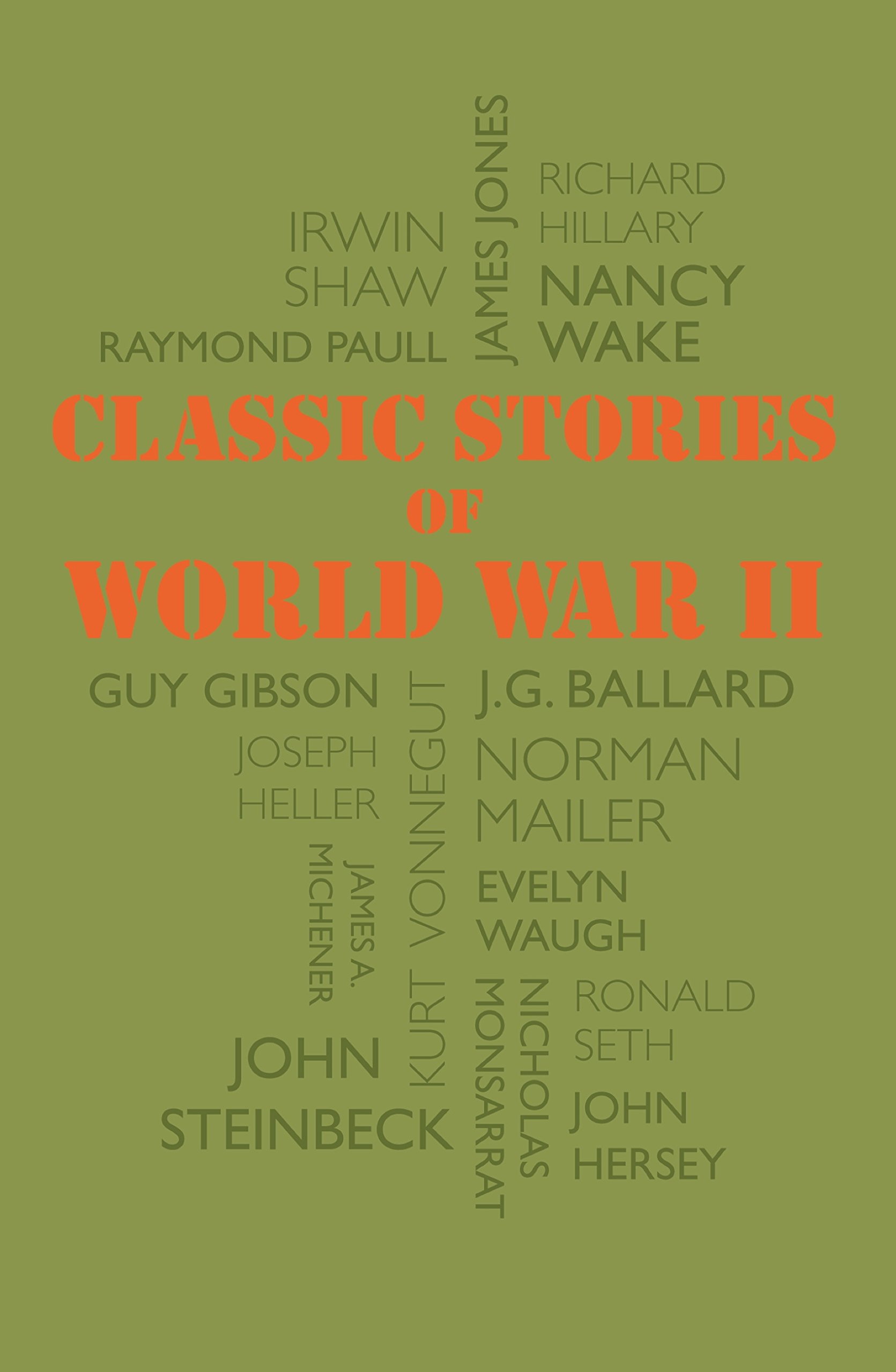
World War II was a global conflict of unprecedented scale, yet its most enduring lessons often reside in the individual experiences of those who lived through it. From the deceptive tactics of the Ghost Army to the incredible survival of last-standing holdouts, these fifteen short stories highlight the courage, ingenuity, and complex moral landscapes of the 1939–1945 era.
The history of World War II is best understood not just through troop movements and treaty signings, but through the remarkable personal accounts of soldiers, spies, and civilians. These 15 stories provide a representative cross-section of the war's diverse theaters, showcasing instances of extreme bravery, technological innovation, and rare moments of humanity amidst global devastation.
The Human Element of World War II History
While traditional military history focuses on "grand strategy"—the movements of armies and the decisions of generals—narrative history focuses on the individual. As of 2026, historical research has shifted significantly toward capturing these "small" stories before the last of the Greatest Generation passes away. These accounts serve as essential case studies in ethics, resilience, and the unpredictable nature of combat.
The following stories have been verified through archival records from institutions such as the National WWII Museum and the Imperial War Museums. They represent a mix of well-known legends and lesser-known incidents that shaped the outcome of the war and the collective memory of the generations that followed.
1. The Ghost Army: The Art of Deception
The 23rd Headquarters Special Troops, known as the "Ghost Army," was a tactical deception unit that used inflatable tanks, sound trucks, and fake radio transmissions to trick the German Wehrmacht. Comprised largely of artists, architects, and sound engineers, they staged over 20 "shows" near the front lines. Their primary goal was to make the enemy believe Allied forces were larger or positioned differently than they actually were. By 2026, their contributions have been fully declassified, revealing how their creative "special effects" saved thousands of lives by drawing enemy fire away from actual combat units.
2. Witold Pilecki: Volunteering for Auschwitz
Polish cavalry officer Witold Pilecki performed one of the most selfless acts of the war: he deliberately allowed himself to be captured by the Nazis to infiltrate the Auschwitz concentration camp. His mission was to gather intelligence and organize a resistance movement from within. Pilecki spent nearly three years inside the camp, smuggling out the "Witold’s Report," which provided the first comprehensive details of the Holocaust to the Western Allies. His bravery is documented by Yad Vashem, highlighting his role as a symbol of Polish resistance against both Nazi and later Soviet oppression.
3. Leo Major: The One-Man Liberator of Zwolle
In April 1945, Canadian soldier Leo Major was tasked with scouting the Dutch city of Zwolle. Rather than just observing, Major decided to liberate the city alone to spare it from artillery bombardment. Throughout the night, he sprinted through the streets, throwing grenades and firing his machine gun to trick the German garrison into thinking a much larger force had arrived. By morning, the Germans had retreated, and Zwolle was free. Major’s refusal of a Distinguished Conduct Medal earlier in the war (because he found the general awarding it "incompetent") only added to his legendary status as a fiercely independent soldier.
4. The Night Witches: Soviet Female Aviators
The 588th Night Bomber Regiment, nicknamed the "Night Witches" by German soldiers, was an all-female Soviet unit that flew wood-and-canvas biplanes. These Polikarpov Po-2 aircraft were slow and obsolete, yet the pilots used this to their advantage. They would glide toward their targets with engines idling to remain silent, dropping bombs before the Germans knew they were there. Despite having no parachutes and flying in freezing open cockpits, they completed over 30,000 missions, becoming some of the most decorated units in the Soviet Air Force.
5. Desmond Doss: The Conscientious Objector
Desmond Doss was a Seventh-day Adventist who refused to carry a weapon or kill an enemy due to his religious beliefs. Serving as a medic during the Battle of Okinawa, Doss stayed atop the 400-foot Maeda Escarpment (Hacksaw Ridge) after his unit retreated. Under heavy fire, he successfully lowered 75 wounded soldiers to safety using a rope system he devised. For his actions, he became the first conscientious objector to receive the Medal of Honor, a feat detailed in the US Army Center of Military History.
6. Nancy Wake: The White Mouse of the Resistance
Nancy Wake was an Australian-born journalist who became a top leader in the French Resistance. Known by the Gestapo as "The White Mouse" for her ability to evade capture, she led a force of 7,000 Maquis fighters in guerrilla warfare against the Nazis. On one occasion, she rode a bicycle over 200 miles through German checkpoints to replace lost radio codes. By 1944, she was the Gestapo's most wanted person, with a 5-million-franc bounty on her head, yet she survived the war as one of the most decorated women of the Allied forces.
7. The Encounter of Charlie Brown and Franz Stigler
In December 1943, 2nd Lt. Charlie Brown’s B-17 bomber was severely damaged over Germany, with half the crew wounded and the tail guns destroyed. German ace Franz Stigler pulled alongside the crippled plane but chose not to fire. Instead, Stigler saw the wounded men inside and remembered his commander’s words: "You are fighter pilots first, last, always. If I ever hear of any of you shooting at someone in a parachute, I'll shoot you myself." Stigler escorted the B-17 to the North Sea, ensuring it reached safety. The two pilots met decades later and remained close friends until their deaths in 2008.
8. "Mad Jack" Churchill: Fighting with a Longbow
Lieutenant Colonel Jack Churchill, often called "Mad Jack," believed that "any officer who goes into action without his sword is improperly dressed." He is the only British soldier credited with a confirmed kill using a longbow during the war. In addition to his bow, he carried a Scottish broadsword and bagpipes into battle. Despite being captured and sent to a concentration camp, he escaped and walked 150 miles to find Allied forces, demonstrating an archaic but effective form of psychological warfare and grit.
9. The Battle of Castle Itter: An Unlikely Alliance
Five days before the war in Europe ended, one of the strangest battles occurred at Castle Itter in Austria. US Army soldiers, led by Captain John C. "Jack" Lee, joined forces with a handful of German Wehrmacht soldiers (who had defected) and French political prisoners to defend the castle against an advancing SS unit. This remains the only time during the war where American and German soldiers fought as allies on the same side. The successful defense saved the lives of several high-profile French captives, including former prime ministers.
10. Virginia Hall: The Limping Lady
Virginia Hall was an American spy working for the British SOE and later the American OSS. Despite having a prosthetic leg (which she named "Cuthbert"), she organized sabotage missions and intelligence networks in occupied France. She was considered by the Germans to be "the most dangerous of all Allied spies." Hall famously hiked over the Pyrenees Mountains into Spain to escape the Gestapo, an agonizing journey for someone with a wooden leg, only to return to France later to help coordinate the D-Day resistance efforts.
11. Hiroo Onoda: The Last Holdout
Intelligence officer Hiroo Onoda was stationed on Lubang Island in the Philippines in 1944. When the war ended in 1945, he refused to believe the reports, viewing them as Allied propaganda. For 29 years, he lived in the jungle, conducting guerrilla activities and survivalist maneuvers. It wasn't until 1974, when his former commanding officer traveled to the island to personally rescind his orders, that Onoda finally surrendered. His story is a profound look at duty, isolation, and the psychological impact of prolonged warfare.
12. The Monuments Men: Saving Western Civilization
The Monuments, Fine Arts, and Archives (MFAA) program was a specialized group of approximately 345 men and women from thirteen nations. Their mission was to protect cultural property in war zones and recover art stolen by the Nazis. In the final months of the war, they discovered massive caches of masterpieces—including works by Michelangelo and Vermeer—hidden in salt mines and castles across Germany and Austria. Their efforts preserved the artistic heritage of Europe for future generations.
13. Lyudmila Pavlichenko: "Lady Death"
Lyudmila Pavlichenko was a Soviet sniper credited with 309 confirmed kills, making her the most successful female sniper in history. After being wounded in 1942, she was sent to the United States on a public relations tour, where she became the first Soviet citizen to be received by a US President (Franklin D. Roosevelt). Her blunt responses to American journalists who questioned her about fashion and makeup rather than her combat experience highlighted the cultural differences in how women's roles in the war were perceived.
14. Operation Mincemeat: The Man Who Never Was
In 1943, British intelligence launched a daring deception to hide the upcoming invasion of Sicily. They took the body of a homeless man who had died in London, dressed him as a Royal Marines officer (Captain William Martin), and equipped him with "secret" documents suggesting an invasion of Greece. The body was dropped off the coast of Spain, where it was found by the Germans. Hitler was completely fooled, diverting thousands of troops to Greece, which allowed the Allied invasion of Sicily to proceed with far fewer casualties than expected.
15. The Christmas Truce of 1944: A Moment of Peace
During the Battle of the Bulge in December 1944, a German woman named Elisabeth Vincken found three American soldiers and four German soldiers at her door in the Hürtgen Forest. Rather than letting them kill each other, she insisted they leave their weapons outside and share a Christmas Eve meal together. For one night, the enemies ate, talked, and rested in peace. The following morning, they shook hands, the Germans gave the Americans a compass and directions back to their lines, and they went their separate ways.
Comparison of Key Figures and Units
The following table summarizes the primary impact and affiliation of the stories mentioned above.
| Name/Unit | Affiliation | Key Achievement | Notable Fact |
|---|---|---|---|
| Ghost Army | USA | Deception / Tactical Ruses | Used inflatable tanks and sound effects. |
| Witold Pilecki | Poland | Intelligence Gathering | Voluntarily entered Auschwitz. |
| Leo Major | Canada | Urban Liberation | Liberated the city of Zwolle alone. |
| Night Witches | USSR | Night Bombing | Flew obsolete plywood biplanes. |
| Desmond Doss | USA | Combat Medical Support | Saved 75 men without firing a shot. |
| Nancy Wake | UK/France | Resistance Leadership | Most wanted person by the Gestapo. |
| Franz Stigler | Germany | Humanitarian Act | Escorted a damaged B-17 to safety. |
| Jack Churchill | UK | Combat / Command | Fought with a longbow and broadsword. |
| Virginia Hall | USA/UK | Espionage | Operated with a prosthetic leg. |
| Hiroo Onoda | Japan | Survival / Duty | Remained at war until 1974. |
Common Questions Regarding WWII Accounts
How are these historical stories verified?
Verification typically involves cross-referencing personal journals, official military "after-action" reports, and testimonies from other witnesses. Organizations like the US National Archives maintain millions of pages of declassified documents that historians use to confirm dates, locations, and outcomes. In cases like the Ghost Army, documents remained classified for decades, meaning the full truth of their actions only emerged in the late 20th and early 21st centuries.
Why do some WWII stories seem "too strange to be true"?
The chaotic nature of a global total war often created unique circumstances where individual initiative mattered more than standard protocol. Figures like Jack Churchill or Leo Major operated in environments where unconventional tactics were sometimes the only way to survive or succeed. Furthermore, the sheer scale of the war (involving over 100 million people) makes the occurrence of "one-in-a-million" events statistically inevitable.
What happened to many of these individuals after 1945?
Many returned to civilian life and did not speak of their experiences for years. For example, the members of the Ghost Army were sworn to secrecy until the 1990s. Others, like Lyudmila Pavlichenko and Witold Pilecki, faced very different fates; Pavlichenko became a historian, while Pilecki was tragically executed by the post-war Polish communist government in 1948, his story suppressed until the fall of the Iron Curtain.
Are there still undiscovered stories from WWII?
Yes. As of 2026, historians continue to find new documents in former Soviet and European archives. Additionally, modern archaeological techniques are helping to locate crash sites and battlefields that provide physical evidence for stories that were previously considered "hearsay" or legend.
Moving Forward: Honoring the Legacy
To gain a deeper understanding of these events, it is recommended to visit primary source repositories or official museums. Reading full-length biographies of figures like Nancy Wake or Witold Pilecki provides the necessary context to understand why they made the choices they did. As we look back from 2026, these stories serve as more than just entertainment; they are a testament to the resilience of the human spirit under the most extreme conditions imaginable. To learn more about specific military records, consult the Smithsonian Institution's historical archives.