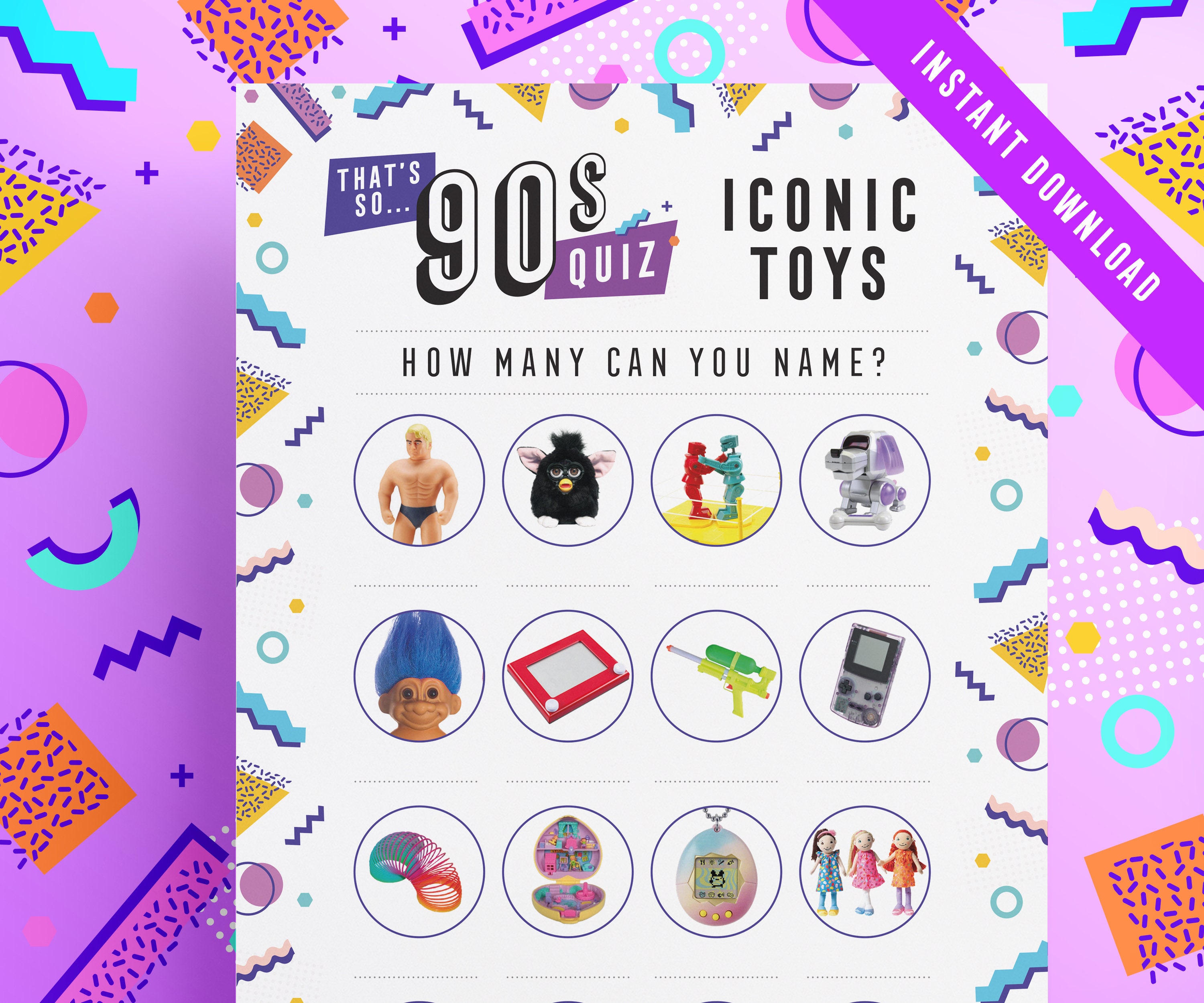
The 10 iconic 90s toys that fundamentally transformed childhood play are Tamagotchi, Furby, Beanie Babies, the Nintendo Game Boy Color with Pokémon, Super Soaker, Nerf blasters, Polly Pocket, Talkboy, Mighty Morphin Power Rangers action figures, and Pogs. These toys introduced digital companionship, speculative collecting, micro-scale worlds, and active competitive mechanics that still define consumer play today.
During the 1990s, the toy industry underwent a structural transformation. Play shifted away from purely static, passive plastic figures toward reactive technology, portable ecosystems, and community-driven social mechanics. To understand how contemporary gaming, smart interactive devices, and modern collector markets operate, one must examine the specific mechanics and behavioral shifts pioneered by the decade's defining releases.
1. Tamagotchi (Bandai, 1996): The Dawn of the Digital Pet
Conceived by Akihiro Yokoi of WiZ and Aki Maita of Bandai, Tamagotchi arrived in Japan in November 1996 and took international markets by storm in 1997. Housed in a compact, egg-shaped plastic fob running on a basic LCD screen and three buttons, Tamagotchi transformed child-toy interactions from open-ended fantasy into time-sensitive, algorithmic caretaking.
TAMAGOTCHI (1996)
- Hardware: 32x16 monochrome dot-matrix LCD
- Controls: 3-button navigation (Select, Confirm, Cancel)
- Engine: Low-power 4-bit microprocessor
- Core Loop:
- Feed
- Clean
- Discipline
- Medicate
The Shift in Play Mechanics
Prior to Tamagotchi, physical dolls required children to supply all narrative projection and emotional stakes. Tamagotchi inverted this relationship. By introducing a continuous real-time clock, the toy demanded attention on its own schedule rather than the child’s. If ignored, the creature suffered, fell ill, and eventually died, leaving behind a tombstone icon.
This loop established several foundational behaviors seen in modern digital interfaces:
- Asynchronous notifications: The device emitted high-pitched piezo beeps demanding immediate user intervention, mirroring modern smartphone notifications.
- Persistent consequence: Decisions made in the morning (such as forgetting a virtual feeding before school) directly determined the creature's developmental evolution by evening.
- Emotional attachment through labor: Players formed deep bonds because the digital asset required active, daily effort to keep alive.
The sheer disruption of Tamagotchi caused widespread school bans across North America and Europe, prompting early discussions regarding child screen dependency and the ethics of synthetic companionship.
2. Furby (Tiger Electronics, 1998): Interactive Animatronics and Biomimicry
Engineered by Caleb Chung and Dave Hampton and released under Tiger Electronics (later acquired by Hasbro) at the 1998 American International Toy Fair, Furby brought complex animatronics out of high-budget theme parks and into mass-market living rooms. Selling over 40 million units in its initial three-year run, Furby was a breakthrough in responsive consumer robotics.
Technical Architecture
Unlike previous speaking toys that relied on internal pull-strings or static cassette loops (such as Teddy Ruxpin), Furby utilized a synchronized system of sensors paired with a single electric motor and a complex gear train:
- Optical and acoustic sensing: Furby featured an infrared transceiver between its eyes for unit-to-unit communication, an ambient light sensor, an inverted mechanical tilt pendulum to register movement and inverted orientation, and a microphone to detect sound thresholds.
- Dynamic biomechanics: A central cam system translated the output of a single motor into coordinated blinking, ear-wiggling, and beak-opening motions that corresponded directly to synthesized speech.
- Simulated language acquisition: Furby started speaking exclusively "Furbish" and gradually integrated English vocabulary over time. While marketed as artificial intelligence, the software actually progressed through pre-programmed temporal thresholds based on the cumulative count of sensor triggers.
Furby reshuffled expectations for consumer technology. It was so convincing in its mimicry that the United States National Security Agency (NSA) banned the toy from its Fort Meade headquarters in 1999 under the mistaken belief that the toy recorded and repeated classified conversations.
3. Beanie Babies (Ty Inc., 1993): Artificial Scarcity and the Collectible Boom
Created by Ty Warner in 1993, Beanie Babies eliminated traditional stiff stuffing in favor of plastic pellets (PVC and later PE beans), allowing the plush toys to be posed naturally. However, the lasting legacy of Beanie Babies lies entirely in Warner's masterclass in behavioral economics, supply-side manipulation, and early internet commerce.
Engineering Market Hysteria
Rather than mass-distributing products through national big-box retailers like Walmart or Toys "R" Us, Ty Warner funneled inventory exclusively through independent gift shops, stationery stores, and boutique specialty retailers. This distributed network made supply tracking opaque and heightened consumer urgency.
TY INC. DISTRIBUTION & VALUATION FEEDBACK LOOP
- Intentional Short Runs
- Boutique-Only Wholesale
- Early Web Secondary Markets
- Retirement Panic
Ty Inc. catalyzed the boom through three deliberate tactics:
- Systematic "Retirements": Without advance warning, Ty would abruptly halt production of a specific mold (such as "Peanut the Royal Blue Elephant"), instantaneously transforming a $5 retail item into a high-demand commodity.
- Micro-Variations: Accidental or deliberate production anomalies—such as mismatched hang-tag generations, misspelled German poem tags, or slight dye variations—created distinct tiers of secondary value.
- Pioneering Digital Web Presence: Ty Inc. launched one of the internet's earliest direct-to-consumer corporate websites in late 1995, using it not to sell directly, but to publish cryptic retirement announcements that fueled secondary trading markets on platforms like eBay.
Beanie Babies altered play by converting toys into speculative financial assets. Children were encouraged by parents to leave tags intact beneath plastic tag protectors, reframing the very concept of play from imaginative tactile interaction to asset preservation.
4. Game Boy Pocket / Color & Pokémon (Nintendo, 1996–1998): Social Play Ecosystems
The original 1989 Game Boy proved the commercial viability of portable video games, but the late-90s hardware iterations—the streamlined Game Boy Pocket (1996) and the backlit-adjacent Game Boy Color (1998)—combined with Satoshi Tajiri’s Pokémon Red and Blue (1998 in North America) changed peer-to-peer play dynamics permanently.
GAME BOY COLOR SYSTEM HIGHLIGHTS
- Processor: 8-bit Sharp SM83 core @ 4.19 / 8.38 MHz
- Display: 2.3-inch reflective thin-film LCD (160x144)
- Palette: 32,768 colors (max 56 concurrent on screen)
- Peripheral: Game Link Cable (synchronous serial comms)
The Transformative Mechanic: The Game Link Cable
Prior to Pokémon, portable gaming was fundamentally an isolated, single-player pursuit. Satoshi Tajiri designed Pokémon around the physical Game Link Cable. By splitting the 151 fictional monsters across two separate cartridge editions (Red and Blue), completion of the game became mathematically impossible without physically meeting another player and negotiating a trade.
This architecture turned schoolyards into decentralized marketplaces. The tactile click of two Game Boys connected via link cable transformed digital data into a physical, social transaction. The dynamic proved that handheld electronics could foster deep offline social networks rather than merely isolate individuals.
5. Super Soaker (Larami / Hasbro, 1990): Pneumatic Power and Active Play
Invented by NASA nuclear engineer Dr. Lonnie Johnson, the Super Soaker (originally patented and marketed briefly as the Power Drencher in 1990 by Larami) completely replaced the puny, trigger-actuated water pistols that had dominated toy aisles for decades.
The Physics of Pressurization
Traditional water guns relied on a small mechanical piston connected directly to the finger trigger, displacing roughly 5 to 10 milliliters of liquid over a range of barely six to eight feet.
Dr. Johnson inverted this system using fluid dynamics:
- Separate pumping reservoir: The user hand-pumped air directly into an integrated pressure chamber containing water (or an external air bladder).
- Energy storage: Rather than relying on instantaneous manual force at the trigger pull, the Super Soaker stored potential energy inside the compressed air reservoir.
- Instantaneous release: Depressing the trigger opened an internal valve, letting the pressurized air force water out of the nozzle under sustained, uniform pressure.
Models like the Super Soaker 50 and the legendary, twin-tank Super Soaker 100 delivered continuous, high-volume streams reaching distances beyond 30 to 40 feet. The toy altered outdoor play by introducing tactical range, team-based territorial play, and physical logistics into outdoor neighborhood games.
6. Nerf Blasters (Kenner / Hasbro, 1991–1995): Indoor Ballistics
While Parker Brothers introduced the original soft polyurethane foam Nerf ball in 1969 with the promise that it "can't hurt babies or old people," the 1990s marked the brand’s historic pivot into mechanical projectile combat. Starting with the Nerf Blast-a-Ball (1989) and accelerating rapidly with the 1991 Nerf Bow 'N Arrow and 1992 Sharpshooter, Nerf codified safe indoor ballistic play.
The Foam Dart Revolution
The breakthrough that elevated Nerf above competing foam dart concepts was the standardization of micro-foam darts tipped with suction cups or flexible rubber heads:
- Spring-piston mechanics: Pulling back a primer compressed a heavy internal spring. Trigger actuation released the spring, pushing a rubber-sealed plunger down an airtight cylinder.
- Air compression barrel: The compressed air was forced through a narrow restrictor, blasting into the hollow base of the foam dart and launching it down the barrel.
- Safe kinetic energy limits: The low mass and high surface area of open-cell polyurethane foam ensured that even high-velocity muzzle discharges dissipated kinetic energy harmlessly upon impact.
Nerf blasters created an entire genre of tactical domestic combat. They allowed children to safely replicate the action dynamics seen in blockbuster action movies and first-person shooter computer games without danger of injury or property damage.
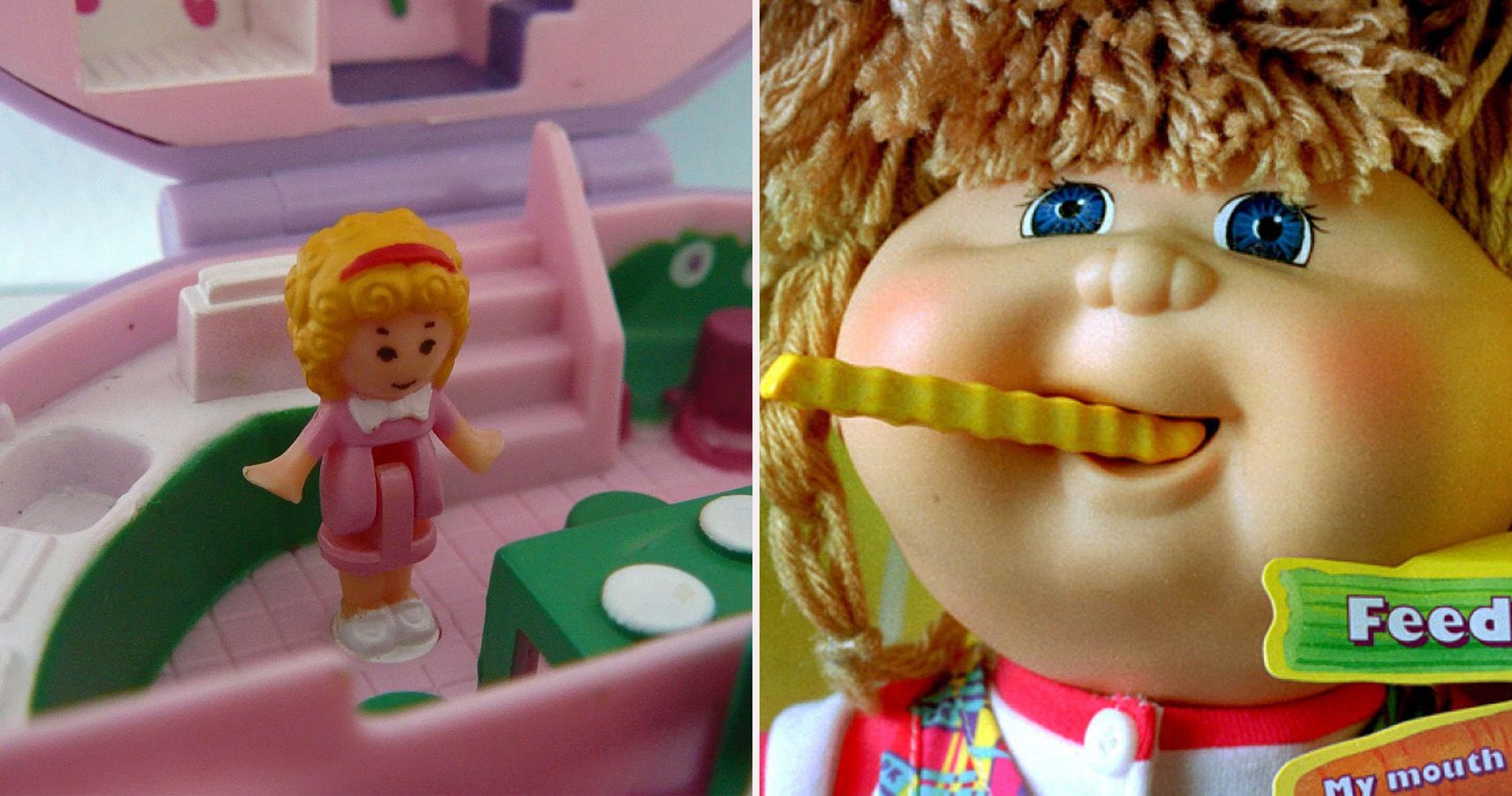
7. Polly Pocket (Bluebird Toys / Mattel, 1989–1998): Micro-Scale Architecture
Invented in 1989 by Chris Wiggs for his daughter using an old makeup powder compact, Polly Pocket was licensed and manufactured by the UK-based Bluebird Toys, rapidly becoming an international phenomenon throughout the 1990s before Mattel acquired the brand in 1998.
The Architecture of Portability
Polly Pocket challenged the traditional doll industry dogma that fashion and pretend play required large, 1:6 scale formats (such as 11.5-inch Barbie dolls) accompanied by massive, room-consuming playsets.
POLLY POCKET DESIGN PRINCIPLES
- Shell: Injection-molded ABS plastic clamshell case
- Scale: Sub-one-inch (<2.5 cm) articulated hard plastic
- Retention: Friction-fit pegs embedded in floors/seats
- Layout: Multi-tier architectural cross-sections
The brilliance of the original Bluebird line was spatial economy:
- Concealed environments: Compacts folded outward to reveal intricate, multi-level environments—castles, ski chalets, hair salons, and beachside villas—complete with working doors, hidden passages, and hinged furniture.
- Spatial mastery: The miniature scale allowed children to hold an entire fictional town inside a school pocket or backpack, enabling discreet play in transit, cars, and classrooms.
- Fine motor manipulation: Manipulating figures less than an inch tall required high finger dexterity, appealing to older children who had aged out of chunkier toddler toys.
When Mattel redesigned the line post-1998 into larger figures with pliable rubber "Quick Click" fashion clothes, collector interest in the original Bluebird micro-compacts surged—a status that remains strong among vintage collectors today.
8. Tiger Electronics Talkboy (1992–1993): Creative Audio Manipulation
Originally designed purely as a non-functioning fictional prop for the 1992 film Home Alone 2: Lost in New York, consumer demand led Tiger Electronics to engineer and release an actual, working Talkboy cassette recorder in 1993.
Mechanics of Audio Manipulation
Standard consumer cassette dictation devices were utilitarian, boxy, and fragile. Tiger Electronics adapted the tech specifically for mischievous, child-led play:
- Variable-speed playback: The unit featured a variable-speed toggle switch that altered the tape transport motor speed. Recording voice at regular speed and playing back in "Slow" dropped the pitch into an adult-sounding baritone (just like Kevin McCallister in the film), while playing in "Fast" produced a high-pitched chipmunk effect.
- Integrated pistol grip and extendable microphone: The Talkboy featured an ergonomic handle with a built-in directional shotgun microphone that could extend outward, encouraging children to run undercover investigative missions and record conversations unnoticed.
- Tactile control panel: Giant, brightly colored mechanical buttons provided direct tactile feedback for rewinding, fast-forwarding, and layering audio over existing magnetic tape tracks.
The Talkboy marked one of the earliest instances where a fictional product from a movie was reverse-engineered into retail reality purely due to grassroots consumer demand. It democratized creative audio production and personal media generation for kids.
9. Mighty Morphin Power Rangers Megazord (Bandai, 1993): Modular Mecha Integration
When Haim Saban imported footage from the Japanese Super Sentai series Kyōryū Sentai Zyuranger and spliced it with American teen scenes to create Mighty Morphin Power Rangers in 1993, retailers severely underestimated product demand. The pinnacle of the toy line was the 1993 Deluxe Dino Megazord manufactured by Bandai.
DINO MEGAZORD COMPONENT ASSEMBLY MATRIX
- Tyrannosaurus: Core Torso / Head Base
- Mastodon: Shoulders / Back / Shield
- Triceratops: Left Foot & Tread Unit
- Sabertooth: Right Foot & Tread Unit
- Pterodactyl: Chest Armor Plate
The Modular Play Loop
Unlike conventional, static action figures that relied entirely on external imagination, the Megazord introduced intricate industrial design mechanics:
- The "Gattack" transformation: Five separate dinosaur vehicles (Zords) functioned as independent, fully articulated toys.
- Mechanical convergence: Following the exact assembly sequence seen on television, all five Zords clicked together through heavy plastic tabs, friction hinges, and spring-loaded locks to form two distinct modes: the rolling Tank Mode and the towering humanoid Megazord.
- Cross-system compatibility: Subsequent releases throughout the decade (such as the Dragonzord and Titanus) featured reverse-compatible connection ports, allowing children to build increasingly massive combined mecha configurations.
This modular system taught mechanical assembly, spatial reasoning, and transmedia fidelity, creating a gold standard for licensed action figure engineering.
10. Pogs & Slammers (World POG Federation, 1993–1995): Tactile Physical Currency
Originating in Hawaii in the 1920s as a game played with milk bottle caps from the Haleakala Dairy's Passion Orange Guava (POG) juice, Pogs exploded into a worldwide schoolyard phenomenon between 1993 and 1995 after being adapted into commercial cardboard discs.
The Anatomy of the Game
The mechanics were deliberately simple, low-cost, and easily scalable:
- The Stack: Players stacked circular cardboard discs face-down in equal numbers.
- The Slammer: A heavier disc made of solid metal, dense brass, or injection-molded acrylic (weighing anywhere from 15 to 50 grams) was hurled downward at the stack.
- The Yield: Any Pog that landed face-up became the property of the thrower when playing "for keeps."
Pogs were accessible to children across every socioeconomic bracket. Because individual packs were inexpensive, almost anyone could participate. The discs evolved into a physical currency traded, won, and wagered on sidewalks.
The cardboard surfaces served as miniature billboards, featuring everything from corporate brand tie-ins and video game mascots to anti-drug messaging and gruesome artistic subcultures. The unregulated gambling aspect ("playing for keeps") prompted rapid, widespread bans across elementary schools globally.
Technical and Cultural Comparison of 90s Play Innovations
The following comparative table illustrates how each of these 10 defining toys revolutionized play through design, mechanics, and cultural behavior, alongside their current status in the collector and vintage marketplace as of 2026.
| Toy / Brand | Primary Release Year | Core Engineering / Play Mechanic | Behavioral & Cultural Shift | 2026 Collector / Market Landscape |
|---|---|---|---|---|
| Tamagotchi | 1996 | Real-time algorithmic loop; 3-button LCD digital companion. | Introduced persistent responsibility; laid early groundwork for screen-time loops. | Active modern releases; pristine 1996 P1 originals command high collector premiums. |
| Furby | 1998 | Multi-sensor animatronics driven by a single motor and cam system. | Popularized consumer-level biomimicry; raised early child-AI surveillance debates. | Strong vintage hacking and repair communities; high demand for sealed original boxes. |
| Beanie Babies | 1993 | Pelleted soft plush; unannounced manufacturing retirements. | Turned play into speculative investing; established early digital aftermarket communities. | Common models carry near-zero value; authenticated generation-tag rarities remain high. |
| Game Boy Color / Pokémon | 1998 | Handheld 8-bit color computing; synchronous Game Link Cable trades. | Transformed isolated video gaming into an active offline social ecosystem. | Surging retro hardware demand; verified original cartridges command premium values. |
| Super Soaker | 1990 | Separated pneumatic manual pump and pressurized liquid release. | Elevated outdoor summer play into high-range tactical team sports. | Original Larami-era models (SS50, SS100) sought after by restoration hobbyists. |
| Nerf Blasters | 1992 | Spring-loaded plunger compression firing kinetic foam projectiles. | Allowed safe, competitive indoor ballistic warfare without physical harm. | Major competitive hobby scene; early vintage designs praised for mechanical simplicity. |
| Polly Pocket | 1989 / 1990s | Sub-inch articulated micro-figures inside folding ABS clamshell cases. | Pioneered micro-scale architecture and portable, travel-friendly playsets. | Original pre-1998 Bluebird compacts trade at high values; modern lines exist at larger scales. |
| Talkboy | 1993 | Variable-speed cassette transport paired with an extendable mic. | Enabled personal audio manipulation, playful surveillance, and creative media skits. | Prized vintage electronic artifact; fully operational rubber drive belts are rare. |
| Power Rangers Megazord | 1993 | Interlocking modular transformable mecha with multi-vehicle click locks. | Standardized modular engineering and physical-to-broadcast narrative play. | Mint-in-box 1993 Deluxe Megazords remain premier centerpieces for toy collectors. |
| Pogs & Slammers | 1993 | Weighted kinetic impact discs flipping low-cost cardboard discs. | Created an ultra-accessible, physical schoolyard trading currency. | Inexpensive bulk market; high-end niche values for rare metal slammers and promotional sets. |
3 Core Trends That Shaped 1990s Toy Design
The success of these ten toys was not accidental. They represent three deep structural shifts in child psychology, manufacturing capabilities, and global media convergence during the decade.
1. The Migration from Static to Responsive Play
Throughout the 1970s and 1980s, responsive toys were largely electromechanical novelties—cumbersome, battery-draining, and prone to gear jams. By the mid-1990s, the plunging cost of microprocessors, LCD screens, and low-energy sensors allowed toy designers to incorporate real-time logic directly into mass-market products.
Tamagotchi and Furby proved that children did not simply want an object that moved; they wanted an object that seemed to care whether the child was interacting with it. This demand for dynamic feedback laid the groundwork for today's connected, smart-device play environments.
2. Physical Toys as Social Networks
Before modern online multiplayer lobbies, the schoolyard was the physical network. Products like Pogs, Beanie Babies, and Pokémon via the Game Boy Link Cable converted physical items into social protocols.
To complete a collection or earn status, children had to communicate, negotiate, assess value, and execute trades face-to-face. These toys succeeded because the physical product served as an entry pass to an ongoing peer-group dynamic rather than an isolated play experience.
3. Transmedia Convergence and Movie Tie-in Realism
In previous decades, licensed toys were often generic molds quickly branded with a licensed sticker or logo. In the 1990s, toys mirrored their on-screen counterparts with unmatched fidelity:
- The Talkboy existed only because a Hollywood prop captivated audiences so thoroughly that consumer pressure forced its physical production.
- The Megazord demanded precise, show-accurate mechanical transformations, meaning engineering blueprints had to align seamlessly with broadcast television footage.
This level of transmedia harmony set a standard that entertainment franchises still follow today.
Best Practices for Preserving and Authenticating 90s Vintage Toys
For collectors, educators, and archivists handling original 1990s play artifacts, age-related degradation poses a growing challenge. Preserving hardware from this specific decade requires targeted maintenance:
1. Battery Corrosion Mitigation
The single greatest threat to 1990s electronic toys (such as the Game Boy, original Furbies, and Talkboys) is alkaline battery leakage.
- Inspect the terminals: Potassium hydroxide leaks from forgotten AA or AAA batteries, forming white, crusty deposits that eat through nickel plating and copper traces.
- Neutralization technique: Clean oxidized contacts using a cotton swab moistened with white vinegar or a mild citric acid solution to neutralize the alkaline base. Rinse with 99% isopropyl alcohol and dry thoroughly.
- Storage rule: Always remove coin cells (such as the LR44 batteries found in original Tamagotchis) and standard alkaline batteries before storing hardware long-term.
2. Elastomer and Drive Belt Restoration
Mechanical toys of the 1990s relied on vulcanized rubber drive belts, pinch rollers, and silicone button membranes.
- Over decades, cassette players like the Talkboy experience belt degradation: the rubber either hardens and snaps or turns into a sticky, black goo.
- Clean degraded drive pulleys using mineral spirits or isopropyl alcohol, and install modern silicone or neoprene belts to restore motor torque.
- Treat brittle rubber parts on water toys and blasters with pure silicone oil to restore flexible seals without dissolving the underlying polymers.
3. Preserving Printed Materials and Plastics
- Combatting photolytic degradation: The ABS plastics used in classic Super Soakers, Game Boys, and Polly Pocket compacts contain brominated flame retardants. UV light exposure causes these plastics to turn yellow or brittle over time. Store artifacts away from direct sunlight in climate-controlled environments kept below 70°F (21°C) and under 50% relative humidity.
- Tag preservation: For Beanie Babies, authentic hang tags from generations 1 through 3 represent up to 90% of the item's total market value. Use acid-free acrylic tag protectors that prevent card creasing and eliminate UV ink fading.
Frequently Asked Questions
Why did elementary schools ban so many 90s toys like Tamagotchi and Pogs?
Schools banned Tamagotchi because its real-time alert beeps interrupted classes, and students frequently became distressed when unable to care for their virtual pets during school hours. Pogs were banned primarily because the "playing for keeps" mechanic met the legal and administrative definitions of schoolyard gambling, which led to frequent peer disputes and lost belongings on school grounds.
How did the original 1998 Furby simulate learning English?
Furby did not possess true machine learning or speech recognition. Its internal ROM contained both Furbish phrases and English words. The software tracked the total count of sensor inputs triggered over time (petting, tilting, sound detection). As Furby hit specific usage counts, its program swapped out Furbish phrases for pre-recorded English equivalents, creating the convincing illusion that the toy was learning language from its owner.
Are original 90s Beanie Babies actually worth thousands of dollars today?
The vast majority of mass-produced Beanie Babies are worth between $1 and $5 today. The speculative bubble burst in the late 1990s due to extreme overproduction. Only authenticated early generation releases (Generations 1 to 3 hang tags), factory production errors on specific early models, or extremely limited promotional runs (such as the original royal blue Peanut the Elephant) hold significant value among serious collectors.
What made Dr. Lonnie Johnson's Super Soaker design so revolutionary?
Before the Super Soaker, water guns relied entirely on direct finger-trigger pumping, which pushed minimal water volume over short distances. Dr. Johnson engineered a system that used a manual pump to compress air inside an internal chamber over several cycles. The stored pressure pushed water out in a powerful, continuous stream at the pull of a trigger, achieving ranges of up to 40 feet.
How can you spot a counterfeit vintage Polly Pocket compact?
Authentic vintage Polly Pockets produced by Bluebird Toys feature crisp copyright markings molded directly into the underside of the plastic shell (typically "Bluebird Toys PLC, Swindon, England" alongside a production year). Counterfeits often exhibit blurry painted facial details, ill-fitting hinges that do not snap securely shut, softer plastics, and unbranded underside surfaces lacking standardized mold stamps.
What to Do Next
To explore, catalog, or begin preserving iconic 1990s toys, start with these actionable steps:
- Audit your vintage electronics for battery safety: If you have original Game Boys, Tamagotchis, Talkboys, or electronic action figures stored away, remove all batteries immediately. Clean minor terminal corrosion with a cotton swab and white vinegar, followed by a thorough flush using 99% isopropyl alcohol.
- Consult authentic reference materials: Before buying or selling items like Beanie Babies, vintage Polly Pockets, or classic video game cartridges, reference verified price guides, such as historical auction sales databases and dedicated collector resources like the National Toy Hall of Fame archives at The Strong National Museum of Play. Avoid unverified social media listings that quote inflated asking prices rather than settled sale prices.
- Store collections properly: Keep vintage plastics, printed tags, and fabrics in UV-filtering, acid-free display cases stored in temperature-stable environments to prevent plastic yellowing, tag dry-rot, and rubber seal failure.