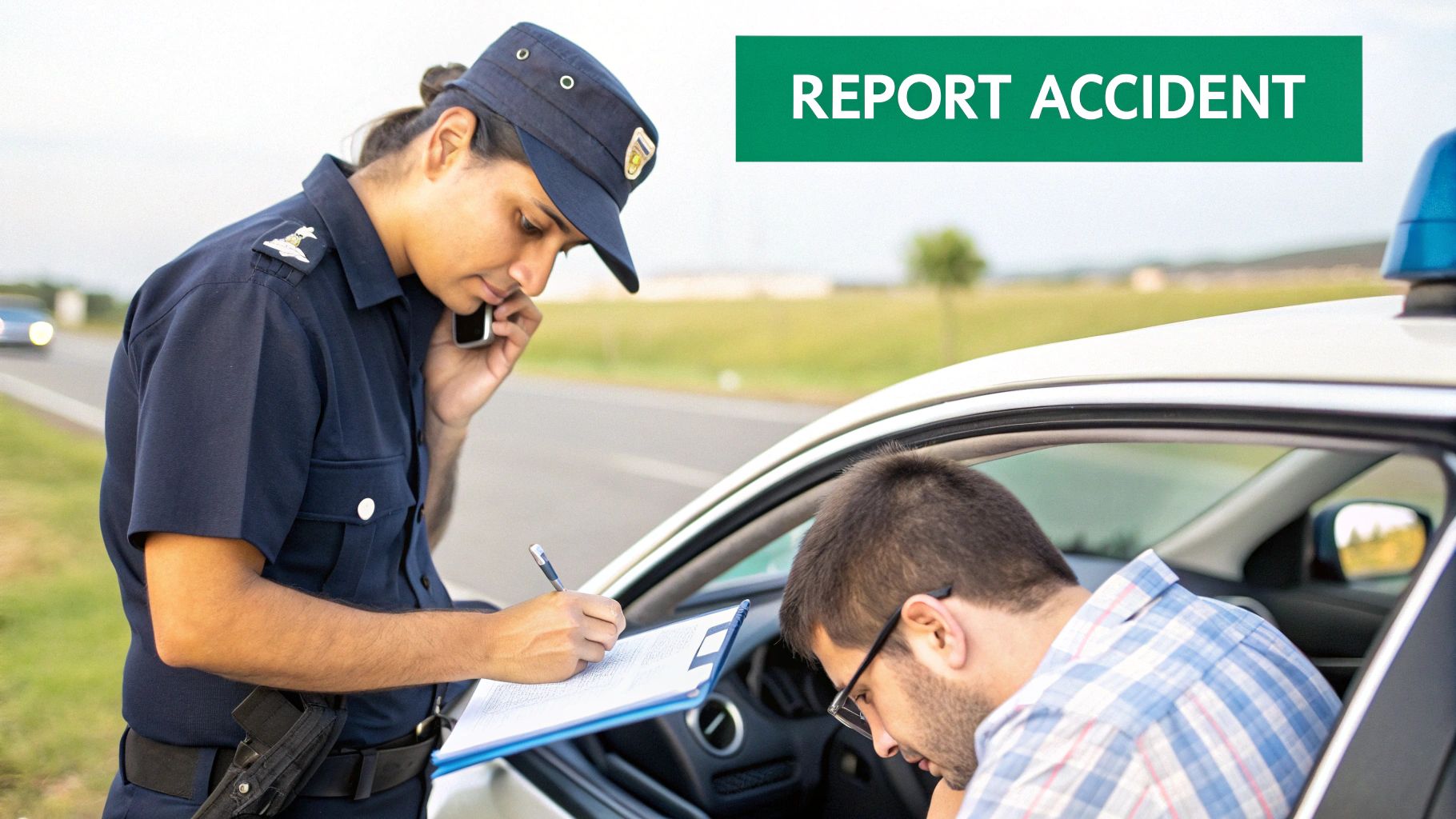
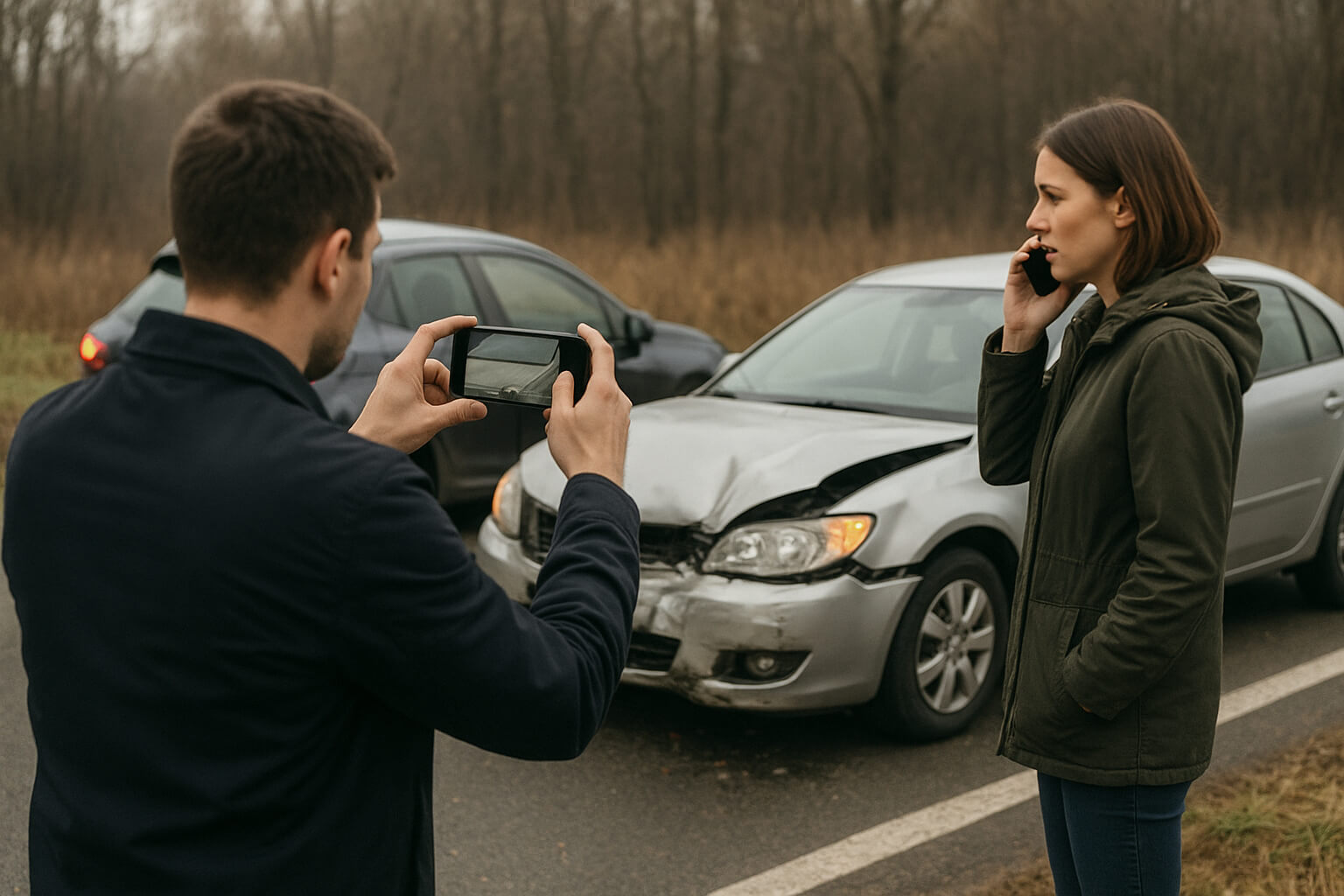
If you suspect you hit a car, stop immediately to inspect both vehicles for damage. If impact occurred, exchange information with the other driver or leave a contact note if the car is parked. You should notify your insurance provider to protect against future liability, even if you do not file a formal claim.
Uncertainty following a potential vehicle collision is a common and stressful experience. Whether it was a perceived "thump" in a parking lot or a close call on a narrow street, the actions you take in the moments following the incident are critical for your legal standing and your insurance coverage. In 2026, with the prevalence of high-definition dashcams and municipal surveillance, leaving the scene of even a minor "suspected" accident carries significantly higher risks than in previous decades.
Immediate Actions: The "Stop and Inspect" Protocol
The moment you feel or hear a potential impact, your first obligation is to stop your vehicle in a safe location. Even if you are on a busy highway, you should signal and pull over to the shoulder as soon as it is safe to do so. In a parking lot, find a spot immediately. Failing to stop when you believe an accident has occurred is the primary criteria for a "hit and run" charge, regardless of how minor the damage might be.
Once stopped, conduct a physical inspection of your own vehicle. Look for fresh scratches, paint transfer (where the color of the other car rubbs off on yours), or indentations. If your car shows no signs of impact, you should still attempt to locate the other vehicle involved. If you find the other car, inspect its exterior. In many modern 2026 vehicle models, even a low-speed impact can trigger internal sensor errors or "hidden" damage behind plastic bumpers that may not be immediately visible as a dent.
If you are certain there was contact, you must attempt to locate the owner. If the vehicle is occupied, exchange names, phone numbers, and insurance information. If the vehicle is parked and unattended, you are legally required in almost every jurisdiction to leave a written note in a conspicuous place. This note should include your name, contact information, and a brief explanation of what happened. Taking a photo of the note on the windshield serves as your evidence that you fulfilled your legal duty to notify.
The Legal Implications of Leaving the Scene
The legal definition of a hit and run does not always require "intent" to flee; in many states, it simply requires that an accident occurred and the driver failed to stop. If you "think" you hit a car and decide to drive away because you don't see immediate damage, you are taking a massive legal gamble.
In 2026, the density of recording devices is at an all-time high. Between Tesla's Sentry Mode, standard integrated dashcams in most new vehicles, and "Smart City" traffic cameras, the likelihood of a minor collision being recorded is nearly 90% in urban areas. If a witness or a camera captures your license plate leaving the scene, law enforcement may contact you days later. At that point, "I didn't think I hit them" is rarely a valid legal defense.
A hit and run conviction can result in:
- Criminal Charges: Depending on the state and the extent of the damage, this can range from a misdemeanor to a felony.
- License Suspension: Most DMVs trigger an automatic suspension for leaving the scene of an accident.
- Insurance Cancellation: Many carriers will non-renew or immediately cancel a policy if the driver is convicted of a hit and run, as it signals high moral risk.
Assessing Damage and the "Paint Transfer" Test
When you are unsure if contact was made, the most reliable physical evidence is paint transfer. Car paint is applied in layers, and the friction of a collision often causes the top coat of one vehicle to adhere to the surface of the other.
Check the "strike zone" on your vehicle—usually the corners of the bumpers, the side mirrors, or the door panels. Run your hand over the area; if it feels rough or looks like a different color than your car's factory paint, contact definitely occurred. If you find only a "scuff" that can be wiped away with a finger, it might just be rubber from a bumper guard, but it still qualifies as an accident if the underlying paint is compromised or the panel is deformed.
Furthermore, modern vehicles are equipped with Advanced Driver Assistance Systems (ADAS). If you hit a car, even lightly, it may have misaligned a radar sensor or an ultrasonic park-assist sensor. These repairs are notoriously expensive, often exceeding $1,000 for a single sensor calibration. This is why "minor" taps in 2026 are handled much more formally by insurance companies than they were a decade ago.
Why You Should Notify Your Insurance Company
A common mistake drivers make is failing to report a minor incident to their insurance company because they plan to "pay out of pocket" or because they aren't sure if the other driver will notice. This is a violation of the "Duty to Report" clause found in almost every standard auto insurance policy.
The Difference Between Notification and a Claim
There is a technical distinction between notifying your insurer and filing a claim. When you notify them, you are essentially saying, "An event occurred, I am not asking you to pay for anything right now, but I want this on the record."
By notifying your insurer, you protect yourself in case the other driver develops "late-onset" injuries or discovers hidden mechanical damage weeks later. If the other driver suddenly sues you for $10,000 in damages three months from now and you never told your insurance company about the incident, the insurer may have the right to refuse to defend you or pay the claim because you breached the contract by not reporting the accident promptly.
Impact on Premiums
In 2026, many insurance companies use sophisticated "telematics" and risk-scoring algorithms. A simple notification where no payout is made (a "zero-dollar claim") typically has a negligible impact on your premiums compared to an at-fault accident where the company pays for repairs. Furthermore, many policies include "small accident forgiveness," which may prevent your rates from rising at all if the damage is below a certain threshold (often $500 to $1,000).
Step-by-Step: What to Do After a "Suspected" Accident
If you find yourself in a situation where you are unsure if you hit a car, follow these specific steps to ensure you are protected:
- Document the Scene: Even if you think there is no damage, take high-resolution photos of your car and the other car's relevant panels. These photos should have timestamps (standard in 2026 smartphone metadata).
- Look for Witnesses: If anyone is nearby, ask if they saw or heard anything. Get their contact information. Their testimony that "it didn't look like they touched" can be invaluable.
- Check for Dashcam Footage: If your car has a 360-degree camera system or an aftermarket dashcam, save the last 10 minutes of footage immediately. This provides objective proof of the distance between vehicles.
- Wait or Leave a Note: If the car is parked, wait for the owner for at least 10–15 minutes. If they don't return, leave the note mentioned previously.
- File a "Desk Report" with Police: In many jurisdictions, you can file a non-emergency police report online for minor incidents. This creates a legal paper trail showing you did not intend to flee.
- Call Your Agent: Explain that you think there might have been a minor contact, but you aren't sure. Ask them to note it on your file without opening a formal claim unless the other party contacts them.
Comparing Outcomes: Reporting vs. Not Reporting
| Feature | Not Reporting (Risky) | Reporting (Safe) |
|---|---|---|
| Legal Status | Potential Hit and Run charges if caught. | Full compliance with the law. |
| Financial Risk | Unlimited personal liability if sued. | Insurance covers legal defense and damages. |
| Policy Standing | Possible cancellation for breach of contract. | Policy remains in good standing. |
| Premium Impact | No immediate change (unless caught). | Possible minor increase or no change. |
| Future Peace of Mind | Constant worry about a "knock on the door." | The issue is documented and handled. |
Handling the "Phantom" Hit: When There Is No Other Car
Sometimes, you might think you hit a car, but upon inspection, you realize you actually hit a curb, a pole, or a pothole. These are categorized as "single-vehicle accidents."
If you have collision coverage, your insurance will pay for these repairs, minus your deductible. However, if the damage is minor (less than your deductible plus a couple of hundred dollars), it is usually financially wiser to pay for the repairs yourself. In 2026, the average deductible is approximately $500 to $1,000. If a bumper scuff costs $700 to fix and your deductible is $500, filing a claim to save $200 is rarely worth the potential premium increase over the next three years.
Dealing with Fraudulent Claims
One of the greatest risks of "thinking" you hit a car is encountering a dishonest driver who takes advantage of your uncertainty. If you leave a note or exchange info, a dishonest person might claim that you caused significant structural damage that existed long before the encounter.
This is why documentation is paramount. If you took photos showing only a tiny scratch, and the other driver presents a bill for a full transmission replacement, your insurance company's adjusters will use your photos to fight the fraud. Without your own documentation, it becomes your word against theirs, and insurance companies often settle these cases by paying out, which then negatively affects your driving record.
Frequently Asked Questions
What if I realized I hit the car only after I got home?
You should return to the scene immediately if possible. If the car is gone, you should go to the local police station and report the incident. Explain that you weren't certain at the time but realized there was damage once you got into better lighting. This proactive honesty usually prevents criminal hit-and-run charges.
Does "no damage" mean "no accident"?
Legally, no. While most people won't pursue a claim for zero damage, the act of hitting the vehicle is the triggering event for the duty to stop. If a witness reports you, the police won't care if there was damage; they will care that you didn't stop to check.
How long do I have to report the accident to insurance?
Most policies require "prompt" notification, usually interpreted as within 24 to 72 hours. Waiting weeks or months to report an incident can give the insurer grounds to deny coverage for any resulting claims.
If I leave a note and the person never calls, am I in the clear?
Generally, yes. By leaving your information, you have fulfilled your legal obligation. Keep the photos of the note and the vehicle for at least three years, as that is the standard statute of limitations for property damage in many regions as of 2026.
Will my insurance go up if I just ask them a question about a potential hit?
Simply asking your agent a "hypothetical" question should not affect your rates. However, if you provide specific details like the date and location, they may be required to document it as an "incident." It is often best to speak with your independent agent (if you have one) rather than the corporate claims hotline for initial advice.
Final Recommendation
If you are currently questioning whether or not you hit a vehicle, the safest and most professional course of action is to treat it as if you did. The cost of a minor premium increase or a small repair bill is significantly lower than the legal, financial, and professional costs of a hit-and-run investigation. Take photos, notify your insurance provider of the "potential" incident, and maintain a paper trail. In the high-surveillance environment of 2026, transparency is your best defense against both legal trouble and insurance complications.