Online art therapy certificate programs offer specialized training for mental health professionals, educators, and social workers looking to integrate creative arts interventions into their clinical or therapeutic practice. These programs provide a structured pathway to learn the principles of visual expression as a therapeutic tool, though they are distinct from master’s degrees required for state-level licensure as a Registered Art Therapist (ATR).
Distinguishing Certificate Programs from Professional Licensure
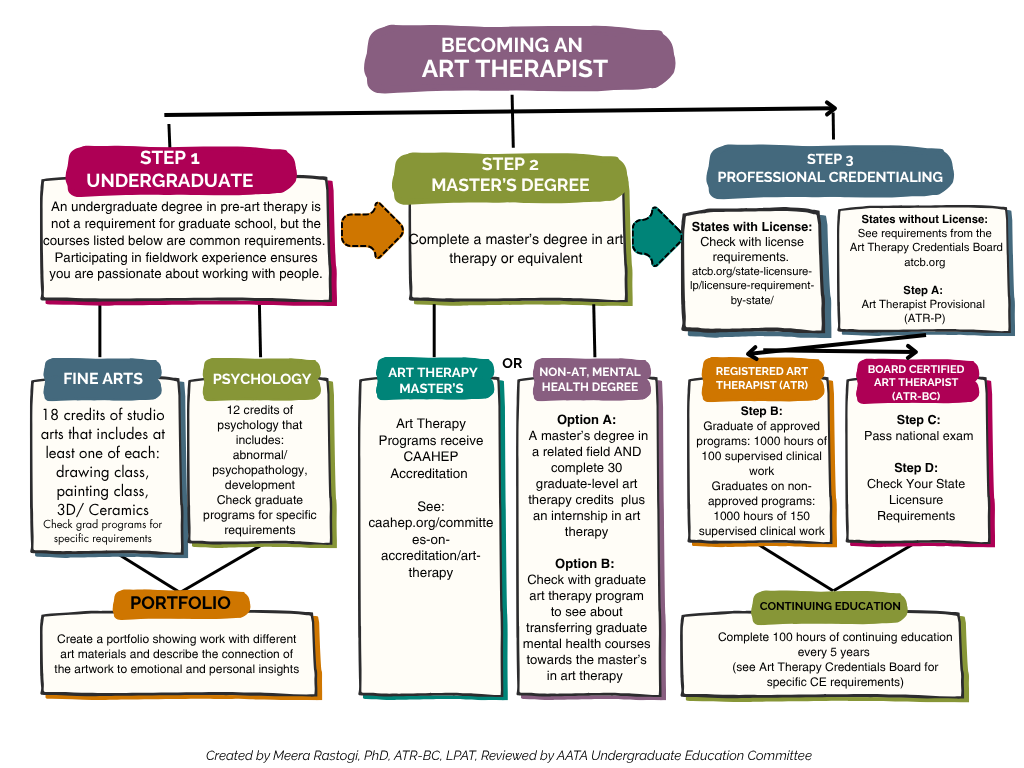
A fundamental ambiguity often surrounds the term "art therapy certificate." It is critical to clarify that completing an online certificate program does not automatically grant an individual the title of "Art Therapist" or provide the credentials necessary to practice psychotherapy independently. In most jurisdictions, including across the United States and Canada, the title of Art Therapist is a protected professional designation that requires a Master’s degree from an institution accredited by the Commission on Accreditation of Allied Health Education Programs (CAAHEP), along with specific supervised clinical hours and a national board certification exam (e.g., the Art Therapy Credentials Board or ATC).
Certificate programs are primarily designed as "post-graduate" or "continuing education" opportunities. They are best suited for individuals who already possess a license in a mental health field—such as clinical social workers, licensed counselors, or psychologists—who wish to supplement their existing skill sets with art-based interventions. By understanding this distinction, you can better align your career goals with the appropriate educational investment.
Core Components of Online Art Therapy Training
Online certificate programs typically utilize a hybrid model, combining asynchronous coursework with synchronous virtual meetings to accommodate working professionals. The curriculum is generally divided into several key pillars of study.
Foundations and Theoretical Frameworks
Most reputable programs begin with the history and theory of art therapy. This includes studying the psychological underpinnings of why creative expression aids in emotional regulation and self-discovery. Students learn how to interpret symbols, understand the "third-hand" role of the therapist, and apply developmental theories to client artwork.
Clinical Applications and Modalities
These modules focus on the practical application of art media. You will explore how different materials—such as clay, paints, collage, or digital media—impact the nervous system and emotional state. Programs often cover how to facilitate sessions for specific demographics, such as trauma survivors, geriatric populations, or adolescents in school settings.
Ethical and Legal Considerations
Working with art as a diagnostic or therapeutic tool carries specific ethical requirements regarding the storage of physical artwork, client confidentiality, and the potential for dual-relationships. Online programs must emphasize the legal standards for documenting creative interventions within standard medical records.
Evaluating Program Quality and Credibility
Because the field of online education has expanded rapidly, not all certificates are viewed equally by employers or professional boards. When researching programs, prioritize those offered by regionally accredited universities or institutions recognized by major professional associations.
- Regional Accreditation: Ensure the institution holds proper accreditation within its country. This ensures that the credits earned carry weight in the professional community.
- Faculty Expertise: Look for programs where faculty are credentialed as Art Therapists (ATR-BC) or licensed mental health professionals with a documented history of clinical research.
- Curriculum Transparency: A high-quality program should clearly outline the total credit hours, the nature of the supervision (if applicable), and whether the program is designed to meet specific continuing education unit (CEU) requirements for your state or province.
- Student Support: Assess whether the program offers virtual office hours, access to academic archives, and, importantly, peer-to-peer discussion boards to facilitate the sharing of clinical experiences.
Comparison of Program Types
| Program Type | Target Audience | Primary Goal | Licensure Pathway |
|---|---|---|---|
| Graduate Certificate | Licensed clinicians | Skill integration | No (Continuing Education) |
| Foundational Course | Educators/Caregivers | Creative literacy | No |
| Master’s Degree | Aspiring therapists | Professional practice | Yes (Primary Pathway) |
| Workshops/Short-form | General interest | Personal exploration | No |
Operational Considerations for Remote Learners
Participating in an online program requires a dedicated physical and digital space. Unlike theoretical psychology courses, art therapy requires the physical manipulation of materials. Even when learning online, you must be prepared to invest in your own "studio kit."
The Physical Studio Requirement
Many programs require students to engage in "experiential learning," where you perform the same art interventions you are learning to facilitate. You will need a designated space that is quiet, well-lit, and equipped with a variety of basic art supplies. Your instructors may require you to document your process through photography or digital scanning, which necessitates a basic level of technical proficiency.
Technical and Scheduling Demands
Most online programs use Learning Management Systems (LMS) such as Canvas, Blackboard, or Moodle. You should ensure your home workstation meets the minimum hardware requirements to handle video streaming and high-resolution image uploads. Furthermore, if the program includes live sessions, verify the time zone alignment to ensure you can participate in real-time interactions, which are often the most valuable part of the cohort-based learning experience.
Common Misconceptions and Risks
A common pitfall is the belief that a certificate serves as a shortcut to bypass the rigorous supervised hours required for clinical practice. Attempting to market oneself as an "Art Therapist" with only a certificate can lead to significant legal and ethical complications. In many jurisdictions, misrepresenting one's credentials in a clinical setting is a violation of the state board’s code of ethics and can result in the loss of your primary license (e.g., your LCSW or LPC license).
Another risk involves the lack of supervision. A certificate program generally does not provide the same depth of clinical supervision as a full graduate program. If you are using these skills with vulnerable populations, ensure that you have access to a clinical supervisor who is familiar with art therapy principles to guide your casework.
Integrating Art Therapy into Your Practice
Once you have completed your certificate, the next step is the gradual integration of these methods into your existing work. Start by utilizing low-stakes interventions, such as "mindful doodling" or "mandala work," as warm-up exercises in group or individual sessions. Always prioritize the client's comfort; art-making can be inherently vulnerable, and not every client will be ready to engage with non-verbal modalities immediately.
Maintain a log of your successes and challenges. Documenting how clients respond to specific prompts will help you build your own "repertoire" of interventions. By operating within your scope of practice and adhering to the ethical guidelines of your primary profession, you can successfully leverage your certificate to provide more holistic, creative, and effective care to those you serve.
Frequently Asked Questions
1. Does an online certificate allow me to call myself an Art Therapist? No. The title of "Art Therapist" is legally protected and typically requires a master’s degree from an accredited program, plus specific clinical supervision hours. An online certificate is for professional development, not a substitute for formal licensure.
2. Can I use these certificates to meet Continuing Education (CE) requirements? Often, yes. Many online certificate programs are designed to provide CE credits recognized by state boards for social workers, counselors, and psychologists. Always verify that the specific provider is an approved CE sponsor for your state licensing board before enrolling.
3. What supplies will I need for an online course? While requirements vary by syllabus, most programs expect you to have a foundational kit including drawing paper, charcoal, oil pastels, acrylic paints, and a way to document work digitally. Some programs may provide a recommended list or partner with suppliers for specialized kits.
4. Are these programs as effective as in-person training? For the theoretical and academic components, online programs are highly effective. However, the lack of in-person, group art-making environments means you may need to seek out local peer-support groups or in-person workshops to gain the full experience of the "group dynamic" that is central to many art therapy models.
5. How much do these programs typically cost in 2026? Costs vary significantly based on the institution. A certificate program can range from $2,000 to over $10,000. Look for transparent pricing structures that include all fees, and avoid programs that do not provide a clear breakdown of tuition vs. material costs.
Next Steps for Prospective Students
To select the right program, start by reviewing the continuing education requirements set by your local professional board. Once you identify the number of credit hours you need, search for programs that emphasize the specific populations you work with—whether that is veterans, children, or geriatric care. Finally, reach out to the program’s admissions office to request a syllabus. Reviewing the course schedule will help you determine if the workload is manageable alongside your current professional responsibilities.