The Arizona Commerce Authority (ACA) serves as the primary economic development agency for the state, but it does not administer, regulate, or manage workers’ compensation insurance policies. Business owners seeking to comply with Arizona’s mandatory workers’ compensation laws must instead interact with the Industrial Commission of Arizona (ICA), which oversees the state’s regulatory framework for employer insurance coverage.
Understanding the Regulatory Landscape: ICA vs. ACA
It is a common point of confusion for new business owners to conflate the Arizona Commerce Authority with the Industrial Commission of Arizona. While the ACA provides excellent resources for business registration, licensing guidance, and economic growth incentives, its mandate is focused on development, recruitment, and commerce infrastructure.
The Industrial Commission of Arizona (ICA) is the state agency with the legal authority to enforce Arizona’s workers’ compensation statutes under Title 23 of the Arizona Revised Statutes. If you are an employer, your interaction regarding workers' compensation—ranging from proving coverage to understanding claims—will be entirely with the ICA, not the ACA. Understanding this distinction is the first step in ensuring your business remains compliant and avoids the significant financial penalties associated with being uninsured.
Arizona’s Legal Mandate for Workers’ Compensation
Arizona law is strict regarding the requirement for workers’ compensation insurance. Under Arizona Revised Statute § 23-901, almost every employer in the state is required to maintain workers’ compensation coverage for their employees. This is a "no-fault" system, meaning the employee is entitled to benefits regardless of who caused the workplace accident, provided the injury or illness occurred within the scope of their employment.
Who Must Have Coverage?
In the state of Arizona, if you hire even one employee—full-time, part-time, seasonal, or temporary—you must secure workers' compensation coverage. There are very few exceptions to this rule. Independent contractors, provided they are truly independent and not misclassified employees, generally do not require coverage. However, the definition of an independent contractor in Arizona is legally rigorous. Relying on a label in a contract is insufficient; the ICA evaluates the actual nature of the relationship, the level of control exercised over the worker, and the economic dependency of the worker on the business.
Consequences of Non-Compliance
Operating a business in Arizona without workers' compensation insurance is a serious offense. If an employee is injured while an employer is uninsured, the employer faces:
- Civil Liability: The employer can be sued in court for damages, where the standard defenses (such as contributory negligence or assumption of risk) are essentially removed.
- Regulatory Fines: The Industrial Commission of Arizona can impose significant administrative fines for failure to maintain coverage.
- Criminal Penalties: Failure to insure is a criminal offense under state law, which can lead to prosecution.
- Direct Financial Responsibility: The Special Fund Division of the ICA may pay the injured employee's benefits and then seek full reimbursement from the uninsured employer, including interest and legal fees.
How to Obtain and Verify Coverage
Securing workers' compensation in Arizona is a market-driven process. The state does not provide the insurance itself; rather, it regulates the private insurance market that provides these policies.
Steps to Acquire Insurance
- Assess Your Business Risk: Contact a licensed commercial insurance broker who specializes in Arizona business insurance. They can evaluate your payroll, industry classification codes (NCCI codes), and risk profile to find the most competitive premiums.
- Select an Authorized Carrier: Ensure the insurance company you choose is authorized by the Arizona Department of Insurance and Financial Institutions to write workers' compensation policies in the state.
- Formalize the Policy: Once the policy is bound, your insurance carrier will submit the proof of coverage to the ICA. This is a critical step because it creates the official record of your compliance.
- Post Required Notices: Arizona law requires employers to post the "Notice to Employees" (Worker’s Compensation Insurance) in a conspicuous place where employees can easily view it. This document informs staff of their rights and your coverage provider.
Table: Comparison of Coverage Options for Arizona Employers
| Feature | Private Insurance Carriers | Self-Insurance (Qualified) |
|---|---|---|
| Availability | Open to all qualifying businesses | Requires strict financial vetting by the ICA |
| Primary Benefit | Predictable monthly/annual premiums | Potential cost savings for large, low-risk firms |
| Administrative Burden | Managed by the carrier | Significant internal management requirements |
| Requirements | Standard business registration | Large cash deposits or surety bonds mandated by law |
| Suitability | Most small to medium-sized businesses | Only for large corporations with high stability |
The Role of the Special Fund Division
When an employer fails to provide required insurance, the injured worker is not left without recourse. The Industrial Commission of Arizona manages the Special Fund Division. This fund acts as a safety net, ensuring that workers who are injured while working for an uninsured employer still receive medical care and indemnity benefits.
However, the existence of this fund does not relieve the employer of their obligations. The Special Fund is entitled to recover all costs from the uninsured employer. In 2026, the enforcement mechanisms for recovering these costs remain robust, with the ICA utilizing liens, asset seizure, and administrative garnishment to collect debts owed to the state.
Addressing Common Misconceptions
"I am a Sole Proprietor; do I need insurance?"
Generally, sole proprietors and partners are not required to cover themselves. However, the moment you hire an employee, the requirement shifts. Furthermore, many general contractors or project owners in Arizona will require you to hold a policy as a condition of your contract, even if you are a sole proprietor, to protect themselves from liability.
"Can I use an out-of-state policy?"
If you have employees based in Arizona, your workers' compensation policy must specifically cover them in the state of Arizona. A policy issued in another state may not automatically satisfy Arizona’s regulatory requirements unless the policy includes an "other states" endorsement specifically naming Arizona. Always verify your policy declaration page with your agent.
"Does the ACA provide grants for insurance costs?"
The Arizona Commerce Authority offers various economic development programs and tax credits, such as the Quality Jobs Tax Credit. However, these programs are separate from the operational costs of running a business, such as workers' compensation premiums. Businesses should not expect the ACA to offset insurance premiums, as these are considered standard costs of doing business.
Frequently Asked Questions
1. Does the Arizona Commerce Authority manage my workers' compensation claims?
No. The Arizona Commerce Authority is an economic development agency. All workers' compensation claims, disputes, and compliance issues are managed by the Industrial Commission of Arizona (ICA).
2. How do I prove to a client that I have valid coverage?
Your insurance carrier will provide you with a "Certificate of Insurance" (COI). You should provide this document to any client or general contractor who requires proof of your coverage. If you need to verify your own standing with the state, you can check your status through the Industrial Commission’s online resources.
3. What happens if I misclassify an employee as an independent contractor?
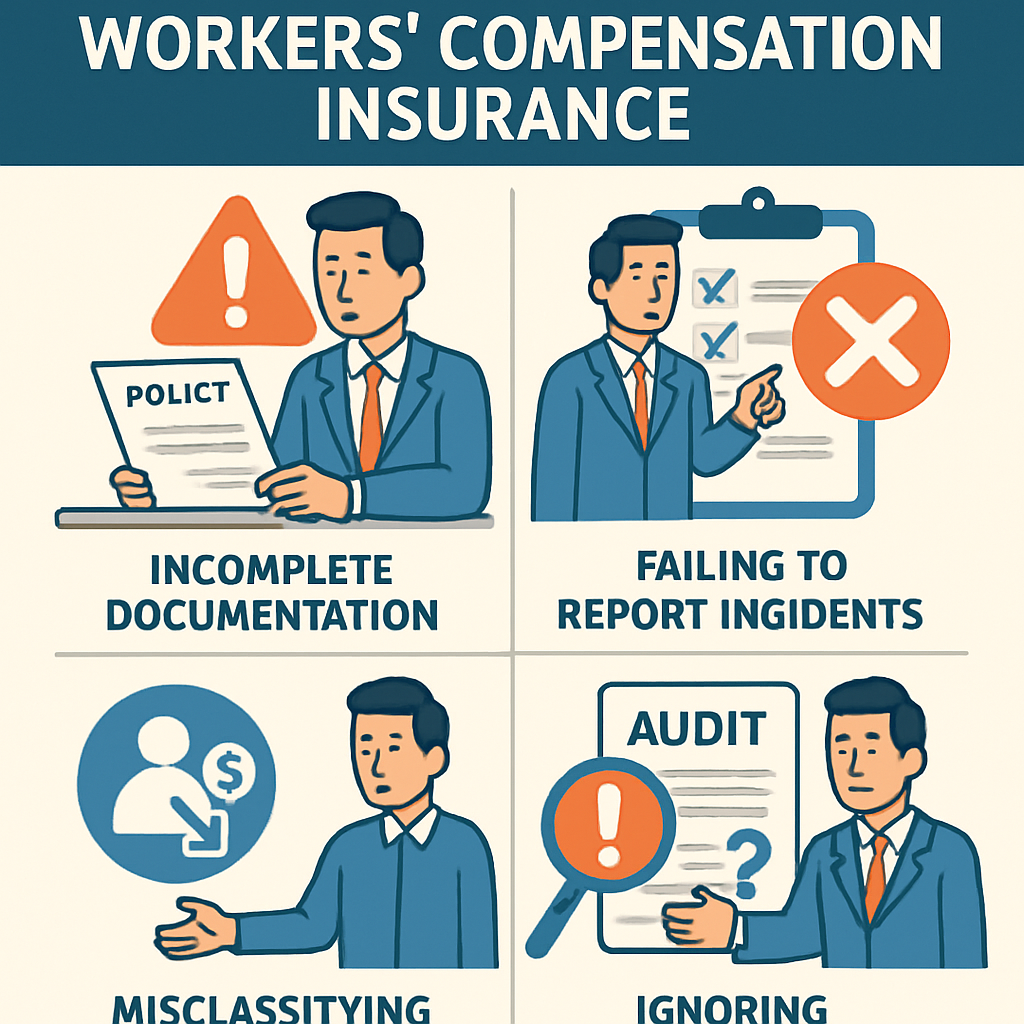
If the ICA determines that your "independent contractors" are actually employees, you may be held liable for unpaid workers' compensation premiums, potential penalties for failing to maintain coverage, and retroactive tax liabilities. The classification is determined by the "right to control" test, not by the existence of a contract.
4. Are there exemptions for family members?
Family members who are considered employees must generally be covered by workers' compensation insurance. There are very narrow exemptions for certain family-owned agricultural operations, but you should consult with a qualified Arizona attorney or your insurance agent to confirm if your specific business structure qualifies for an exemption.
5. Can I switch insurance providers mid-policy?
Yes, but you must ensure there is no lapse in coverage. You should coordinate the cancellation of your old policy and the inception of your new policy carefully to ensure that your business remains covered by the ICA's standards throughout the transition.
Next Steps for Business Owners
If you are unsure of your current compliance status, take these actions immediately:
- Audit Your Payroll: Clearly distinguish between employees, W-2 staff, and independent contractors.
- Contact Your Insurance Agent: Ask them to verify that your current policy is explicitly filed to cover Arizona employees and that the policy includes the correct NCCI classification codes for your specific industry.
- Visit the Industrial Commission of Arizona (ICA) Website: Use their official portal to review the most recent employer guidelines and ensure you are using the correct, state-approved posters for your workplace.
- Consult Legal Counsel: If your business model relies heavily on independent contractors, have an employment law attorney review your contracts and work procedures to ensure you do not inadvertently trigger a classification audit.
By separating the economic development functions of the Arizona Commerce Authority from the regulatory duties of the Industrial Commission of Arizona, you can navigate your legal obligations effectively and maintain the safety and compliance of your workforce.