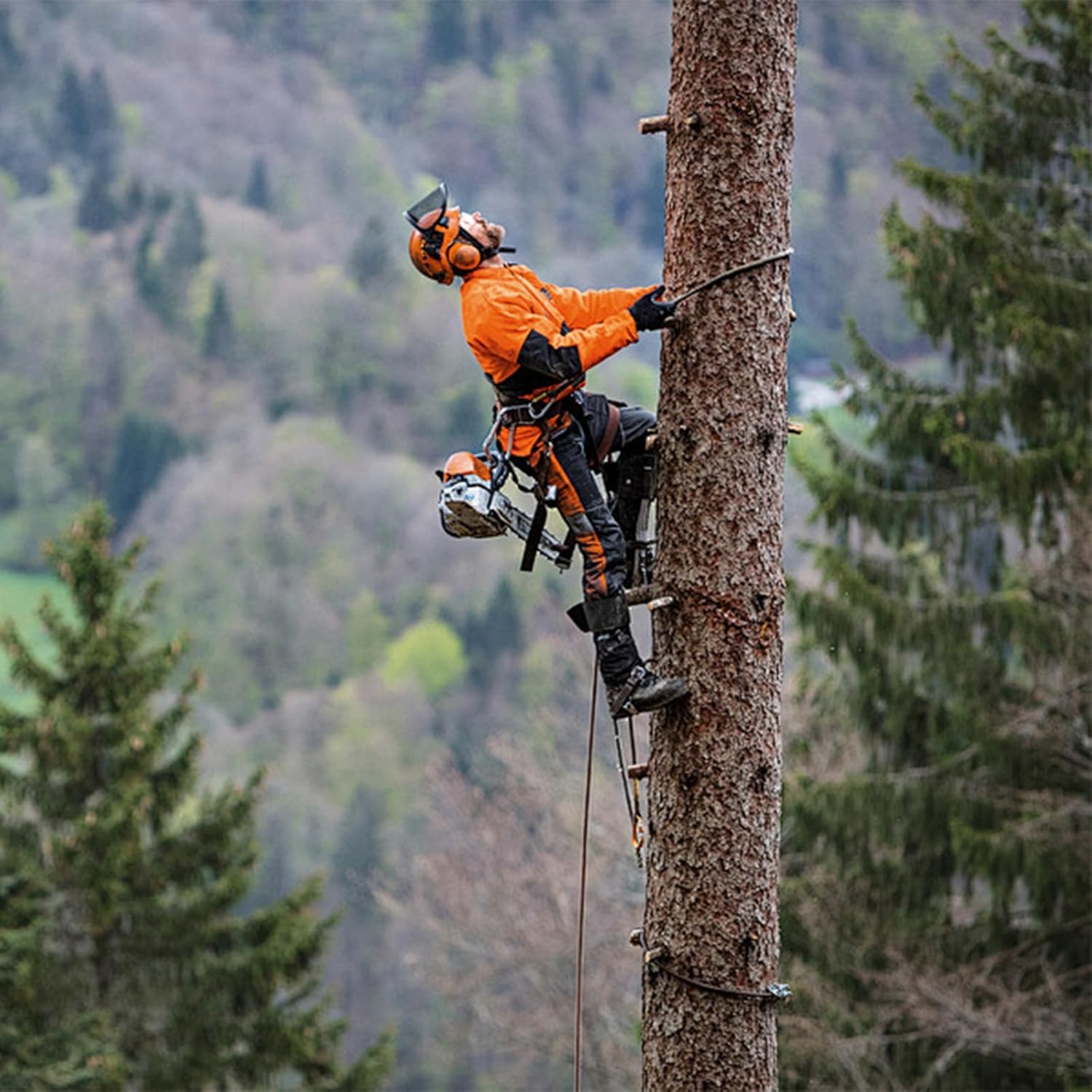
For certified arborists, climbing training is not a foundational exercise in basic knots or ascents, but a specialized path toward mastery, efficiency, and advanced risk mitigation. As industry standards evolve, continuing education in high-angle rescue, complex rigging, and ergonomic rope management becomes essential for career longevity and operational safety. This training focuses on refining mechanical advantage systems, integrating modern climbing hardware, and mastering rescue protocols to maintain proficiency in an increasingly technical trade.
The Evolution of Professional Climbing Standards
The transition from a journeyman arborist to a master climber is defined by a shift in focus from merely completing the job to optimizing every movement. While initial certification ensures a baseline of competency, professional development in 2026 focuses on the nuances of tree biology and mechanical physics. Advanced training sessions typically address the limitations of traditional systems and introduce modern climbing techniques, such as the use of rope friction devices (RFDs) and advanced mechanical advantage (MA) systems that reduce physical strain.
Certified arborists must remain current with the American National Standards Institute (ANSI) Z133 safety requirements. These standards are the definitive legal and operational benchmarks in the United States, dictating everything from minimum clearance distances from electrical conductors to the structural requirements for personal protective equipment (PPE). Advanced training often centers on interpreting these evolving standards and implementing them in complex, high-stakes environments, such as removals in confined urban spaces or structural restoration of heritage trees.
Identifying Specialized Training Pathways
When selecting a training program, certified arborists should move beyond generalized workshops and focus on specialized curricula. The following table outlines the primary areas of advanced focus relevant to the current industry landscape.
| Training Focus Area | Target Skill Outcome | Technical Application |
|---|---|---|
| Advanced Rigging | Controlled dismantling of hazardous timber | Friction-based load management |
| High-Angle Rescue | Rapid, safe extraction of an injured climber | Victim management and lowering systems |
| Canopy Access Systems | Increased speed and reduced operator fatigue | Mechanical ascenders and hybrid SRS |
| Tree Biomechanics | Structural assessment for climbing risk | Load distribution and anchor selection |
Mastering High-Angle Rescue Protocols
Perhaps the most critical component of advanced training is the mastery of aerial rescue. Every certified climber should be capable of executing a rescue in under four minutes, as dictated by various international best practices. This training moves past the basic "cut and lower" mentality, teaching instead the complexities of managing a victim who may be unconscious, suspended in a harness, or entangled in electrical hardware.
Advanced workshops emphasize the use of dedicated rescue kits, including pre-rigged lowering lines, specialized pulleys, and rope grabs. Training involves simulated scenarios that require the rescuer to stabilize the victim, transfer the victim's weight to the rescuer's system, and descend safely while maintaining control of the rigging line. In 2026, the integration of lightweight, high-strength synthetic rigging gear has significantly altered how these rescues are performed, allowing for faster response times without sacrificing the safety margin.
The Role of Modern Equipment and Hardware
Technological advancement in arborist gear is rapid. For the certified climber, keeping pace with hardware iterations is a professional necessity. Training programs now frequently feature segments on Stationary Rope Systems (SRS) and the nuances of various hitch-tending pulleys.
Understanding the "why" behind the hardware—such as the force-limiting properties of specific knots compared to mechanical devices—is essential. For instance, while a Prusik loop is a tried-and-true friction hitch, many modern training courses now focus on the mechanical efficiency of micro-cams and rope wrenches. These tools allow for more ergonomic positioning, which is critical for long-term career health. Participants learn to troubleshoot gear failure, understand manufacturer maintenance cycles, and verify the compatibility of different components before they are introduced into a production setting.
Prerequisites and Eligibility
Participation in advanced arborist climbing courses requires verifiable proof of certification. Organizations such as the International Society of Arboriculture (ISA) maintain the standards that training providers typically require for admission. Before enrolling, practitioners should be prepared to provide:
- Valid ISA Certified Arborist (CA) or Certified Tree Worker (CTW) credentials.
- Proof of active, current liability insurance coverage.
- Documentation of completed basic safety training or relevant job experience.
- A personal kit of inspected and tagged gear that meets current ANSI Z133 or equivalent standards.
Common Challenges and Troubleshooting
Even seasoned professionals encounter plateaus in their technical abilities. One of the most common issues identified in advanced training is "technique drift," where a climber develops unsafe habits over years of production work. Expert instructors use video analysis to identify inefficient movement patterns that lead to premature wear on equipment or physical injury to the climber.
Another frequent challenge is the improper integration of multiple rigging systems. When using a combination of SRS and Moving Rope Systems (MRS), climbers often struggle with rope interference. Advanced training provides specific troubleshooting modules on rope management, teaching the climber how to segregate lines and minimize friction points during complex removals.
Integrating Training into Daily Workflow
The true value of advanced training is realized only when the skills are applied systematically on the job site. Once a certification update or advanced course is completed, the next logical step is to implement a "toolbox talk" with the ground crew. By training the entire team on the new rescue protocols or rigging techniques, the climber ensures that the ground support staff is capable of assisting in a crisis.
Furthermore, professional arborists should treat their gear as a dynamic system. Following training, it is common practice to perform a comprehensive audit of all carabiners, harnesses, and ropes to ensure they are compatible with the new methodologies. Keeping a log of all equipment—including service dates, drop-history, and retirement cycles—is not merely an organizational task; it is a critical safety practice that separates elite professionals from the rest of the field.
Frequently Asked Questions
What are the primary differences between basic and advanced climbing training? Basic training focuses on fundamental safety, knot tying, and access, while advanced training emphasizes complex rigging, high-angle rescue scenarios, and efficiency through the application of physics and mechanical advantage.
Do I need to renew my ISA certification to attend advanced training? While you do not always need to be in the middle of a renewal cycle, you must hold a valid, current certification to be admitted to most professional-tier advanced programs, as these assume a baseline of knowledge.
How often should a certified arborist refresh their high-angle rescue skills? Industry standards typically recommend a practical rescue drill at least annually. However, professionals in high-risk environments often perform quarterly refreshers to ensure reaction times remain within the critical window.
Can I substitute online courses for hands-on climbing training? No. While theoretical knowledge and equipment theory can be learned online, the physical execution of climbing, knot security under load, and rescue maneuvers require direct supervision and hands-on validation by a qualified instructor.
How does ANSI Z133 affect the gear I use during training? ANSI Z133 provides the performance criteria for your equipment. Any advanced training must adhere to these standards, meaning your gear must be rated for tree work and within its manufacturer-specified service life.
Final Recommendation for Professional Growth
For the certified arborist, the path forward is one of continuous validation and skill refinement. Your next action should be to review your current rescue equipment against the latest manufacturer safety bulletins and register for an intensive, hands-on high-angle rescue workshop. Prioritize courses that offer ISA Continuing Education Units (CEUs) to ensure your professional development is formally recognized, keeping your certification status robust while you sharpen the technical skills that ensure you return home safely every evening.