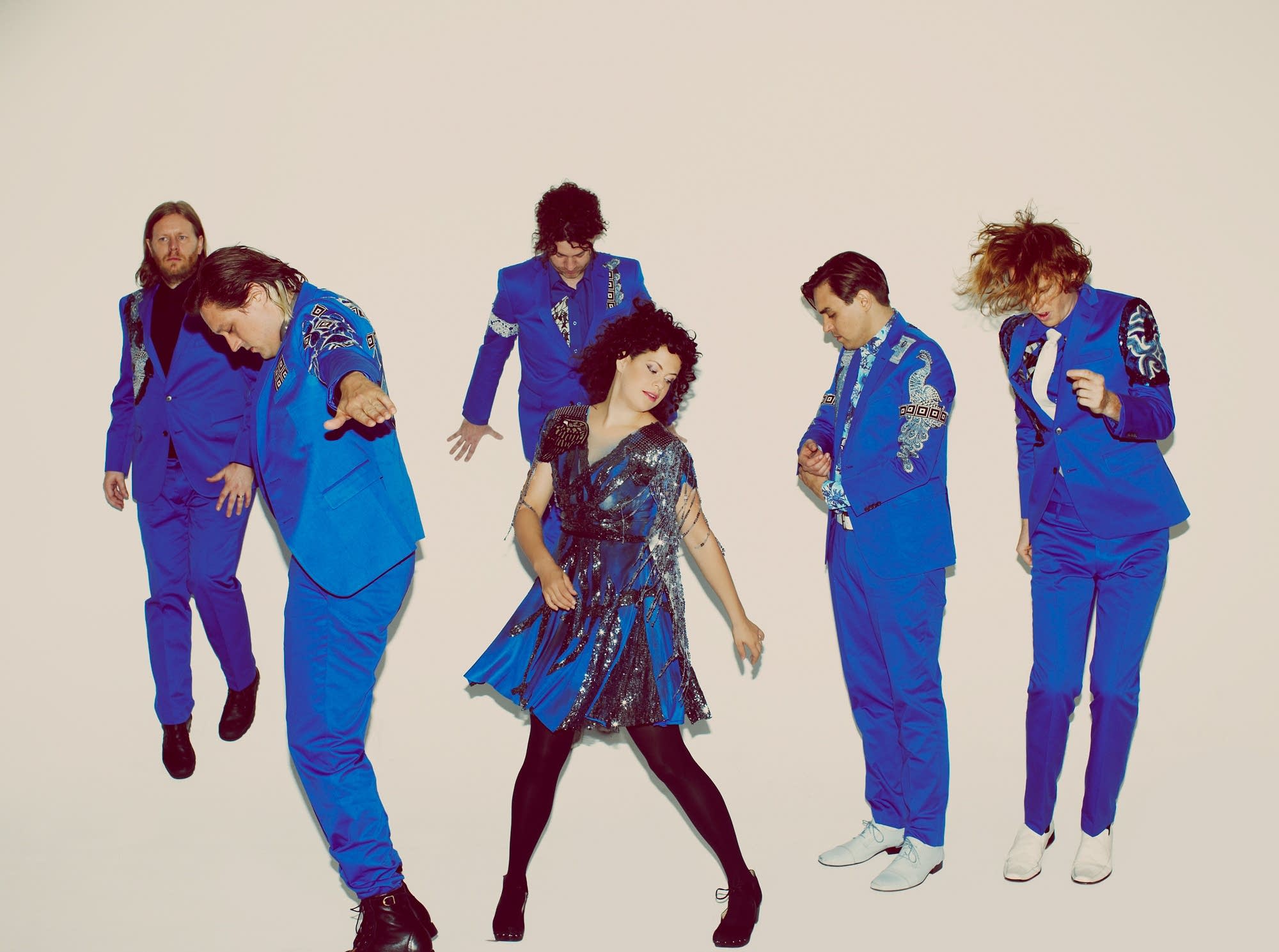
As of 2026, Arcade Fire has not officially broken up. While the band has undergone significant internal shifts—most notably the departure of core member Will Butler in 2022—they continue to perform and maintain their status as an active entity. The group recently celebrated the 20th anniversary of their debut album, Funeral, signaling a focus on their legacy while navigating the complexities of their current lineup and public standing.
The Catalysts for Breakup Rumors
The question of whether Arcade Fire would break up became a central topic of discussion in the music industry starting in early 2022. This period represented a "perfect storm" of internal and external pressures that led many fans and critics to wonder if the Montreal-based collective could survive. The rumors were not based on a single event but rather a sequence of developments that altered the band’s public image and internal chemistry.
To understand why breakup rumors persist in 2026, one must look at the transition between their 2017 album Everything Now and their 2022 release WE. The former received mixed reviews, creating the first sense of vulnerability in a band that had previously enjoyed near-universal acclaim. When the pandemic hit, the band retreated, as did most artists, but the silence was punctuated by individual members pursuing outside interests, leading to speculation about the group's cohesion.
The rumors gained significant traction when the band’s visual and energetic stage presence began to change. For two decades, Arcade Fire was defined by a large, rotating cast of multi-instrumentalists who created a "wall of sound." As the lineup began to thin out and focus more tightly on the core founders, the "breakup" narrative became a shorthand for fans expressing concern over the loss of the band’s original, chaotic energy.
The Departure of Will Butler
Perhaps the most concrete piece of evidence cited by those fearing a breakup was the departure of Will Butler. In March 2022, just as the band was preparing to launch the WE era, Will announced he had left the group after the completion of the new album. As the younger brother of frontman Win Butler and a member since the band’s inception, his exit was more than a simple lineup change; it was a shift in the band's foundational DNA.
Will Butler was often seen as the "heart" of the band’s live performances, known for his frantic energy, helmet-banging percussion, and ability to play almost any instrument on stage. His official statement clarified that he had not left due to any specific animosity but rather a desire to pursue his own projects and spend more time with family. He noted that he had changed, and the band had changed, over the course of nearly 20 years.
Since his departure, Will has successfully transitioned into a solo career, releasing music with his band Sister Squares. For Arcade Fire, his absence required a redistribution of musical responsibilities. While they hired touring musicians to fill the sonic gaps, the visual and emotional vacuum left by a founding member contributed to the ongoing narrative that the Arcade Fire of the 2000s and 2010s had effectively "broken up," even if the legal and professional entity remained.
The 2022 Controversy and Its Lasting Impact
The most challenging period for the band’s survival began in August 2022. A report published by Pitchfork detailed allegations of sexual misconduct against frontman Win Butler by several individuals. Butler denied the allegations of non-consensual behavior, stating that the encounters were consensual, though he acknowledged being unfaithful to his wife and bandmate, Régine Chassagne.
This event fundamentally changed the conversation surrounding the band. It moved from "Will they break up because of musical differences?" to "Should the band continue to exist?" The immediate fallout was significant:
- Tour Openers: Artists like Feist and Beck, who were scheduled to open for the band on their European and North American tours, dropped out of the dates.
- Radio Airplay: Several radio stations, particularly in Canada, removed Arcade Fire’s music from their rotations.
- Fan Sentiment: A significant portion of the fanbase felt a sense of betrayal, leading to heated debates about the "separation of art and artist."
Despite these pressures, the band chose to move forward with their scheduled tour dates. They did not issue a statement regarding a breakup or even a formal hiatus. Instead, they leaned into their live performances, often with Régine Chassagne taking a more prominent role in the show's emotional arc. By 2026, the band has settled into a "post-controversy" reality where they remain active but operate with a much more polarized public profile than they did during their peak.
The "WE" Era and the 20th Anniversary of Funeral
The release of WE in 2022 was intended to be a return to form—a shorter, more focused album produced by Nigel Godrich. While the album was generally well-received by critics, its legacy was largely overshadowed by the aforementioned controversies. However, the band’s refusal to disband during this time suggests a collective decision to weather the storm.
In 2024, the band reached a major milestone: the 20th anniversary of their seminal debut, Funeral. This anniversary served as a litmus test for the band’s status. They performed a series of "Funeral Anniversary" shows in cities like Milan, London, and at various festivals. These performances were meticulously staged to honor the original album, and they saw a return of some long-time fans who were willing to engage with the band’s historical contribution to indie rock.
These anniversary shows provided the strongest evidence that Arcade Fire is not breaking up. Instead of fading away, they are leaning into their "legacy" status. By 2026, the band has demonstrated that they can continue to draw crowds at major international festivals, even if their days as the "darlings" of the indie-alternative press have largely concluded.
Current Roster and Band Dynamics
As we look at the band in 2026, the core membership remains stable but smaller than the sprawling collective of the The Suburbs era. The current iteration of the band is centered on the partnership of Win Butler and Régine Chassagne, supported by the long-term commitment of other core members.
| Member | Primary Instruments | Status (2026) |
|---|---|---|
| Win Butler | Vocals, Guitar, Piano | Lead Frontman; Active |
| Régine Chassagne | Vocals, Keyboards, Drums, Hurdy-gurdy | Core Leader; Active |
| Richard Reed Parry | Guitar, Bass, Keyboards, Percussion | Core Member; Active |
| Tim Kingsbury | Bass, Guitar, Keyboards | Core Member; Active |
| Jeremy Gara | Drums, Percussion | Core Member; Active |
| Will Butler | Multi-instrumentalist | Departed (2022) |
| Sarah Neufeld | Violin, Vocals | Frequent Collaborator/Touring |
The internal dynamics have shifted toward a more professional, perhaps less communal, arrangement. The band relies heavily on a core group of multi-instrumentalists and touring professionals to recreate their complex studio arrangements. The survival of the band is inextricably linked to the personal and professional relationship between Butler and Chassagne, who have remained a united front throughout the personal and public turmoils of the last few years.
Comparing Arcade Fire’s Trajectory to Peer Bands
To understand the "breakup" question, it is helpful to compare Arcade Fire to their contemporaries from the mid-2000s indie boom. Many bands from that era have either officially disbanded or entered permanent hiatus.
- LCD Soundsystem: Famously "broke up" with a massive Madison Square Garden show in 2011, only to reunite a few years later. Arcade Fire has avoided this "fake breakup" narrative, opting instead for a continuous, if rocky, existence.
- The White Stripes / Daft Punk: These groups issued definitive "it’s over" statements. Arcade Fire’s lack of such a statement, even during their lowest points in 2022, indicates a desire to keep the brand alive.
- Radiohead: While not broken up, Radiohead has entered a long period of focus on side projects (The Smile). Arcade Fire members also have side projects, but they have maintained the "Arcade Fire" banner for major touring cycles more consistently than many of their peers.
The band’s persistence suggests that they view Arcade Fire as a life-long project rather than a phase of their careers. This is a common trait among Canadian musical collectives, which often prioritize the longevity of the institution over the individual controversies of its members.
Technical Analysis of Their Current Musical Direction
Musically, the "breakup" of the original sound is perhaps more relevant to fans than a legal dissolution of the band. In 2026, the music Arcade Fire produces is markedly different from the orchestral folk-rock of Funeral or the baroque pop of Neon Bible.
The shift toward electronic textures and dance-oriented structures, which began with Reflektor (2013), has become the standard. For some, this represents a "breakup" with the band’s original identity. However, for the band themselves, this is described as evolution. The production on WE and subsequent live arrangements in 2024 and 2025 show a band that is comfortable using synthesizers and programmed loops to maintain a big sound without needing a 12-person orchestra on stage.
This streamlined approach is also a logistical necessity. Touring in 2026 is significantly more expensive than it was in 2004. By reducing the core touring party and focusing on a more "electronic-assisted" sound, the band can remain financially viable while still delivering the high-production-value shows for which they are known.
Common Misconceptions About the Band's Status
A significant amount of confusion stems from the way news is consumed in the digital age. Several factors contribute to the false belief that Arcade Fire has broken up:
- Hiatus vs. Breakup: Like many bands with 20-year careers, Arcade Fire takes long breaks between albums. A three-year gap without a tour is often misinterpreted by casual listeners as a disbandment.
- Will Butler’s Solo Career: Because Will was such a visible member, news articles about his "departure from Arcade Fire" are frequently misread as "Arcade Fire breaking up."
- Win Butler’s Cancellation: During the height of the 2022 allegations, many social media users "canceled" the band, leading to a general impression that the band was "gone" or "finished," which is culturally distinct from a legal breakup.
In reality, the band has continued to book shows, record in their New Orleans and Montreal studios, and manage their business affairs as a functioning group.
Frequently Asked Questions
Did Win Butler leave Arcade Fire?
No, Win Butler remains the frontman and primary songwriter for the band. While he faced significant public scrutiny and allegations in 2022, he has continued to lead the group and perform at all scheduled events through 2026.
Why did Will Butler leave the band?
Will Butler officially left in March 2022. He stated that his departure was not due to a single event but a natural evolution of his interests. He wanted to focus on his family and his own musical projects, such as his work with Sister Squares. His departure was announced prior to the public allegations against Win Butler.
Is Arcade Fire still touring in 2026?
Yes, the band continues to perform. Their schedule in recent years has shifted toward major festival appearances and selective "residency" style shows in major cities rather than the grueling year-long world tours of their earlier career.
Who is the current lead singer of Arcade Fire?
The band continues to have two primary vocalists: Win Butler and Régine Chassagne. Since 2022, Chassagne has taken on an even more prominent role in the live sets, leading several of the band’s most popular tracks.
Will there be a new Arcade Fire album?
While the band has not officially announced a release date for a follow-up to WE, they have historically released albums every 3 to 5 years. Given their activity in 2024 and 2025, industry analysts expect news of a new project or a significant collection of unreleased material in the near future.
Future Outlook: What to Expect Next
Moving forward, Arcade Fire is likely to continue operating as a "legacy-plus" act. This means they will continue to honor their classic catalog—especially as they hit the anniversaries of Neon Bible and The Suburbs—while occasionally releasing new music that explores their interest in electronic and dance genres.
The band has successfully navigated a period that would have ended many other groups. Whether they can regain the cultural zeitgeist they held in the early 2010s remains to be seen, but from a functional and professional standpoint, they are very much intact. For fans, the "breakup" is not a reality, but the "change" in the band’s spirit and lineup is an undeniable fact.
Next Action: If you are a fan looking to stay updated, the most reliable sources are the band's official website and their social media channels, which they use to announce "pop-up" shows and anniversary events. For those interested in the broader context of the band's evolution, listening to Will Butler's solo work provides a fascinating counterpoint to the direction the main band has taken since 2022.