Sleep is the body’s primary state for dermal restoration and structural maintenance. During deep sleep phases, the endocrine system releases growth hormones that stimulate collagen production and repair cells damaged by daily environmental stressors. This nightly "repair cycle" is essential for maintaining skin elasticity, reducing chronic inflammation, and ensuring long-term skin longevity.
The relationship between sleep and skin aging is not merely a matter of looking refreshed; it is a fundamental biological requirement for the maintenance of the integumentary system. As we navigate 2026, the intersection of chronobiology and dermatology has revealed that the skin follows a precise internal clock. When this clock is disrupted by poor sleep hygiene or insufficient rest, the visible markers of aging—fine lines, hyperpigmentation, and loss of volume—accelerate significantly.
The Science of the Circadian Rhythm in Dermal Health
Every cell in the human body, including keratinocytes and fibroblasts in the skin, operates on a circadian rhythm. This 24-hour internal clock is governed by "clock genes" (such as CLOCK and PER1) that dictate when cells should focus on protection and when they should pivot to repair. During the daylight hours, the skin is in a defensive mode, thickening its barrier and producing antioxidants to neutralize UV radiation and pollution.
When the sun sets and the body prepares for rest, the skin’s priority shifts. Research indicates that the rate of cell division (mitosis) peaks at night, particularly between 11:00 PM and 2:00 AM. This is the window during which the skin sheds damaged cells and generates new ones. If sleep is delayed or fragmented, this proliferative phase is truncated, leading to a duller complexion and a slower recovery from environmental insults.
Furthermore, the skin’s permeability increases at night. While this makes the skin more vulnerable to transepidermal water loss (TEWL), it also creates a unique opportunity for the absorption of active ingredients. Understanding this rhythm is the cornerstone of modern anti-aging strategies, as it allows for the alignment of topical treatments with the body’s natural regenerative peaks.
The Hormonal Trinity: Melatonin, Growth Hormone, and Cortisol
The anti-aging power of sleep is largely mediated by three key hormones. The balance of these chemicals determines whether the skin stays in a state of chronic stress or moves into deep repair.
Melatonin as a Systemic Antioxidant
Often called the "sleep hormone," melatonin does far more than regulate the sleep-wake cycle. It is a potent free-radical scavenger. At night, systemic melatonin levels rise, helping the skin neutralize oxidative stress accumulated during the day. Unlike many other antioxidants, melatonin can easily cross cell membranes, protecting the DNA within the nucleus from oxidative damage that leads to mutations and premature aging.
Somatotropin (Growth Hormone) and Collagen Synthesis
During deep, slow-wave sleep (NREM Stage 3), the pituitary gland releases somatotropin, also known as human growth hormone (HGH). This hormone is the primary driver of tissue repair. It stimulates the production of collagen—the protein responsible for skin firmness—and helps repair the extracellular matrix. Without sufficient deep sleep, HGH levels remain low, resulting in thinner, more fragile skin that is prone to wrinkling.
Cortisol and the Breakdown of the Skin Barrier
Cortisol is the body’s primary stress hormone. Ideally, cortisol levels should drop significantly as we fall asleep, reaching their lowest point around midnight. If sleep is deprived, cortisol levels remain elevated. High cortisol is catastrophic for skin longevity because it triggers the breakdown of collagen and elastin through a process called proteolysis. Moreover, chronically high cortisol weakens the skin’s barrier function, leading to increased sensitivity and inflammatory conditions like eczema or acne.
Nighttime Microcirculation and Nutrient Delivery
During sleep, the body reallocates blood flow to the skin through a process called vasodilation. This increase in microcirculation serves two vital purposes: nutrient delivery and waste removal.
- Nutrient Delivery: The increased blood flow brings oxygen and essential amino acids to the dermis, providing the raw materials needed for fibroblasts to synthesize new collagen and elastin fibers.
- Detoxification: The lymphatic system, which is highly active during rest, works to remove metabolic waste products and toxins from the skin tissues. This reduction in "cellular trash" helps prevent the sallow, puffy appearance often associated with sleep deprivation.
The increase in blood flow also leads to a slight rise in skin temperature. While this is beneficial for ingredient penetration, it also contributes to the aforementioned transepidermal water loss. This is why nocturnal skincare formulations are typically richer and more occlusive than daytime moisturizers; they are designed to "trap" the moisture that would otherwise evaporate through the heated skin surface.
Comparison of Sleep Stages and Their Impact on Skin
The quality of sleep is just as important as the quantity. The skin benefits differently from various stages of the sleep cycle.
| Sleep Stage | Primary Physiological Action | Impact on Skin Longevity |
|---|---|---|
| NREM Stage 1 & 2 | Transition to sleep; heart rate slows. | Minimal direct impact; prepares the body for deeper stages. |
| NREM Stage 3 (Deep Sleep) | Maximum release of Growth Hormone (HGH). | Peak period for collagen synthesis and cellular repair. |
| REM (Rapid Eye Movement) | High brain activity; processing of emotions. | Regulates the autonomic nervous system, indirectly lowering stress-related skin issues. |
| Early Morning (Final Cycles) | Gradual rise in Cortisol and body temperature. | Skin shifts back into "defensive" mode; barrier function begins to strengthen. |
Transepidermal Water Loss (TEWL) and the Nighttime Barrier
As the skin’s temperature rises and the barrier becomes more permeable at night, moisture escapes more easily. This phenomenon, known as Transepidermal Water Loss (TEWL), is one of the biggest challenges to skin longevity. Dehydrated skin is less efficient at repairing itself and more prone to "micro-cracks" that allow irritants to enter.
To combat this, a robust nighttime routine should focus on both humectants (which pull water into the skin) and occlusives (which seal that water in). Ingredients like hyaluronic acid and glycerin are excellent humectants, while ceramides, squalane, and petrolatum act as occlusives to mimic the skin’s natural lipid barrier. By maintaining hydration throughout the night, you provide the optimal aqueous environment for cellular enzymes to carry out repair functions.
Common Sleep Habits That Accelerate Skin Aging
Longevity is not just about what you do, but also what you avoid. Several common sleep habits can inadvertently cause mechanical or chemical damage to the skin.
Sleep Position and "Sleep Wrinkles"
Sleeping on your side or stomach causes the face to be pressed against the pillow for hours. This mechanical compression creates "sleep wrinkles," which are different from expression lines. Over time, as collagen decreases with age, the skin loses its "bounce back" ability, and these temporary creases become permanent. Sleeping on your back is the most effective way to prevent this mechanical aging.
The Impact of High-Energy Visible (HEV) Light
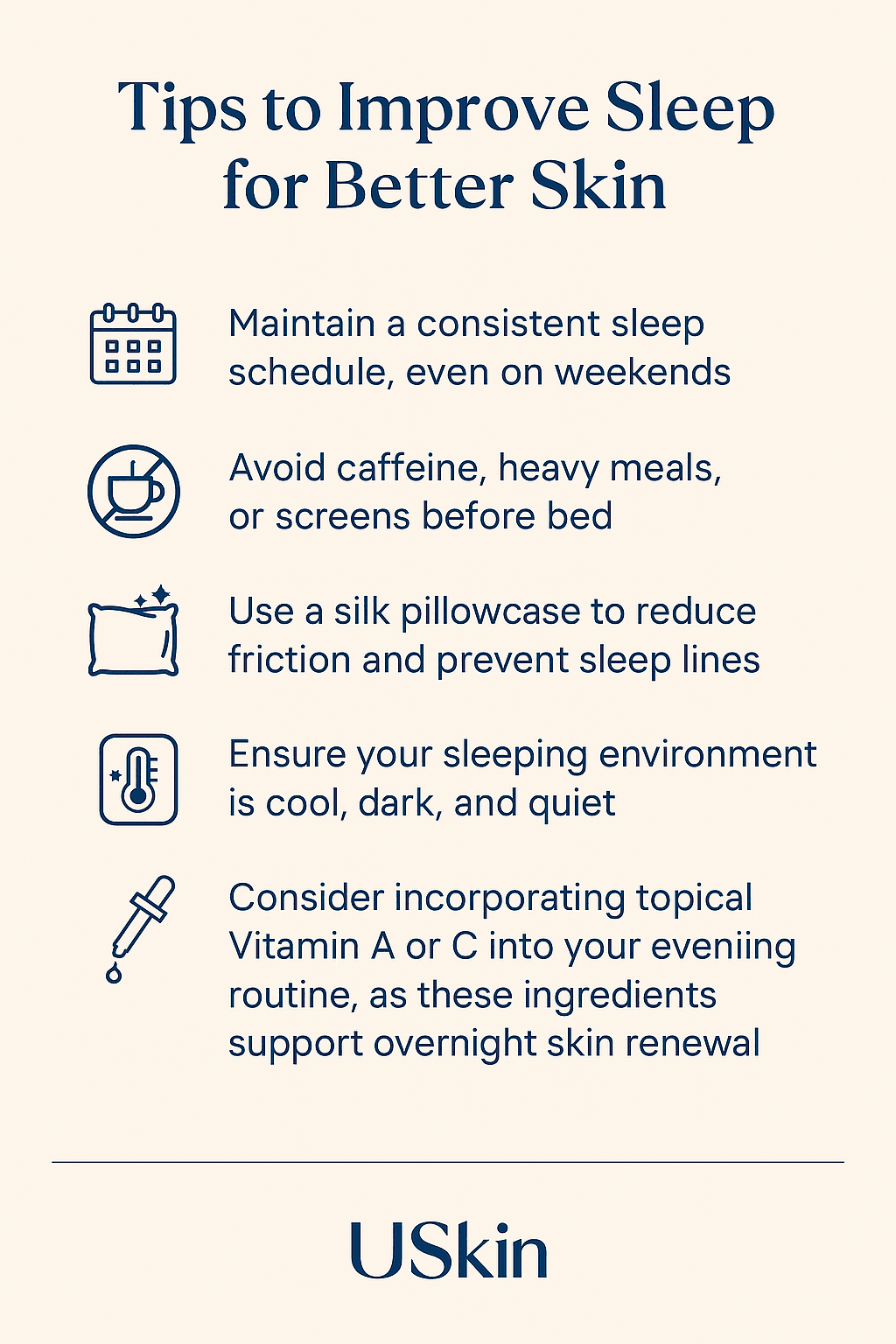
Exposure to blue light (HEV) from smartphones and tablets before bed does more than just disrupt your melatonin production. Emerging research suggests that HEV light can penetrate deeper into the skin than UV rays, causing oxidative stress and pigment changes. Using digital devices in bed can essentially "trick" your skin’s clock genes into thinking it is daytime, delaying the start of the repair cycle.
Cotton vs. Silk Pillowcases
Traditional cotton pillowcases are absorbent and create friction. They can strip the skin of its natural oils and the expensive nighttime products you apply. Furthermore, the friction can irritate the skin barrier. Silk or satin pillowcases provide a "slip" that minimizes friction and helps maintain the skin’s moisture levels, making them a simple but effective tool for skin longevity.
The Role of Topical Interventions in the Night Cycle
Because the skin is in "repair mode" and its permeability is higher, night is the ideal time for high-potency actives that might be too irritating or unstable for daytime use.
- Retinoids (Retinol, Tretinoin): These are the gold standard for anti-aging. They accelerate cell turnover and boost collagen. Since they are light-sensitive and can cause photosensitivity, they are strictly for nighttime use.
- Peptides: These short chains of amino acids act as signal molecules, telling the skin to produce more collagen or repair the basement membrane.
- Alpha Hydroxy Acids (AHAs): Ingredients like glycolic or lactic acid help with desquamation (the shedding of dead skin cells), allowing for fresher skin to emerge and improving the penetration of other products.
Applying these ingredients right before the "Golden Hours" (11 PM - 2 AM) ensures that they are present in the tissue when the skin’s metabolic activity is at its zenith.
Expert Guidance for Optimizing "Beauty Sleep"
To maximize the anti-aging benefits of your sleep, consider the following protocol:
- Maintain a Consistent Schedule: Going to bed and waking up at the same time every day stabilizes your circadian rhythm, ensuring that the hormonal release of HGH and melatonin occurs reliably.
- Optimize the Environment: Keep the bedroom cool (around 65°F or 18°C). A cooler body temperature facilitates the transition into deep sleep.
- Double Cleanse: Ensure all pollutants, makeup, and sunscreen are removed. If these remain on the skin, they can cause oxidative stress during the very period the skin is trying to repair itself.
- Prioritize Darkness: Use blackout curtains or a sleep mask. Any light exposure during the night can suppress melatonin production and interrupt the dermal repair cycle.
Frequently Asked Questions
Can I "make up" for lost sleep on the weekends to help my skin?
While catching up on sleep can reduce immediate puffiness and dark circles, you cannot retroactively "fix" the missed cellular repair cycles. The skin requires consistent nightly restoration to maintain its structural integrity over decades. Intermittent "catch-up" sleep does not prevent the long-term collagen degradation caused by regular sleep deprivation.
Does blue light from my phone really age my skin at night?
Yes, in two ways. First, it suppresses melatonin, which is a key antioxidant for the skin. Second, direct exposure to blue light can trigger the production of free radicals in the skin, leading to premature breakdown of collagen and increased hyperpigmentation, particularly in darker skin tones. It is best to avoid screens at least 60 minutes before sleep.
Why do I look older when I sleep on my side?
Side sleeping causes the skin to fold and compress against the pillow. This repeated mechanical stress, combined with the force of gravity, creates vertical creases on the cheeks and around the eyes. As we age and our skin loses elasticity, these "sleep lines" eventually stop disappearing after we wake up and become permanent wrinkles.
What are the "Golden Hours" for skin repair?
The "Golden Hours" are generally considered to be between 11:00 PM and 2:00 AM. This is when the concentration of growth hormone is typically at its highest and when cell mitosis (division) is most active. Missing this window by staying up late can significantly reduce the efficacy of the skin’s natural regenerative processes.
Should I use a different moisturizer for night than for day?
Yes. Daytime moisturizers are usually lighter and contain SPF or antioxidants meant for protection. Nighttime moisturizers should be richer and contain ingredients like ceramides, fatty acids, and repair-focused actives (like retinol or peptides). They are designed to counteract transepidermal water loss and support the skin's intensive repair phase.
Practical Recommendation for Skin Longevity
To truly harness the power of sleep for anti-aging, focus on consistency over intensity. Rather than relying on expensive "miracle" creams occasionally, establish a strict sleep hygiene routine that guarantees at least 7 to 9 hours of quality rest. Combine this with a nighttime skincare regimen that emphasizes hydration (humectants and occlusives) and repair (retinoids or peptides). By aligning your lifestyle with your skin’s biological clock, you provide the most effective environment for long-term dermal health and cellular longevity.