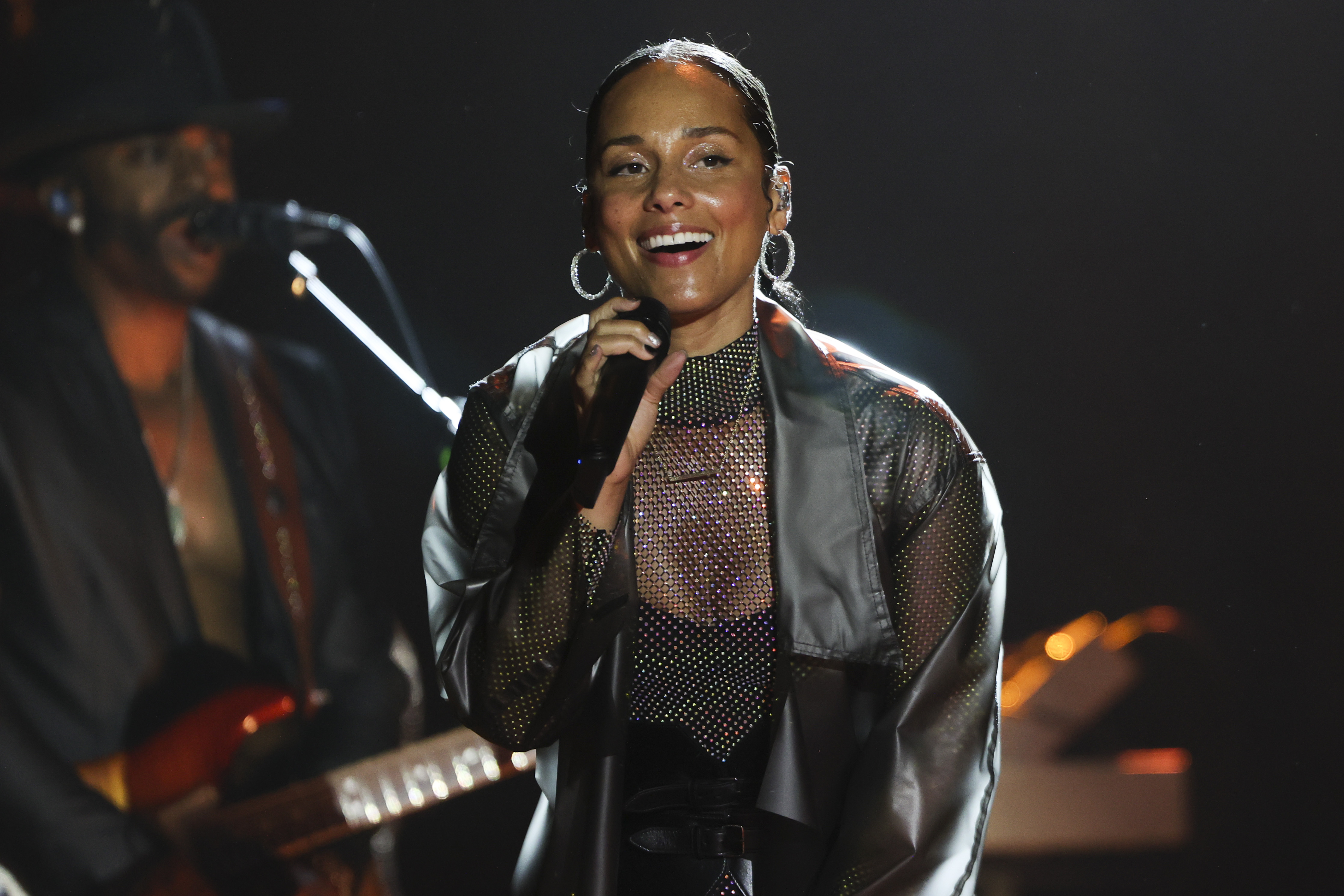
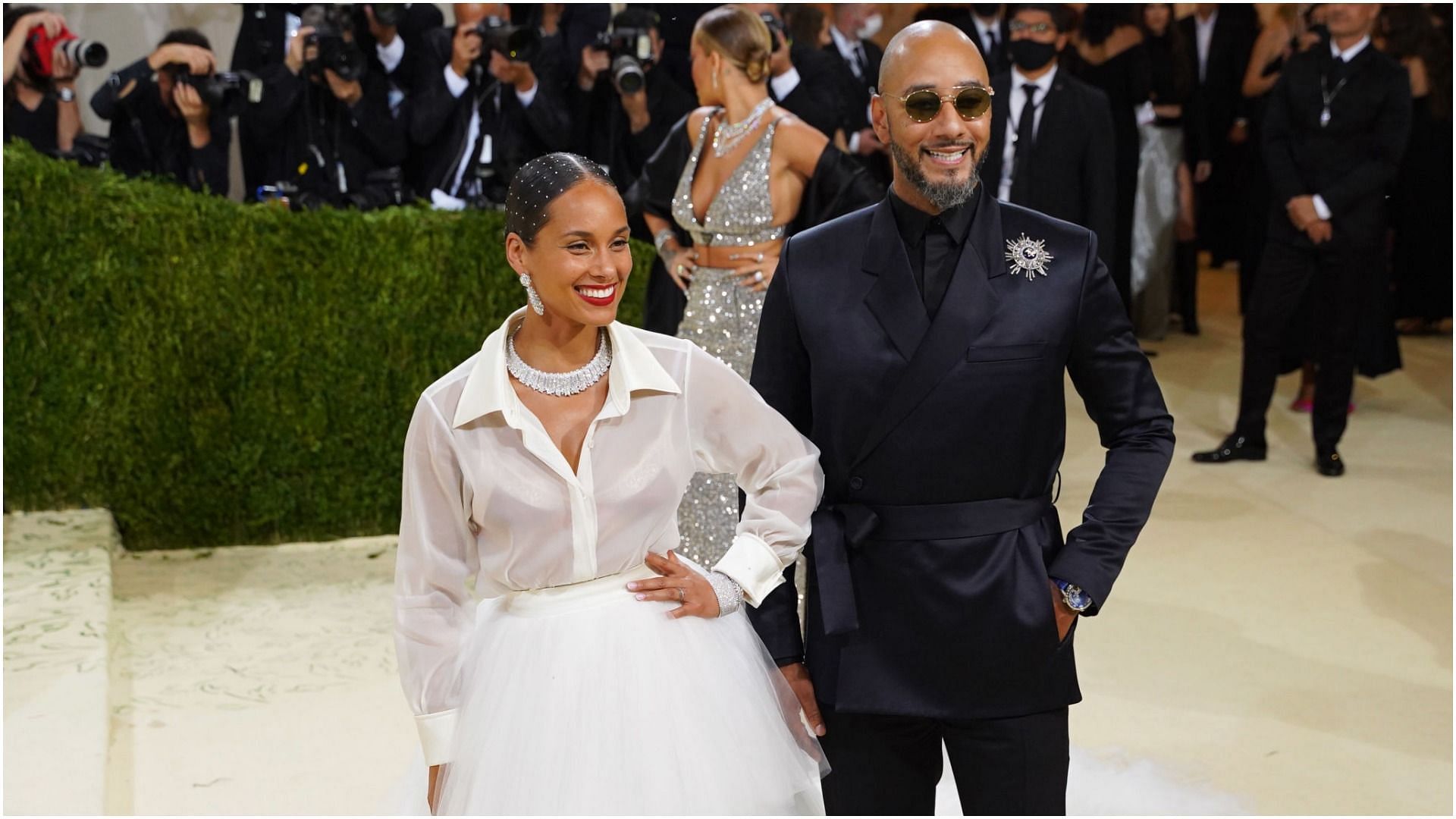
Alicia Keys holds an estimated solo net worth of approximately $180 million as of 2026, driven by catalog royalties, global concert touring, entrepreneurial ventures, and theatrical productions. When evaluated alongside her husband, super-producer Kasseem "Swizz Beatz" Dean, their combined household wealth exceeds $350 million, underpinned by extensive blue-chip contemporary art holdings and high-value real estate.
Evaluating the private financial holdings of high-profile entertainment figures requires separating gross box office earnings, headline transaction values, and joint marital holdings from net asset equity. While public filings do not exist for private celebrity estates, industry royalty schedules, documented real estate transactions, commercial brand partnerships, and box office disclosures provide clear data on Keys’ financial trajectory.
The Core Pillars of Alicia Keys' Net Worth
Alicia Keys transitioned from a classical prodigy in Manhattan’s Hell’s Kitchen to an internationally recognized, multi-hyphenate mogul. Her financial portfolio is not dependent on a single revenue stream; instead, it is distributed across traditional music revenue, live theatrical performance rights, brand ownership, and tangible appreciating assets.
Estimated Wealth Allocation
| Category | Allocation |
|---|---|
| Music Publishing, Masters, & Royalties | 35% - 40% |
| Touring, Live Performance, & Residencies | 20% - 25% |
| Entrepreneurship & Brand Ventures | 15% - 20% |
| Real Estate & Tangible Assets | 15% - 20% |
1. Recorded Music and Publishing Royalties
With over 90 million records sold worldwide and 16 Grammy Awards, Keys possesses one of the most commercially durable modern catalogs in R&B and pop music. Her debut album, Songs in A Minor (2001), was certified seven-times platinum by the Recording Industry Association of America (RIAA), instantly establishing her commercial footprint. Subsequent multi-platinum releases—including The Diary of Alicia Keys (2003) and As I Am (2007)—generated massive mechanical and performance royalties.
Unlike many contemporary artists who rely solely on third-party songwriters, Keys has maintained substantial songwriting and production credits across her discography. This structural decision affords her significant publishing rights, which yield ongoing revenue across three primary channels:
- Performance Royalties: Collected via performance rights organizations (PROs) such as ASCAP or BMI whenever compositions are broadcast on terrestrial radio, television, or public venues globally.
- Mechanical Royalties: Generated per physical sale and digital download, alongside mandated statutory allocations from digital streaming service providers.
- Sync Licensing Fees: High-value placement rights for film, television, video games, and global advertising campaigns. Anthems like "Empire State of Mind" (with Jay-Z), "Girl on Fire," and "No One" command seven-figure licensing fees across multi-year brand campaigns.
2. Touring and Global Live Engagements
While recorded music establishes steady annuity-style cash flow, touring represents large injections of capital. The modern touring model delivers major revenue upside through ticket pricing tiers, VIP packages, and on-site merchandise concessions.
The Alicia + Keys World Tour, which spanned across 2022 and 2023, covered North America, Europe, and Latin America, grossing upwards of $40 million across dozens of arena dates. Keys followed this with the Keys to the Summer Tour, which utilized an innovative 360-degree theater-in-the-round stage configuration, optimizing venue capacity and driving ticket sales across major North American markets. Beyond primary tours, Keys frequently headlines private corporate conventions, international festivals, and ultra-high-net-worth private events, which traditionally pay anywhere from $1 million to $3 million per individual private booking.
Diversified Business Ventures and Intellectual Property
Sustainable wealth accumulation in modern entertainment requires leveraging personal brand recognition into equity and enterprise value. Keys has systematically transitioned from pure endorsement deals to equity-backed consumer brands and original theatrical productions.
Keys Soulcare and the E.l.f. Beauty Partnership
In late 2020, Keys partnered with E.l.f. Beauty (NYSE: ELF) to launch Keys Soulcare, a comprehensive lifestyle, skincare, and wellness enterprise. Rather than simply serving as a paid brand ambassador under a traditional licensing arrangement, Keys established an operational partnership grounded in product co-development and profit sharing.
Keys Soulcare was positioned within the "clean beauty" and holistic ritual space, rolling out globally through retailers such as Ulta Beauty, Sephora International, and direct-to-consumer digital channels. By partnering with an established cosmetics operator, the brand leveraged E.l.f.'s supply chain economies of scale, marketing infrastructure, and international distribution networks, minimizing initial capital expenditures while securing upside equity appreciation and substantial annual dividend distributions.
Broadway Expansion: Hell’s Kitchen
One of the most consequential additions to Keys’ financial portfolio is the Broadway musical Hell’s Kitchen. Loosely based on her childhood and adolescent development in midtown Manhattan, the production debuted off-Broadway at The Public Theater before transferring to the Shubert Theatre on Broadway in spring 2024.
The production secured 13 Tony Award nominations and quickly became a consistent box-office draw, repeatedly generating weekly grosses exceeding $1.3 million to $1.5 million. The economic mechanisms of a successful Broadway musical offer substantial, recurring financial returns for a creator in Keys’ position:
- Originating Rights Holder Royalties: Keys earns direct royalties calculated as a percentage of weekly gross box office receipts.
- Publishing Royalties for Re-Purposed Music: Because the musical features her celebrated back-catalog alongside original compositions, performance rights organizations collect licensing fees for every staged performance.
- Equity Participation: As an executive producer and lead financial stakeholder, Keys participates in the net profit pools once the production's initial capitalization costs are recouped.
- Secondary Rights and Touring Licensing: Future domestic and international touring rights, West End transfers, school and amateur licensing arrangements, and cast album streaming royalties create decades-long annuity cash flows.
Real Estate and The Architecture Portfolio
Real estate forms a central part of Keys’ and Swizz Beatz’s physical balance sheet. The couple is recognized in architectural and design circles for acquiring unique, museum-caliber modernist residences.
Key Real Estate Transactions Over Time
| Property Location | Estimated Purchase Price | Significance / Architectural Notes |
|---|---|---|
| La Jolla, California | $20.8 Million (2019) | "Razor House" designed by Wallace E. Cunningham; modernist landmark. |
| Englewood, New Jersey | $10.4 Million (2013) | Former Eddie Murphy estate; 32-room mansion with recording hub. |
| SoHo, New York City | $14.5 Million (2010) | Historic penthouse formerly owned by Lenny Kravitz; sold in 2013. |
The Razor House (La Jolla, California)
In 2019, Keys and Dean completed the purchase of the landmark Razor House in La Jolla, California, for $20.8 million. Designed by celebrated architectural designer Wallace E. Cunningham, the cliffside home encompasses nearly 11,000 square feet of cantilevered concrete, floor-to-ceiling curved glass, and panoramic views of the Pacific Ocean. Widely documented by architectural publications, the property has substantially appreciated since its 2019 transaction date, with local ultra-luxury real estate trends suggesting an equity valuation well above its original purchase figure.
Historic East Coast Real Estate
Prior to establishing their primary residence on the West Coast, the couple maintained substantial East Coast holdings. In 2013, they acquired a sprawling 32-room compound in Englewood, New Jersey, from comedian Eddie Murphy for $10.4 million. The 5-acre estate included a private bowling alley, indoor swimming complex, and a dedicated wing constructed to house their private recording studio and art collection. Keys also previously owned a multi-level luxury penthouse in Manhattan’s SoHo neighborhood, purchased from rock musician Lenny Kravitz for roughly $14.5 million in 2010 and later liquidated as part of their geographic portfolio reallocation.
The Dean Collection: Fine Art as a Strategic Investment Class
A material portion of the combined Keys-Dean household net worth is preserved in tangible fine art. Through The Dean Collection, the couple has assembled one of the world's most significant private collections of works by contemporary African American, African, and African diasporic artists.
The collection includes major holdings by historically prominent and blue-chip contemporary artists, including:
- Gordon Parks: The Dean Collection holds the largest private gathering of original Gordon Parks photographs in the world.
- Jean-Michel Basquiat: Significant early and career-defining paintings and works on paper.
- Contemporary Blue-Chip Masters: Substantial works by Kehinde Wiley, Arthur Jafa, Kerry James Marshall, Barkley L. Hendricks, Derrick Adams, and Toyin Ojih Odutola.
The market value of The Dean Collection is estimated in the tens of millions of dollars, with certain individual masterworks experiencing significant market appreciation over the past decade. In early 2024, the Brooklyn Museum organized a major ticketed institutional exhibition titled "Giants: Art from the Dean Collection," highlighting the institutional importance and market validation of these assets.
In institutional wealth management, museum-grade art collections operate not only as cultural stewardship but also as stable hedges against inflation, offering collateralization advantages for private-bank credit facilities.
Joint Financial Dynamic: Alicia Keys and Swizz Beatz
While Keys maintains complete financial independence through her individual corporate structures, her joint financial profile with husband Kasseem "Swizz Beatz" Dean forms an elite creative partnership. Dean, an influential hip-hop producer, DJ, and entrepreneur, holds an estimated solo net worth of roughly $150 million to $170 million.
Dean's primary wealth drivers include:
- Production Royalties: Architect behind foundational hit records for DMX, Jay-Z, Beyoncé, and Eve.
- Corporate Advisory and Brand Design: Former creative directorships and ongoing consulting alliances with brands such as Reebok, Monster Cable, and luxury vehicle manufacturers.
- Technology and Media Exits: Co-creator of Verzuz, the digital music battle platform launched alongside Timbaland during the 2020 pandemic lockdowns. In 2021, the creators engineered an acquisition deal with social media network Triller Network, trading the platform for equity stakes and executive board allocations, before later orchestrating subsequent strategic distributions.
When combined, the couple’s net worth stands at more than $350 million, managed through complex corporate entities, private investment offices, and dedicated wealth management teams.
Philanthropy and Strategic Non-Profit Allocations
A comprehensive assessment of Keys' financial activity includes her capital commitments to philanthropic foundations. Unlike purely passive donors, Keys frequently utilizes her balance sheet to establish and support non-profit organizations, which carries strategic tax-planning and wealth-stewardship implications under U.S. financial law.
- Keep a Child Alive (KCA): Co-founded by Keys in 2003, KCA has raised and deployed upwards of $90 million to provide clinical treatment, social support, and clinical infrastructure to children and families affected by HIV/AIDS in Africa and India. The foundation's annual "Black Ball" fundraisers regularly raised millions of dollars per evening from institutional and private donors.
- She Is The Music (SITM): Keys co-founded this non-profit initiative to address the structural underrepresentation of women across the music industry supply chain, including audio engineering, songwriting, and executive production.
- Endowments and Educational Grants: Direct grants, scholarship programs, and creative arts endowments across the United States.
Tax planning structures under IRS rules allow high-earning entertainers to channel tax-deductible contributions through 501(c)(3) entities and donor-advised funds (DAFs), dampening overall income-tax liability while generating sustained social impact.
Professional Wealth Advisory and Valuation Limitations
When reviewing celebrity net worth calculations, several analytical limitations must be noted:
- Private Corporate Structures: The majority of Keys’ intellectual property and touring gross proceeds flow through private single-member LLCs, loan-out corporations, and family trusts. These private entities shield exact operational expenses, management commissions, and internal distributions from public record.
- Gross Receipts vs. Retained Earnings: Public concert tour grosses reported by industry trackers (such as Pollstar or Billboard Boxscore) reflect gross ticket sales. The actual net take-home pay retained by the headlining artist typically ranges between 30% and 50% after accounting for:
- Arena rental fees and local union staging labor.
- Lighting, sound, and staging freight logistics.
- Booking agency commissions (typically 5% to 10%).
- Personal management fees (typically 10% to 15%).
- Legal counsel and business management retainers (typically 5%).
- Taxation: Top-tier individual income is subject to maximum federal tax rates alongside California state income taxes (which peak at 13.3%) or New York state and local taxes, significantly impacting overall annual liquid retention.
Disclaimer: The financial valuations, asset figures, and net worth estimations compiled here are developed through historical transaction reports, box office filings, recorded real estate deeds, and established industry benchmarks. They do not constitute formal financial, tax, or legal disclosures.
Frequently Asked Questions
What is Alicia Keys' estimated net worth in 2026?
Alicia Keys has an estimated solo net worth of roughly $180 million. When combined with the assets of her husband, producer Swizz Beatz, their household wealth exceeds $350 million.
How much money does Alicia Keys make from Hell’s Kitchen on Broadway?
Keys earns weekly royalties as both the composer/lyricist and the originator of the source intellectual property, calculated as an agreed percentage of weekly gross ticket sales. With the show consistently generating between $1 million and $1.5 million in weekly box office receipts during peak runs, her annual production income and downstream publishing royalties from the project reach into the millions of dollars.
Does Alicia Keys own the master recordings to her music?
Keys operates with significant ownership and creative control over her catalog through major long-term licensing and distribution joint ventures. While her early albums were released under J Records and Sony Music, her continued industry prominence allowed her to renegotiate favorable royalty splits, publishing retention, and long-term reversion terms for her master assets.
How much did Alicia Keys pay for the Razor House?
Alicia Keys and Swizz Beatz acquired the famous Wallace Cunningham-designed Razor House in La Jolla, California, for $20.8 million in the autumn of 2019. The property’s current market value is substantially higher due to historic real estate appreciation in coastal Southern California.
What is Keys Soulcare, and how does it contribute to her wealth?
Keys Soulcare is a beauty and lifestyle brand founded by Keys in collaboration with publicly traded cosmetics company E.l.f. Beauty. Rather than receiving a basic endorsement fee, Keys participates in direct product development, operational profits, and overall enterprise equity appreciation.
What is the estimated value of Alicia Keys and Swizz Beatz's art collection?
While private art appraisals are strictly confidential, industry estimates value The Dean Collection well into the tens of millions of dollars. The collection comprises museum-grade works by Jean-Michel Basquiat, Gordon Parks, Kehinde Wiley, and Arthur Jafa, which regularly hold record valuations in international auction markets.
Strategic Wealth Takeaways for Creatives
Alicia Keys’ wealth-building trajectory offers an instructive roadmap for navigating the modern creative economy. Long-term financial resilience requires shifting away from single-transaction performance fees toward equity ownership, intellectual property retention, and diverse asset classes.
To apply these structural financial concepts to individual professional portfolios:
- Prioritize Intellectual Property Retention: Whether operating in music, software, writing, or corporate consulting, retaining the underlying publishing, patents, or copyright rights creates perpetual residual cash flow.
- Diversify Beyond Earned Income: Channel active, liquid earnings from labor into hard, appreciating assets—such as diversified equity indexes, income-producing real estate, or inflation-resistant collections.
- Pursue Equity Over Endorsement: When partnering with established corporate brands, structure agreements that include equity participation, royalty overrides, or profit-sharing mechanisms rather than flat, one-time cash honorariums.