The 15Q Air Traffic Control Operator MOS in the United States Army forms a critical backbone of tactical and garrison aviation operations, integrating radar systems, communications protocols, and airspace management procedures to orchestrate safe aircraft movement across complex operational environments.
Introduction to the 15Q Military Occupational Specialty
Within the United States Army, the Military Occupational Specialty (MOS) 15Q designates the Air Traffic Control (ATC) Operator. This specialized career field is responsible for maintaining the safe, orderly, and expeditious flow of air traffic within controlled airspaces globally, supporting both routine garrison operations and high-stress tactical deployments. Understanding how the 15Q system works requires looking at a multi-layered structure encompassing rigorous initial entry training, stringent certification milestones, advanced tactical equipment, and continuous operational risk management.
While many civilian counterparts operate out of massive federal terminal radar approach control facilities or towering airport control structures, Army 15Q operators must be equally proficient in operating mobile, expeditionary air traffic control systems. These systems can be deployed rapidly into austere environments, establishing immediate command-and-control nodes for rotary-wing and fixed-wing aircraft alike. This guide examines the structural mechanics of the 15Q MOS, detailing prerequisites, training pipelines, operational responsibilities, technical equipment, career progression pathways, and troubleshooting protocols.
Core Responsibilities and the Operational System
The primary function of a 15Q Air Traffic Control Operator is to prevent collisions between aircraft operating in the airspace and between aircraft and obstructions on the movement area. To achieve this, the operator relies on a synchronized system of visual observations, radio communications, and radar data feeds.
Airspace Management and Control Towers
In a fixed or tactical control tower environment, 15Q soldiers manage the immediate surface area of an airfield. This includes active runways, taxiways, and the surrounding airspace (typically a radius of five nautical miles up to a specific altitude). Operators issue flight clearances, direct taxiing aircraft, sequence arrivals and departures, and coordinate closely with ground crews, firefighters, and flight operations personnel. Every directive issued must adhere strictly to Federal Aviation Administration (FAA) guidelines adapted for military aviation standards.
Radar Operations and Terminal Control
Beyond visual tower operations, the 15Q system extends into radar control facilities. Operators sit at radar consoles monitoring scopes that display transponder codes, altitude data, and positional tracks. They provide separation services to instrument flight rules (IFR) aircraft, vector pilots around severe weather or hazardous obstacles, and manage approach and departure corridors. This dual capability—controlling traffic both visually from a tower and electronically from a radar scope—differentiates the 15Q MOS from many other aviation support roles.
Prerequisites, Recruitment, and Initial Training Pipeline
Becoming a 15Q requires meeting strict physical, cognitive, and security standards before an individual ever steps foot inside a classroom. Because the margin for error in aviation is exceptionally low, the screening process is rigorous.
Enlistment Prerequisites and Qualifications
Candidates interested in the 15Q MOS must meet specific enlistment criteria outlined by the United States Army Recruiting Command and the United States Army Aviation Center of Excellence:
- Armed Services Vocational Aptitude Battery (ASVAB): Applicants must achieve a qualifying score in the General Technical (GT) and Skilled Technical (ST) composite areas. Specifically, a minimum GT score of 105 and an ST score of 101 are generally required to comprehend the complex physics, mathematics, and spatial reasoning inherent in air traffic control.
- Security Clearance: Candidates must be eligible for a Secret security clearance, which involves a comprehensive background investigation, verification of citizenship, and financial history checks.
- Physical Standards: Normal color vision is mandatory. Because operators must distinguish between colored light gun signals, runway lights, and radar display indicators, red-green color blindness is an immediate disqualifier. Hearing and visual acuity must also fall within strict military medical standards.
Advanced Individual Training (AIT) at Fort Rucker
Once a recruit enlists, their formal education begins with Advanced Individual Training at Fort Novosel (formerly Fort Rucker), Alabama, the home of Army Aviation. The 15Q AIT pipeline is notoriously challenging, marked by high academic standards and continuous evaluation.
- Academics and Regulations: Students spend months memorizing federal aviation regulations, airspace classifications, weather reporting codes, and phraseology.
- Tower Simulators: Trainees transition to high-fidelity, 360-degree virtual reality tower simulators. These simulators replicate high-density traffic scenarios, emergency situations, equipment failures, and rapidly changing weather conditions.
- Radar Labs: Students practice vectoring aircraft on radar scopes, calculating ground speeds, and resolving simulated traffic conflicts under time-sensitive constraints.
Failure rates in 15Q AIT can be significant. Students who fail to meet progressive testing benchmarks or practical control evaluations are typically reclassified into alternative military occupational specialties.
Key Phases of 15Q Training and Certification
- Initial Enlistment & ASVAB Screening
- Advanced Individual Training (Fort Novosel)
- Facility Rating & On-the-Job Training (OJT)
- FAA Control Tower Operator (CTO) Credentialing
Graduating from AIT does not immediately make a 15Q operator fully qualified to control traffic independently. The system relies on a rigorous local certification process once the soldier arrives at their first operational unit.
On-the-Job Training (OJT) and Position Ratings
Upon reporting to a tactical or garrison air traffic control facility, a newly arrived soldier is designated as a trainee. They are paired with experienced rated operators who serve as instructors and evaluators.
- Position Qualification: Trainees must learn the specific local geography, obstacles, instrument approach procedures, and local flying area characteristics of their assigned installation.
- Evaluations: Soldiers progress through individual control positions (e.g., Ground Control, Local Control, Flight Data, and Radar Approach Control). Each position requires a rigorous oral evaluation and practical board review before the soldier is permitted to control live traffic without direct supervision.
FAA Credentialing Equivalency
A hallmark of the 15Q MOS is its high degree of civilian transferability. Qualified Army air traffic controllers have the opportunity to test for and earn the Federal Aviation Administration Control Tower Operator (CTO) certificate and radar ratings. This alignment ensures that soldiers leaving active-duty service possess industry-recognized credentials that translate directly into high-paying civilian career opportunities within the Federal Aviation Administration or private aviation sectors.
Tactical Equipment and Mobile Systems
While garrison controllers work out of fixed architectural towers, tactical 15Q operators must master mobile systems designed for rapid deployment anywhere in the world.
Major Tactical ATC Systems
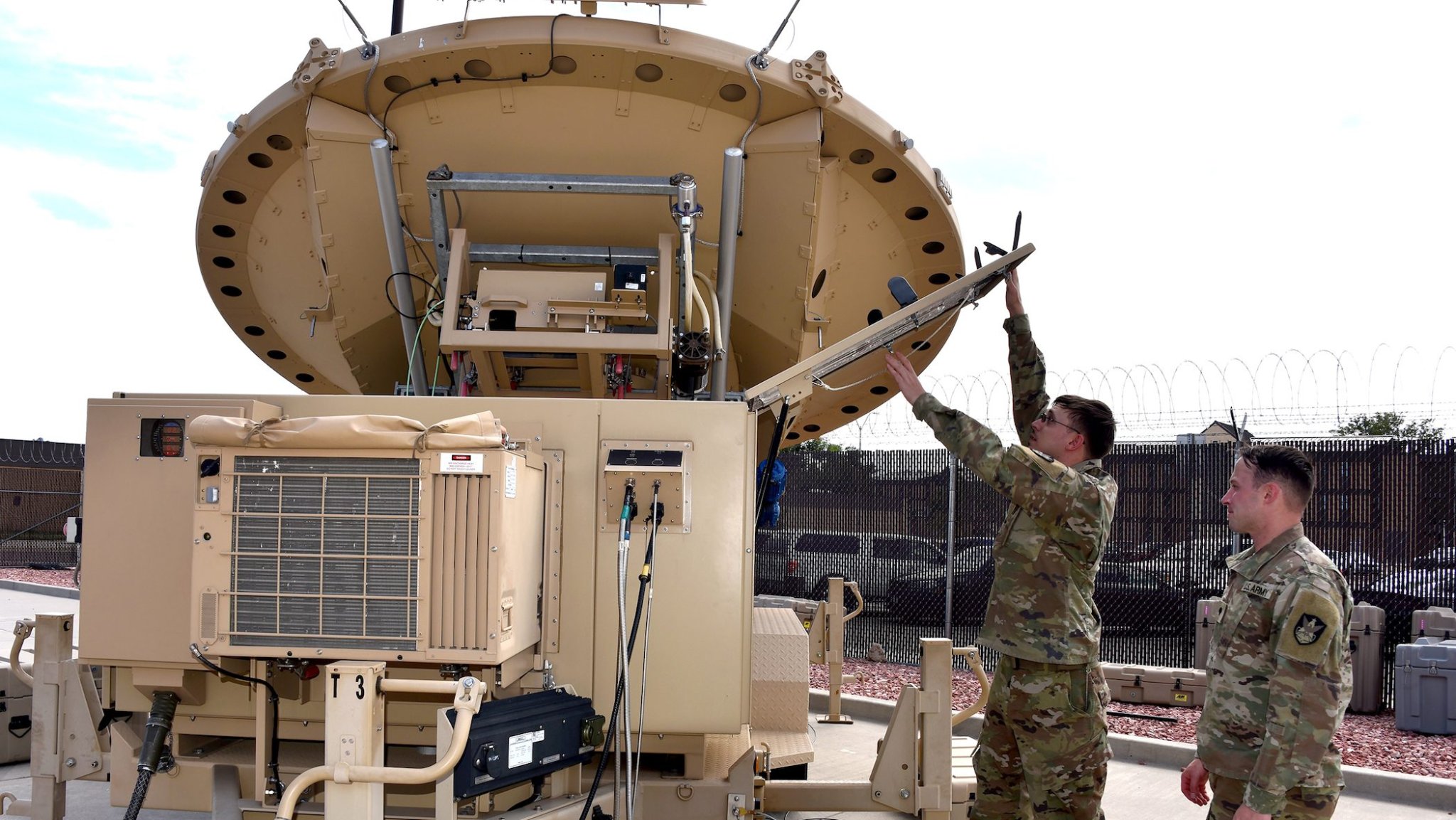
- AN/TSC-198 Tactical Terminal Control System (TTCS): A transit-case-based or vehicle-mounted system that provides rapid deployment air traffic control capabilities. It integrates radios, weather monitoring instruments, and communication switching systems into a compact footprint.
- Mobile Tower Systems (MOTS): Self-contained, elevated control cabs mounted on heavy tactical vehicles or trailers, providing immediate visual control capabilities in austere or undeveloped operational theaters.
- Tactical Airspace Integration System (TAIS): A software and hardware suite that provides air-space command and control, planning, and deconfliction capabilities at brigade and division command posts.
| System Designation | Primary Deployment Mode | Core Function | Operational Environment |
|---|---|---|---|
| AN/TSC-198 TTCS | Transit-case / HMMWV / LMTV | Visual and radio tower control | Forward operating bases, austere strips |
| Mobile Tower Systems | Trailer / Truck-mounted | Elevated visual air traffic control | Expeditionary airfields, tactical sites |
| TAIS | Command Post Workstations | Airspace management & deconfliction | Brigade, Division, and Corps TOCs |
Operational Workflow and Safety Protocols
The daily execution of the 15Q system is governed by strict operational discipline, redundancy, and risk mitigation strategies. Aviation safety depends on flawless execution across every shift.
Shift Coordination and Position Relief
Air traffic control operations run on continuous shifts. Handing over control of an airspace requires a standardized, formal briefing process known as position relief. The incoming and outgoing operators verify active flight strips, current weather conditions, runway status, ongoing emergencies, and special instructions. This checklist-driven handover prevents information gaps that could lead to catastrophic runway incursions or mid-air collisions.
Handling In-Flight Emergencies
When an aircraft declares an emergency—such as engine failure, hydraulic loss, or fuel exhaustion—the 15Q operator initiates a pre-planned emergency response checklist. This involves:
- Clearing the immediate airspace of non-essential traffic.
- Notifying base operations, crash-fire-rescue (CFR) teams, and medical evacuation personnel.
- Providing the distressed pilot with continuous weather updates, vectoring assistance, and runway preference information.
Career Progression and Leadership in the 15Q MOS
As soldiers advance in rank, their responsibilities shift from direct tactical control to facility management, quality assurance, and training administration.
Enlisted Progression Pathways
- Private to Specialist (E-1 to E-4): Focuses on mastering basic control positions, earning local facility ratings, and operating radar or tower positions under supervision.
- Sergeant and Staff Sergeant (E-5 to E-6): Serves as watch supervisors, training instructors, and crew chiefs. They are responsible for evaluating junior controllers and ensuring compliance with safety directives.
- Sergeant First Class and Above (E-7 to E-9): Manages entire air traffic control platoons, acts as Chief Air Traffic Control Facility Managers, and advises aviation commanders on tactical airspace integration, resource allocation, and safety compliance.
Troubleshooting and Common Operational Challenges
Operating within the 15Q framework presents distinct technical and psychological challenges. Understanding how operators troubleshoot these issues is vital to system reliability.
Communications and Equipment Failures
In the event of a primary radio frequency failure or radar blackout, 15Q operators must immediately transition to backup emergency channels and secondary visual signaling methods, such as directional light guns. Operators undergo regular drills simulating total power loss, generator failure, and secure communication drops to ensure seamless continuity of operations.
Human Factors and Fatigue Management
Air traffic control is intensely mentally demanding. Controllers must process multiple auditory and visual inputs simultaneously while making split-second decisions that impact human lives. The Army enforces strict crew rest cycles and maximum continuous duty hours for 15Q operators to prevent cognitive fatigue, maintain vigilance, and mitigate human error.
Conclusion and Next Actions
The 15Q Army MOS represents a sophisticated blend of advanced technology, rigorous discipline, and high-stakes operational execution. From managing tactical airfields in remote regions to coordinating complex garrison airspace networks, 15Q operators ensure the safety and success of military aviation missions worldwide. For prospective candidates looking to enter this field, ensuring strong mathematical aptitude, color vision compliance, and mental resilience is the essential first step toward securing an enlistment contract and embarking on a rewarding career in military and civilian aviation.