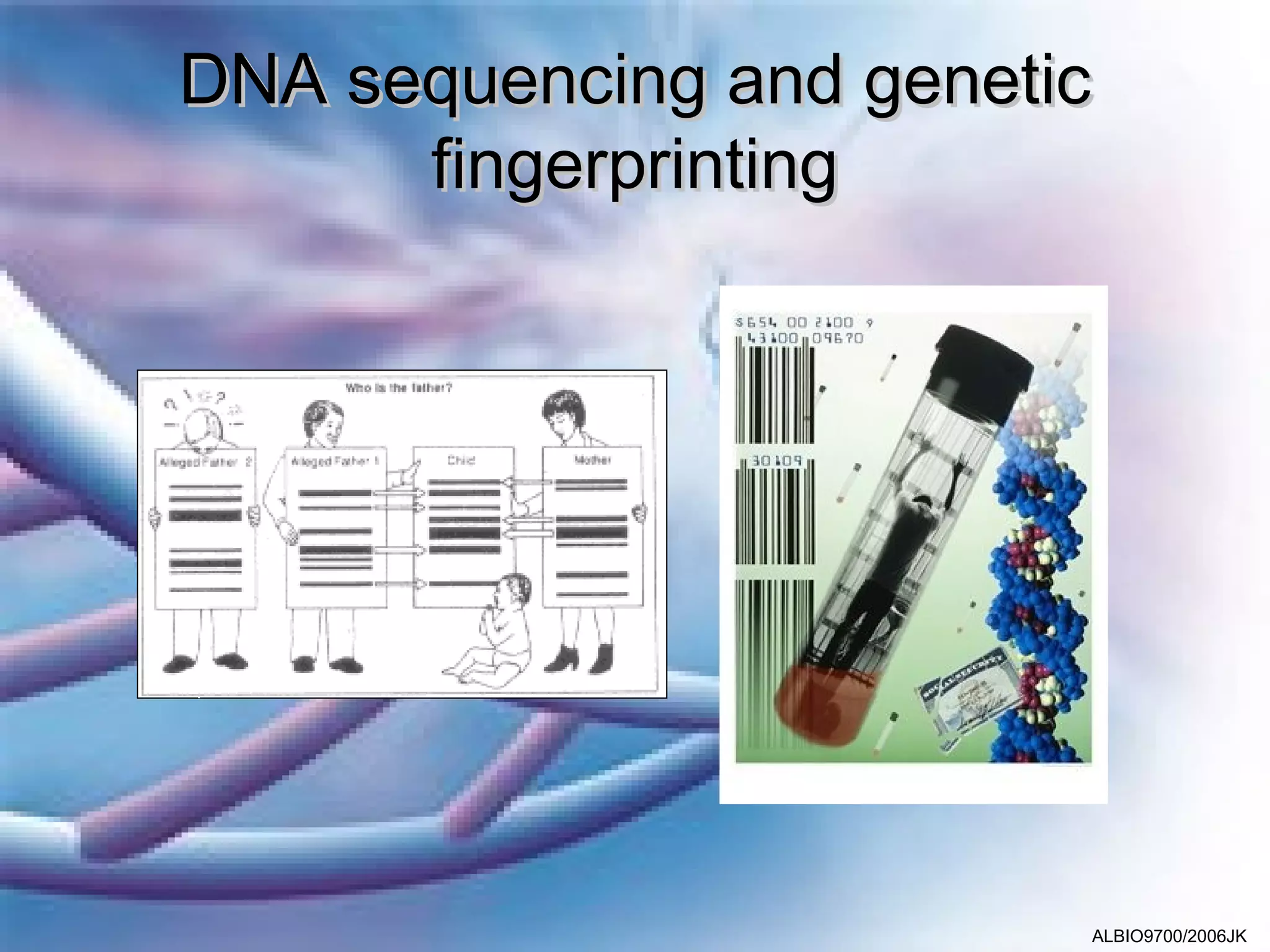
In the 1980s, DNA fingerprinting emerged as a revolutionary forensic and biological technique that permanently transformed criminal investigations, paternity testing, and immigration disputes. Developed by British geneticist Alec Jeffreys in 1984, the method shifted biological analysis from broad blood grouping to highly individualized genetic profiling, providing unprecedented certainty in human identification.
The Scientific Breakthrough: Alec Jeffreys and Multilocus Probes
The genesis of DNA fingerprinting occurred serendipitously on September 10, 1984, in the laboratories of the University of Leicester. Professor Alec Jeffreys and his team were studying myoglobin genes when they noticed that certain segments of DNA—specifically repetitive, non-coding regions known as minisatellites or Variable Number of Tandem Repeats (VNTRs)—showed striking variations between individuals. Jeffreys realized that while the vast majority of the human genome is identical across the population, these specific repetitive sequences varied so significantly that the chance of two unrelated individuals sharing the same pattern was astronomically low.
Jeffreys developed radioactive DNA probes designed to bind to these repetitive VNTR sequences. When exposed to X-ray film via autoradiography, the resulting pattern resembled a barcode consisting of numerous dark bands at various molecular weight positions. Because each band represented a specific inherited genetic fragment, the collective pattern formed an individual-specific genetic signature.
Crucially, this first-generation technique was known as multilocus profiling (MLP). A single radioactive probe would simultaneously bind to multiple hypervariable loci across different chromosomes, creating a complex array of 30 or more bands per individual. This complexity made the resulting profile remarkably distinct, but it also introduced technical challenges regarding data interpretation, standardization, and the requirement for relatively large, high-molecular-weight DNA samples.
Technical Workflow: How 1980s RFLP Analysis Worked
Before the widespread adoption of the Polymerase Chain Reaction (PCR) in forensic science during the 1990s, 1980s DNA fingerprinting relied entirely on Restriction Fragment Length Polymorphism (RFLP) analysis combined with Southern blotting. This methodology required meticulous laboratory execution and significant biological material compared to modern low-template DNA typing.
The analytical workflow followed a strict sequential protocol:
- Sample Extraction: High-molecular-weight genomic DNA was extracted from biological evidence—such as blood, semen, hair roots, or tissue—using organic solvents like phenol-chloroform.
- Restriction Enzyme Digestion: Specialized bacterial enzymes (restriction endonucleases, such as HaeIII or HinfI) were added to the DNA extract. These enzymes acted as molecular scissors, cutting the double-stranded DNA molecule at specific, short nucleotide sequences. Because the distance between repetitive VNTR regions varied among individuals, the resulting fragments varied in length.
- Gel Electrophoresis: The fragmented DNA samples were loaded into an agarose gel submerged in a conductive buffer solution. An electrical current was applied, causing the negatively charged DNA fragments to migrate toward the positive electrode. Smaller fragments moved faster and further through the gel matrix than larger fragments, separating the mixture by size.
- Southern Blotting: Because the agarose gel was fragile and difficult to handle directly, the separated DNA fragments were transferred upward onto a durable nitrocellulose or nylon membrane via capillary action, preserving the exact spatial distribution pattern established during electrophoresis.
- Hybridization and Autoradiography: The membrane was treated with a radioactive (typically Phosphorus-32) or enzyme-linked DNA probe that specifically targeted the repetitive VNTR regions. After washing away unbound probe material, the membrane was placed against X-ray film. Radiation emitted by the bound probes exposed the film, producing visible dark bands corresponding to specific fragment lengths.
| Step | Technique | Primary Purpose | Material Required |
|---|---|---|---|
| 1 | Organic Extraction | Isolate high-molecular-weight DNA | Blood, semen, or tissue sample |
| 2 | Enzymatic Digestion | Fragment DNA at targeted sites | Restriction endonucleases |
| 3 | Gel Electrophoresis | Separate DNA fragments by molecular size | Agarose gel, buffer, electrical current |
| 4 | Southern Blotting | Transfer DNA bands to a solid membrane | Nitrocellulose/nylon filter |
| 5 | Autoradiography | Visualize specific genetic loci patterns | Radioactive probes, X-ray film |
Milestone Cases: The Narborough Village Murders and Legal Precedents
The real-world utility of DNA fingerprinting was demonstrated dramatically in the mid-1980s during the investigation of the Narborough village murders in Leicestershire, England. In 1983, a 15-year-old girl named Lynda Mann was raped and murdered. Three years later, in 1986, a second teenager, Dawn Ashworth, was subjected to a strikingly similar attack and killed.
Local police initially arrested a 17-year-old local youth, Richard Buckland, who confessed to the second murder under interrogation. Investigators turned to Alec Jeffreys, whose laboratory was located nearby, to verify Buckland's involvement using the newly invented DNA fingerprinting technique. To the astonishment of investigators and the legal system, Jeffreys’ analysis proved definitively that both murders were committed by the same unknown perpetrator, but that Richard Buckland was completely innocent. Buckland became the first person in legal history exonerated by DNA evidence.
To find the true killer, Leicestershire Constabulary launched the world’s first mass DNA screening initiative. Over 4,000 local men voluntarily provided blood or saliva samples over several months. While this massive dragnet did not immediately catch the culprit, it pioneered the concept of forensic genetic screening. The breakthrough finally occurred when a local man, Colin Pitchfork, was overheard boasting that he had paid a coworker to give a blood sample in his place. Arrested in 1987, Pitchfork's blood sample matched the semen collected from both crime scenes, leading to the first murder conviction secured through DNA profiling.
In the United States, the legal system rapidly absorbed the technology, though not without intense scrutiny. The landmark 1987 case State v. Andrews in Florida marked the first time DNA evidence was formally admitted in an American criminal trial, surviving a rigorous Frye standard challenge regarding the scientific reliability of RFLP profiling.
Evolution to Single-Locus Probes and Early PCR
As forensic laboratories began adopting genetic identification in the late 1980s, the inherent limitations of multilocus profiling became apparent. Multilocus probes produced complex patterns that were often difficult to interpret when analyzing mixed biological samples—such as a sexual assault kit containing DNA from both the victim and an assailant. Furthermore, MLP required substantial amounts of high-quality, un-degraded DNA, making it ineffective for ancient, weathered, or minute evidence traces.
To overcome these obstacles, researchers and commercial entities developed single-locus probes (SLPs). Instead of targeting multiple hypervariable regions simultaneously, an SLP targeted a single specific VNTR locus per hybridization. While this required running multiple separate tests on the same sample to achieve a sufficiently rare statistical profile, it offered critical advantages:
- Clarity: The resulting autoradiograph displayed only one or two bands per individual, making profiles much easier to interpret and compare side-by-side.
- Sensitivity and Resolution: SLPs drastically reduced the likelihood of band-shifting anomalies and allowed analysts to definitively separate mixed-source DNA profiles.
- Statistical Power: By combining the frequencies of multiple independent single-locus profiles using the product rule, forensic scientists could calculate match probabilities exceeding one in several million or billions.
Concurrently, the foundational work on the Polymerase Chain Reaction (PCR) by Kary Mullis at Cetus Corporation during the mid-1980s began setting the stage for the next revolution in molecular biology. Although early 1980s forensic casework relied almost exclusively on RFLP and Southern blotting, the invention of PCR laid the groundwork for amplifying tiny, degraded DNA quantities—a methodology that would completely replace traditional RFLP by the late 1990s.
Impact on Paternity, Immigration, and Civil Law
Beyond criminal law, 1980s DNA fingerprinting revolutionized civil jurisprudence, particularly in paternity testing and immigration disputes. Before genetic profiling, paternity disputes relied on ABO blood grouping, human leukocyte antigen (HLA) typing, and protein electrophoresis. These older methods could only exclude a falsely accused man with moderate probability; they could never positively confirm biological fatherhood with statistical certainty.
The introduction of Jeffreys' technique changed family law overnight. Because a child inherits half of their minisatellite DNA bands from the biological mother and the other half from the biological father, every single band in a child's multilocus or single-locus profile must be traceable to one of the two biological parents. This absolute genetic accounting allowed laboratories to establish paternity with accuracies exceeding 99.99%.
In immigration law, the technique resolved high-profile citizenship disputes. In 1985, Alec Jeffreys was approached by solicitors representing a Ghanaian boy whose family reunification visa had been blocked by the UK Home Office amid suspicions that the boy was not biologically related to his supposed parents. Jeffreys applied his nascent DNA profiling method, proving beyond doubt that the boy was indeed the biological child of the couple. This success prompted the British government to drop restrictions, and DNA fingerprinting quickly became a standard administrative tool for verifying family ties in immigration adjudication worldwide.
Challenges, Controversies, and Quality Control
Despite its immediate utility, DNA fingerprinting in the 1980s faced intense scientific, legal, and operational challenges. The technology expanded faster than formal regulatory frameworks, prompting significant debate regarding laboratory standards, population genetics, and civil liberties.
Key areas of controversy and technical limitation during the decade included:
- Sample Degradation: RFLP analysis required high-molecular-weight DNA. Environmental exposure to heat, sunlight, and moisture frequently degraded DNA samples into short fragments, rendering them untestable via Southern blotting.
- Population Frequency Databases: Calculating the statistical significance of a match required accurate databases detailing how often specific VNTR alleles occurred within distinct ethnic populations. Early database methodologies sparked vigorous academic debates among statisticians and geneticists regarding population substructure and allele frequency calculations.
- Laboratory Standardization: Before formal accreditation bodies and proficiency testing programs were established, individual forensic laboratories used varying protocols, film exposure times, and sizing ladders. This lack of uniformity occasionally led to defense challenges in court regarding the reliability of band-matching criteria.
- Privacy and Ethical Concerns: The creation of early genetic databases and mass screening sweeps raised profound civil liberties concerns regarding genetic privacy, informed consent, and the potential stigmatization of specific demographic groups.
Frequently Asked Questions
Who invented DNA fingerprinting and when?
DNA fingerprinting was invented by British geneticist Sir Alec Jeffreys at the University of Leicester in September 1984. He discovered that repetitive, non-coding regions of DNA (minisatellites) vary remarkably between individuals, creating unique genetic patterns suitable for identification.
What is the difference between RFLP and modern DNA profiling?
1980s DNA fingerprinting primarily used Restriction Fragment Length Polymorphism (RFLP) combined with Southern blotting, requiring large, un-degraded DNA samples and radioactive probes. Modern forensic DNA profiling relies on Short Tandem Repeat (STR) analysis amplified via the Polymerase Chain Reaction (PCR), which can generate complete profiles from minute or degraded biological samples.
What was the first criminal case solved using DNA profiling?
The first criminal case solved using DNA fingerprinting was the double murder investigation of Lynda Mann and Dawn Ashworth in Leicestershire, England. The technique successfully convicted Colin Pitchfork in 1988 while exonerating the primary false suspect, Richard Buckland.
Why did 1980s DNA fingerprinting require large sample sizes?
Early RFLP analysis required intact, high-molecular-weight genomic DNA because restriction enzymes needed long DNA strands to cleave meaningful fragments around VNTR regions. Degraded or microscopic samples lacked sufficient intact template DNA to generate clear band patterns on X-ray film.
How accurate was paternity testing in the 1980s compared to previous methods?
Traditional pre-1980s methods like blood grouping and HLA typing could only exclude non-fathers with limited statistical probability. 1980s DNA fingerprinting tracked inherited genetic bands directly from parents to child, allowing laboratories to confirm biological paternity with statistical certainty exceeding 99.99%.
Practical Takeaways and Historical Significance
The development of DNA fingerprinting in the 1980s established the foundation of modern forensic genetics. For researchers, legal professionals, and historians, understanding this foundational era highlights the rapid transition of molecular biology from academic laboratories into the cornerstone of the global justice system. While technical methodologies have evolved significantly—moving from radioactive RFLP probes to fluorescently labeled STR multiplexes—the core forensic principle established by Alec Jeffreys remains unchanged: human genetic variation provides an indelible signature of identity.