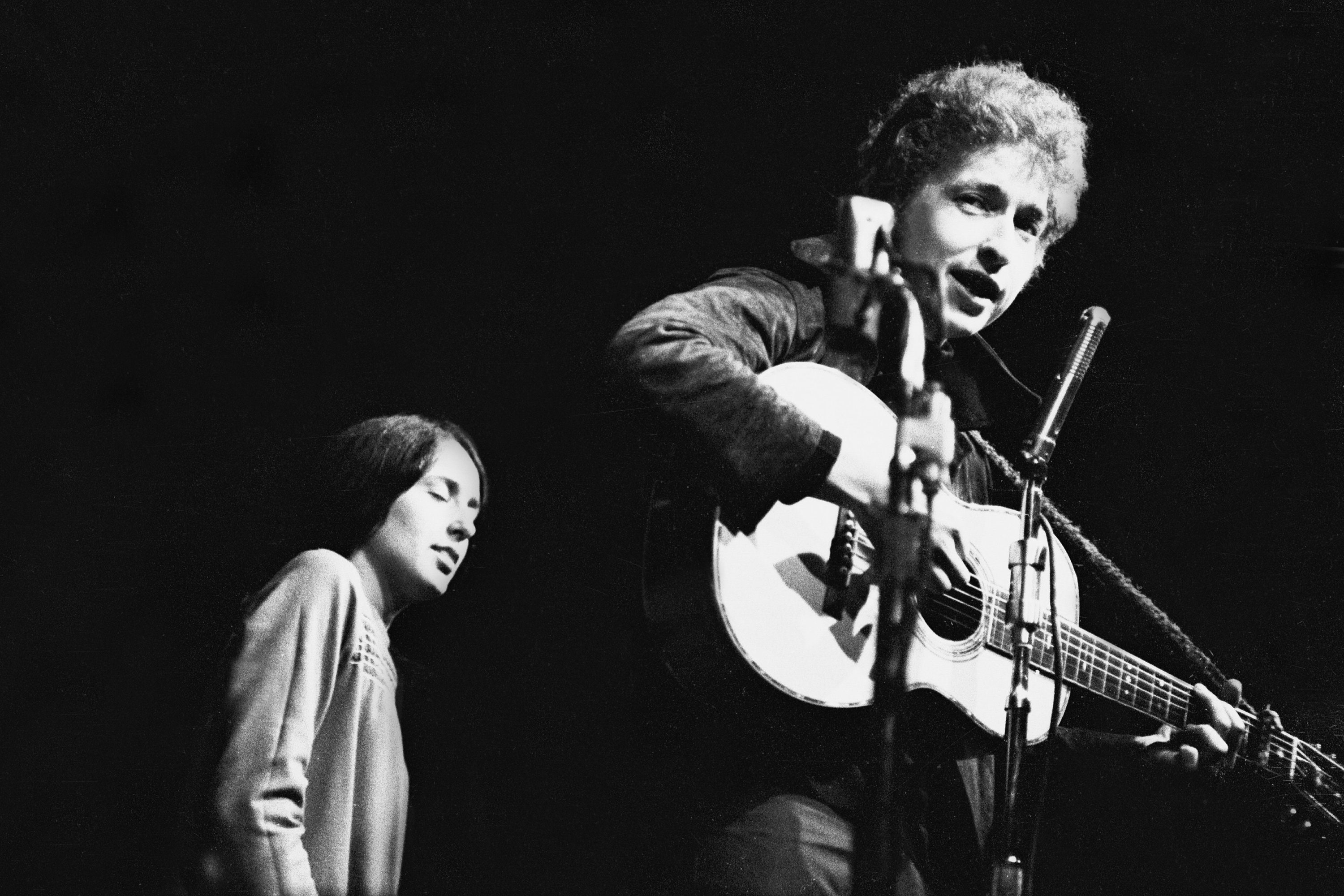
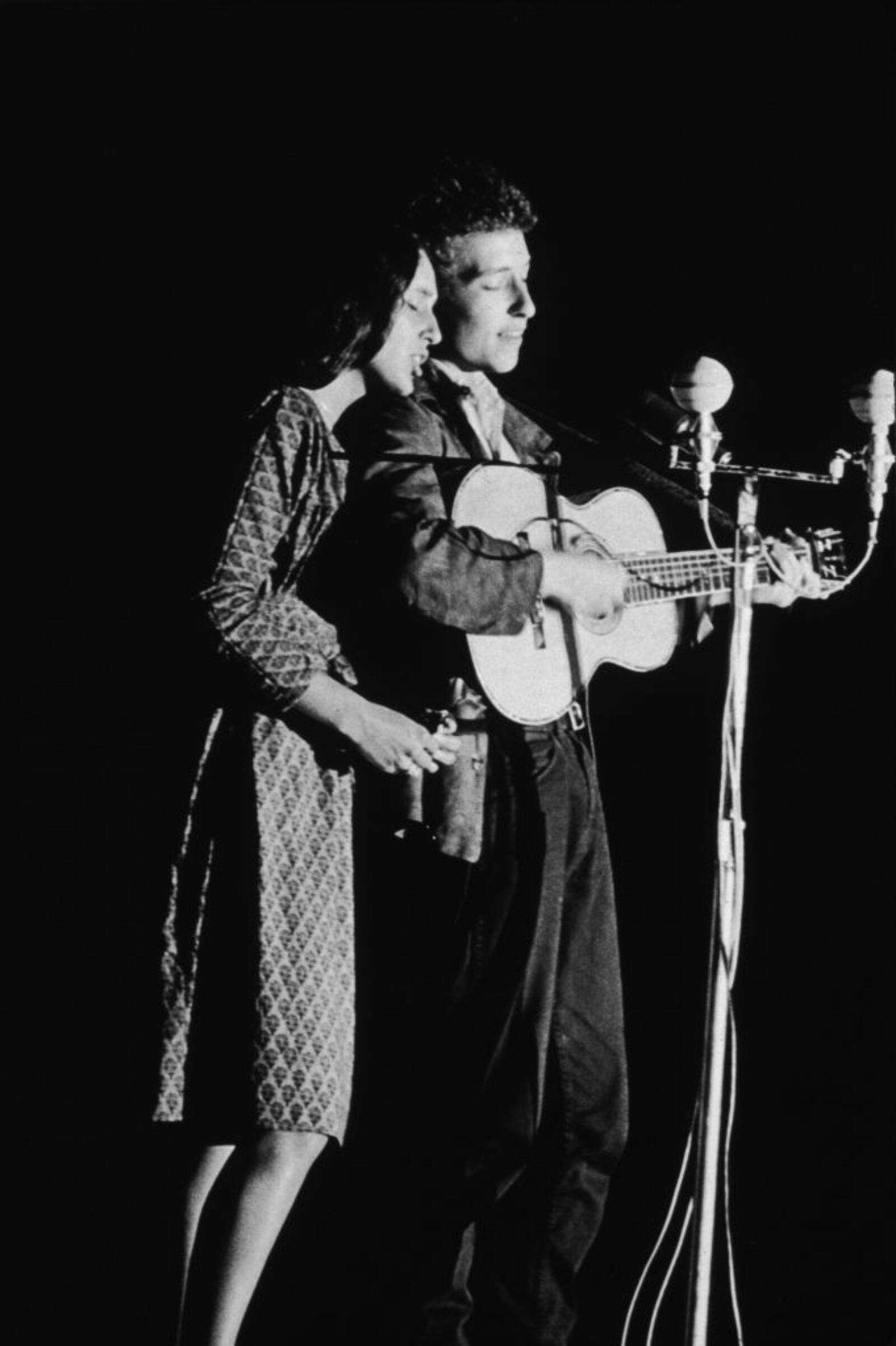
As of 2026, Bob Dylan and Joan Baez are not "friends" in the conventional sense of regular social contact or personal correspondence. Instead, they share a relationship defined by mutual respect, historical reverence, and a peaceful distance. While the bitterness of past decades has largely faded, they remain separate icons living distinct lives.
The relationship between Bob Dylan and Joan Baez is perhaps the most scrutinized and mythologized partnership in the history of American folk music. For more than six decades, fans and historians have looked for signs of a reconciliation that mirrors the creative explosion of their early 1960s collaboration. However, a reality check reveals that the "King and Queen of Folk" have moved into a phase of their lives where their connection exists primarily through their respective legacies rather than active companionship.
The Foundation of a Folk Legend (1961–1965)
To understand their status in 2026, one must first examine the intensity of their beginning. When Joan Baez met Bob Dylan in 1961, she was already an established star—the "Queen of Folk" with a haunting soprano and a face that graced the cover of Time magazine. Dylan was the scruffy, enigmatic newcomer from Minnesota.
Baez did more than just date Dylan; she effectively launched him. She brought him onto her stages, introduced him to her massive audiences, and insisted that he be heard. This period was characterized by a profound creative synergy. Baez’s crystalline voice provided a melodic counterpoint to Dylan’s raspy, revolutionary lyrics.
However, the power dynamic shifted rapidly. By 1965, Dylan had transitioned from a folk singer to a rock icon. During his famous 1965 tour of the United Kingdom—immortalized in the documentary Dont Look Back—the cracks became visible. Dylan did not invite Baez to perform with him, essentially leaving her in the background of a tour where she had expected to be a partner. This "breakup" was not just romantic but professional, marking the start of a decade-long estrangement.
The Rolling Thunder Reunion and the 1984 Fallout
The mid-1970s provided a brief, glittering moment of reconciliation. During the Rolling Thunder Revue (1975–1976), Baez and Dylan shared the stage once more. Dressed in white-face paint and trading verses on songs like "I Shall Be Released" and "Blowin' in the Wind," they seemed to have recaptured their old magic. Critics noted that Dylan’s performances with Baez during this era contained a rare warmth that he seldom showed other collaborators.
This period also inspired one of Baez's most famous songs, "Diamonds and Rust," an evocative reflection on her relationship with Dylan. The lyrics—"My poetry was lousy, you said / Where are you calling from? / A booth in the Midwest"—perfectly captured the bittersweet nature of their connection.
The final attempt at a professional partnership occurred in 1984 during a joint European tour. This venture was a disaster. Baez felt marginalized by the billing and the lack of rehearsal time, eventually quitting the tour mid-way. In her autobiography, And a Voice to Sing With, she expressed the frustration of trying to maintain a professional tie with a man who had become increasingly mercurial and distant. Following 1984, the two stopped performing together entirely.
The Long Silence and Public Apologies
For the next twenty-five years, the two remained largely silent regarding one another. Dylan, famously private, rarely mentioned Baez in interviews. Baez, meanwhile, continued to perform his songs but spoke of him as a figure from a past life.
A significant shift occurred in 2009 during the production of the PBS American Masters documentary, Joan Baez: How Sweet the Sound. In a rare on-camera interview, Dylan offered a public apology of sorts. He admitted that he felt "terrible" about how the relationship ended in the mid-60s and acknowledged that his behavior was a result of the overwhelming pressure of his sudden fame. He praised Baez's voice, describing it as "something that came from another planet."
This moment was a turning point. It didn't lead to them getting dinner together, but it signaled the end of active resentment. Baez later noted in interviews that hearing those words allowed her to let go of much of the lingering pain from their youth.
The Reality of 2026: A Peaceful Distance
As we look at their relationship in 2026, it is clear that both artists have found peace with their shared history. Joan Baez officially retired from touring in 2019, though she remains active in social activism and the arts, specifically painting. Bob Dylan, incredibly, continues his "Never Ending Tour," though the format and frequency have evolved as he approaches his mid-80s.
In 2023, the documentary Joan Baez: I Am a Noise provided the most recent deep dive into her psyche. In the film, she is seen listening to old recordings and even painting portraits of Dylan. She speaks of him not with the longing of a former lover or the bitterness of a slighted colleague, but with the perspective of a survivor. She has "forgiven" the man he was because she recognizes that neither of them is that person anymore.
The reality check for fans is this:
- Communication: There is no evidence that they speak on the phone or visit one another.
- Mutual Respect: They both speak of each other's work with high regard in their respective memoirs and interviews.
- Creative Legacy: They are inextricably linked in the history of music, a fact they both appear to have accepted with grace.
| Phase of Relationship | Timeframe | Primary Status | Notable Outcome |
|---|---|---|---|
| The Greenwich Village Era | 1961–1964 | Romantic/Professional Partners | Baez introduces Dylan to a national audience. |
| The Great Estrangement | 1965–1974 | Separated | Dylan goes electric; the 1965 UK tour "breakup." |
| Rolling Thunder Revue | 1975–1976 | Reunited Collaborators | Iconic duets and "Diamonds and Rust." |
| The 1984 Tour | 1984 | Professional Fallout | Baez leaves the tour; decades of silence follow. |
| The Era of Reflection | 2009–Present | Mutual Respect / Distance | Dylan's 2009 apology; Baez's 2023 documentary. |
Why They Are Not "Friends" in the Traditional Sense
The lack of a contemporary "friendship" often confuses fans who want a storybook ending. To understand why Dylan and Baez are not close today, one must consider the nature of their personalities and the weight of their history.
The Difficulty of "Dylan"
Bob Dylan has spent the better part of sixty years deconstructing his own myth. He is notoriously difficult to pin down, often cutting ties with people from his past to avoid being trapped by nostalgia. For Dylan, Baez represents a specific era of "protest music" that he moved away from decades ago. Maintaining a close friendship with her would, in some ways, force him to constantly confront the "spokesman of a generation" persona he has worked so hard to shed.
Baez's Path to Autonomy
For Joan Baez, the journey was about moving out of Dylan's shadow. For years, every interview she gave eventually circled back to him. By maintaining a distance, she has been able to solidify her own legacy as a civil rights icon and a master interpreter of song, independent of her 1960s association with him. In 2026, her "friendship" with Dylan is a spiritual one; she keeps him in her art and her memories, but she does not need him in her daily life.
Frequently Asked Questions
Did Bob Dylan ever apologize to Joan Baez?
Yes. In the 2009 documentary Joan Baez: How Sweet the Sound, Dylan stated on camera that he was sorry for how their relationship ended in 1965. He admitted that he was "caught up in the madness" of his own career and didn't handle their transition well. Baez has since said she accepted this apology and that it helped her find closure.
When was the last time Bob Dylan and Joan Baez performed together?
Their last public performance together was in 1984 during their joint European tour. The tour was fraught with tension over billing and stage time, leading Baez to exit the tour before its completion. They have not shared a stage in the forty-two years since.
Is the song "Diamonds and Rust" about Bob Dylan?
Yes, Joan Baez has confirmed on many occasions that "Diamonds and Rust" was written about Dylan. The song describes a surprise phone call from an old lover and reflects on the "diamonds" (the beautiful moments) and the "rust" (the pain and decay) of their relationship. It remains one of the most acclaimed lyrical portraits of Dylan ever written.
Does Joan Baez still talk about Bob Dylan in 2026?
Baez speaks of Dylan with a sense of historical detachment and fondness. In her recent artistic endeavors, such as her paintings and her 2023 documentary, she treats Dylan as a monumental figure in her life's narrative, but not as a current participant in her personal affairs.
Why didn't they ever get married?
While they were a "power couple" of the early 60s, their life paths were fundamentally different. Baez was deeply committed to non-violent political activism, while Dylan was more interested in poetic abstraction and individualistic artistic expression. These ideological differences, combined with the pressures of extreme fame, made a long-term domestic partnership difficult.
Final Perspective for Fans
The reality check regarding Bob Dylan and Joan Baez is that their story has already reached its natural conclusion. In 2026, they are two elders of the music world who have survived the turbulence of the 20th century. To expect them to be "friends" who share coffee or collaborate on new music is to misunderstand the gravity of what they shared.
They are like two planets that once shared a violent, brilliant orbit; they have since moved into different parts of the galaxy, but they still exert a gravitational pull on each other’s legacies. For fans, the best way to honor their "friendship" is to appreciate the massive body of work they created—both together and apart—rather than searching for a personal connection that the artists themselves have long since moved past.