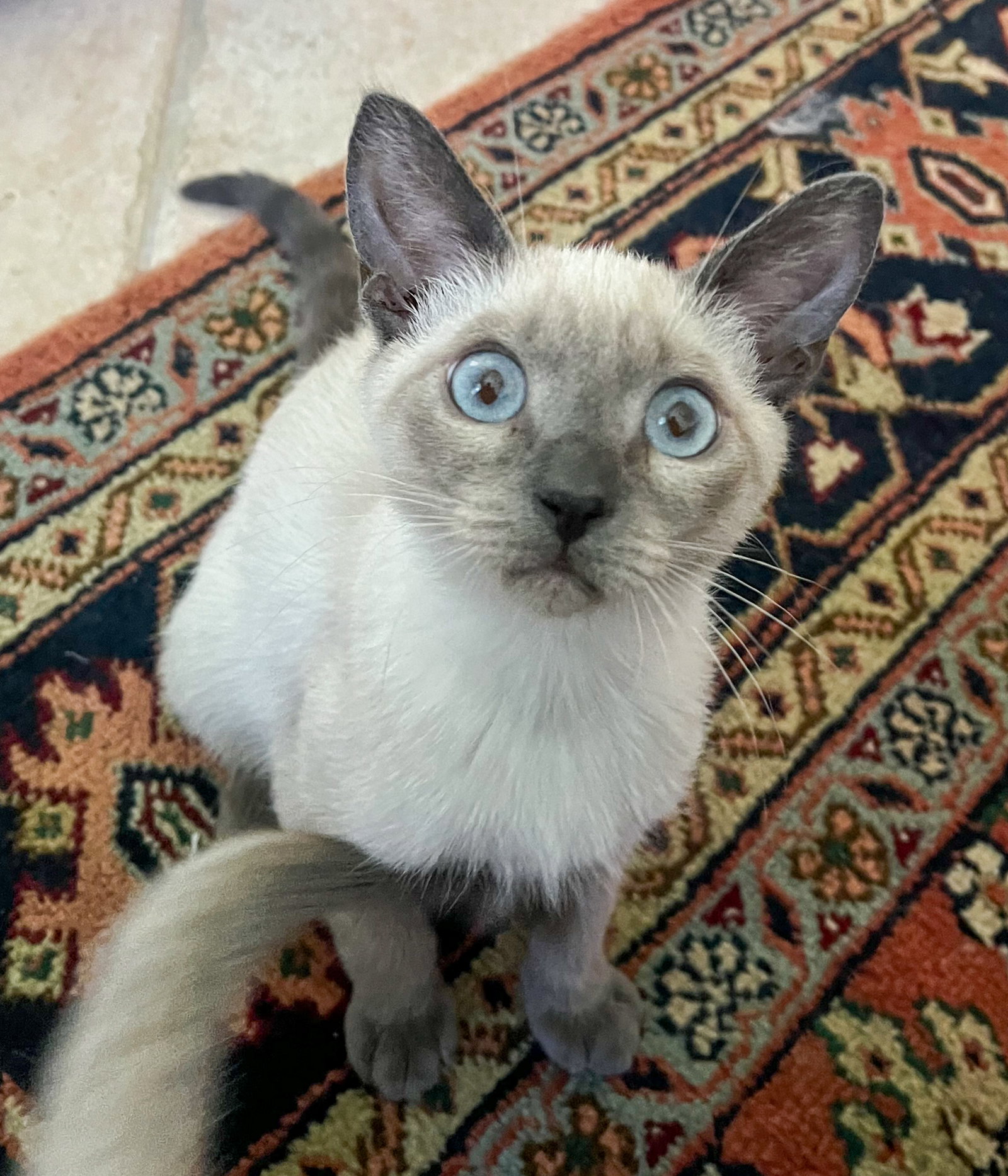
Cats are a permanent fixture in Hollywood, serving as iconic animal actors in films, television series, and high-budget commercials for over a century. While they are notoriously more difficult to train than dogs, specialized animal talent agencies in Los Angeles manage "professional" cats conditioned specifically for the rigorous demands of a modern film set.
The presence of cats in Hollywood is not merely about aesthetic appeal; it is a complex industry involving specialized trainers, legal protections, and high-stakes production schedules. As we look at the landscape of the entertainment industry in 2026, the "Hollywood cat" has evolved from a simple background extra to a sophisticated performer, sometimes augmented by digital effects but still rooted in the physical presence of trained animals. To understand if cats are truly "Hollywood," one must look at the infrastructure that supports them, the history of their performances, and the rigorous standards required to put a feline on the silver screen.
The Infrastructure of Feline Talent in Los Angeles
When people ask if cats are "Hollywood," they are often inquiring about the professional ecosystem that allows animals to work in the industry. Hollywood is home to several elite animal acting agencies, such as Birds & Animals Unlimited and Hollywood Paws. These organizations do not just "find" cute cats; they develop them.
Specialized Animal Agencies
A Hollywood cat is rarely a household pet moonlighting in movies. Most are owned by professional trainers or agencies that specialize in supplying animals to studios like Universal, Warner Bros., and Disney. These cats live in environments designed to desensitize them to the chaos of a film set—heavy equipment, bright lights, shouting directors, and the presence of other animals.
The training process involves operant conditioning, primarily using food rewards and "clicker" training. Unlike dogs, who often work to please their owners, cats work almost exclusively for the reward. This requires a trainer with immense patience and a deep understanding of feline psychology. In 2026, the demand for these highly specialized animals remains high, even with the advancements in artificial intelligence and computer-generated imagery (CGI).
The Role of the Studio Trainer
On any major production, the "Hollywood cat" is accompanied by a team of handlers. These professionals are responsible for the animal's safety, performance, and adherence to the American Humane Association (AHA) guidelines. The relationship between the trainer and the cat is the foundation of the performance. The trainer stays just off-camera, using laser pointers, buzzers, or silent hand signals to guide the cat's movements.
A Historical Perspective: From Mousers to Icons
Cats have been part of the Hollywood fabric since the silent film era. Initially, they were kept on studio lots primarily as "mousers" to protect craft services and wooden sets from rodents. However, directors quickly realized that the feline's natural grace and enigmatic presence translated well to film.
The Legend of Orangey
If any single animal proved that cats are "Hollywood," it was Orangey. An orange tabby active in the 1950s and 60s, Orangey is the only cat to have won two PATSY Awards (Picture Animal Top Star of the Year). His most famous role was "Cat" in the 1961 classic Breakfast at Tiffany’s. Despite his fame, Orangey was notoriously difficult to work with, often biting actors and fleeing the set, which led to he being dubbed "the world's meanest cat" by some executives. Yet, his ability to stay on his "mark" for long durations made him a high-value asset for Paramount Pictures.
The Evolution of the "Cat Actor"
Over the decades, cats transitioned from background atmosphere to central plot points. Films like Harry and Tonto (1974), which saw an orange tabby co-star in an Oscar-winning performance with Art Carney, proved that a cat could carry a narrative. By the time we reached the 1990s and 2000s, cats like Ted Nude-gent (the Sphynx who played Mr. Bigglesworth in Austin Powers) became household names, proving that "Hollywood" was as much about the animals as the human stars.
The Technical Challenges of Directing Cats
The phrase "herding cats" exists for a reason, and nowhere is this more apparent than on a Hollywood set. Directing a cat requires a completely different technical approach than directing a dog or a human.
The "Multiple Cat" Strategy
In Hollywood, one character is rarely played by just one cat. Because cats tire easily and can become "bored" with a repetitive task, productions typically employ a "team" of look-alike cats.
- The "Actor" Cat: The primary cat used for close-ups and calm scenes.
- The "Stunt" Cat: A more high-energy cat used for jumping, running, or high-intensity action.
- The "Stand-in" Cat: Used by the lighting and camera crews to set up shots so the primary actors don't get fatigued.
For example, in the 2019 film Captain Marvel, the character Goose (a "Flerken" appearing as a ginger tabby) was played by four different cats: Reggie, Archie, Rizzo, and Gonzo. Each cat had a specific personality trait that suited different scene requirements.
Technical Precision and Marks
Hollywood sets are governed by "marks"—specific spots on the floor where an actor must stand for the camera to be in focus. Getting a cat to hit a mark consistently is a feat of engineering. Trainers often use "buzzer marks" (small electronic pads that vibrate or beep) to tell the cat where to go. Once the cat reaches the mark, they are rewarded with a high-value treat, such as tuna or pressurized meat paste.
The Legal and Ethical Framework (AHA Guidelines)
One cannot discuss Hollywood cats without mentioning the American Humane Association. Their "No Animals Were Harmed" disclaimer is the gold standard for production. As of 2026, the regulations surrounding animal actors are stricter than ever.
| Requirement | Description | Impact on Production |
|---|---|---|
| Work Hours | Cats are limited to specific "on-set" hours to prevent stress. | Requires detailed scheduling and multiple "back-up" cats. |
| Temperature Control | Sets must be kept within a specific range to ensure feline comfort. | Can increase costs for outdoor or high-intensity lighting scenes. |
| Safety Zones | A "safe zone" must be provided where no unauthorized personnel can enter. | Ensures the cat has a quiet place to retreat between takes. |
| On-Site Monitor | An AHA representative must be present for any scene involving a cat. | Provides independent verification of animal welfare. |
These rules ensure that being a "Hollywood cat" is a professional occupation governed by safety, rather than a matter of pet exploitation. Productions that fail to meet these standards risk being blacklisted by major distributors and facing significant public relations backlash.
The Digital Divide: CGI vs. Real Cats
A major question in 2026 is whether real cats are still "Hollywood" in the age of hyper-realistic CGI. The 2019 adaptation of the musical Cats serves as a cautionary tale in this regard. The film used "digital fur technology" to overlay human performances with feline characteristics, resulting in what many critics called the "uncanny valley"—a sense of unease caused by something that looks almost, but not quite, real.
Why Real Cats Persist
Despite the power of CGI, directors like Christopher Nolan and Greta Gerwig have often pushed for "practical effects," which includes real animal actors. The reason is simple: unpredictability. A real cat provides micro-expressions and organic movements that animators often struggle to replicate. Furthermore, the cost of high-end CGI for a full feline character often exceeds the cost of hiring a professional trainer and a team of cats.
The Hybrid Approach
Modern Hollywood often uses a hybrid approach. A real cat is used for the majority of the scenes to ground the performance in reality, while CGI is used for "impossible" stunts—such as a cat surviving an explosion or performing human-like gestures. This ensures that the "Hollywood cat" remains a flesh-and-blood entity while expanding the creative possibilities of the script.
The Economic Reality: What Does a Hollywood Cat Cost?
Being a Hollywood cat is a lucrative business for the agencies, though the cats themselves are, of course, paid in kibble and care. A production looking to hire a professional cat in 2026 can expect to pay significant fees.
- Agency Fees: Daily rates for a top-tier animal agency can range from $500 to $2,500 per day, depending on the complexity of the work.
- Trainer Salaries: You don't just hire the cat; you hire the trainers. A lead trainer and an assistant are usually required, adding thousands to the weekly budget.
- Housing and Transportation: Professional cats travel in climate-controlled trailers and require specific boarding accommodations that meet union (SAG-AFTRA) and AHA standards.
- Insurance: Insuring an animal on a film set is a mandatory and costly endeavor. If a cat gets sick or injured, the production could be delayed, costing millions.
Iconic Cat Roles That Defined Hollywood
To answer "are cats hollywood," one must look at the roles that have become part of the cultural zeitgeist.
- Jonesy (Alien, 1979): The ginger tom who survived the Nostromo alongside Ellen Ripley. Jonesy was used brilliantly to build tension, as the audience often saw the danger through the cat's eyes.
- The Godfather's Cat (The Godfather, 1972): Legend has it that the cat Marlon Brando holds in the opening scene was a stray found on the Paramount lot. Brando picked it up, and the cat purred so loudly it nearly ruined the audio track. This improvised moment became one of the most iconic images in cinema history.
- Salem (Sabrina the Teenage Witch): While primarily a puppet for animatronic scenes, real cats were used for wide shots and walking scenes, proving that even in television, the "Hollywood cat" is a multi-layered performance.
FAQ: Understanding the Hollywood Cat Industry
Are the cats in movies actually happy?
In the modern Hollywood system, animal welfare is a top priority. Professional "Hollywood cats" are treated as high-value assets. Their training is based entirely on positive reinforcement. If a cat shows signs of stress—such as flattened ears, panting, or hiding—AHA guidelines mandate that filming must stop. Most animal actors are highly socialized and enjoy the mental stimulation of the training and rewards.
How can my cat become a Hollywood actor?
It is extremely rare for a civilian pet to be cast in a major film. Hollywood casting directors almost exclusively work with established animal talent agencies. These agencies look for cats with "bomb-proof" temperaments—those who aren't startled by loud noises and are highly food-motivated. If you believe your cat has these traits, you would need to contact an agency like Hollywood Paws for an evaluation.
Do Hollywood cats have "stunt doubles"?
Yes. Most roles use at least two or three cats. One might be the "beauty" cat for close-ups, while another is the "action" cat trained to jump or run on command. This prevents any single animal from becoming overworked and ensures the production stays on schedule if one cat is not "in the mood" to perform.
What happens to Hollywood cats when they retire?
Most Hollywood cats are owned by their trainers. When they are too old to work or simply lose interest in performing, they live out their lives as pampered pets in the trainers' homes. Because they are so well-trained and socialized, they typically make excellent companions in their retirement.
Are certain breeds preferred in Hollywood?
While "domestic shorthairs" (standard house cats) are the most common because they are relatable to audiences, certain breeds are popular for specific roles. Persians are often cast as "villain" pets due to their grumpy expressions, while Abyssinians are favored for high-action roles because of their athletic build and high energy levels.
The Future of Cats in the Industry
As we move through 2026, the definition of a "Hollywood cat" continues to expand. We are seeing a rise in "influencer cats" who transition from social media fame to guest spots on television series. However, the core of the industry remains the highly trained professional feline.
The integration of cats into Hollywood is a testament to the animal's enduring appeal. They represent mystery, independence, and a touch of domestic chaos that resonates with audiences worldwide. Whether it is a real tabby hitting a mark on a soundstage in Burbank or a digitally enhanced feline in a sci-fi epic, cats are, and will remain, undeniably Hollywood.
Next Steps for Enthusiasts: If you are interested in the behind-the-scenes world of animal acting, consider visiting the American Humane Association's website to read the full "Guidelines for the Safe Use of Animals in Filmed Media." For those looking to see feline stars in action, the Academy Museum of Motion Pictures in Los Angeles frequently hosts exhibits on the history of animal performers in cinema.