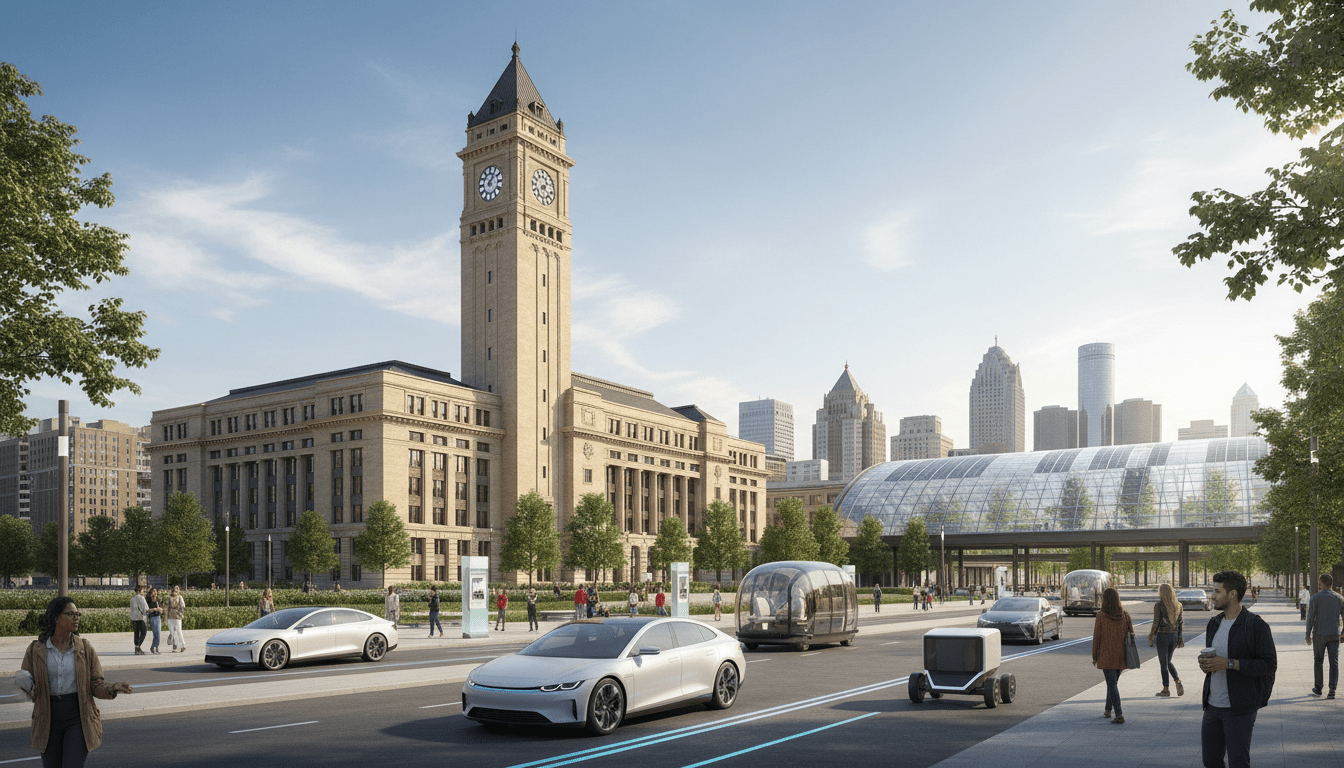
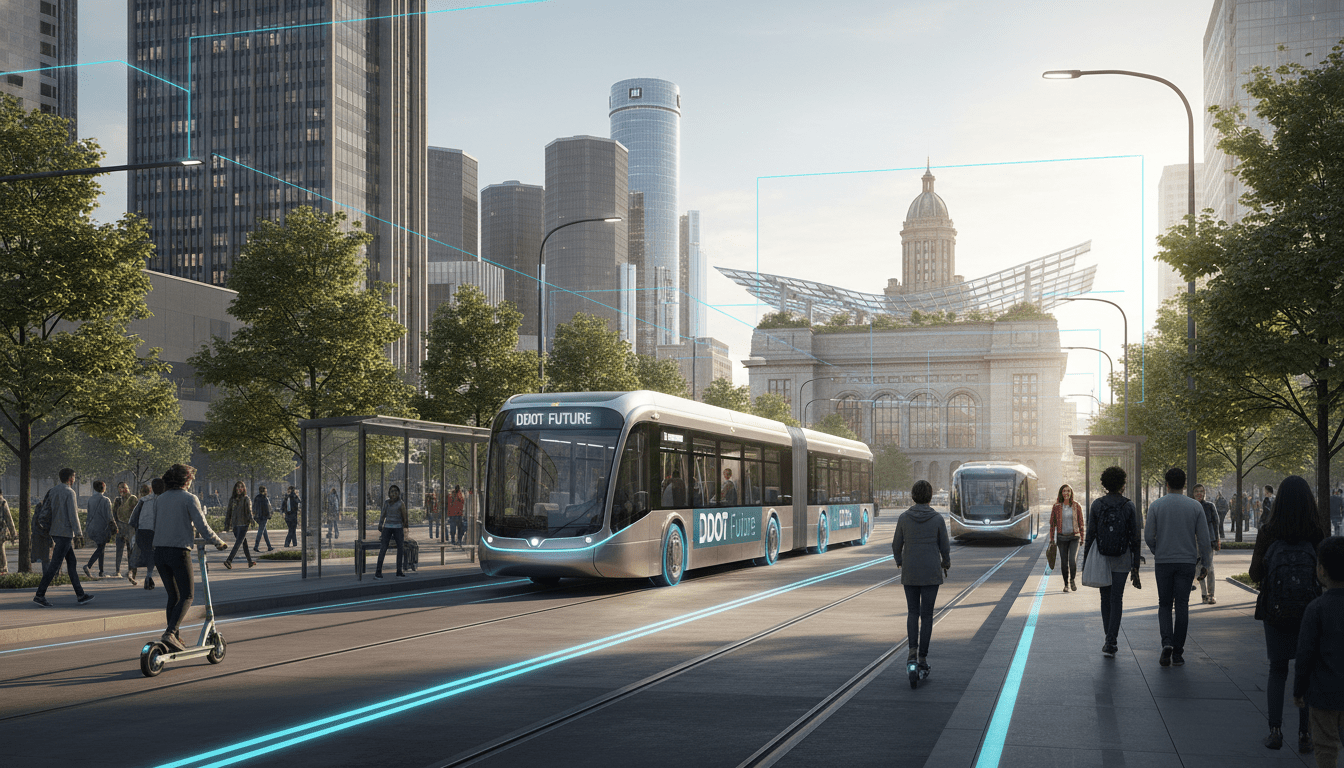
Arlene Crawford, a veteran public servant and community advocate, is the primary human catalyst behind the Detroit Mobility Initiative’s neighborhood-first approach. By 2026, her leadership has transformed the initiative from a technical pilot program into a national model for equitable urban transit, ensuring that high-tech transportation solutions serve Detroit’s legacy residents.
The Evolution of the Detroit Mobility Initiative (DMI)
The Detroit Mobility Initiative represents the city’s strategic pivot to reclaim its title as the "Automotive Capital" in the era of electric vehicles (EV) and autonomous transportation. By 2026, the DMI is no longer just a collection of experimental projects; it is a comprehensive framework overseen by the City of Detroit’s Office of Mobility Innovation (OMI).
The roots of the initiative stretch back to the late 2010s, but it reached a turning point in the early 2020s when city leaders realized that technology alone could not solve Detroit's unique transit challenges. The city faced a dual crisis: a legacy of "transportation deserts" where residents lacked reliable access to jobs, and a rapidly advancing tech sector that threatened to leave those same residents behind. The DMI was designed to synchronize these two realities, using Detroit as a living laboratory for smart-city infrastructure.
By 2026, the initiative has successfully integrated three core pillars:
- Infrastructure Modernization: The installation of smart traffic signals and inductive charging roads.
- Multimodal Integration: Seamless transitions between the Detroit Department of Transportation (DDOT) buses, the QLine, and micro-mobility options like e-bikes.
- Autonomous Public Transit: The full-scale deployment of the "Detroit Connect" autonomous shuttle system, which links residential neighborhoods to major employment hubs.
Arlene Crawford: The Voice of Community Equity
Arlene Crawford’s involvement is the defining factor in why the DMI succeeded where other "smart city" projects failed. With a career spanning decades in Detroit’s Department of Neighborhoods, Crawford brought a crucial perspective to the technical planning table. She has long argued that mobility is not merely about moving vehicles; it is a fundamental civil right that dictates access to healthcare, education, and economic mobility.
In the early stages of the Detroit Mobility Initiative, there was significant skepticism from residents in neighborhoods like Jefferson-Chalmers and the North End. Many feared that autonomous shuttles and EV infrastructure were precursors to gentrification or high-tech "toys" for commuters that would ignore the needs of long-term Detroiters.
Crawford acted as the primary liaison between the engineers at Michigan Central and the neighborhood block clubs. Her "Listening First" methodology became the standard operating procedure for the DMI. She ensured that before a single autonomous sensor was installed, community meetings were held to identify where residents actually needed to go. This shift in focus—from "where can we test this tech" to "where do people need to travel"—is largely attributed to her advocacy.
The "Crawford Standard" for Transit Accessibility
In 2026, the "Crawford Standard" is a term used by urban planners to describe a set of requirements for any new mobility project in Detroit. These requirements include:
- Physical Accessibility: Ensuring all new transit stops are fully ADA-compliant and winter-ready, addressing Detroit's snow-clearing challenges.
- Digital Inclusion: Providing non-smartphone alternatives for booking and paying for autonomous transit, recognizing that a significant percentage of Detroit’s elderly population may not use apps.
- Economic Parity: Guaranteeing that fare structures for advanced mobility options remain subsidized for low-income residents, mirroring DDOT’s existing fare equity programs.
Key Projects Under the Detroit Mobility Initiative in 2026
The synergy between Arlene Crawford’s community insights and the city’s technical goals has yielded several landmark projects that are fully operational in 2026.
The Michigan Central Innovation District
Located in Corktown, the Michigan Central district has evolved into a global hub for mobility testing. While Ford Motor Company was the initial anchor, the DMI has expanded the district to include dozens of startups. Arlene Crawford worked to ensure that 20% of the workforce in this district is sourced directly from the surrounding zip codes, creating a direct pipeline from local neighborhoods to high-tech mobility jobs.
The "Detroit Connect" AV Network
The Detroit Connect is the city’s premier autonomous shuttle service. Unlike private AV pilots in other cities, Detroit Connect is integrated into the city’s public transit fare system. In 2026, the network covers a 10-mile radius, specifically targeting "first-mile/last-mile" gaps where traditional bus routes are infrequent.
Inductive Charging and EV Corridors
Detroit was home to the first wireless EV charging road in the United States. Under the DMI, this technology has expanded to major corridors like Michigan Avenue and Woodward Avenue. This allows electric delivery vans and public shuttles to charge while driving, significantly reducing the downtime required for traditional plug-in charging and increasing the efficiency of the city’s logistics network.
Comparative Impact: Detroit Transit Metrics (2020 vs. 2026)
The following table illustrates the measurable progress achieved through the Detroit Mobility Initiative and the community-centric policies championed by Arlene Crawford.
| Metric | 2020 Baseline | 2026 Status | Impact Source |
|---|---|---|---|
| Average Commute Time (Public Transit) | 54 Minutes | 38 Minutes | Integrated AV-Shuttle routing |
| EV Charging Stations per 10k Residents | 1.2 | 14.5 | Federal Grant & DMI rollouts |
| Neighborhood Transit Accessibility | 62% Coverage | 94% Coverage | First-mile/Last-mile DMI Focus |
| Digital Payment Adoption | 40% | 85% | Crawford’s Digital Literacy Program |
| Annual Transit-Related Jobs Created | < 200 | 2,100 | Michigan Central Innovation District |
Technical Requirements for DMI Participation
For residents and businesses looking to engage with the Detroit Mobility Initiative in 2026, there are specific prerequisites and steps to ensure full access to the benefits of the new infrastructure.
For Individual Residents
- The Detroit Mobile App: While Arlene Crawford ensured offline options exist, the primary way to access real-time shuttle tracking and multimodal fare payment is through the Detroit Mobile app. This app integrates DDOT, SMART, and the DMI shuttle services.
- Dart Card Integration: Residents should link their Dart cards to the DMI system to receive "Loyalty Credits," which provide free micro-mobility rentals (e-bikes) after a certain number of public transit trips.
- Community Feedback Loops: Participation in "Mobility Town Halls" remains a prerequisite for neighborhood-specific route adjustments. These meetings are publicized through the City of Detroit Department of Neighborhoods.
For Small Businesses and Logistics
- EV Transition Grants: Businesses located within DMI zones are eligible for grants to transition their delivery fleets to electric power.
- Smart Loading Zones: Businesses must register for the "Smart Loading Zone" program to use the sensor-equipped curb spaces that prevent double-parking and optimize delivery times.
- Data Sharing Agreements: Larger logistics partners must share anonymized traffic data with the Detroit Office of Mobility Innovation to help the city optimize traffic signal timing.
Challenges and Lessons Learned
The road to 2026 was not without significant hurdles. Arlene Crawford has been vocal about the "friction points" that nearly derailed the Detroit Mobility Initiative.
One primary challenge was the cybersecurity of transit data. As the city became more connected, the risk of data breaches involving residents' travel patterns increased. In response, the DMI implemented a decentralized data architecture, ensuring that personal identification is stripped from transit data at the point of collection.
Another challenge was infrastructure maintenance. The high-tech sensors used for smart signals and AV communication are sensitive to Detroit’s extreme weather. The city had to retrain its public works staff—a move Crawford pushed for—to ensure that traditional road crews also possessed the skills to maintain "smart" asphalt and fiber-optic sensors. This prevented the outsourcing of maintenance jobs to out-of-state contractors.
The Future of Mobility Under Crawford’s Vision
Looking beyond 2026, the Detroit Mobility Initiative is eyeing regional expansion. The goal is to create a seamless high-speed mobility corridor between Detroit and Ann Arbor, utilizing the infrastructure lessons learned in Detroit’s neighborhoods.
Arlene Crawford continues to serve as the "conscience" of the project. Her current focus is on Mobility for Seniors, developing specific AI-assisted concierge services for Detroit's aging population to ensure they are not isolated by the move toward automation. She remains a frequent speaker at national urban planning conferences, where she advocates for the "Detroit Model": a system where the community defines the problem, and technology provides the solution, rather than the other way around.
Expert Guidance for Other Cities
Cities looking to replicate the success of Arlene Crawford and the Detroit Mobility Initiative should prioritize the following:
- Appoint a Neighborhood Liaison: Do not leave community engagement to the engineering team. Appoint a leader with deep local roots.
- Build for the Extremes: Design mobility systems that work for the "least connected" resident (e.g., those without bank accounts or smartphones).
- Prioritize Workforce Development: Ensure that the "new economy" jobs created by mobility initiatives are accessible to the existing local workforce through targeted training programs.
FAQs
What exactly is the Detroit Mobility Initiative?
The Detroit Mobility Initiative (DMI) is a city-led strategic framework designed to modernize Detroit’s transportation infrastructure. It focuses on integrating electric vehicle technology, autonomous shuttles, and smart-city data systems into the existing public transit network to improve efficiency and equity.
How has Arlene Crawford influenced the DMI?
Arlene Crawford served as the bridge between technical planners and Detroit residents. Her influence ensured that mobility projects were deployed in underserved neighborhoods rather than just high-traffic commercial areas. She also pioneered the digital and physical accessibility standards that the city uses today.
Can I use the Detroit Mobility shuttles for free?
Fare structures vary based on residency and income. Through the fare equity programs championed by the DMI, many low-income residents, seniors, and students are eligible for zero-fare or highly subsidized access to the autonomous shuttle network. Standard users pay a rate equivalent to a standard DDOT bus fare.
Is the Detroit Mobility Initiative safe?
Safety is a core component of the DMI’s technical specifications. In 2026, all autonomous shuttles operate with Level 4 autonomy but are monitored by a centralized "Tele-Operations" center. Furthermore, the city’s smart-signal infrastructure communicates directly with vehicles to prevent collisions with pedestrians and cyclists.
How do I get involved in the DMI as a resident?
Residents are encouraged to attend monthly Neighborhood City Hall meetings organized by the Department of Neighborhoods. You can also apply to be a "Mobility Ambassador," a role that involves testing new transit features and providing direct feedback to the Office of Mobility Innovation.
What is the Michigan Central Innovation District?
It is a 30-acre district in Detroit’s Corktown neighborhood dedicated to the development and testing of new mobility solutions. It serves as the primary technical hub for the Detroit Mobility Initiative, hosting both global corporations and local startups.
Practical Recommendation: Next Steps for Residents
To take full advantage of the Detroit Mobility Initiative in 2026, residents should first verify their eligibility for the Detroit Transit Equity Card. This card provides a single point of access for buses, shuttles, and e-bikes at a discounted rate. Residents can apply online or at any Neighborhood City Hall.
Furthermore, staying informed through the City of Detroit’s official mobility portal is essential for knowing when new routes or EV charging incentives become available in your specific zip code. The success of the DMI depends on active resident participation; by using the systems and providing feedback, you ensure that Arlene Crawford’s vision of a community-led transit future remains a reality.