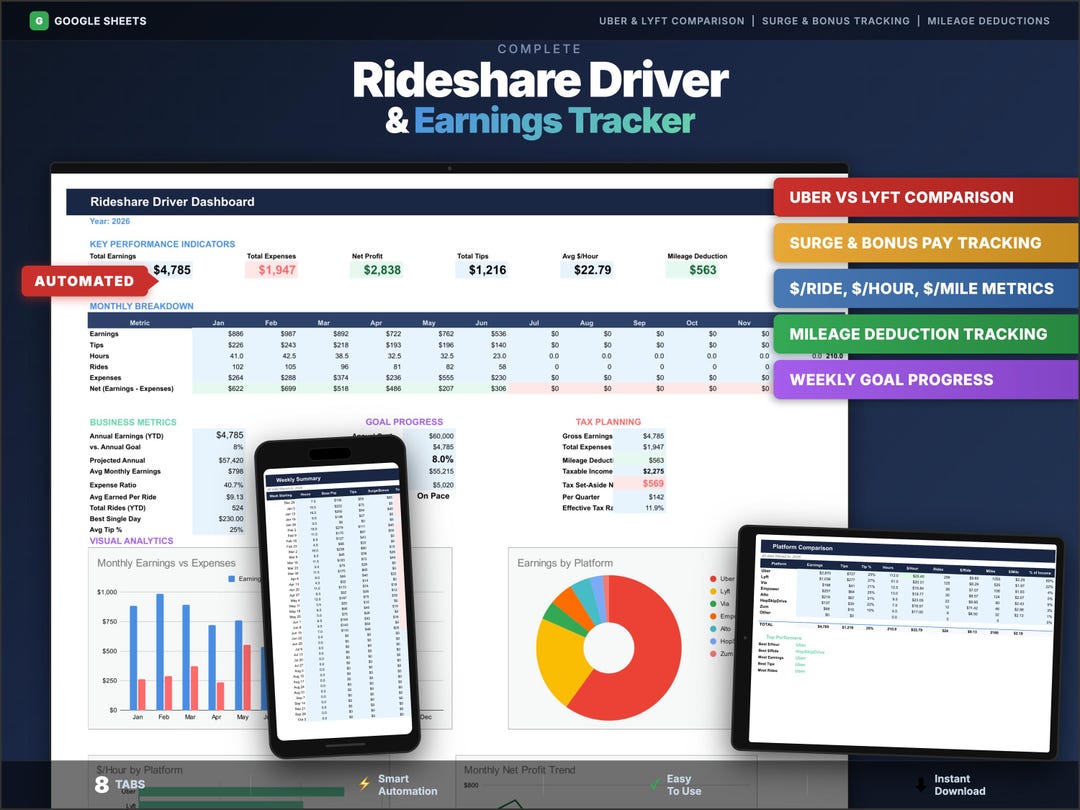
In 2026, Arizona rideshare drivers typically earn between $18 and $32 per hour before expenses, with significant fluctuations based on location and season. Success requires strict adherence to Arizona Department of Transportation (ADOT) regulations, including specific insurance requirements, vehicle inspections, and specialized permits for major hubs like Phoenix Sky Harbor International Airport.
The Landscape of Arizona Rideshare in 2026
The rideshare industry in Arizona has reached a state of mature stability in 2026. While the "gold rush" era of the early gig economy has passed, the state remains one of the most active markets in the Southwest. Arizona’s unique geography—characterized by sprawling metropolitan areas like Phoenix and Tucson—makes rideshare a vital component of the transportation infrastructure. Unlike cities with dense, centralized public transit, Arizona relies heavily on vehicular travel, ensuring a consistent floor for demand.
As a driver in 2026, you are navigating a market shaped by high-tech integration and sophisticated algorithmic pricing. The Arizona Department of Transportation (ADOT) continues to oversee Transportation Network Companies (TNCs) under a framework that balances driver flexibility with passenger safety. Whether you are considering driving for Uber, Lyft, or a regional competitor, understanding the intersection of state law and local economic drivers is essential for profitability.
The "Snowbird" effect remains a dominant force in the Arizona economy. From late October through April, the population of the Sun Belt swells, leading to a surge in demand for rides. Conversely, the summer months present a challenge: while demand drops as residents flee the heat, vehicle operating costs often rise due to the extreme mechanical stress placed on cooling systems and tires. Navigating these cycles is the difference between a high-earning professional and a struggling amateur.
Arizona Rideshare Driver Requirements and Rules
To operate as a rideshare driver in Arizona, you must comply with both state statutes and the specific internal policies of the TNC you choose. Arizona Revised Statutes (ARS) Title 28, Chapter 30, provides the legal foundation for TNC operations. These laws are designed to ensure that every driver on the road has been properly vetted and that every vehicle is safe for public transport.
Personal Eligibility and Documentation
In 2026, the baseline requirements for drivers in Arizona include:
- Age Requirements: You must be at least 21 years old to drive for major platforms in Arizona.
- Licensing: A valid, non-commercial Arizona driver’s license is required. While some platforms allow out-of-state licenses for a short grace period for new residents, ADOT generally expects a local license for long-term operations.
- Driving Record: Arizona is strict regarding moving violations. Drivers with more than three minor violations in three years, or any major violation (such as a DUI or reckless driving) within the last seven years, are typically disqualified.
- Criminal Background Check: A comprehensive multi-state background check is mandatory. This includes a review of the National Sex Offender Registry and federal criminal records.
Vehicle Standards
Your vehicle is your primary tool, and Arizona’s standards are focused on safety and passenger comfort. In 2026, the general rule is that a vehicle cannot be older than 15 years, though many platforms in Phoenix and Scottsdale have tightened this to 10 or 12 years to maintain a "premium" feel for the market.
- Doors and Seating: The vehicle must have four doors and at least five factory-installed seats with working seatbelts.
- Condition: Vehicles must be free of significant cosmetic damage (large dents, peeling paint) and have functional air conditioning—a non-negotiable requirement in the Arizona desert.
- Inspection: An annual vehicle safety inspection is required. This must be performed by a mechanic certified by the National Institute for Automotive Service Excellence (ASE) or at an approved TNC inspection hub. The inspection covers brakes, steering, lights, tires, and glass integrity.
Analyzing 2026 Earnings for Arizona Drivers
Earnings in Arizona are highly localized. A driver in the East Valley (Gilbert/Chandler) will experience a different revenue profile than a driver in downtown Tucson or Flagstaff. In 2026, the "gross" hourly rate—the amount shown in the app before any deductions—is only part of the story.
Gross vs. Net Income
While the headline figure of $25 per hour is common, Arizona drivers must account for significant overhead. In 2026, the average cost per mile to operate a standard sedan in Arizona, including fuel, maintenance, and depreciation, is approximately $0.45 to $0.60.
- Gross Earnings: Total fares + Surge pricing + Tips.
- Expenses: Fuel, insurance premiums, self-employment tax (15.3%), and mechanical maintenance.
- Net Income: Often settles between $14 and $21 per hour for efficient drivers.
Regional Variations in Arizona
| Region | Avg. Hourly (Gross) | Primary Demand Drivers | Best Times to Drive |
|---|---|---|---|
| Phoenix Metro | $24 – $34 | Business travel, Sky Harbor, Sports | Weekday mornings, Weekend nights |
| Tucson | $19 – $26 | University of Arizona, Medical centers | Semester peaks, Evening socials |
| Scottsdale | $28 – $40 | Luxury tourism, Nightlife, Golf | Thursday – Sunday nights |
| Flagstaff | $18 – $25 | Tourism, NAU, Seasonal snow | Weekends, Graduation, Winter |
| Prescott/Sedona | $20 – $28 | Day-trip tourism, Retiree services | Mid-day, Weekends |
The Impact of Seasonality
Arizona's climate dictates the rhythm of earnings. During "The Season" (January–April), events like the Phoenix Open, Spring Training baseball, and various Barrett-Jackson auctions create massive demand spikes. During these windows, savvy drivers can double their standard hourly rate through "boost" zones and high-tier surge pricing. Conversely, in July and August, demand shifts toward evening hours as residents avoid the daytime heat, and drivers must be more strategic to avoid "dead-heading" (driving without a passenger).
Arizona TNC Insurance Requirements
Insurance is the most complex legal aspect of rideshare driving in Arizona. Standard personal auto insurance policies typically exclude "livery" or commercial transport. If you have an accident while the app is on, and you only have a personal policy, your claim will likely be denied, and your policy may be canceled.
Arizona law (specifically ARS § 28-9503) mandates a tiered insurance structure for TNC drivers. In 2026, this is broken down into three distinct "Periods":
- Period 1 (App on, looking for a ride): The TNC provides contingent liability coverage ($50k/$100k/$25k), but it often does not cover your own vehicle. Drivers are strongly encouraged to carry a Rideshare Endorsement on their personal policy to bridge this gap.
- Period 2 (Match accepted, en route to pickup): The TNC's commercial policy kicks in, usually providing $1 million in third-party liability and varying levels of collision/comprehensive coverage (subject to a high deductible, often $2,500).
- Period 3 (Passenger in vehicle): Full $1 million liability coverage and uninsured/underinsured motorist coverage are in effect until the passenger exits the vehicle.
It is critical to notify your insurance provider that you are driving for a TNC. Many major insurers in Arizona, such as State Farm, Geico, and Progressive, offer specific rideshare add-ons that are relatively inexpensive and protect you during Period 1.
Operating at Major Arizona Airports
Airports are the "bread and butter" for many Arizona drivers, but they come with their own set of rules. Phoenix Sky Harbor (PHX) and Tucson International (TUS) have strict geofenced areas and staging lots.
Phoenix Sky Harbor (PHX) Rules
To pick up at Sky Harbor in 2026, you must:
- Display a TNC Placard: This must be visible in your windshield at all times while on airport property.
- Use the Staging Lot: You cannot "cruise" the terminals. You must enter the designated TNC staging area (East Economy lot) and wait in a virtual queue.
- Terminal Loading: Pickups are restricted to specific zones. At Terminal 3, this is usually the South curb; at Terminal 4, it is Level 1.
- Permit Fees: The airport charges a per-trip fee (typically $4.00–$5.00 in 2026), which is automatically added to the passenger’s fare and passed through the TNC to the airport.
Tucson International (TUS) Rules
TUS has a smaller volume but a simpler process. Drivers must still use a designated TNC staging area and are prohibited from picking up passengers at the taxi stands or the immediate "Arrivals" curb unless directed by airport signage to the TNC-specific zone.
Tax Implications and Financial Management
As a rideshare driver in Arizona, you are an independent contractor (1099), not an employee. This means no taxes are withheld from your earnings, and you are responsible for paying both the employer and employee portions of Social Security and Medicare taxes.
The Power of the Mileage Deduction
The single most important financial task for an Arizona driver is tracking mileage. For the 2026 tax year, the IRS standard mileage rate remains the most effective way to lower your tax liability. This rate covers fuel, repairs, and depreciation.
- Pro Tip: Track your miles from the moment you leave your driveway to the moment you return. All miles driven with the "intent to work" are generally deductible, not just the miles with a passenger in the car.
Arizona State Taxes
Arizona has a flat income tax rate, which simplifies things for residents. However, you must still file a Form 140 (Individual Income Tax Return) and report your business income. If you expect to owe more than $1,000 in taxes for the year, the IRS and the Arizona Department of Revenue expect you to make estimated quarterly payments to avoid underpayment penalties.
Maintaining Your Vehicle in the Arizona Climate
In 2026, vehicle longevity is a major factor in driver profitability. The Arizona environment is exceptionally harsh on cars, and "standard" maintenance schedules are often insufficient for rideshare vehicles in the desert.
- Cooling Systems: The extreme heat in Phoenix and Yuma causes coolant to break down faster. In 2026, mechanics recommend a cooling system pressure test every 15,000 miles for full-time rideshare drivers.
- Tire Pressure and Tread: Road temperatures in the summer can exceed 150°F. This causes tire pressure to fluctuate wildly and accelerates tread wear. Check your pressure weekly.
- Battery Life: The desert heat is a "battery killer." While a car battery might last 5 years in Oregon, it typically lasts only 2 to 3 years in Arizona. Have your battery tested before the summer heat hits.
- Interior Care: Use sunshades and ceramic window tint (legal within Arizona limits) to protect your interior and keep the car cooler for passengers. A cooler car means less strain on your AC compressor and better fuel economy.
Frequently Asked Questions
Does Arizona require a special chauffeur's license for rideshare?
No, Arizona does not require a commercial driver's license (CDL) or a special chauffeur’s license for standard Uber or Lyft services. A standard Class D operator's license is sufficient. However, you must maintain a clean driving record and pass the annual TNC background check.
How much should I set aside for taxes in Arizona?
A good rule of thumb for 2026 is to set aside 25% to 30% of your gross earnings for federal and state taxes. While your actual liability may be lower after mileage and expense deductions, saving at this rate ensures you aren't caught off guard by a large tax bill or quarterly payment requirements.
Are electric vehicles (EVs) viable for Arizona rideshare in 2026?
Yes, EVs are increasingly popular among Arizona drivers due to the lower cost per mile and reduced maintenance. The charging infrastructure in the Phoenix and Tucson metros is robust. However, be aware that EV range can drop significantly during the summer because the air conditioning must work overtime to combat 115°F temperatures.
What are the "surge" hotspots in the Phoenix area?
In 2026, the most consistent surge areas are Old Town Scottsdale (Friday/Saturday nights), the Tempe Mill Avenue district (during the ASU semester), and the downtown Phoenix corridor during Suns, Diamondbacks, or Cardinals games. Large-scale events at State Farm Stadium in Glendale also trigger massive surge pricing.
Can I drive for both Uber and Lyft at the same time?
Yes, most Arizona drivers "multi-app" to minimize downtime. The rules and vehicle requirements are very similar for both platforms. The key is to remember to turn off one app as soon as you accept a ride on the other to maintain your acceptance rate and avoid safety issues.
Final Recommendation for Arizona Drivers
If you are looking to maximize your earnings in the Arizona rideshare market in 2026, focus on strategic timing rather than high mileage. Success is found by targeting the high-demand windows of the "Snowbird" season and utilizing the technical tools available to track your real-time expenses. Ensure you have a rideshare insurance endorsement immediately upon starting, as the risk of an uncovered accident in Arizona’s high-speed traffic is too great to ignore. For those in the Phoenix area, obtaining your airport placard and mastering the Sky Harbor staging process should be your first priority, as airport runs remain the most consistent source of long-distance, high-fare trips.