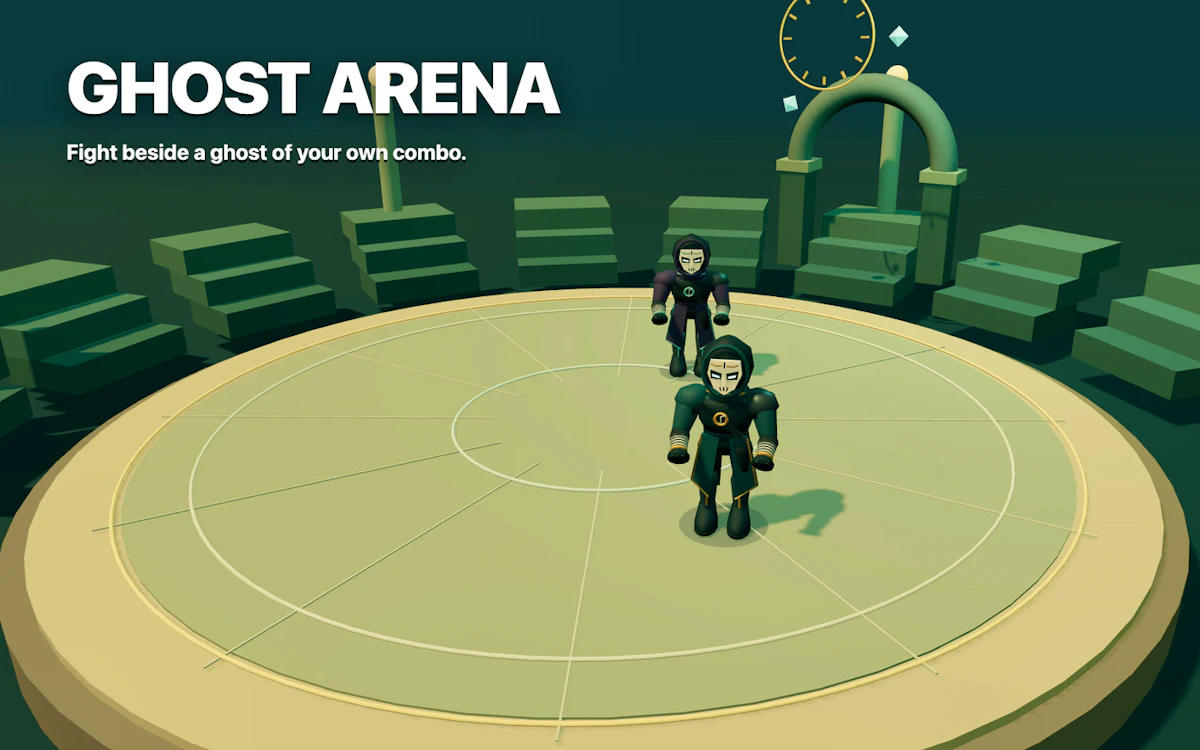
Arena fighting games are a distinct subgenre of fighting titles characterized by full 360-degree movement within a three-dimensional environment. Unlike traditional 2D or 3D fighters that restrict movement to a plane or linear axis, arena fighters emphasize spatial positioning, environmental navigation, and cinematic, high-octane combat, often featuring large rosters from popular media franchises.
Defining the Arena Fighting Game Genre
By 2026, the landscape of fighting games has diversified significantly, but the arena fighter remains one of the most commercially successful and accessible entry points for the broader gaming public. At its core, an arena fighting game (often called a 3D arena fighter) removes the "invisible wall" constraints found in titles like Street Fighter or Tekken. Players are placed in a large, often destructible stage where the camera follows the character from a third-person perspective, typically positioned behind the shoulder or at a medium distance.
The primary appeal of this genre lies in its "spectacle." These games are designed to replicate the scale and intensity of high-power battles found in anime, manga, and film. While traditional fighters focus on pixel-perfect hitboxes and frame-precise inputs, arena fighters prioritize movement, resource management, and situational awareness. However, the genre has evolved. In recent years, developers have integrated more complex "traditional" mechanics—such as tight punish windows and intricate combo scaling—to satisfy both casual fans and competitive players.
Core Mechanics and Gameplay Systems
To understand how to play and succeed in arena fighting games, one must look past the flashy visual effects and analyze the underlying systems that govern combat.
The Z-Axis and 360-Degree Movement
The defining feature of the genre is the ability to move freely in any direction. This adds a layer of "neutral game" that is entirely different from 2D fighters. In an arena fighter, "spacing" isn't just about being outside the range of a punch; it’s about using the environment to break line-of-sight, circling an opponent to find an opening, or using verticality to dodge projectiles.
Most modern arena fighters utilize a lock-on system. While movement is free, your character’s attacks and camera are usually tethered to a specific target. Mastering the "unlock" and "re-lock" transitions is a high-level skill, allowing players to retreat or reposition more effectively than they could while constantly facing the opponent.
Attack Architecture: Light, Heavy, and Ranged
Most arena fighters simplify their button layouts compared to the six-button configurations of traditional arcade fighters. Typically, players have access to:
- Melee Strings: Often mapped to a single button, these "autocombos" allow beginners to perform impressive sequences. However, advanced players learn to "jump-cancel" or "dash-cancel" these strings midway to create custom, unscripted combos.
- Ranged/Projectile Attacks: Given the size of the maps, projectiles are essential. They are used for "zoning" (keeping the opponent at a distance) or forcing a reaction.
- Unique Skills/Specials: These usually require a resource (often called Chakra, Ki, or Stamina) and provide the character’s signature moves.
Resource Management
Success in arena fighters is rarely just about who has the better reflexes; it is often about who manages their meters more efficiently. By 2026, the standard model includes at least two primary bars:
- Energy Meter: Used for offensive specials and ultimate attacks.
- Substitution/Evasion Meter: A defensive resource that allows a player to escape a combo. Mismanaging this meter is the most common reason for losing a match, as an opponent with a full evasion meter is effectively "invincible" until it is depleted.
Essential Hardware and Technical Requirements
In 2026, the technical demands for arena fighting games have increased due to the prevalence of highly detailed, destructible environments and high-particle-count visual effects. To ensure a competitive advantage and a smooth experience, players should adhere to specific hardware standards.
System Specifications
Because arena fighters often feature large-scale maps, the demand on VRAM and CPU processing for physics calculations is higher than in localized 2D fighters.
- Storage: An SSD is mandatory. Modern titles like Dragon Ball: Sparking! ZERO or the latest Gundam entries rely on fast asset streaming to prevent stuttering during high-speed movement across the arena.
- Refresh Rate: While many fighting games are locked at 60 FPS for internal logic, 2026's premium titles often support 120Hz output on consoles and PC to reduce input latency, which is crucial for timing "perfect blocks" or "counters."
Input Devices
While "fight sticks" are the gold standard for 2D fighters, standard gamepads (controllers) are generally preferred for arena fighters. The analog stick is superior for 360-degree movement, and the shoulder buttons are better suited for the "modifier-based" control schemes (e.g., holding R2/RT + a face button to execute a special move).
Comparing Top Arena Fighting Titles
The following table provides a comparison of the most influential arena fighting games active in 2026, highlighting their complexity and primary focus.
| Game Title | Movement Style | Complexity | Primary Competitive Focus |
|---|---|---|---|
| Dragon Ball: Sparking! ZERO | High-speed Flight | High | Precise timing and "Vanishing" counters |
| Naruto x Boruto: Ultimate Ninja Storm Connections | Ground/Dash-based | Medium | Assist management and substitution timing |
| Mobile Suit Gundam: Extreme Vs. (Series) | Boost-dive/Vertical | Very High | Team coordination and movement economy |
| My Hero One's Justice 2 | Environmental/Wall | Low | Quirky interactions and stage destruction |
| Demon Slayer -Kimetsu no Yaiba- The Hinokami Chronicles | Traditional Arena | Medium | Parry-heavy gameplay and "Breath" management |
The Role of Netcode and Online Play
For any fighting game in 2026, the quality of the online experience is the primary factor in its longevity. The genre has historically struggled with "delay-based" netcode, which caused significant lag if players were geographically distant.
However, the industry standard has shifted toward Rollback Netcode. Rollback predicts player inputs and corrects them nearly instantaneously, making an online match feel like a local, "offline" experience. When choosing an arena fighter to play competitively, always verify if the title supports Rollback. Games utilizing older delay-based systems are often relegated to casual play due to the inconsistency of the connection during high-stakes matches.
Advanced Strategies for Mastery
Moving from a casual "button masher" to a skilled player requires a shift in mindset. Here are the core pillars of advanced arena fighting:
1. Understanding the Neutral Game
"Neutral" is the state where neither player is in a combo and both are searching for an opening. In an arena fighter, neutral is won through movement. Instead of running directly at your opponent, use "zigzag" dashing or "staircase" jumping to make your approach unpredictable. Force the opponent to miss a ranged attack, then capitalize on their "recovery frames" (the time they are stuck in an animation).
2. Guard Breaking and Mix-ups
If an opponent is constantly blocking, you must use a "Guard Break" or a "Grab." Most arena fighters have a specific sequence that shatters a shield if it is held too long. A "mix-up" involves forcing the opponent to guess between a high attack, a low attack, or a grab. By 2026, many games have added "cross-ups," where you dash behind the opponent quickly, forcing them to reverse their directional input to continue blocking.
3. Assist Synergies
Many modern arena fighters are "tag-team" or "assist-based." You aren't just playing one character; you have a backup. Do not use your assists randomly. Use them to:
- Extend a combo: Call an assist just as your own combo is ending to keep the opponent in the air.
- Cover a retreat: Call an assist to fire a projectile while you charge your energy meter.
- Pressure: Use an assist to keep the opponent blocking while you attempt a grab.
Common Mistakes to Avoid
- Wasting the Substitution Meter: In games like Naruto Storm, players often "Sub" (teleport out) of the very first hit of a combo. This is a mistake. Take a few hits of the combo, and only substitute if the opponent is about to use a high-damage Ultimate or if you are near a ledge/wall.
- Predictable Recovery: After being knocked down, most players immediately "tech" or roll in a specific direction. Skilled opponents will predict this and "meat-press" (attack you exactly as you stand up). Vary your wake-up timing and direction.
- Over-reliance on Ultimates: Ultimate moves are flashy but often easy to dodge or block if used raw. They should almost always be "confirmed"—meaning you only trigger them once you are certain the preceding hit has landed.
Frequently Asked Questions
What is the difference between a 3D fighter and an arena fighter?
A 3D fighter (like Tekken or SoulCalibur) takes place on a 2D plane with the ability to "sidestep" into the background or foreground. An arena fighter (like Naruto Storm) allows for full, unrestricted movement throughout a large 3D space, including flying or running in any direction.
Can I play arena fighting games competitively?
Yes. While the community is often smaller than that of Street Fighter, titles like Gundam Extreme Vs. and Dragon Ball: Sparking! ZERO have dedicated competitive circuits, local tournaments, and high-level ranked ladders.
Do arena fighting games require a special controller?
No. Unlike traditional fighters where a "fight stick" or "leverless" controller is often preferred, arena fighters are specifically designed for standard console controllers. The dual analog sticks are essential for camera control and 360-degree movement.
Is "autocomboing" considered bad etiquette?
In the casual community, it is expected. In the competitive community, autocombos are seen as a tool. While they are easy to execute, they are often less damage-efficient than manual, optimized combos. Skilled players use the first few hits of an autocombo but "cancel" out of it to perform more complex maneuvers.
Why do arena fighters often use anime characters?
The "arena" format is the best way to simulate the massive scale of anime battles. The open space allows for high-speed flight, massive energy beams, and environmental destruction that wouldn't fit within the narrow confines of a 2D fighting stage.
Practical Next Actions
To begin your journey into arena fighting games, start by selecting a title that features characters you are familiar with; this makes learning the move-sets more intuitive. Spend at least two hours in Training Mode before heading online. Focus specifically on "movement cancels"—learning how to stop an attack animation mid-way to dodge. This single skill separates beginner players from intermediate ones. Finally, ensure your gaming setup is connected via a wired Ethernet cable; in 2026, even with advanced rollback netcode, a stable wired connection remains the most critical factor for competitive integrity in fighting games.